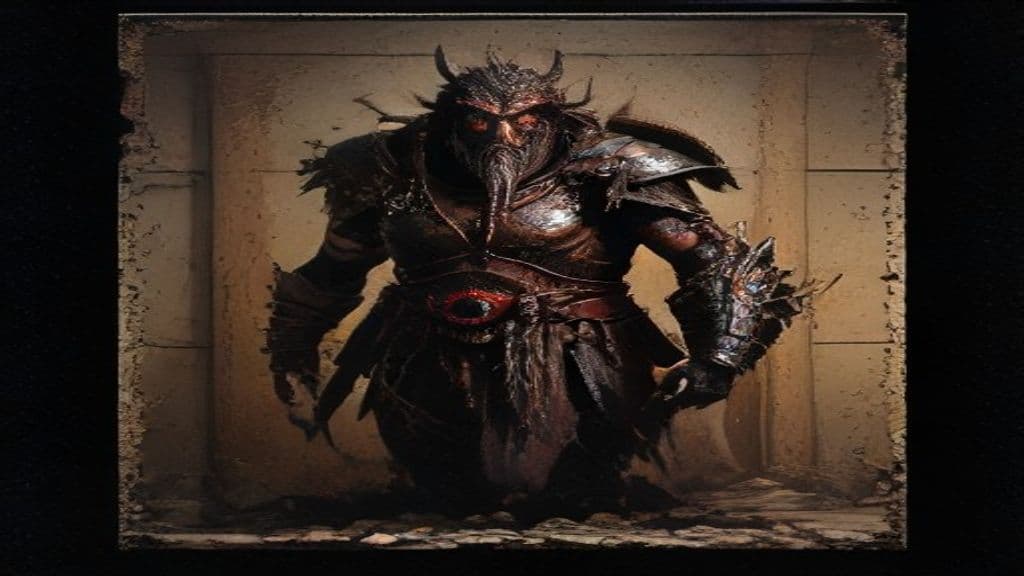
Amphimedon is presented in the Homeric epic-cycle world of the Odyssey as an Ithacan noble, son of Melaneus, who joins the cohort of suitors courting Penelope during Odysseus's absence. During Odysseus's return and the violent restoration of his household (the slaughter of the suitors in his hall), Amphimedon fights against Odysseus and his allies, is slain by Telemachus after striking at Telemachus's armour, and—within the Odyssey's afterlife sequences—appears among the dead in the Underworld to narrate the suitors' fate. These details derive from the Odyssey's Book XXII and associated Homeric passages that record both the combat and the testimony of the dead.
The surviving sources provide no detailed physical portrait or epithet beyond family identity (son of Melaneus) and his martial action in the hall. Homeric accounts note his role as one of the armored suitors who attacks Odysseus's household and that he delivered a glancing blow to Telemachus's carapace (shield/armour) before being killed; no further description of age, facial features, or distinctive accoutrements is recorded in the cited texts.
Amphimedon's recorded 'abilities' are those of an armed mortal combatant within the epic: he bears arms, joins the collective assault on Odysseus's household, and strikes at Telemachus's armour. After his death, within the Homeric narrative he functions as a posthumous witness—speaking among the dead in the Underworld to recount the slaughter. There is no indication in the sources of ongoing supernatural powers attributed to him beyond this narrative testimony.
Weaknesses
- conditionmortality
Wards
None recorded.
Arnaeus (Irus)
Arnaeus, commonly called Irus in English translations, is a mortal beggar who appears in Book XVIII of Homer's Odyssey as a hanger‑on in the hall of Odysseus on Ithaca. He functions in the narrative as a social type and a foil for the disguised Odysseus, provoking a public fight that illustrates themes of hospitality, social disorder, and appearances versus reality.
Elpenor
Elpenor is a named human figure in the Homeric epic tradition (Odyssey) who dies accidentally on Circe’s island and later appears as a shade in Hades during Odysseus’ katabasis to plead for a proper cremation and burial. He functions in the poem as an example of neglecting funerary obligation and the moral duty of the living to care for the dead.
Eudoros
Eudoros (Ancient Greek Εὔδωρος) is a Homeric heroic-age leader, the second of Achilles' five commanders in the Iliad. Presented as a demigod son of Hermes and the mortal Polymele, he commands a contingent of Myrmidons and is praised for speed and fighting skill.
Eumaeus
Eumaeus is a mortal character of the Homeric Odyssey: the loyal swineherd and household attendant of Odysseus, raised in his master's household and notable for his hospitality, fidelity, and practical skill in animal husbandry during Odysseus's return to Ithaca.
Eurylochus
Eurylochus is a mortal seaman in Homer's Odyssey, serving as Odysseus' second-in-command and leader of contingents of crewmen. He is portrayed through actions and speech as a cautious but quarrelsome subordinate whose persuasion and dissent contribute to critical narrative catastrophes (notably the slaughter of Helios' cattle).
Halitherses
Halitherses (Ancient Greek: Ἁλιθέρσης) is an Ithacan seer and elder in the Homeric Odyssey cycle, named as the son of Mastor. He interprets signs from Zeus, pronounces their meaning publicly, and counsels restraint and deference to the gods; his warnings are often disregarded by the suitors and portions of the community.
Iamenus
Iamenus (Ancient Greek: Ἰαμενός) is a named Trojan warrior in Homer's Iliad (Book XII) who takes part in the cavalry charge against the Achaean wall and is recorded as slain there by the Greek warrior Leonteus. He is a minor mortal participant in the epic rather than a supernatural being.
Amphimachus
Amphimachus (Ancient Greek Ἀμφίμαχος) is an ancient Greek personal name borne by several mythological mortals — warriors, princes, kings, and suitors — attested across epic and genealogical traditions of the heroic age rather than a single supernatural entity. The name, derived from ἀμφί (amphi) 'around' and μάχη (machē) 'battle', marks a martial character and recurs in Homeric, mythographic, and local genealogical accounts.
Amphimachus I of Elis
Amphimachus (Ancient Greek: Ἀμφίμαχος) of Elis is a mortal heroic leader in the Homeric and later mythographic tradition. He is named as one of the Epeian captains who brought ships to the Trojan War and is slain in battle by Hector in the Iliad; his identity is chiefly genealogical and martial, tied to Elis and its local aristocratic networks.
Amphimachus of Caria
A mortal Homeric leader: son of Nomion and co-captain (with his brother Nastes) of the Carian contingent allied with Troy in the Trojan War tradition. Attested in Homeric catalogue material and later commentary; sources record a variant tradition in which one of Nomion's sons was slain and stripped of gold by Achilles, with disagreement over whether that was Amphimachus or Nastes.
Amphinome
Amphinome is an ancient Greek proper name attested for multiple distinct female figures in myth — chiefly a Nereid (sea-nymph) and several mortal women (including a wife of Aeson and one of the Peliades). The name is also reused in modern taxonomic and creative contexts (annelid genus, butterfly species, and contemporary fantasy), but these are later reuses rather than continuations of a single mythic being.
Amphinomus
Amphinomus (Ἀμφίνομος) is a personal name borne by several human figures in Greek tradition, most notably a princely suitor of Penelope in Homer's Odyssey; other bearers appear in local genealogies, a Catanian civic legend, and a later historical record as a geometer. The sources treat Amphinomus as mortal personages rather than a supernatural being.
Community Record
- [1]Amphimedon (Wikipedia entry). Wikipedia, 'Amphimedon' (Homeric figure summary)wiki
- [2]Wikidata: Amphimedon. Wikidata entry for Amphimedonother
- [3]The Odyssey, Book XXII. Homer, Odyssey, Book XXII (account of the slaughter of the suitors and related actions)literary
- [4]Amphimedon (sponge) (Wikipedia). Wikipedia, 'Amphimedon' (genus of sponges) — provided to note distinct biological referentwiki