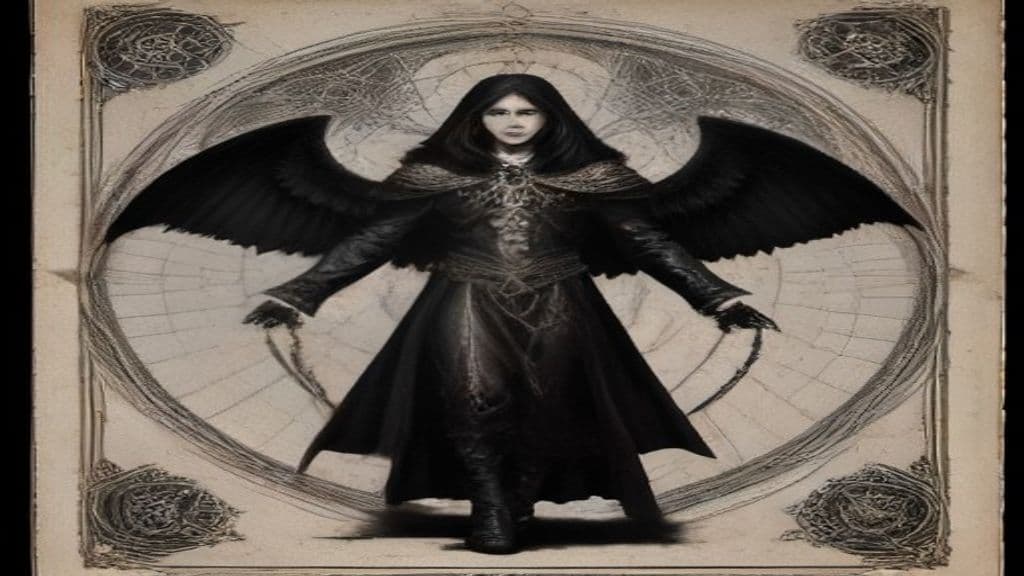
Andromalius appears within the cataloguing practice of Western grimoire tradition: later compilations and reference works derived from the Ars Goetia list named spirits with ranks, legions, and specialized functions useful to ritual magicians. The supplied sources present Andromalius as one such individuated agent within that ordered system. Primary grimoire excerpts in the provided material note variation between lists (for example, the Pseudomonarchia daemonum excerpt explicitly states that several names are not listed in that appendix, naming Andromalius among them), indicating that Andromalius's presence and registry vary between compilations rather than being tied to a single mythic origin narrative in the supplied corpus.
The supplied grimoire-derived sources do not provide a consistent traditional physical description for Andromalius. Modern reference pages (e.g., Thelemapedia) emphasize rank and functions rather than corporeal depiction, and later popular-media uses of the name (game wikis, fiction) present varied character portrayals that are not traceable to a single traditional source (examples of such adaptations appear in Final Fantasy XIV and fandom pages). Consequently, no reliable traditional description can be reconstructed from the provided materials; later fictional depictions should be treated as adaptations rather than primary tradition.
Within the grimoire-derived entries cited in the provided material, Andromalius is credited chiefly with recovering stolen goods and bringing back thieves, punishing thieves and other wrongdoers, and discovering hidden treasures and dishonest dealings. Thelemapedia summarizes these functions: he can "bring back both a thief and the stolen goods, punishes all thieves and other wicked people, and discovers hidden treasures, all evilness, and all dishonest deal." The broader context of Ars Goetia–style catalogs treats such named spirits as officers commanding legions and performing practical services when summoned by a magician; however, precise legion counts, ritual protocols, and physical iconography for Andromalius are not supplied in the excerpts available here.
Weaknesses
- otherNo traditional weaknesses recorded in the supplied grimoire sources
Wards
- otherNo traditional warding formulas or specific seals for Andromalius are recorded in the supplied sources
Flauros
Flauros (also attested as Haures / Hauras in variant spellings) is a named high-ranking spirit in Western grimoires, notably the Ars Goetia (Lesser Key of Solomon). Described as a 'Great Duke' who initially appears as a leopard and later assumes a human form with flaming eyes, he is invoked for truthful revelation about past, present, and future and for destructive aid against enemies, but must be constrained by ritual to prevent deception.
Andrew the Apostle
Andrew the Apostle (Greek Ἀνδρέας, Latin Andreas) is one of the Twelve Apostles in the New Testament, a fisherman from Bethsaida, the brother of Simon Peter, described as the “first-called” who introduced others to Jesus. Post-biblical traditions depict him as an early missionary and founder of Christian communities (notably claims of missions to Thrace, Scythia, and founding the see of Byzantium) and as a martyr crucified at Patras.
Androgeos
Androgeos (Greek Ἀνδρόγεως, Latin Androgeus) is a personal name borne by mortal figures in classical Greek and Roman literary tradition, most notably a son of Minos and Pasiphaë whose death in mythic narratives precipitates Athenian tribute to Crete. A separate, less-detailed bearer of the name is listed as a Greek soldier present at the sack of Troy in some sources.
Androgeus
Androgeus is a mythic human name borne by at least two distinct figures in Classical Greek and Roman tradition: a Cretan prince, son of Minos and Pasiphaë, famed for athletic victories and whose death in some accounts is linked to the Marathonian/Cretan bull; and Androgeos, a Greek soldier named by Virgil in the Aeneid who, during the sack of Troy, mistakes Aeneas and his companions for fellow Greeks. Both are mortal figures woven into larger heroic and epic cycles rather than supernatural beings.
Androgynos (Judaism)
In rabbinic Jewish literature, the androgynos (Hebrew: אַנְדְּרוֹגִינוֹס, ʾandərôg̲înôs) is a human juridical category for a person who possesses both male and female sexual characteristics. It is treated as a special halakhic classification that raises questions about which gendered legal obligations, prohibitions, and ritual statuses apply.
Androktasiai
Androktasiai (Ἀνδροκτασίαι, sing. Androktasia) are plural personifications in ancient Greek poetry that embody manslaughters or the slayings of men in battle. They appear chiefly as named offspring of Eris in Hesiod's Theogony and as elements in Homeric/Hesiodic ekphrasis (the Shield of Heracles), functioning as poetic embodiments of wartime slaughter rather than individualized cult-deities.
Andromache
Andromache (Ancient Greek Ἀνδρομάχη) is a human figure of ancient Greek literary tradition: the wife of Hector of Troy who exemplifies virtuous fidelity, ritual mourning, and the losses suffered by women in war. She appears in Homeric epic and later classical sources as grieving spouse, captive concubine after Troy's fall, and later queen in post-war narratives.
Andromeda
Andromeda is a mortal princess in ancient Greek myth, daughter of Cepheus and Cassiopeia, who is offered as a sacrificial victim to the sea monster Cetus and rescued by the hero Perseus. Her story links human hubris, divine punishment, heroic rescue, and catasterism—she is later placed among the stars as the constellation Andromeda in some accounts.
Andron
Andron (Ancient Greek: Ἄνδρων) is an ancient Greek personal name attested for multiple historical individuals (writers, a dancer/composer, historians, a sculptor, a physician) in classical biographical and bibliographical sources; it also appears as a modern given name/surname in contemporary records. The provided sources do not present Andron as a supernatural being.
Andvari
Andvari is a dwarf from Old Norse sources (attested in the 12th century) who lives beneath a waterfall, hoards gold, owns a magical ring called Andvaranaut, can change into a pike, and curses the gold when it is stolen—events that set in motion tragic outcomes in Norse heroic narrative.
Anemoi
In ancient Greek religion and myth the Anemoi (Ἄνεμοι, 'Winds') are the personified winds: a group of minor wind-gods each associated with a compass direction and with characteristic weather or seasonal phenomena that come from that direction.
Anethus
Anethus (Ancient Greek Ἄνηθος, Ánēthos) is a fragmentarily attested mythic figure from Greek tradition who is named as a beautiful youth transformed into the dill plant (Anethum graveolens). He functions as an aetiological or name-origin figure preserved only in late-antique grammatical/mythographic commentary.
Community Record
- [1]Andromalius — Thelemapedia: The Encyclopedia of Thelema & Magick. Thelemapedia entry on Andromalius — summarizes rank and functions, describing him as able to "bring back both a thief and the stolen goods, punishes all thieves and other wicked people, and discovers hidden treasures, all evilness, and all dishonest deal."wiki
- [2]Pseudomonarchia Daemonum (excerpt / PDF). Pseudomonarchia daemonum excerpt — notes variation in demon lists and explicitly states in the supplied Spanish-language excerpt: "los demonios no listados en este libro son Vassago, Seere, Dantalion y Andromalius," indicating Andromalius is omitted from that appendix and no ritual details for him are provided there.other
- [3]List of demons in the Ars Goetia — Wikipedia. Wikipedia entry referencing the Ars Goetia and noting variation in names and numbering across grimoire compilations; cited here for contextual information about cataloguing practice in the tradition where Andromalius appears.wiki
- [4]Andromalius — Final Fantasy XIV Online Wiki (example of modern adaptation). Game wiki entry demonstrating later fictional reuse of the name Andromalius in popular-media contexts; included as an example of adaptation rather than traditional attribution.wiki
- [5]Andromalius | Villains Wiki. Fandom page showing fictional portrayals that reuse the goetic name in new narratives; cited to indicate modern cultural reuse outside the grimoire sources.wiki
- [6]Andromalius (Demon in the Goetia, Lesser Key of Solomon) — DeliriumsRealm. Modern occult reference page summarizing Andromalius's functions in the goetic tradition (recovery of thieves and stolen goods); used as corroborative modern reference in the supplied corpus.other