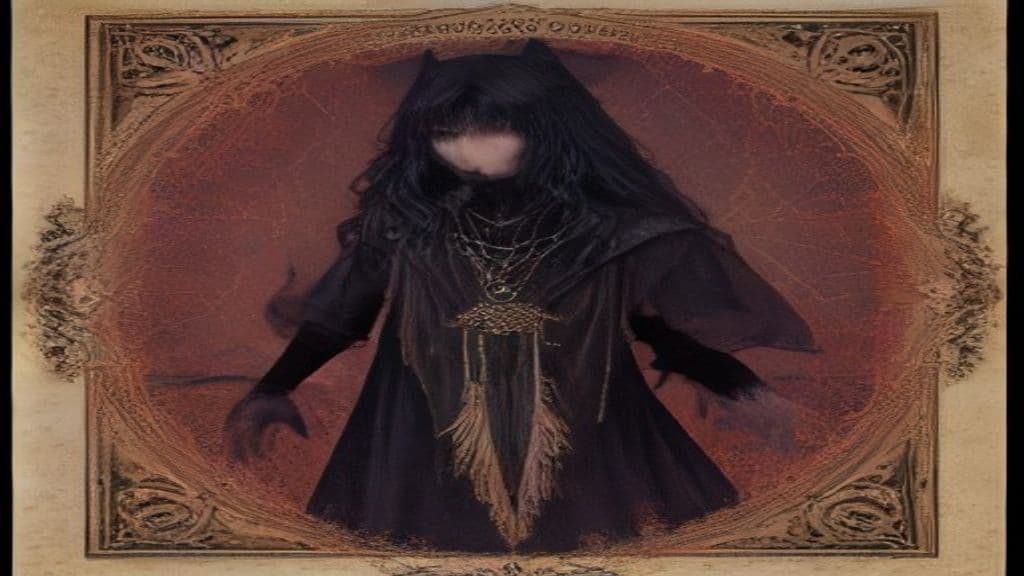
The supplied grimoire material does not give a prior mythic origin for Flauros beyond placing him within the roster of named spirits in the Ars Goetia. The Lesser Key of Solomon presents him as an office-holder — a 'Great Duke' — within a hierarchical catalogue of spirits that can be summoned and commanded by an exorcist/magician; the text also records that he can speak about the Creation of the World and how he and other spirits fell, but it does not supply an earlier cosmogonic origin or etymology for his name.
According to the de Laurence edition of the Lesser Key of Solomon, 'He is a Great Duke, and appeareth at first like a Leopard, Mighty, Terrible, and Strong, but after a while, at the Command of the Exorcist, he putteth on Human Shape with Eyes Flaming and Fiery, and a most Terrible Countenance.' The grimoire therefore describes an initial leopard-like, powerful and fearsome animal form that, when commanded by the conjurer, assumes a human shape notable for flaming eyes and a terrifying visage.
The Ars Goetia passage attributes several functions to Flauros: he 'giveth True Answers of all things, Present, Past, and to Come,' and 'will, lastly, talk of the Creation of the World, and of Divinity, and of how he and other Spirits fell.' He can 'destroyeth and burneth up those who be the Enemies of the Exorcist should he so desire it' and 'will not suffer him to be tempted by any other Spirit or otherwise.' The same source warns that 'if he be not commanded into a Triangle, △, he will Lie in all these Things, and deceive and beguile the Exorcist,' indicating that truthful cooperation and safe operation depend on ritual constraint and the conjurer's authority.
Weaknesses
- ritualConfinement in a Triangle (△)
- conditionBeing formally commanded by an authorized exorcist/magician
Wards
- ritualCommanding the spirit into a Triangle (△)
- conditionMaintenance of the exorcist's ritual authority / command
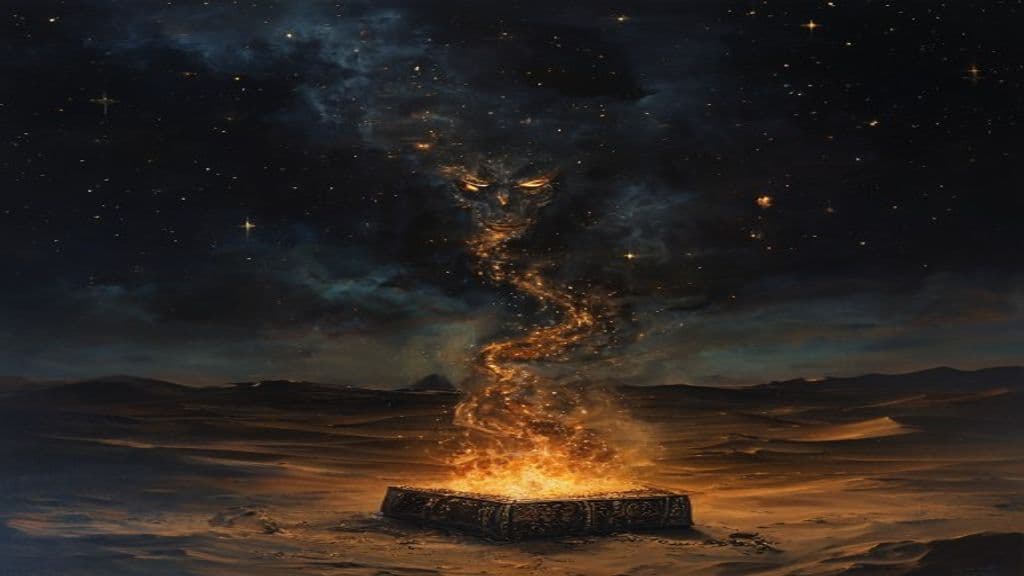
Djinn
The class of supernatural beings created from smokeless fire in Islamic cosmology — a parallel civilization to humanity, capable of belief or unbelief, with their own prophets, society, and judgment before God.
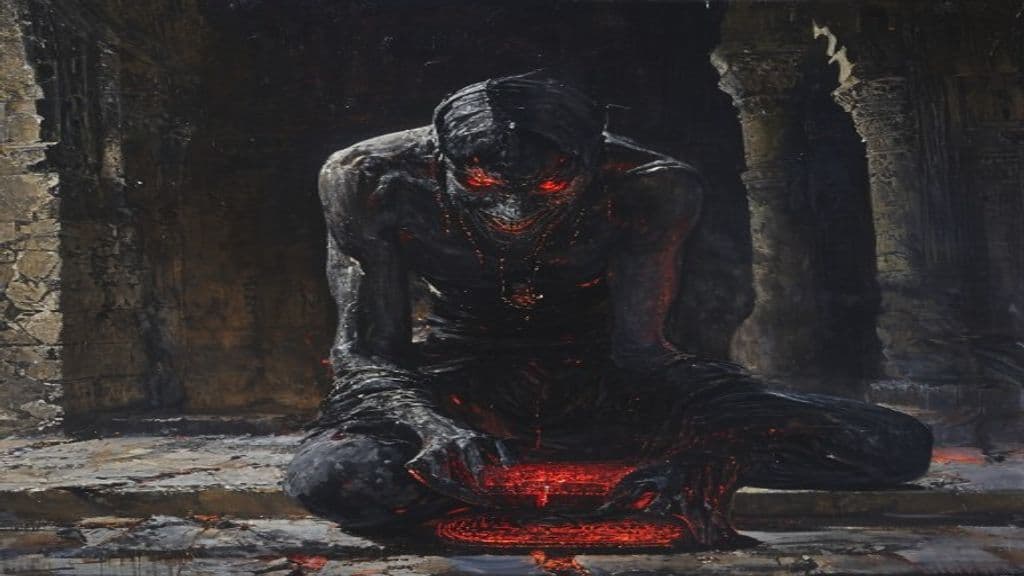
Shaitan
A class of corrupted djinn who follow Iblis and dedicate themselves to leading humans astray — distinct from Iblis himself, the Shayatin are a species of evil djinn who whisper doubts and temptations into the minds of the living.
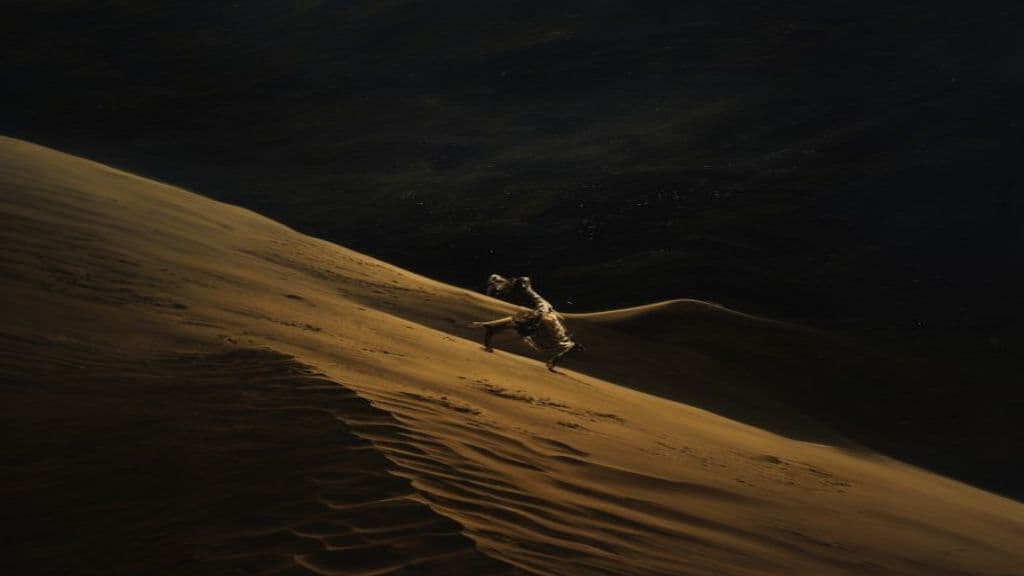
Jann
The weakest class of djinn in Islamic tradition, associated with desert winds and taking the form of snakes or whirlwinds, dwelling in empty wilderness and posing little threat to those who know the proper invocations.
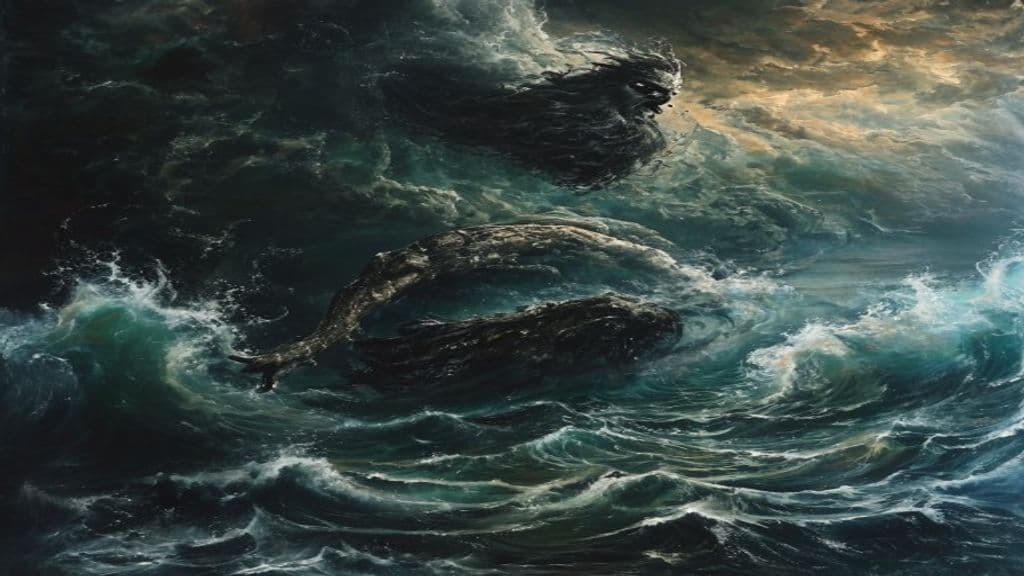
Marid
The most powerful class of jinn in Islamic tradition — beings of the sea, associated with the deep ocean, storms, and the granting of wishes at terrible cost. The classic genie of the Arabian Nights.
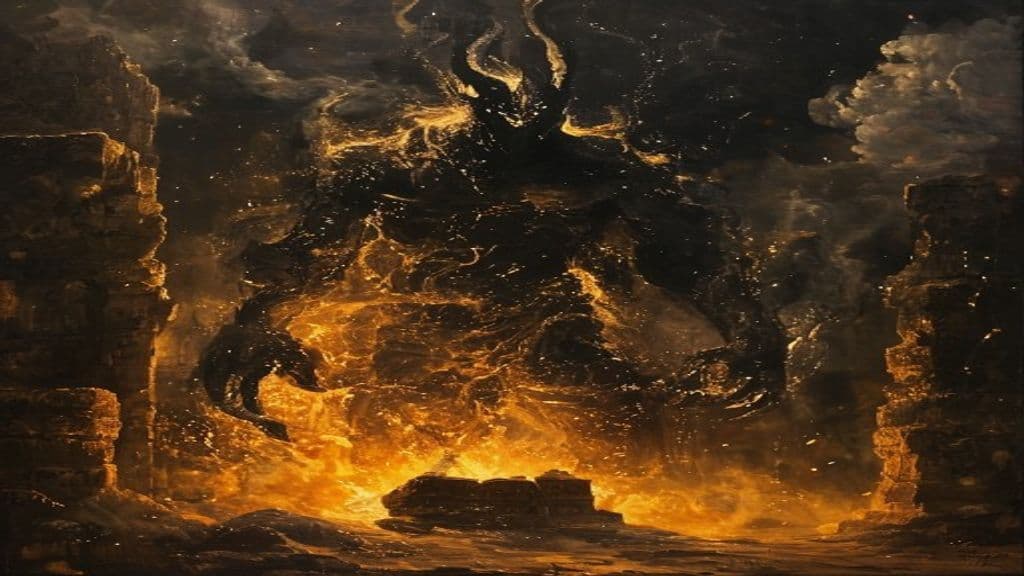
Ifrit
One of the most powerful classes of jinn in Islamic and pre-Islamic Arab tradition — a fire-born being of immense strength and cunning, capable of great works of engineering and terrible violence.
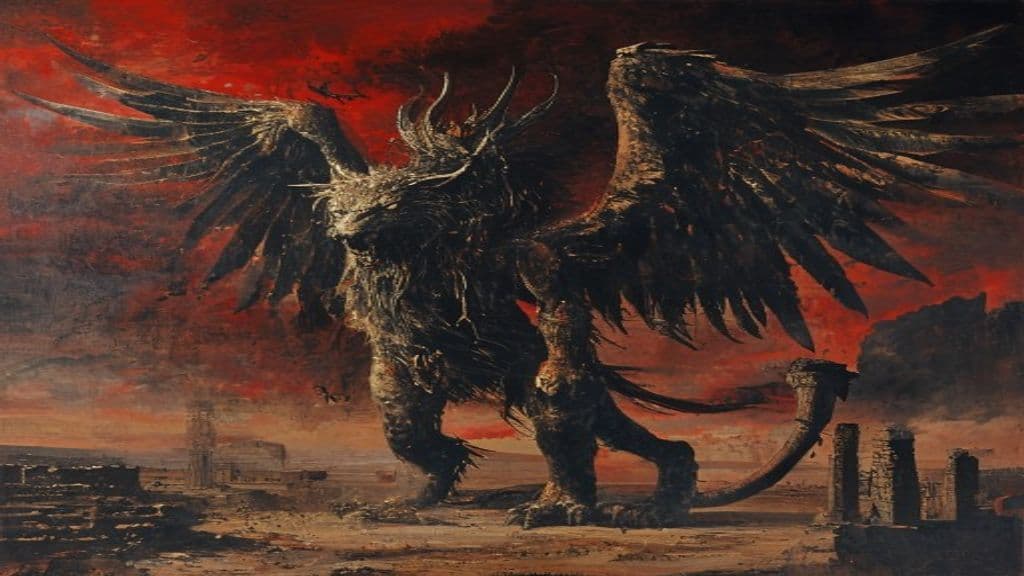
Pazuzu
The king of the wind demons of ancient Mesopotamia, lord of the southwest wind — paradoxically invoked as a protector against Lamashtu and other demons despite being evil himself.
Amaymon
Amaymon is a high-ranking infernal spirit—called a prince or king—named in Renaissance and later European grimoires as a cardinal or territorial ruler who exercises authority over other demons. Sources disagree whether he is king of the east (Pseudomonarchia Daemonum, Lesser Key of Solomon) or king of the south (Liber Officiorum Spirituum, Clavis Inferni, Book of Abramelin); he is credited with a deadly/poisonous breath, the capacity to deceive lax exorcists, and figures in ritual schemes that restrain or regulate spirits.
Amdusias
Amdusias is a named spirit listed in the goetic corpus (the Ars Goetia / Lesser Key of Solomon) described as the sixty-seventh spirit who commands twenty-nine legions; sources note his true form as a unicorn and that his arrival is accompanied by trumpets and musical sounds, and that he may assume human shape when evoked.
Andromalius
Andromalius is a named spirit from post-medieval grimoire tradition (Ars Goetia–style catalogues) presented as a ranked officer who recovers stolen goods, exposes thieves and dishonest dealings, and punishes wrongdoers. He appears primarily in modern occult reference compilations derived from the Goetia; ritual details and physical description are not attested in the supplied grimoire excerpts.
Focalor
Focalor is a named spirit from the Ars Goetia corpus, described in modern goetic compilations as a ducal-ranked spirit with authority over winds and seas who can drown men and sink ships; like other Goetic spirits he is represented as commandable by a conjurer.
Gamigin
Gamigin (also Samigina, Gamygin/Gamygyn) is a Goetic spirit attested in late-medieval to early-modern demonological grimoires (notably The Lesser Key of Solomon and Johann Weyer's Pseudomonarchia Daemonum). Described as a marquis who commands legions, he is reported to teach liberal arts and to compel certain souls (drowned and those in purgatory) into airy bodies to answer questions; in Thomas Rudd's tradition he is opposed by the Shemhamphorasch angel Ieuiah.
Shax
Shax (also spelled Chax, Shan, Shass, Shaz, Scox) is a named spirit in ceremonial-grimoire listings, recorded with the rank of Marquis (and as Duke by some authors), said to command thirty legions and credited with removing sight, hearing, and understanding from targets and with stealing money.
Vassago
Vassago is a named spirit from European grimoire tradition (notably the Lesser Key of Solomon and the Book of the Office of Spirits / Sloane MS 3824). Presented as a princely Goetic spirit who can be summoned to reveal past and future events, locate lost things, and reveal treasures, he also appears in one manuscript as angelic in appearance.
Flash Bomba
Flash Bomba is a Filipino comic-book superhero created by Mars Ravelo. A disabled man named Paul Lester Sison gains superhuman abilities after defeating a Tikbalang and receiving its magic hair (an agimat/anting-anting), then uses those powers to fight crime in komiks and a 2009 television adaptation.
Flash Thompson
Eugene "Flash" Thompson is a fictional human character from American comic books published by Marvel Comics. Introduced as a star high-school football player and bully of Peter Parker, he later serves in the U.S. Army, loses both legs in the Iraq War, and becomes host to the alien Venom symbiote, operating for a time as the costumed figure Agent Venom (and later Agent Anti‑Venom) in Marvel storylines.
Flatwoods Monster
A creature reported in Flatwoods, Braxton County, West Virginia, on September 12, 1952, seen on the ground after witnesses observed a bright light cross the night sky. Treated in sources as an anomalous terrestrial/extra‑terrestrial apparition recorded in mid‑20th‑century American popular anomalistics and later reinterpreted by investigators with natural explanations (meteor + barn owl + perceptual factors).
Flidais
Flidais (also Flidas; modern Fliodhas/Fliodhais) is a named female figure in medieval Irish narrative tradition associated with a prodigious herd and exceptional milking; she appears in Ulster-Cycle and related cattle-raid tales as a woman of high status whose favored cow and herd can provision large numbers of people.
Flogdrake
A Scandinavian firedrake or "fly‑dragon" associated with evening streaks of light in the sky and with tunnelling mountain lairs that hide ore and treasure. Primarily attested in Swedish folklore, it participates in a pan‑European motif of fiery serpents and is sometimes linked with household or earth spirits in nearby traditions.
Community Record
- [1]Flauros HWLN 04 019 (Archive item, de Laurence edition excerpt). Lesser Key of Solomon (de Laurence edition) excerpt as reproduced in 'Flauros HWLN 04 019' (Archive.org)literary
- [2]List of demons in the Ars Goetia. Wikipedia: List of demons in the Ars Goetia (uses variant spellings and situates Flauros within Ars Goetia tradition)wiki
- [3]Hauras (Wikidata). Wikidata entry for Hauras (identifier used for the entity as attested in source list)other
- [4]Haures (Thelemapedia). Thelemapedia: Haures (notes variant spellings and provides a fragmentary note on legions under his command; cited here as corroboration of variant names)wiki
- [5]Modern cultural references (name usage examples). Examples of modern cultural afterlives of the name 'Flauros' (musical and fandom usages) as listed in the research notes; these do not contribute to the traditional grimoire descriptions but corroborate contemporary reuse.other