
Multiple origin narratives appear in Roman literary sources. Ovid records a tradition identifying Anna Perenna with Anna, sister of Dido, who after shipwreck and wandering is transformed by the river-god Numicus into a perennial stream-nymph and thus renamed Anna Perenna. Other literary identifications (not uniform) equate her variously with lunar, Themis, Io, or Amaltheia figures. Modern scholars (e.g., Franz Altheim) have proposed, as a suggestion, deeper Italic or Etruscan antecedents, but such reconstructions are scholarly hypotheses rather than unanimous ancient attestations.
Ancient sources do not provide a stable iconographic description of Anna Perenna. Surviving evidence focuses on her legends and cultic locales rather than anthropomorphic depiction. Material attestations for her cult include inscriptions (e.g., finds at Buscemi) and an archaeological fountain associated with her rites (the Fons Annae Perennae, unearthed in 1999), which testify to tangible cult places but not to a standardized image.
In the literary and cultic record Anna Perenna is a calendrical and seasonal divinity: she is propitiated to secure the completion and healthy repetition of the year (the 'circle of the year') and is associated with wishes for longevity — Ovid notes celebrants praying for as many years as they drink cups at her festival. Ovid's mythic account also associates her with perennial water (a transformation into a perennial stream) and situates her within a set of syncretic identifications; the sources do not attribute further specific supernatural powers beyond these cultic functions.
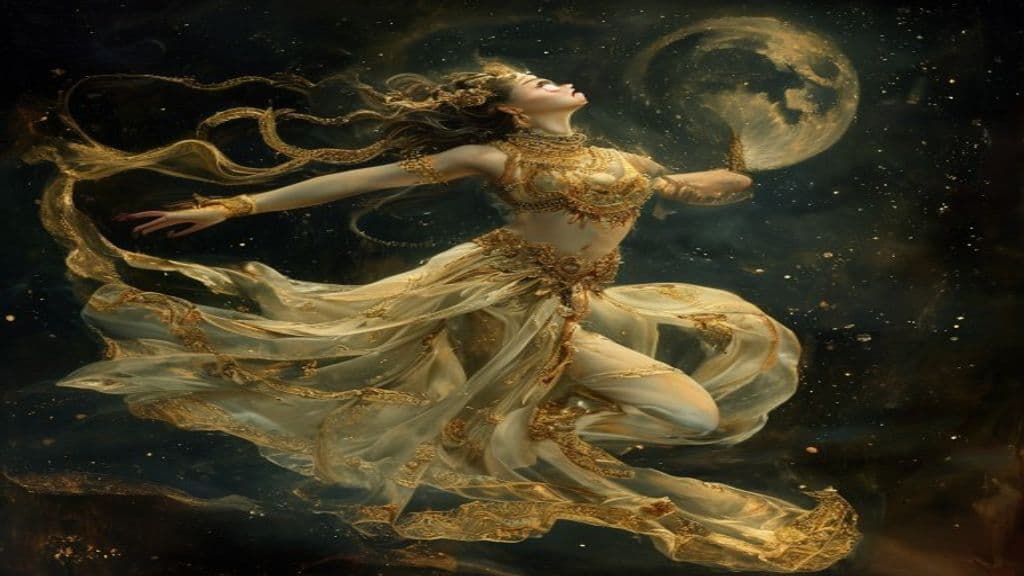
Apsara
Celestial dancers and water nymphs of Hindu cosmology — beautiful semi-divine beings who dance at the court of Indra and, by his command, descend to earth to distract sages from excessive asceticism.
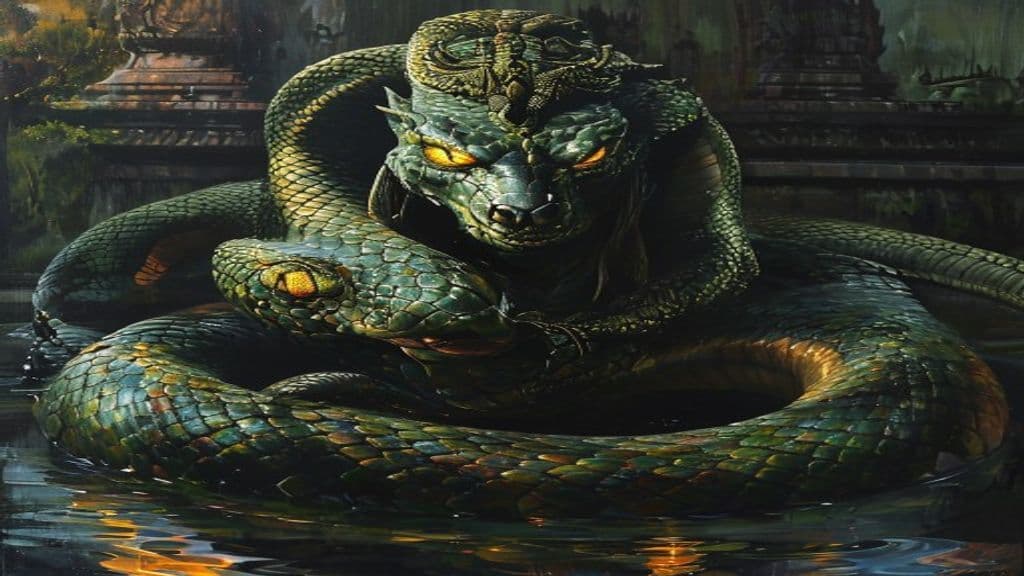
Naga
Divine serpent beings of Hindu, Buddhist, and Jain cosmology — powerful guardians of water, earth, and underground treasures. Revered as deities in South and Southeast Asia.
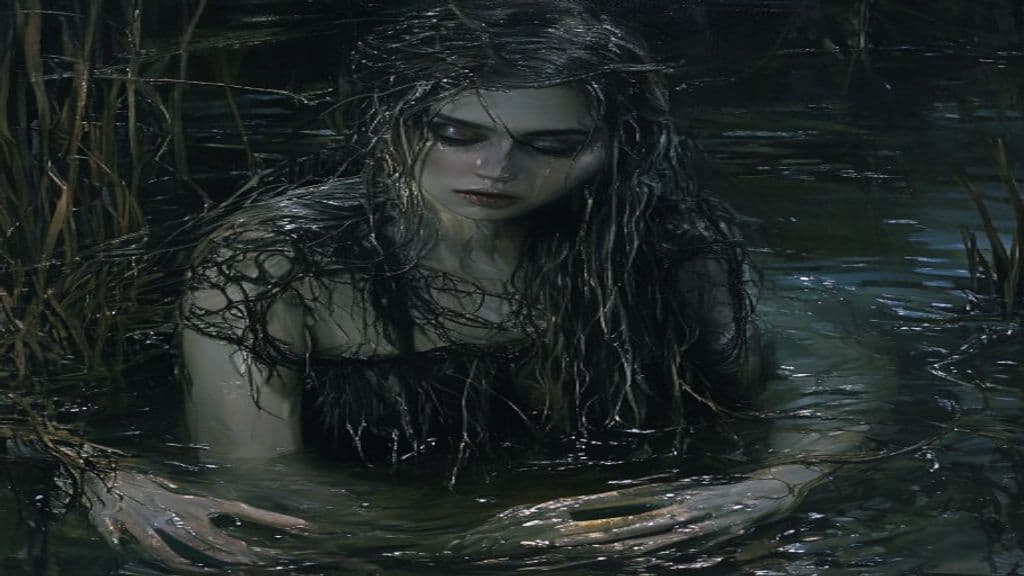
Rusalka
Water spirits in Slavic folklore — the spirits of young women who died by drowning or suicide, bound to rivers and lakes. Beautiful and dangerous, they can bewitch men to their deaths.
Anius
Mortal king and priest of Apollo in Greek mythology, with significant spiritual roles. (Note: * Power tier: Lower than Primordial; considering Anius is described as a mortal king and priest, a more accurate power tier would be Greater or at least Ancient, but likely not Primordial. * Abilities)
Anjana
Anjanas are benevolent female fairy beings in Cantabrian popular belief who protect forests, springs, animals and people, aid the poor and lost, leave gifts for the generous, and oppose the hostile Ojáncanu. Oral tradition presents them either as heavenly agents sent by God with a limited earthly term or as spirits of trees who care for the woodland.
Ankalamma (Angala Paramesvari)
Ankalamma (also Angala Paramesvari) is a village mother‑goddess and guardian deity (kaval deivam) of South India, venerated in Andhra Pradesh, Karnataka, and Tamil Nadu. She is associated with territorial protection, sacred groves, and liminal mortuary spaces (graves and cremation), and is often syncretized with Parvati, Kali, or counted among the Matrikas.
Ankh
A symbol representing life in ancient Egyptian cosmology, often associated with eternal life and resurrection. (Note: - Power tier should be Ancient (not Primordial), as it's a symbol representing concepts in ancient Egyptian cosmology. - Abilities description is too vague; consider specifying how the Ankh affects or)
Ankh-ef-en-Khonsu i
Ankh-ef-en-Khonsu i (Egyptian: ꜥnḫ-f-n-ḫnsw) was a historical Theban priest of the god Montu who lived in the late Third Intermediate to early Late Period (late 25th–early 26th Dynasty, c. 725 BCE). He is chiefly known as the dedicant of a painted wooden offering stele (Cairo A 9422, formerly Bulaq 666) made to guarantee his continued existence in the netherworld. In modern esoteric reception his name and stele were reinterpreted and adopted by Thelemic authors such as Aleister Crowley as a magical signature and symbol (the so-called "Stele of Revealing").
Ankou
The Breton personification of death — the last person to die in a parish each year who drives a creaking cart collecting the dead, whose appearance or sound presages death.
Annapurna
Annapūrṇā is a Hindu goddess, a manifestation of Parvati who presides over food, feeding, and nourishment. She is venerated in temple cults (notably in Varanasi) and in textual traditions that praise annadāna (the donation of food) and invoke her through stotras and name-lists.
Annapurna Devi Mata
Annapurna (Annapūrṇā, Annada, Annapurneshwari) is a Hindu manifestation of the goddess Parvati who sacralizes food, feeding, and nourishment. She is venerated in temple and household cults (notably the Annapurna Devi Mandir in Varanasi) and is the focus of stotras, aarti, sahasranama, and the festival Annapurna Jayanti.
Annas (Ananus)
Annas (Hebrew Ḥānān; Greek Ἅννας) was a first-century CE Jewish high priest of Judaea (AD 6–15) whose familial network and continued influence made him a central figure in priestly leadership in Jerusalem and in New Testament narratives of the Passion and early Christian episodes.
Annatar
Annatar is an assumed persona used by the malignant Maia later known as Sauron, who presented himself to the Elves of Eregion as a fair, elflike teacher of ring‑craft and jewelry. The name (Quenya, glossed 'Lord of Gifts') functioned rhetorically to gain trust while concealing the being's true aim to dominate through the Rings of Power.
Anne Weying
Anne Weying is a human legal professional in Marvel Comics and in Sony's Spider-Man Universe films who, on rare occasions, becomes a temporary host for the alien Venom symbiote and assumes the narrative identity "She-Venom." Her bonded episodes grant her the abilities associated with Venom but are depicted in the cited sources as temporary narrative events rather than a separate folkloric species.
Annea Clivana
Annea Clivana was a goddess or female spirit worshipped in Canale in Veneto within the territory of the Cenomani Celts in Italy. Roman observers or later compilers identified her with the Roman goddess Juno, and she is attested as being portrayed in the company of a genius loci, indicating a localized, place‑centered cult.
Community Record
- [1]Anna Perenna — Wikipedia. Wikipedia entry 'Anna Perenna' (quoting Macrobius; summarizing Ovid, Fasti; notes on festival and cult loci)wiki
- [2]Anna Perenna — Wikidata. Wikidata entry for Anna Perennaother
- [3]Magical practice in the Latin West : papers from the international conference held at the University of Zaragoza, 30 Sept.-1 Oct. 2005. Conference volume containing chapters on 'Religion and magic at Rome: the Fountain of Anna Perenna' and 'The texts from the Fons Annae Perennae' (treatment of fountain and associated texts noted in research notes)academic
- [4]Anna Perenna (historical volumes). Archive volume 'Anna Perenna' (historical treatment and primary/secondary materials)other
- [5]Anna Perenna and related historical materials. Archive item 'Anna Perenna, Oder Engel- und Holländische Heldenthaten...' (listed among supplied sources)other