
Textually attested in funerary literature rather than in a narrated cosmogony, the Assessors of Maat are recorded principally in Chapter 125 of the Book of the Dead (notably the Papyrus of Ani). In that canonical judgment scene the group of forty-two minor deities stands as the liturgical and juridical apparatus that enforces Maat: each assessor is named and linked to a specific declaration of innocence (one of the 'Negative Confessions'). Their authority is therefore ritual and textual—embedded in the funerary rite of psychostasia—rather than described as deriving from an independent creation myth in the supplied sources.
The supplied sources do not provide iconographic descriptions of the Assessors as a unified visual group or of individual members; Chapter 125 lists their names and provenances (geographical or atmospheric) but the excerpts provided do not record standard physical attributes. Sources do note that the assessors 'flanked Osiris' in the hall of judgment, but no further descriptive detail is given in the materials supplied.
The Assessors serve a juridical function in the afterlife: each of the forty-two is associated with a particular moral declaration (one of the Negative Confessions) and presides over or witnesses the deceased's claim of innocence regarding that specific charge. They join Osiris's tribunal in the psychostasia (the judgment scene). The weighing of the heart is conducted in the presence of Anubis and compared to Maat's feather; if the heart fails the test the consequence recorded in the sources is that Ammit, the Devourer, destroys the heart and thus the soul. The Assessors' role is evaluative and canonical within this ritual framework rather than operative in the mechanics of the scales or in directly executing annihilation.
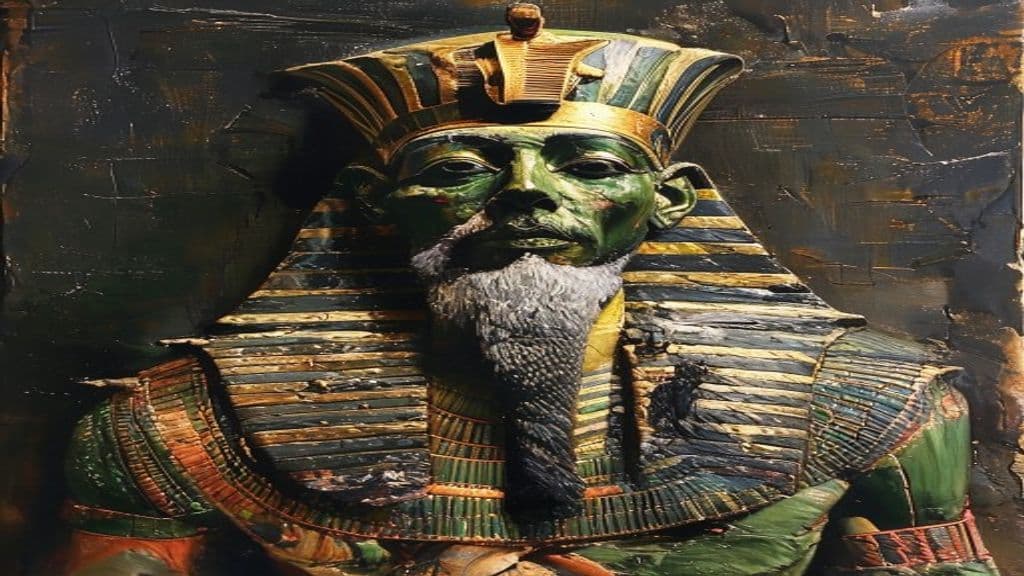
Osiris
Osiris is the major ancient Egyptian god of fertility, vegetation, death, resurrection, and the afterlife. He functions as sovereign of the realm of the dead, a guarantor of postmortem renewal and agricultural fertility, and the archetypal divine figure with whom deceased kings and mortals ritually unite to gain continuity after death.
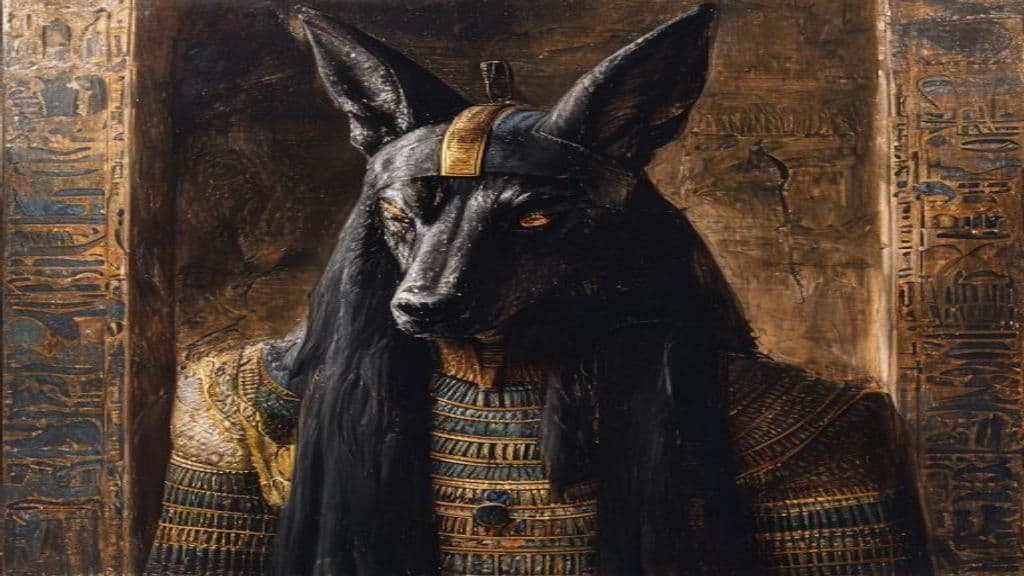
Anubis
Anubis is the ancient Egyptian funerary deity associated with embalming, protection of graves, and guiding the dead into the afterlife. Depicted as a canine or a man with a canine head and shown in black, he presides over mortuary rites and attends the judgment of the deceased, though he is not the central subject of many major myths.
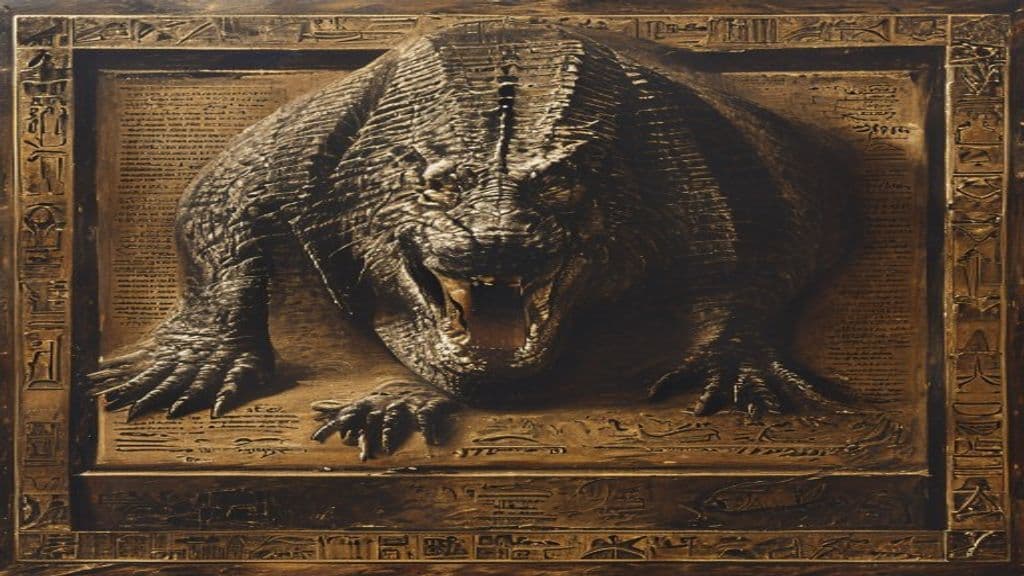
Ammit
Ammit is an ancient Egyptian funerary guardian-demon of the Duat who stands at the Hall of Two Truths during the weighing of the heart. Feared and not worshipped, she awaits the verdict and consumes hearts judged impure, thereby preventing the deceased from joining the blessed dead.
Aani
Aani (ancient Egyptian jꜥnr) is the lexical term for the baboon in ancient Egyptian language and functions in religious contexts as an animal icon and theophoric epithet. Attested repeatedly in Egyptian texts and images, the baboon image is used to represent or denote aspects of gods such as Thoth, Hapy, Khonsu, and Osiris rather than implying the animal itself is an independent deity.
Aker
Aker is an ancient Egyptian personification of the horizon and an earth and underworld deity who is described in surviving summaries as guardian of the eastern (Bakhu) and western (Manu) horizons, marking liminal boundaries between day and night and between the living world and the netherworld.
Akhty
Akhty (also read Netjer-akhty) is an ancient Egyptian deity identified with the northern bald ibis and linked to the akh (the transfigured, luminous human spirit). Attested from early 2nd dynasty inscriptions and in Old Kingdom personal names and priestly titles, Akhty was associated with the evening horizon and believed to guide the setting sun and carry the deceased's spirit into the night sky.
Amaunet (Amunet)
Amaunet (also spelled Amunet, Amonet) is a primordial female deity of ancient Egyptian religion, attested from early religious texts and represented as the feminine counterpart and consort of the god Amun. She is presented in sources as a pre-creation or primeval principle associated with hiddenness; Thebes is recorded as a principal center of her cult into the late dynastic and Ptolemaic periods.
Amenhotep, son of Hapu
Amenhotep, son of Hapu was a historically attested 18th‑Dynasty official who was posthumously venerated and integrated into Egyptian temple cult as a deified, local healing intercessor. His cult appears in Thebes and resurges in the Ptolemaic period, represented in votive reliefs, chapels, and statues.
Ammit
Ammit is an ancient Egyptian funerary guardian-demon of the Duat who stands at the Hall of Two Truths during the weighing of the heart. Feared and not worshipped, she awaits the verdict and consumes hearts judged impure, thereby preventing the deceased from joining the blessed dead.
Ammut
Ammut is an ancient Egyptian chimeric creature associated with the Judgment of the Dead; traditionally described as a composite of lion, hippopotamus, and crocodile, she is said to consume the souls or the symbolic heart of those judged unworthy, preventing admission to the afterlife. Modern artistic and speculative retellings recast Ammut as a large scavenging semi‑aquatic animal whose corpse‑consuming habits inspired funerary beliefs.
Amset (Imsety)
Amset (Egyptian Imsety) is one of the four sons of Horus in ancient Egyptian mortuary religion, a named funerary guardian commonly associated with protection of the liver and represented as the human-headed canopic-jar lid in mummification and afterlife iconography.
Amun
Amun is a major ancient Egyptian deity whose name (imn) means 'the hidden one.' Originating as a local Theban tutelary god, he rose to national prominence and was syncretized with the sun‑god Ra (Amun‑Ra), becoming a transcendent, self‑created creator and king of the gods closely tied to royal legitimation and personal petitionary religion.
Amun-Re
Amun-Re is a major ancient Egyptian state deity formed by syncretism of Amun with the sun-god Re. Attested from the Old Kingdom and rising to prominence as the patron god of Thebes by the 11th Dynasty, Amun-Re is closely tied to pharaonic kingship, temple cult, and oracular activity (notably at Siwa).
Amunet
Amunet (jmnt) is a primordial Egyptian goddess originally one of the female members of the Ogdoad of Hermopolis whose name means ‘The Hidden One.’ In later Theban religion she became a localized consort and cult companion of Amun, serving protective and liturgical roles in royal coronation, Sed festivals, temple liturgies, and funerary invocations.
Ancient Egyptian corkscrew-horned sheep
An extinct ovicaprine form identified in modern scholarship as Ovis longipes palaeoaegyptiacus and depicted in early pharaonic art; its distinctive loosely spiralling horns were adopted as the horn-type for several ram-headed Egyptian deities and persisted in iconography after the animal vanished from the record.
Community Record
- [1]Assessors of Maat — Wikipedia. Wikipedia contributors. "Assessors of Maat." Wikipedia, The Free Encyclopedia.wiki
- [2]Wikidata: Assessors of Maat (Q9133532). Wikidata entry Q9133532: Assessors of Maat.other