
Daughter of the Titans Phoebe and Coeus and sister of Leto, Asteria is an early divine figure whose name derives from the Greek for 'star' and who appears in mythic genealogies bridging the Titan and Olympian generations. Pursued by Zeus (in most accounts), she transformed into a quail and flung herself into the Aegean, then metamorphosed into a floating or hidden island identified with Ortygia/Delos; that island later became the refuge for Leto and the birthplace of Apollo and Artemis. In Hesiod she is also mother of Hecate by Perses, marking her role as progenitrix in some genealogical lines.
Surviving sources emphasize metamorphosis rather than a fixed human description: narrative accounts record Asteria turning into a quail (Ancient Greek: ὄρτυξ) and then becoming an island variously described as small, barren, and at times hidden or floating before being fixed in the sea as Delos. Artistic representation includes anthropomorphic depiction (for example on the Gigantomachy frieze of the Pergamon Altar), but textual descriptions preserve no detailed, consistent human-form appearance.
Mythic narratives attribute metamorphic power to Asteria: she escapes divine pursuit by changing form (bird → island) and thus can become and embody place. She functions as a sanctuary-bestowing presence when her island shelters Leto against Hera's prohibition, and she participates among divine figures in some artistic mythic programs (e.g., depicted fighting Giants). Genealogically she produces other divine figures (most commonly Hecate in Hesiod), linking older Titan generations to later Olympian-associated cultic landscapes.

Leto
Leto (Ancient Greek: Λητώ / Λατώ; Latin: Latona) is an ancient Greek goddess best known as the mother of the Olympian twins Apollo and Artemis. She functions in myth and cult as a kourotrophic (mother‑or nurse‑goddess) figure with important sanctuaries at Delos and the Letoon in Lycia, and appears in narratives that emphasize both mildness and the capacity to call down retribution when insulted.
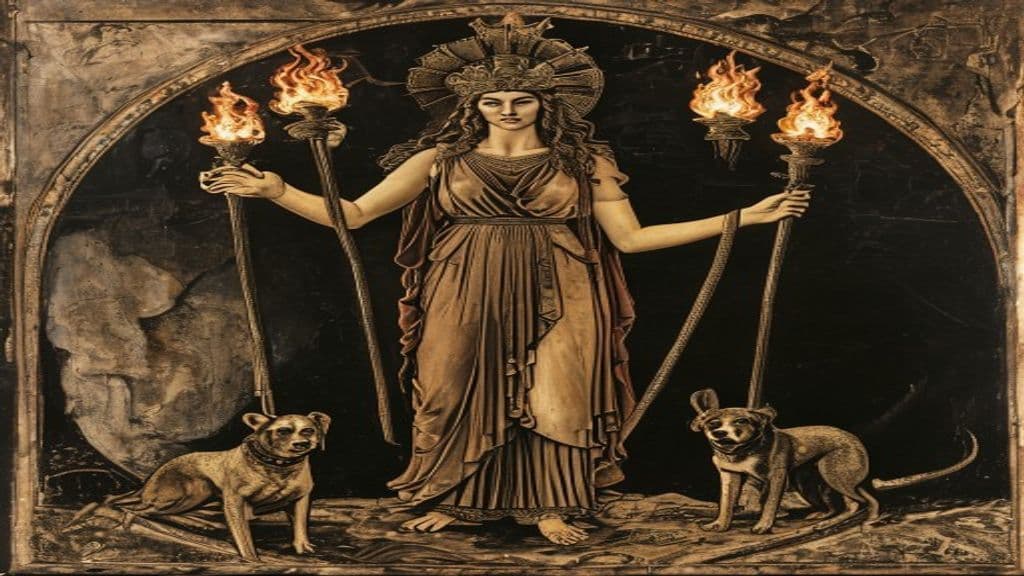
Hecate
Hecate (Ancient Greek: Ἑκάτη) is a liminal goddess in ancient Greek religion associated with crossroads, night, light, magic/witchcraft, the Moon, and household protection. She appears in early Greek poetry (Hesiod) with broad domains and in later traditions (notably the Chaldean Oracles) with expanded cosmological roles; she retained important regional cults, especially in Anatolia (Lagina) and had popular associations with witches in Thessaly.
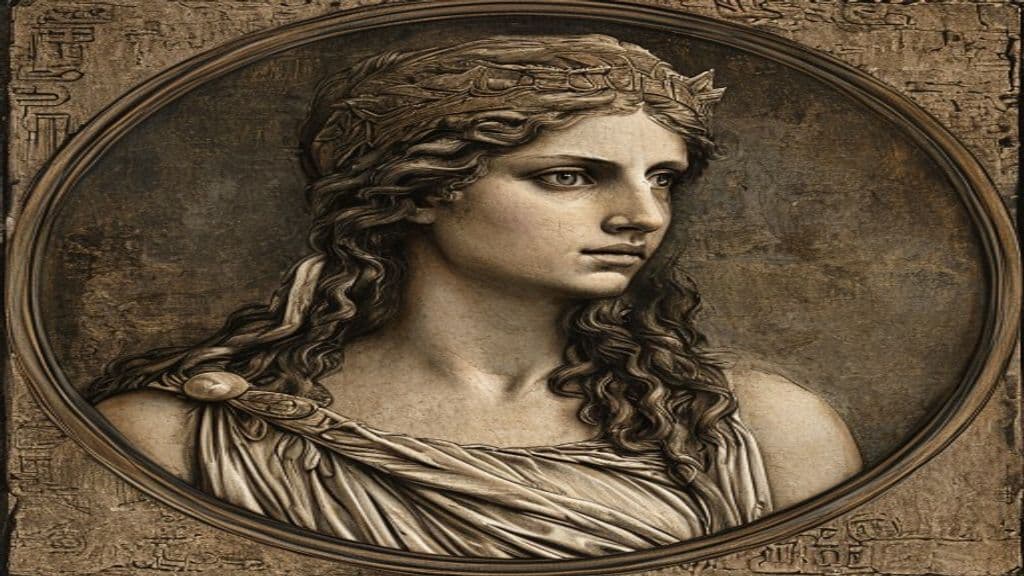
Phoebe
Phoebe (Ancient Greek: Φοίβη, 'bright') is a first‑generation Titan in Greek mythology, daughter of Uranus (Sky) and Gaia (Earth). The name Phoebe is also used as an epithet for lunar goddesses (Artemis/Diana, Selene/Luna) and has been recycled in modern taxonomy and nomenclature (a moon of Saturn, plant and animal genera), but these are distinct referents rather than a single supernatural persona.
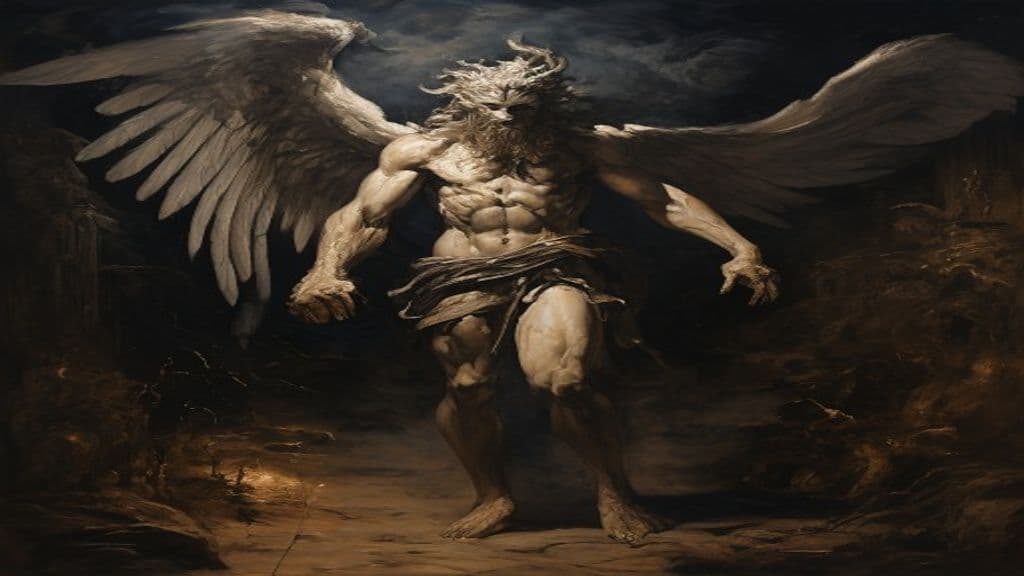
Coeus
Coeus (Greek: Κοῖος, Koîos) is one of the primordial Titans in Greek mythic genealogy, a child of Uranus and Gaia. He is mainly preserved as a genealogical figure — father of Leto and Asteria — and is otherwise an obscure member of the pre‑Olympian divine generation who was overthrown in the Titanomachy.
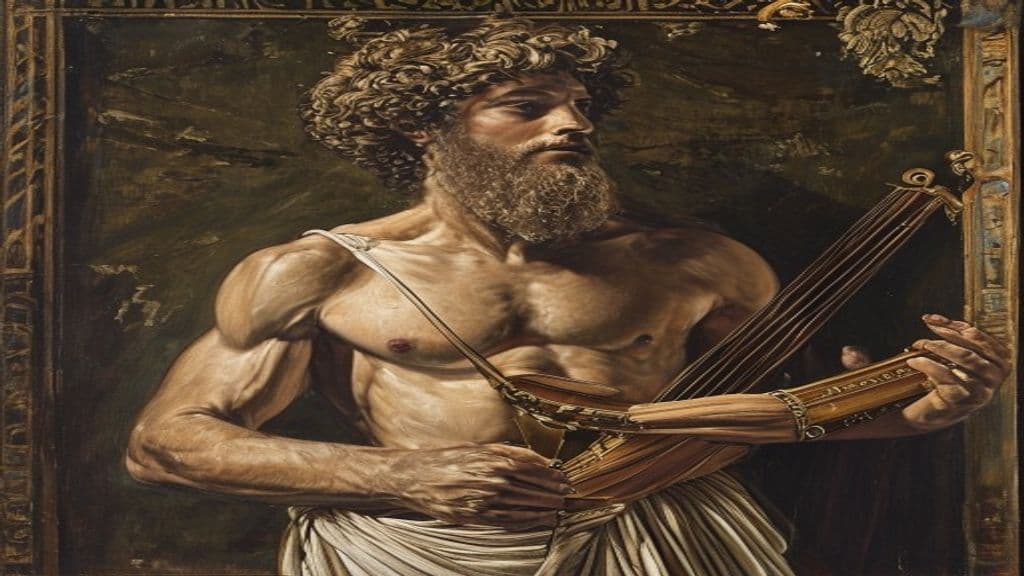
Apollo
Olympian deity of ancient Greek religion associated with prophecy, healing, music, archery, purification, and civic order. Principal patron of the Delphic oracle, protector of youth and flocks, and ambivalently both healer and bringer of plague.

Artemis
Artemis is an ancient Greek goddess of hunting, the wilderness and wild animals, transitions (especially childbirth and puberty), vegetation, and chastity. Twin sister of Apollo and daughter of Zeus and Leto, she functions as a protector of young children and maidens while also capable of inflicting disease or punishment for transgressions against her sacred laws.
Community Record
- [1]Asteria (Wikipedia). Wikipedia, 'Asteria (mythology)'wiki
- [2]Asteria (Wikidata). Wikidata item for Asteriaother
- [3]Collected classical attestations (summarized in research notes). Summary drawn from cited ancient authors including Hesiod, Pindar, Callimachus, Hyginus, Nonnus, and evidence such as the Pergamon Altar frieze as collated in the provided Wikipedia synthesisliterary