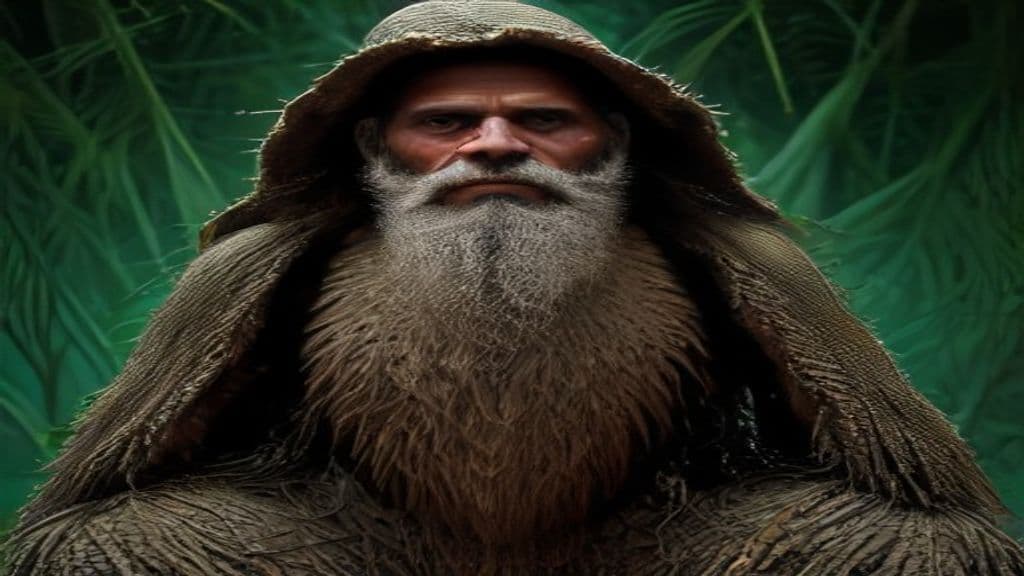
Attested accounts present the Bacab primarily as a fourfold set of elder brothers placed at the four world-points to hold up the sky and stabilize the world-quarters. Colonial-era summaries record variant accounts in which a Bacab may be treated as a singular filiational figure (e.g., a son of Itzamna and Ixchebelyax in a Hernández-like account) and Gulf Coast variants recall Bacab-like 'Grandfathers'—drowned ancestors who serve as earth-carriers for a year and one of whom opens the rainy season. Sources present these as complementary regional and historical variants rather than a single unified narrative.
Iconographically the Bacab corresponds to the Classic-period 'God N' figure: an aged, often bearded elderly manbearing attributes linked to the interior earth and water (conch, turtle, snail or shell, spider-web, or bee armour) and a characteristic netted superfix/headdress element. They are depicted in fourfold formation carrying a sky-dragon or architectural slabs/roofs; individual scenes sometimes show an old, shell-hidden Bacab within a cave-shell or inhabiting a turtle, underscoring subterranean and cave symbolism.
Their principal functions are cosmological and ritual: represented as sky-bearers who hold up and separate sky and earth and as patrons of the four world-quarters; intimately tied to subterranean waters, thunder, and meteorological phenomena. Each Bacab is associated with a cardinal direction and an associated Year Bearer day and is invoked in divination about crops, weather, and bee health. They are closely associated with Chaac (rain deities) and Pawahtuns (wind deities). The Bacabs are also central to early-colonial curing corpora (the Ritual of the Bacabs) and are repeatedly invoked in curing rites; Gulf Coast variants include cyclical, ancestral office-holders who open the rainy season and in some local accounts are characterized as drunken or lecherous thunder elders.
Weaknesses
- otherNo specific weaknesses recorded in provided sources; mythic scenes sometimes show Bacab threatened or extracted from shell/cave by a younger warrior, indicating narrative vulnerability in particular iconographic episodes.
Wards
- ritualInvocation of the directional Bacabs
Chaac
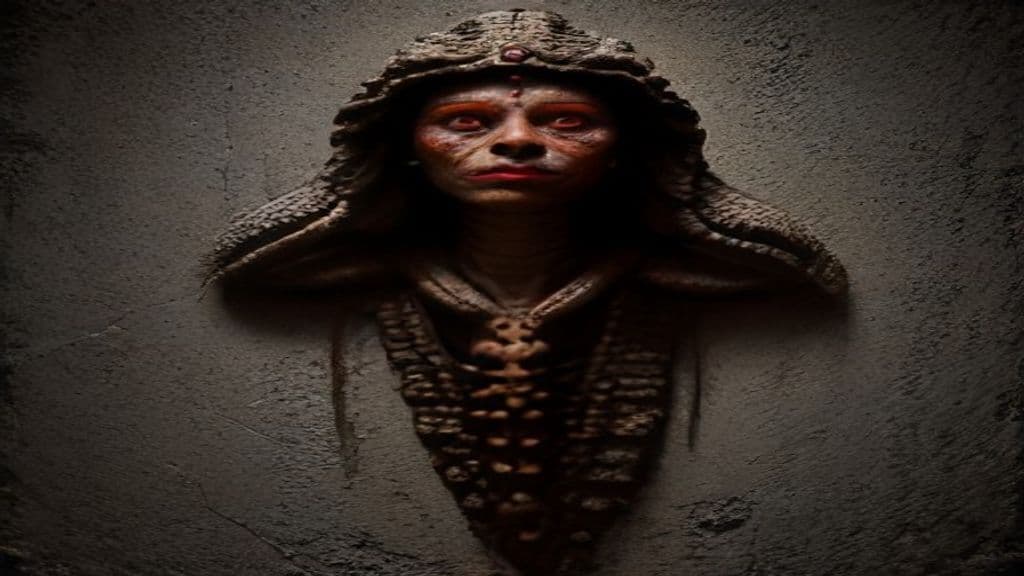
Chaac is the Maya god of rain, thunder, and lightning, a central agricultural deity who produces storms by striking clouds with a lightning axe. He appears as both a singular figure and as multiple directional Chaacs, is associated with subterranean waters (cenotes and caves), and is the focus of communal rain-request rituals and specialist rainmaker practices.
Itzamná
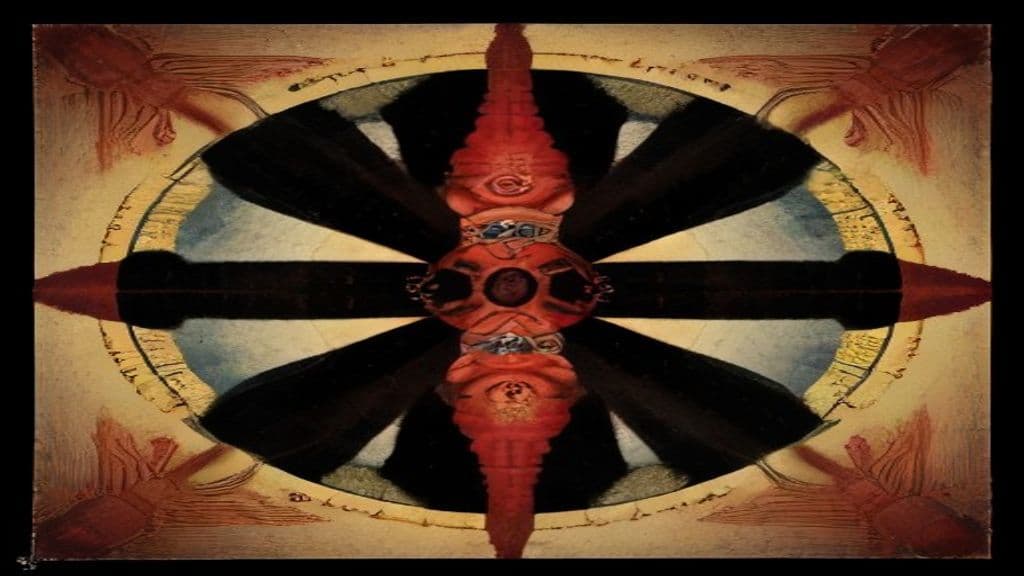
Itzamná is a principal upper-world creator deity in Maya religious thought, associated with the sky, priestly arts (including writing), calendrical authority, agriculture (maize), and rulership. He appears across Classic iconography and Postclassic codices in multiple transformative aspects (aged tonsured maize form, a Principal Bird Deity, and within a two‑headed caiman earth image) and is invoked in specific ritual months in early‑colonial reports.
Babi Ngepet
In Indonesian mythology, the Babi Ngepet is a boar demon associated with malevolent intentions towards humans. (Note: * Power tier: Downgrade to Ancient (deity-level) as there's no indication of Primordial powers. * Abilities: Specify what malevolent intentions towards humans implies, e.g., ability to curse or cause )
Baboon
Baboon refers to primates of the genus Papio (family Cercopithecidae). The sources treat baboons as living Old World monkeys with distinct anatomy, complex social systems, omnivorous diets, and a primarily African (and partly Arabian) distribution.
Babr-e Bayān
Babr-e Bayān is the name of a legendary suit or armor associated with the Iranian hero Rostam in Persian epic tradition. In most accounts it is an extraordinary protective garment (sometimes said to be made from a slain creature’s hide) that confers invulnerability when worn.
Baby Train
A modern urban legend that humorously explains a local baby boom by attributing it to an early-morning train whistle (or similar repetitive noise) that wakes residents who then have sex. It is a narrative motif circulating in English-language media and folkloric collections rather than a supernatural being.
Baby Wildebeest
Baby Wildebeest is a fictional character from DC Comics' New Teen Titans series: a juvenile, wildebeest-themed created host-body who serves as an adopted child-member of the Teen Titans, noted for great strength and durability. Introduced in 1992, the character was killed during Infinite Crisis and later appeared briefly as a Black Lantern in Blackest Night.
Babys
Babys (Ancient Greek: Βάβυς, Bábus) is a sparsely attested figure in Greek mythology identified in available sources as the brother of the Phrygian satyr Marsyas; surviving references associate him only fragmentarily with a flute and place him within the Marsyas–Apollo musical contest tradition.
Bacchis
Bacchis is not attested in the provided sources as a supernatural being; the name appears in historical, literary, and scientific contexts (the Bacchiadae clan of ancient Corinth, a modern biological genus, and titles/characters in classical drama collections). No folkloric cosmology, powers, appearance, or rituals for a spirit called Bacchis are documented in the supplied material.
Bacchus
Bacchus is the Roman identification of the Greek god Dionysus, a deity associated with wine, vegetation and fertility, ritual ecstasy and theatrical performance. In Roman religion he is conflated with the Italic Liber and known for rites that induce possession, frenzy (baccheia), and group revelry.
Bachué
Bachué is a Muisca primordial mother figure presented in colonial-era chronicles and modern summaries as the mother of humanity. She emerges from the sacred Iguaque Lake with an infant who becomes her companion; after populating the earth they transform into snakes and return to the lagoon. She was worshipped at a temple near Iguaque (present-day Chíquiza) and is described as an ancestral, life-giving protectress who sometimes returned from the underworld to guide her people in the accounts cited.
Backstreet Project
Backstreet Project is a 2000 single-issue American comic book tie‑in that depicts the pop group Backstreet Boys as themselves and, within the story, transformed into a superhero team called the Cyber Crusaders after receiving enchanted amulets from an alien. It functioned as a cross‑media promotional property with tie‑in Burger King action figures, three television commercials, and a short Flash webisode series.
Baco
A single modern reference (a Wikipedia disambiguation entry) lists "Baco (god)" with the brief descriptor "a Celtic god of the boar." Beyond that terse label, the supplied sources contain no primary or secondary evidence describing Baco's nature, cult, or mythology.
Badalisc
The Badalisc is a local ritual creature of Val Camonica (Andrista, Cevo) in northern Italy: an animal‑like masked figure captured in the woods at Epiphany, led into the village, and used as a mouthpiece for a satirical public speech that names communal misdeeds before being released back to the woods.
Community Record
- [1]Bacab — Wikipedia. Wikipedia, 'Bacab' entry (summaries of ethnographic, iconographic, and ritual material).wiki
- [2]Book of Chilam Balam of Chumayel (quoted passages in summaries). Quoted passage from the Book of Chilam Balam of Chumayel as cited in source summaries on Bacab cosmology.other
- [3]Archive footage and description: Pok ta Pok invocation. Archive description of modern Pok ta Pok events noting ceremonial evocation of the Lords of the four cardinal points (Bacab of the East, etc.).other
- [4]Name-Doctor: Bacab name meaning. Name-Doctor summary of Bacab etymology and meaning as 'the four aged deities of the interior of the earth.'other