
The phrase appears as a relational kenning in the Poetic Edda's Völuspá, embedded in the eschatological sequence of Ragnarök. It is not presented as an independent origin-bearing entity in the surviving texts; instead it names the act/role of the slayer of Beli within prophetic mythic narration. Scholarly tradition associates such kenning-phrases with the narrative world of gods, jötnar, and end-time combat rather than with separate cultic biographies.
No independent, detailed physical description is preserved in the sources. One manuscript transmission of the Völuspá line includes the adjective bjart ('bright') qualifying the bane (rendered in glosses as 'Beli's bright bane'); beyond this single adjectival epithet the poetic fragment is lacunary and supplies no fixed iconography.
The only attested action in the source material is the slaying of Beli (the phrase names the slayer). The line situates that deed within the wider combative frame of Ragnarök (adjacent to lines about Óðinn fighting the wolf and references to Surtr). No other powers, habitual behaviors, or interactions with humans are described in the provided texts. Where the kenning is taken to refer to a known deity (see sources), broader attributes derive from that deity's independent attestations, not from the kenning itself.
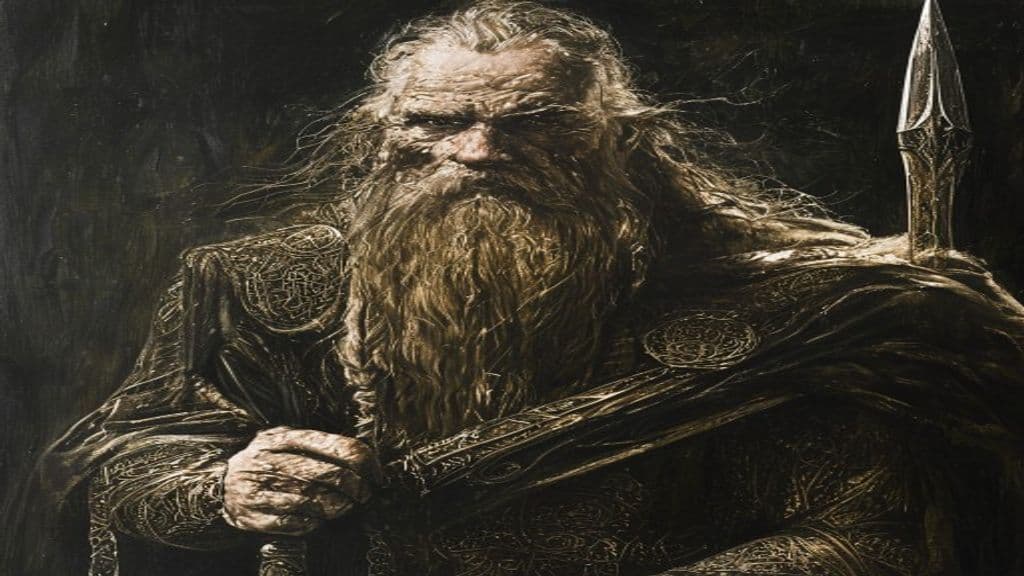
Odin
Odin (Old Norse: Óðinn) is the chief god of the Norse (Æsir) pantheon, a multifaceted deity associated with wisdom obtained by sacrifice, poetic inspiration, death and warfare, and rulership over the hall Valhöll where chosen slain warriors (einherjar) dwell. He appears throughout Germanic tradition from Roman-era accounts through the Viking Age and in later folklore as leader of the Wild Hunt.

Surtr
Surtr is a foremost fire-associated jötunn in Old Norse myth who stands at the frontier of Múspell (Muspelheim). In eschatological sources he leads the sons of Múspell from the south at Ragnarök, bears a bright flaming sword from which light shines more brightly than the sun, and flings fire that burns the world.
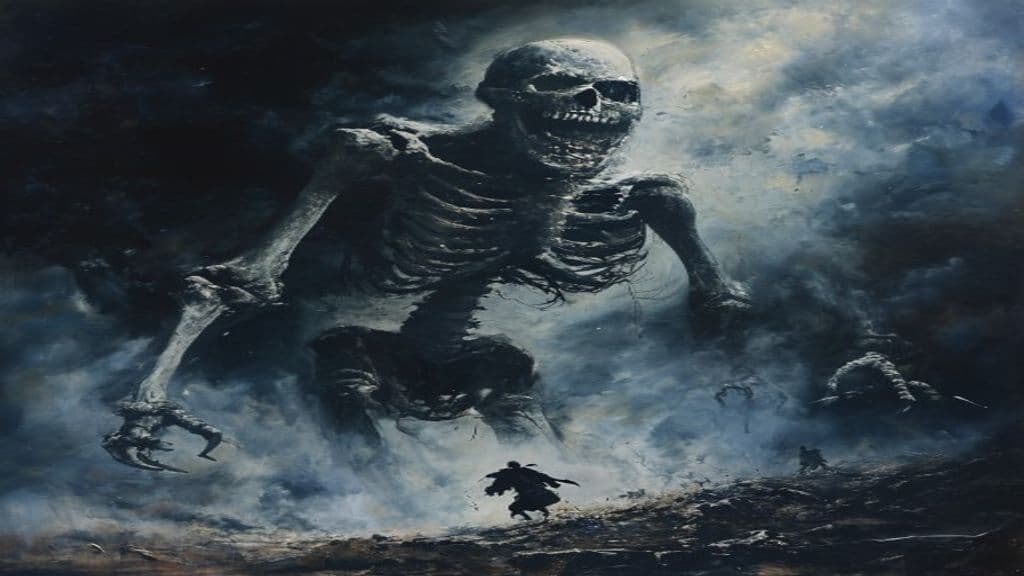
Gashadokuro
A fifteen-times-human-height skeletal yokai formed from the bones of those who starved to death or died on battlefields, their unburied remains fused together into a hungry colossus.
Agilaz (Egil)
Agilaz (reconstructed Proto-Germanic) — commonly recorded in medieval sources as Egil or Ægil — is a legendary archer attested in Germanic heroic tradition. He appears as the brother of Völund (Wayland/Weland) in the Old Norse poem Völundarkviða and in the Thidreks saga, and his name is also inscribed on early medieval objects (Franks Casket, Pforzen buckle). The attested material presents him as a named heroic human archer within saga and inscriptional contexts rather than as a recurrent supernatural species.
Agnarr Geirröðsson
Agnarr Geirröðsson is a mortal prince attested only in the Poetic Edda poem Grímnismál; he aids Odin (disguised as Grímnir) during Geirröðr's torture and, after Odin reveals himself and King Geirröðr dies, Agnarr succeeds as king.
Bestla
Bestla is a jötunn (giantess) in Old Norse mythic genealogies, attested as the mother of Odin, Vili, and Vé by the giant Borr. She functions primarily as a maternal progenitor in the medieval Icelandic corpus (Poetic Edda, Prose Edda, and skaldic verse), and surviving references to her are sparse and fragmentary.
Dvalinn
Dvalinn is an Old Norse mythic name attested in the Poetic Edda and several sagas applied to at least two distinct figures: a named dwarf among the dwarf-kind (craftsman, rune‑figure, leader in some lists) and one of the four harts/stags that feed among the branches of the world‑tree Yggdrasill. The corpus does not reconcile these uses of the same name into a single coherent biography.
Falhófnir
Falhófnir is a named horse in Old Norse sources listed among the steeds ridden by the Æsir when they go to make judgments at Yggdrasil. The name is glossed as "pale-hoofed" or "the one with the fallow hooves," but the surviving sources preserve only roster-like attestations rather than a narrative or cultic role.
Helgi Hundingsbane
Helgi Hundingsbane is a legendary Old Norse heroic figure attested in the Poetic Edda and related saga material. Presented as a mortal warrior famed for slaying Hunding, his story includes valkyrie love, death in vengeance, presence among the einherjar in Valhalla, and motifs of rebirth with his lover Sigrún.
Menglöð
Menglöð is an Old Norse supernatural female figure attested in the poem-cycle Svipdagsmál as the guarded maiden whom the hero Svipdagr seeks to woo and wed. She resides in an enchanted hall protected by a giant sentinel, dogs, a clay wall and a wall of fire; surviving sources present her mainly in this narrative-ritual context rather than as a fully articulated cultic deity.
Reginn
Reginn is a figure in Old Norse heroic-literary tradition who functions as a foster-father, master smith, counsellor, and plotting instigator in the Sigurð/Sigurd cycle. Appearing in the Poetic Edda (Reginsmál, Dvergatal) and the Völsunga saga, he is embedded in a kin-group (son of Hreiðmarr; brother to Fáfnir and Ótr) tied to a cursed hoard.
Skald (Norse Poet)
In Norse tradition, a skald is a poet who composes poetry in the form of skaldic verse, often honoring kings and mythological figures. (Note: - Power tier: Downgrade to Ancient (deity-level), as the abilities described do not match Primordial level. - Appearance: Clarify that formal attire was worn during performances, but provide more spec)
Beli
Beli is a jötunn (giant) in Old Norse myth known chiefly as an adversary slain by the god Freyr. Attestations are fragmentary: he appears in Eddic and skaldic references as the named foe of Freyr and as an element in kennings, and scholars treat the fuller myth as largely lost.
Beli Mawr
Beli Mawr is a legendary ancestral king and eponymous progenitor in medieval Welsh genealogies and literature, presented as the father of several named mythic figures and as an origin-figure for royal houses. Modern scholarship sometimes hypothesizes a connection with the continental Celtic deity Belenus/Belenos, but medieval sources principally treat Beli as an ancestral/kingly figure rather than explicitly as a deity.
Belial
In Hebrew Bible usage Belial is originally a pejorative term for worthlessness; in Second Temple (Dead Sea Scrolls) literature it is personified as the malign leader of the 'Sons of Darkness', an angelic/oppositional figure who commands hostile spirits and features in Qumran dualist eschatology.
Community Record
- [1]Völuspá (Poetic Edda) — fragment / line. Poetic Edda: Völuspá, fragmentary lines including 'bani belia bjart' (normalized transmission).literary
- [2]The Interlinear Edda — Völuspá gloss. Interlinear Edda gloss and translation rendering the line as 'Beli's bright bane' in the catalogue of Ragnarök events.literary
- [3]List of names of Freyr (Wikipedia) — discussion of related names and identifications. Wikipedia entry noting traditions that associate certain epithets and name-relations with the god Freyr; cited here for the scholarly tendency to connect kenning-references to attested deity-names in the corpus.wiki
- [4]Surtr (Wikipedia). Wikipedia entry on Surtr used to contextualize adjacent references in the Ragnarök sequence where the kenning appears.wiki