
The name Berchtold is Germanic in origin, derived in Old High German from elements glossed as beruht ('bright' or 'brightly') and waltan ('rule over'). The supplied sources do not record a mythic origin story for a supernatural individual named Berchtold; the only folkloric attestation is a 16th‑century statement that the name serves as leader of the Wild Hunt, replacing the female Perchta. Any account framing Berchtold as a mythic founder or divine ancestor is not attested in the provided materials.
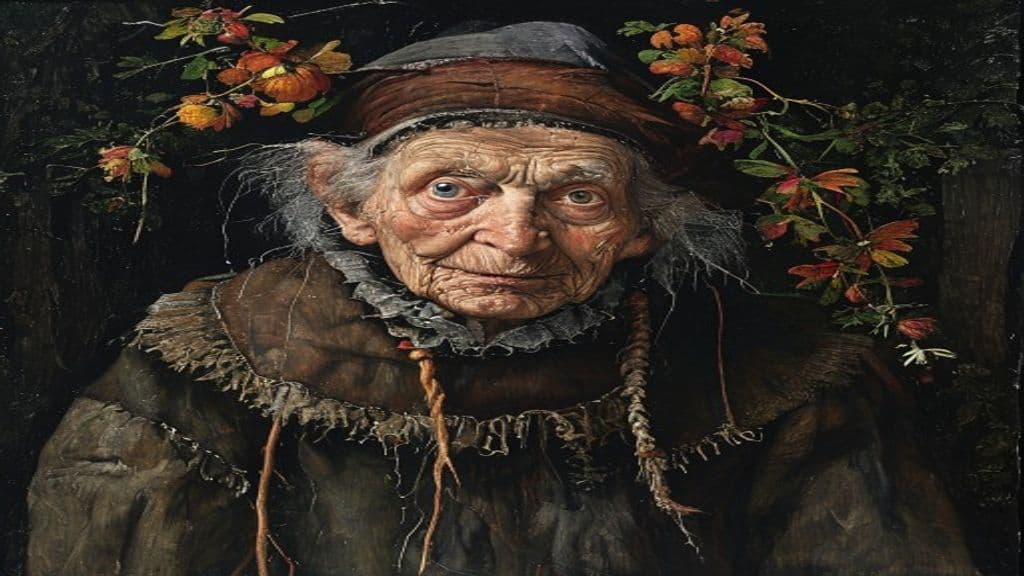
No physical description of a supernatural Berchtold is given in the provided sources. The sole folkloric note identifies Berchtold only by name as the leader of the Wild Hunt in a 16th‑century German context; the sources supply no details about human or nonhuman form, clothing, mounts, or attributes.
The sources do not attribute specific powers or behaviors to Berchtold. The single attestation places the name in the Wild Hunt motif, which generally involves a spectral or ritual procession of huntsmen or riders; any inference that Berchtold leads such a procession is derived solely from that motif. Specific abilities commonly ascribed to Wild Hunt leaders (for example, soul‑taking, weather control, or punishment) are not documented for Berchtold in the supplied materials and would be speculative.
Beowa (Germanic Tradition)
A figure associated with barley and agriculture, appearing in Anglo-Saxon royal genealogies. (Note: - Power tier should be Primordial or Ancient, as it's associated with agriculture and fertility on a cosmic or deity-level. - The appearance section is missing, but since there's no description in the)
Beowulf
Beowulf is a legendary Geatish hero preserved in the Old English epic poem Beowulf. Presented as an exceptional human warrior and later king, he undertakes dangerous journeys to aid other polities (notably the Danes of Hrothgar) and to protect his own people, confronting monstrous threats such as Grendel and Grendel's mother.
Berbalang
Berbalangs are a class of corpse‑eating, astral‑projecting beings described in a late‑19th‑century ethnographic account from the island of Cagayan Sulu (Mapun). The report portrays them as a village community whose members are said to dig up graves to eat corpses and, by entering trance, liberate an astral body to possess and feed on the living; protective measures recorded include lime and a coconut pearl talisman.
Berbalang
The Berbalang are legendary creatures from the Philippines described in available sources as corpse-eating ghouls associated with grave-digging; some accounts also report they can fly or send a spirit to do so. Documentation is limited and drawn from summarised folkloric reports.
Berberoka
A water-associated swamp spirit or creature from northern Luzon (Philippines) said to prey on people at ponds, lakes, rivers, and swamps by manipulating water—draining and reflooding sites to drown victims. Described in summaries as a 'swamp creature' or 'water ogre'; some modern adaptations portray it as a scaled ogre.
Berchta (Perchta)
Berchta (also Perchta/Percht) is an Alpine and Upper Germanic female supernatural figure tied to midwinter/Christmastide customs. In surviving folkloric and folkloristic sources she appears as a polyvalent mother-earth/seasonal figure who rewards industrious household behavior and punishes neglect, and who is associated with wintertime movements and textile work (spinning/distaff).
Bereet
Bereet is a fictional extraterrestrial character from Marvel Comics, a Krylorian techno-artist/filmmaker who produces techno-art films and who in stories documents or dramatizes adventures (notably of the Hulk). She first appeared in The Rampaging Hulk #1 (Jan. 1977) and made her Earth-616 debut in The Incredible Hulk vol. 2 #269 (March 1982); she also appears briefly in the Marvel Cinematic Universe film Guardians of the Galaxy (2014).
Berehynia
Berehynia is presented in modern treatments as a female figure counted among Slavic divine or semi-divine female figures; surviving references are fragmentary and reconstruction relies on limited documentary and folkloric evidence.
Beren
Beren is a named mortal man and protagonist in J. R. R. Tolkien's legendarium whose questing life and love for the Elf Lúthien form one of the central tales of the Elder Days. His story, treated largely from an Elvish perspective, exemplifies human mortality, courage, and tragic heroism within the wider cosmology of Middle-earth.
Beren and Lúthien
Beren and Lúthien are the central protagonists of a foundational First‑Age tale in J. R. R. Tolkien’s legendarium about the love between a mortal Man (Beren) and an immortal Elf‑maiden (Lúthien), their quest to take a Silmaril from Morgoth’s crown, Beren’s death and unique return, and Lúthien’s choice to become mortal.
Bergeist
No information about an entity called 'Bergeist' appears in the provided source materials. The supplied excerpts contain no descriptions, traditions, rituals, or cultural contexts for a Bergeist; any assertions beyond absence of evidence would be speculative and are not supported by the given sources.
Bergelmir
Bergelmir is a jötunn in Norse mythology, attested as a descendant of the primordial giant Aurgelmir (Ymir) and portrayed as the survivor who preserves the frost-jötunn line after the primeval flood caused by Ymir's death. He appears in two primary Old Norse contexts: the poem Vafþrúðnismál (where he is implied to be an infant laid in a lúðr) and Snorri Sturluson's Gylfaginning (where he and his wife escape on a lúðr).
Community Record
- [1]Berchtold. Wikipedia: Berchtold (entry noting etymology and brief folkloric claim of Wild Hunt leadership replacing Perchta, 16th century).wiki
- [2]Wikidata: Berchtold. Wikidata entry for Berchtold (onomastic identifier and linked data).other
- [3]Archive: ERNESTUS BERCHTOLD. Archive listing including instances of the name Berchtold in historical/biographical records.other
- [4]Berchtold von Falkenstein. Wikipedia biographical page illustrating historical use of the personal name.wiki
- [5]Berchtold of Engelberg. Wikipedia biographical page illustrating historical use of the personal name.wiki