
Surviving references present Berchta as a figure rooted in Alpine popular belief and memory of pre-Christian seasonal cults rather than as a single unified mythic biography. Encyclopedic summaries and regional myth notes describe Perchta/Berchta as thought to be a goddess in Alpine paganism with continuing presence in local place-names (for example the Berchtesgaden place-name has been linked in folk etymology to 'Berchta' + 'gaden') and in listings of Christmas and winter traditions (Sources: Wikipedia summary; Berchtesgaden myths pages; The Christmas Almanack listing; Wikidata). Scholarly and folkloric treatments therefore present her as a surviving or reinterpreted maternal/seasonal female figure remembered in winter rite contexts (Sources: Wikipedia; song catalogue listing that places her among mother-earth goddesses).
The sources do not fix a single, detailed corporeal description; instead they emphasize roles and emblematic accoutrements. A recurring image in the song material names Berchta 'with the rocken' (distaff/spinning) moving about in wintertime, linking her visually to spinning and textile-work paraphernalia rather than to a fixed human appearance (Source: Die große Göttin / song lyrics). Other compilations and encyclopedic summaries treat her as a goddess/spiritiess feminine figure of the Alpine tradition without preserving consistent physical attributes (Sources: Wikipedia; The Christmas Almanack).
Folkloric sources and compiled songs ascribe to Berchta a set of seasonal behaviors and moral functions: she is said to travel or be present during winter and around Christmastide, oversee domestic textile work (spinning/distaff), reward industrious women, and punish laziness or disorder in household duties. The song explicitly recounts her 'going about in wintertime' with the distaff, 'entangling the full skeins' and 'rewarding the industrious maid' (Source: Die große Göttin / song lyrics). Encyclopedic and regional myth notes likewise describe her as a goddess-like Alpine figure associated with the seasonal cycle and with winter/Christmas customs (Sources: Wikipedia; Berchtesgaden myths; The Christmas Almanack). Some poetic lines group her among a set of mother/earth/seasonal goddesses and briefly gesture to more ambiguous powers connected to the borderlands of life and death in verse, but the extant excerpts do not provide a developed cosmological portfolio or ritual technicalities (Source: song lines; Strange Horizons context on Christmas Eve spirits).
Weaknesses
- otherNo specific weaknesses recorded in provided sources
Wards
- conditionHousehold diligence (maintaining proper domestic spinning and industrious behavior) — sources record social expectation that industriousness earns Berchta's favor
- otherNo specific apotropaic rituals, formulas, or protective prescriptions against Berchta are recorded in the supplied excerpts
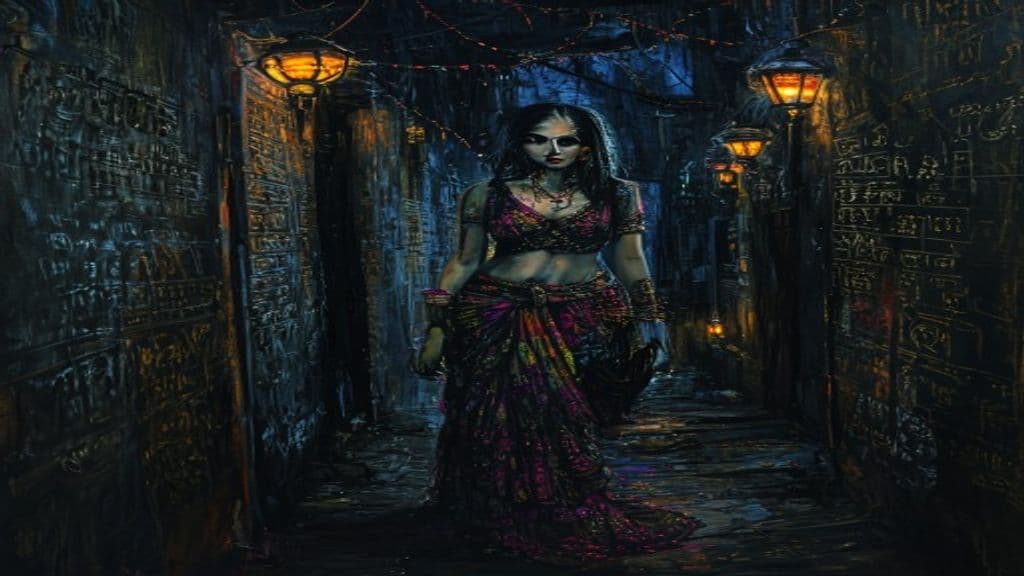
Stree
A vengeful female spirit from Chanderi who abducts men during festival nights. Warded off by the inscription 'O Stree, kal aana' — her legend, still practised on walls across Madhya Pradesh, inspired the 2018 Bollywood horror-comedy.
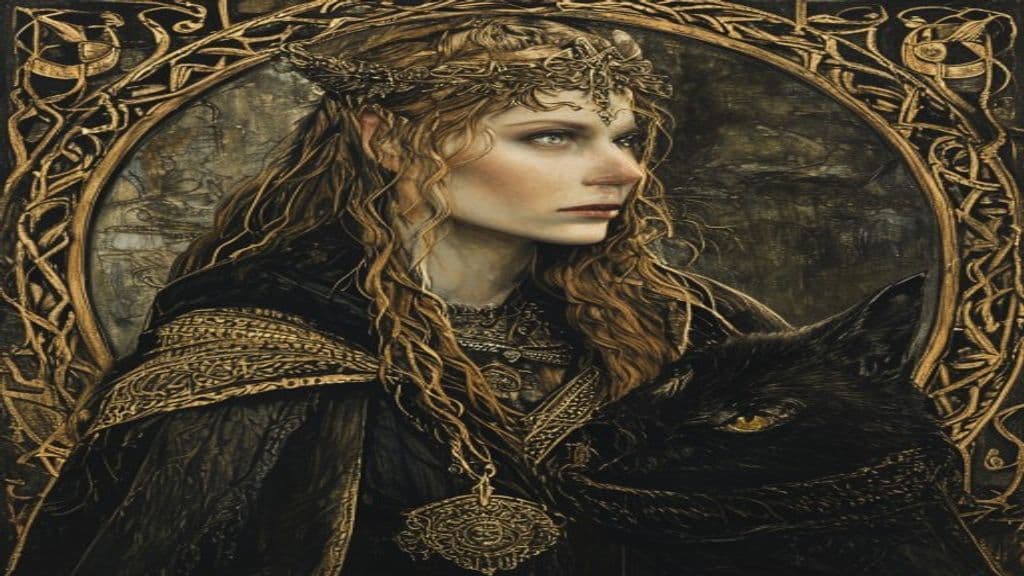
Freyja
Freyja is a major Vanir goddess in Norse mythology associated with love, beauty, fertility, gold, war, and the seiðr form of magic. She rules the field Fólkvangr and the hall Sessrúmnir, where she receives half of those slain in battle, and is attested across the Poetic Edda, the Prose Edda, skaldic poetry, and later Scandinavian folklore.
Beorn
A fictional individual in J. R. R. Tolkien's legendarium: a 'skin-changer' who is a man able to assume the form of a great black bear. He is a solitary chieftain who aids the company in The Hobbit and becomes the ancestor of the Beornings, a people retaining diminished bear-shaping power.
Beowa (Germanic Tradition)
A figure associated with barley and agriculture, appearing in Anglo-Saxon royal genealogies. (Note: - Power tier should be Primordial or Ancient, as it's associated with agriculture and fertility on a cosmic or deity-level. - The appearance section is missing, but since there's no description in the)
Beowulf
Beowulf is a legendary Geatish hero preserved in the Old English epic poem Beowulf. Presented as an exceptional human warrior and later king, he undertakes dangerous journeys to aid other polities (notably the Danes of Hrothgar) and to protect his own people, confronting monstrous threats such as Grendel and Grendel's mother.
Berbalang
Berbalangs are a class of corpse‑eating, astral‑projecting beings described in a late‑19th‑century ethnographic account from the island of Cagayan Sulu (Mapun). The report portrays them as a village community whose members are said to dig up graves to eat corpses and, by entering trance, liberate an astral body to possess and feed on the living; protective measures recorded include lime and a coconut pearl talisman.
Berbalang
The Berbalang are legendary creatures from the Philippines described in available sources as corpse-eating ghouls associated with grave-digging; some accounts also report they can fly or send a spirit to do so. Documentation is limited and drawn from summarised folkloric reports.
Berberoka
A water-associated swamp spirit or creature from northern Luzon (Philippines) said to prey on people at ponds, lakes, rivers, and swamps by manipulating water—draining and reflooding sites to drown victims. Described in summaries as a 'swamp creature' or 'water ogre'; some modern adaptations portray it as a scaled ogre.
Berchtold
Berchtold is primarily a Germanic personal name; in one brief folkloric attestation from 16th‑century German sources the name Berchtold is recorded as the leader of the Wild Hunt, replacing the female figure Perchta. Beyond this isolated mention there is no sustained folkloric tradition, description, or ritual corpus for a supernatural Berchtold in the provided sources.
Bereet
Bereet is a fictional extraterrestrial character from Marvel Comics, a Krylorian techno-artist/filmmaker who produces techno-art films and who in stories documents or dramatizes adventures (notably of the Hulk). She first appeared in The Rampaging Hulk #1 (Jan. 1977) and made her Earth-616 debut in The Incredible Hulk vol. 2 #269 (March 1982); she also appears briefly in the Marvel Cinematic Universe film Guardians of the Galaxy (2014).
Berehynia
Berehynia is presented in modern treatments as a female figure counted among Slavic divine or semi-divine female figures; surviving references are fragmentary and reconstruction relies on limited documentary and folkloric evidence.
Beren
Beren is a named mortal man and protagonist in J. R. R. Tolkien's legendarium whose questing life and love for the Elf Lúthien form one of the central tales of the Elder Days. His story, treated largely from an Elvish perspective, exemplifies human mortality, courage, and tragic heroism within the wider cosmology of Middle-earth.
Beren and Lúthien
Beren and Lúthien are the central protagonists of a foundational First‑Age tale in J. R. R. Tolkien’s legendarium about the love between a mortal Man (Beren) and an immortal Elf‑maiden (Lúthien), their quest to take a Silmaril from Morgoth’s crown, Beren’s death and unique return, and Lúthien’s choice to become mortal.
Bergeist
No information about an entity called 'Bergeist' appears in the provided source materials. The supplied excerpts contain no descriptions, traditions, rituals, or cultural contexts for a Bergeist; any assertions beyond absence of evidence would be speculative and are not supported by the given sources.
Community Record
- [1]Perchta (Wikipedia). Wikipedia, 'Perchta' entry — summary of Perchta/Berchta as a goddess in Alpine paganism and Upper German/Austrian/Slovenian regions.wiki
- [2]Perchta (Wikidata). Wikidata entry Q258927 — character metadata classifying Perchta as a figure of Continental Germanic and Slavic mythology.other
- [3]Berchtesgaden Myths (WorldFutureFund). Berchtesgaden myths note linking 'Berchta' as an Alpine goddess name and discussing Berchtesgaden place-name association.folk
- [4]The Christmas Almanack (archive.org). The Christmas Almanack — listing Berchta among Christmas/winter tradition entries in a compendium of Christmas customs.folk
- [5]Die große Göttin (song; lyric excerpt). Modern performance and lyric translation that lists Berchta among goddess-epithets and contains lines: 'Bald als Berchta mit dem Rocken gehst du um zur Winterzeit / Und verwirrst die vollen Wocken und belohnst die fleiß'ge Maid.'literary
- [6]Drive the Cold Winter Away / folk song listing (Roud V9375). Folk-song catalogue context referencing wintertime and Christmas folk material in which figures like Berchta appear in the seasonal repertoire.folk
- [7]Strange Horizons — 'Do No Harm to Me or Mine: The Haunted History of Christmas Eve'. Article discussing older accounts of wandering air-spirits around Christmas Eve and contextualizing seasonal figures like Berchta in Christmastide beliefs.other