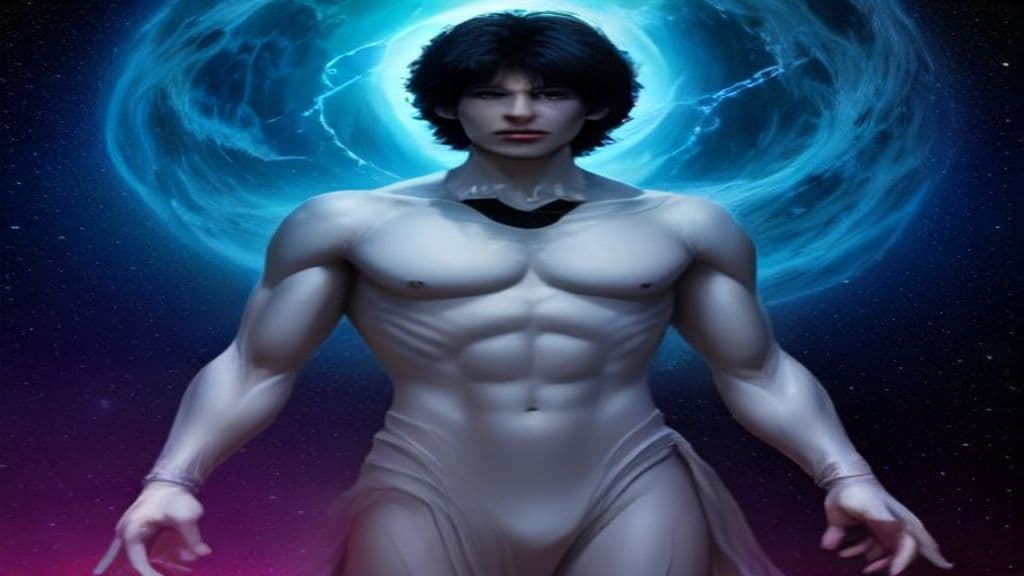
In Marvel Comics publication history the Beyonder is described as the sentient manifestation of energy from a plane called the Beyond‑Realm that exists outside the Marvel multiverse. In the original Secret Wars origin that Beyond‑Realm energy manifested as a unique, conscious being who could reach into the multiverse; some of that same Beyond‑realm energy is linked in the narratives to the Molecule Man (Owen Reece), with later storylines presenting the Beyonder either as a product of Cosmic Cube energy or as a 'child unit' of a larger race called the Beyonders. These different published accounts form the character's composite origin across story retcons and editorial changes.
In its first presentation the Beyonder was largely unseen, manifesting effects that indicated vast power rather than a stable physical body. In Secret Wars II the Beyonder adopts human form to learn about desire, able to change gender and present as a person during direct interactions with humans. Subsequent storylines depict the entity assuming other guises or evolving into related constructs (for example Kosmos or forms associated with Cosmic Cube energy and later the Maker) as continuity was retconned.
Across published sources the Beyonder is credited with extreme reality‑warping: creating Battleworld by assembling planetary fragments, abducting heroes and villains across space/time, transmuting objects (for example turning a building into gold), and performing healing acts (such as restoring Daredevil's sight). Initially described as one of the most powerful beings encountered in Marvel stories, later continuity connects or limits that power by relating the Beyonder to Cosmic Cube energy, Molecule Man, and the Beyonders race. In narrative terms the Beyonder displays curiosity about human desire, can take human form and gender, and can be opposed or neutralized through combined action by other powerful characters (notably a coalition of heroes and Molecule Man in Secret Wars II).
Weaknesses
- conditioncollective opposition by many powerful beings
- otherenergetic link to Molecule Man (Owen Reece) — exploited in narratives to neutralize or absorb Beyonder energy
Wards
None recorded.
Betsy Braddock
A fictional comic-book superheroine published by Marvel Comics, introduced in Captain Britain #8 (1976). Portrayed as a human mutant (born with an X-gene) whose principal abilities are telepathy and telekinesis; she has served as a member of the X-Men, Excalibur and, in recent status quo, assumed the mantle of Captain Britain.
Bette Kane
Bette Kane (originally Betty Kane) is a human costumed heroine in DC Comics who began as the pre-Crisis Bat-Girl (Betty Kane) and was reimagined in post-Crisis continuity as Mary Elizabeth "Bette" Kane, taking the Flamebird mantle and operating as a West Coast/team-based adventurer. She is a legacy figure whose history and identity have been reshaped by editorial continuity events.
Betty Brant
Betty Brant is a fictional human supporting character in Marvel Comics, introduced in The Amazing Spider-Man #4 (1963). She is best known as J. Jonah Jameson's secretary at the Daily Bugle and as an early romantic interest of Peter Parker who later becomes a reporter and marries Ned Leeds.
Betty Clawman
Betty Clawman is a fictional Aboriginal Australian woman in DC Comics who was selected by the Guardians of the Universe to take part in an experiment in human evolution and to advance the human race; after entering the Dreamtime she becomes a disembodied cosmic-force–aligned metahuman associated with dream influence and Earth‑mother imagery, and appears as a member of the New Guardians and later the Sleeping Soldiers under the alias Dreamer.
Betty Ross
Betty Ross is a fictional human character from Marvel Comics, introduced in The Incredible Hulk #1 (1962). She functions primarily as the Hulk/Bruce Banner's long‑running romantic interest and supporting character and has at times undergone superhuman transformations (e.g., Harpy, Red She‑Hulk) within the Marvel fictional universe.
Beyla
Beyla is a minor attendant of the Vanir god Freyr attested only in the Poetic Edda poem Lokasenna (prose introduction and stanzas 55 and 66). Surviving texts give her no independent cult or clear domain; modern scholars have proposed she may be an agricultural personification based on name-interpretation and association with Freyr.
Beyul Guardian Spirits
Place‑bound guardian spirits associated with beyul (Tibetan sBas yul), the concealed or hidden valleys of the Himalayas and Tibetan plateau. They function as protectors and gatekeepers of these sacred, fortress‑like lands and are integrated into Nyingma treasure (terton) traditions and local Himalayan ritual practice.
Bhadra (भद्र)
Bhadra is a Sanskrit word meaning 'good', 'fortunate', or 'auspicious' that functions in Hindu literature as a personal name and epithet applied to multiple distinct mythic persons and forms (queens, yaksha, goddess-forms, kings, and others) rather than a single unified supernatural being.
Bhadrakali
Bhadrakali is a fierce form of the Hindu supreme goddess Adi Shakti worshipped especially in South India. She functions as a martial and protective divine person who destroys wickedness in mythic narratives, protects women and lineages, and is integrated into Shaiva, Vaishnava, and Shakta registers.
Bhagavatī
Bhagavatī is an honorific Sanskrit epithet applied to revered female divinities in Hinduism and Mahayana Buddhism rather than a single individualized spirit. The title functions as a respectful form of address for goddesses such as Sarasvati, Lakshmi, Parvati and certain Buddhist female deities (e.g., Cundā) and is the feminine counterpart to Bhagavān.
Bhairav (tantrik)
A complex figure in Hindu tradition, associated with Shiva as the destroyer or transformer. He is a powerful tantric disciple of Guru Gorakshanath and appears in various contexts within Hindu mystical traditions. (Note: - Power tier should be adjusted to Greater (powerful regional) as Bhairav's abilities are related to Shiva, but he is not a cosmic being himself. - Appearance: Add that no detailed physical descriptio)
Bhairava
Bhairava is a fierce Shaivite deity and tantric figure—an intense manifestation of Shiva—worshipped across Hindu and Vajrayāna Buddhist traditions as executor of divine punishment, guardian of sacred sites, and a tantric teacher/meditational yidam.
Community Record
- [1]Beyonder - Wikipedia. Wikipedia, 'Beyonder' page (entry summarizes Secret Wars origin, Secret Wars II, powers, and later retcons linking to Beyonders and Cosmic Cube energy).wiki
- [2]Beyonder (Secret Wars character) - Marvunapp Appendix. Marvunapp character appendix summarizing Beyonder appearances and ties to Battleworld and Secret Wars storylines.other
- [3]Secret Wars #1; Secret Wars II summaries and archival scans. Archive scans and summaries of Beyonder appearances in Secret Wars and Secret Wars II (depiction of abduction to Battleworld, human form, transmutations, and interactions with heroes).literary
- [4]Beyonders - Wikipedia. Wikipedia page on the Beyonders race that documents later retcons identifying the original Beyonder as a 'child unit' of that race and related cosmic events.wiki
- [5]Scifi.StackExchange discussion: What is the difference between Beyonder and pre-retcon Beyonder?. Community Q&A discussing distinctions between original Beyonder portrayals and later retcons linking it to Cosmic Cube energy and the Beyonders race.other
- [6]Wikidata: BEYONDER. Wikidata entry for the Marvel Comics character Beyonder consolidating identifiers and basic data.wiki