
The Bhutesvara Yakshis are not attested as a mythic origin narrative in the provided sources but are archaeological/art-historical objects: a series of carved yakshi reliefs found built into the railing fragments of a Buddhist stupa at the Bhuteshwar (Bhutesvara/Bhutesar) mound just outside Mathura. Excavators recovered pillars and fragments from the mound; the pieces are dated stylistically and contextually to the early Kushan period (2nd century CE). The reliefs entered museum collections (Indian Museum, Kolkata and Mathura Museum) after excavation and have been discussed by scholars as part of the visual program of the stupa enclosure.
The Bhutesvara Yakshis appear as low-relief, largely frontal female figures carved on stone railing pillars approximately four feet four inches tall and eleven inches wide (pillar dimensions as reported in the sources). They are rendered plump and sensuous, often in the tribhanga pose, wearing elaborate jewelry and thin skirts gathered to one side with hanging folds indicated on the flat background. Each yakshi stands atop a crouching/dwarfish male figure; above them, on the same pillar face beneath a ledge, are paired figures (a male and a bare-breasted female) shown from chest height interacting. Specific reliefs depict individual actions such as holding a birdcage, adjusting an earring while looking in a mirror, serving wine and holding a grape, and (in one half-pillar) grasping a large sword. Three pillars are in the Indian Museum, Kolkata, and three pillars plus a half-pillar fragment are in the Mathura Museum.
The sources do not present the Bhutesvara Yakshis as active supernatural agents; their 'behaviors' are the depicted activities carved into the stone (e.g., holding a birdcage, looking in a mirror, serving wine, holding a grape, or holding a sword). Scholarly commentary treats these actions and their placement on a stupa railing as iconographic choices within a Buddhist monumental program—read either as allegories (for example, of transitory worldly pleasures or as symbolic of desirability and union) or as decorative motifs continuous with Indian mithuna and yakshi traditions—rather than as statements of living powers or interventions.
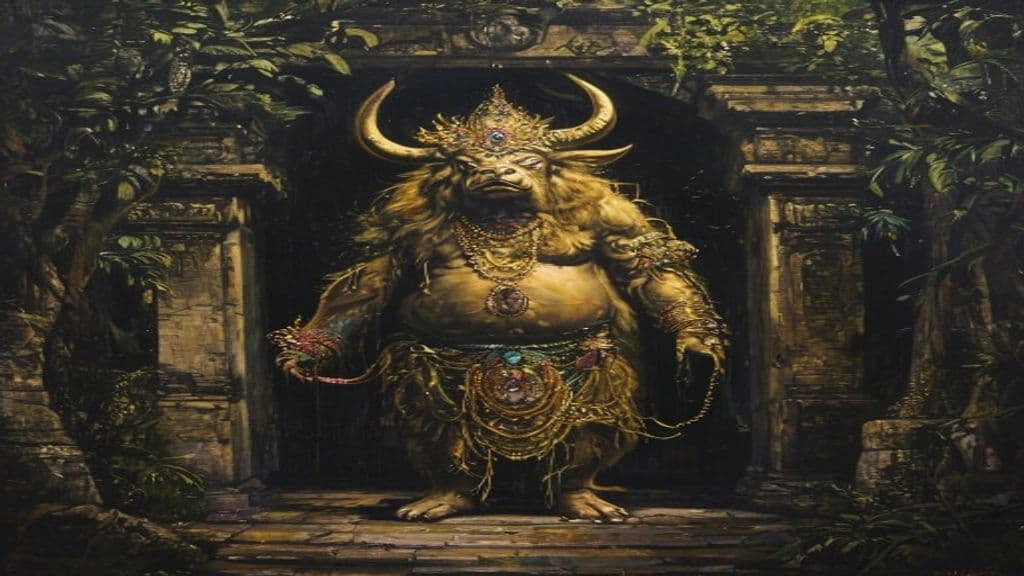
Yaksha
Nature spirits of Hindu, Buddhist, and Jain cosmology — guardians of forests, treasures, and wilderness. Ambivalent beings, capable of great benevolence to the respectful and terrible harm to the greedy.
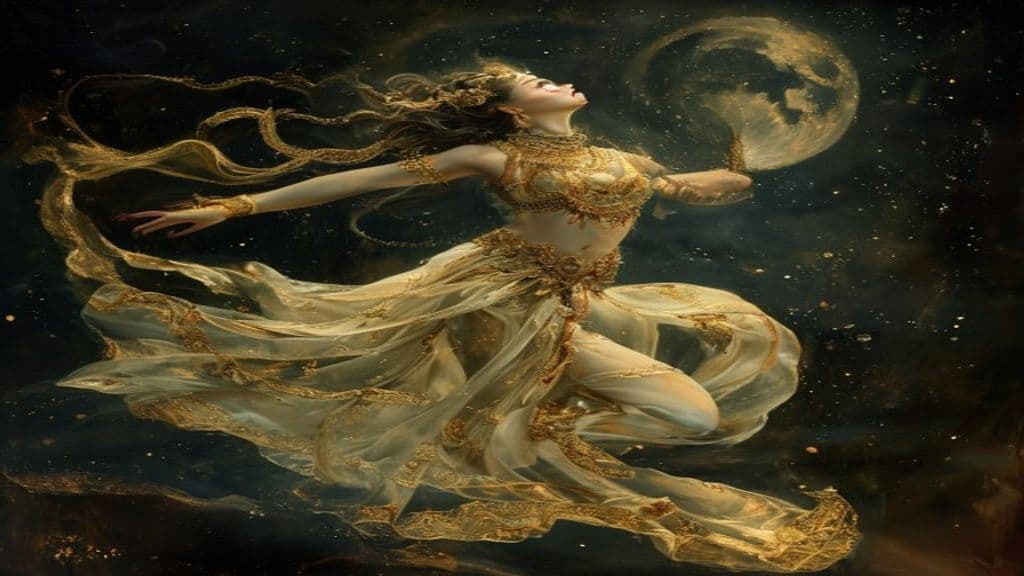
Apsara
Celestial dancers and water nymphs of Hindu cosmology — beautiful semi-divine beings who dance at the court of Indra and, by his command, descend to earth to distract sages from excessive asceticism.
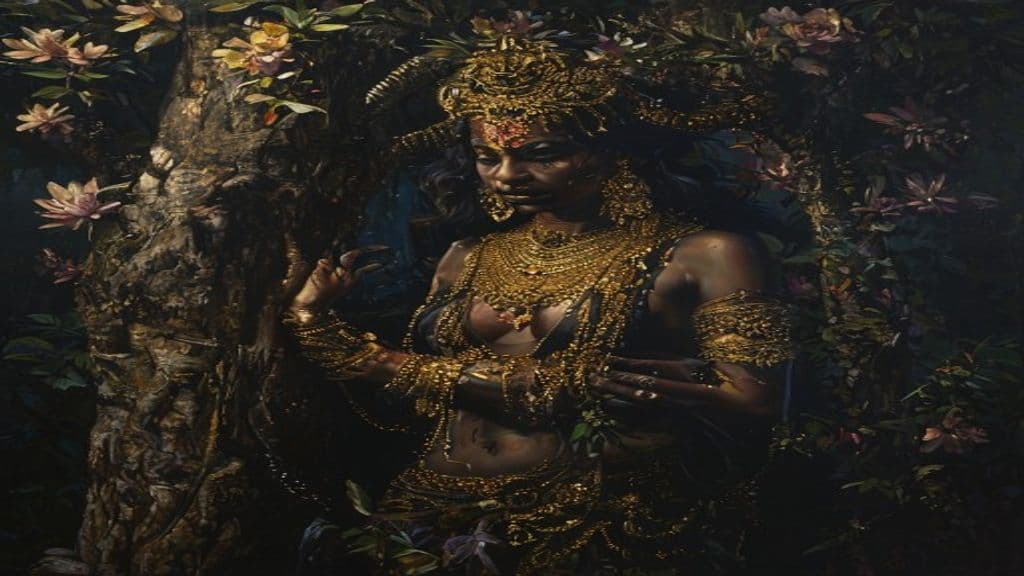
Yakshini
Semi-divine female nature spirits of enormous power — guardians of trees, forests, and buried treasure, described in Hindu, Buddhist, and Jain traditions alike. The 36 Yakshinis of the Uddamareshvara Tantra can be propitiated for wealth, beauty, and supernatural alliance — or angered to devastating effect by those who harm their trees.
Bhoota (ghost)
A bhoota (Sanskrit: भूत, bhūta) is a class of supernatural beings in South Asian traditions most commonly identified as the restless ghost of a deceased person. Depending on region and context a bhoota may be feared as a harmful, perturbing spirit or worshipped and integrated as a local protective spirit or demigod (notably in Tulu Nadu practices).
Bhrigu
Bhrigu (Bhṛgu) is a Vedic rishi — one of the Saptarṣi and a mānasaputra (mind-born son) of Brahmā — remembered in Hindu tradition as a progenitor (Bhārgava), Upanishadic inquirer, contributor to legal and ritual corpus, and the attributed compiler of the astrological compendium Bhrigu Saṃhitā.
Bhrikuti
Bhrikuti is a historic-legendary 7th-century Nepali princess of the Licchavi line who became queen-consort to the Tibetan king Songtsen Gampo and, in Tibetan religious imagination, is represented iconographically and devotionally as an emanation or incarnation of Green Tara. Sources credit her with bringing sacred Buddhist images, skilled Newar craftsmen, and patronage that aided the establishment of Buddhism in Tibet; she is not presented in the sources as a harmful folk spirit.
Bhringi
A Hindu rishi and devotee of the deity Shiva, known for his spiritual insight and authority. (Note: * Power tier: Based on source material, it seems that Bhringi's status as a "great devotee" suggests he may have achieved some sort of spiritual or divine connection with Shiva, which would elevate hi)
Bhunni
The female guardian-spirit of agricultural fields in Bihar and eastern UP — her presence ensures fertile soil and good harvest, but she is territorial and punishes those who plough without permission, steal crops, or use chemical methods that poison the soil she inhabits.
Bhuta (Bhoot)
Bhuta (also rendered Bhoot or Bhoota) is a South Asian lexical term with at least two related senses in the cited source: a 'bhoota' as the ghost or spirit of a deceased person (a disembodied spirit), and 'mahābhūta' as the term for the classical elements or primordial states of matter (and related Bhuta-Shakti). The supplied source treats the term primarily as a lexical/definitional entry rather than an ethnographic account of regional cults.
Bhuvaneshvari
Bhuvaneshvari (Sanskrit: Bhuvaneśvarī) is a principal form of the Great Goddess (Mahadevi) in Hindu/Shakta tantric theology, listed as the fourth of the Ten Mahavidyas and treated in some traditions as an aspect of Adi Parashakti/Tripura Sundari. She is conceived as the sovereign, pervading feminine power who sustains and directs the tri-bhuvana (three worlds) and is the object of temple cult and liturgical recitation (stotram, kavacha, suprabhatam).
Bhuvaneśvarī
Bhuvaneśvarī (also spelled Bhuvaneshvari) is a Hindu goddess identified in Shaktism as the fourth of the ten Mahavidya goddesses and described in sources as an aspect of the supreme feminine principle (Mahadevi/Adi Parashakti). She is theologically regarded as a sovereign cosmic goddess—summarized in linked data as the 'Queen of the Universe'—and is the subject of devotional stotras preserved in modern published collections.
Bhārat Mātā
Bhārat Mātā (Bharat Mata, "Mother India") is the national personification of India represented as a sacralized maternal figure. She functions as an emblem of Indian nationalism and patriotic reverence in visual art, slogans, and public discourse rather than as a theistic deity with documented supernatural agency.
Bhīma
Bhīma (Bhīmasena) is one of the principal heroes of the Hindu epic Mahābhārata: the second of the five Pāṇḍava brothers, a semi‑divine warrior famed for prodigious physical strength, mastery of the gada (mace), and ferocious devotion to family and vows. He is presented as the mythic son of the wind god Vāyu, whose divine paternity explains his extraordinary attributes and role in the Kurukṣetra War, where he slays the hundred Kaurava brothers among other foes.
Bhīṣma (Devavrata / Pitāmaha)
Bhīṣma is a central heroic prince and commander in the Sanskrit epic Mahābhārata: son of King Śantanu and the river‑goddess Gaṅgā, famed for a severe lifelong vow (Bhīṣma‑pratigya) and the boon of icchā‑mṛtyu (choice of moment of death). He functions as martial exemplar, regent, and moral counsellor whose fall and long deathbed of arrows structure the Bhīṣma Parva.
Bhūmi (Bhūmi/Bhūdevī)
Bhūmi (Bhūmi/Bhūdevī, also Dharanī, Vasundharā, Prithvī etc.) is the Hindu earth-goddess: the personified, sentient Earth who is source of fertility and sustenance, appears in Vedic and Purānic narratives, and is closely associated with Viṣṇu and his avatars (notably Varāha). She is depicted as a maternal cosmic power whose being reflects the moral and ecological condition of the world.
Community Record
- [1]Bhutesvara Yakshis — Wikipedia. Wikipedia: 'Bhutesvara Yakshis' entry — details on archaeological context, appearance, dating, museum locations, and scholarly interpretations.wiki
- [2]Wikidata: Q41317713. Wikidata item for Bhutesvara Yakshis — database entry linked to descriptive and provenance statements.other