
Bhīma is born to Kuntī in the dynastic setting of the Kuru court after Kuntī invokes a celestial begetter using a boon/mantra; the child is mythically fathered by Vāyu (the wind god), making Bhīma a semi‑divine or demigod‑figure. His birth and early demonstrations of invulnerability and prodigious strength are narrated as the direct result of this divine paternity.
Sources emphasize Bhīma's vast size, immense physical strength, corpulence and great appetite (epithet Vṛkodara, 'wolf‑bellied'). Anecdotes in the epic signal superhuman sturdiness from infancy (for example, an infant Bhīma falling onto rock and remaining unhurt). Later literary and regional retellings may vary in detail, but canonical emphasis remains on large bodily form and martial bearing.
Bhīma's powers derive from his divine birth by Vāyu: superhuman physical strength and endurance, preeminence in gada (mace) combat, and capacity to slay many powerful opponents. In the epic he defeats and kills numerous named antagonists (including Bakasura, Kīcaka, Jarāsandha, and the rākṣasī Hidimbā's assailant, fathers Ghaṭotkacha by Hidimbī) and, in the Kurukṣetra War, slays the hundred Kaurava brothers. His behavior is marked by fierce loyalty to family, fulfillment of sworn oaths of vengeance (for example, vows tied to the humiliation of Draupadī), and a raw, earthy temperament that combines protective devotion with brutal martial violence.
Weaknesses
- conditionhuman mortality (eventual death on Himalayan ascent)
- othertemper and oath‑bound rigidity (narratively exploited by rivals and the moral ambivalence of his violent acts)
- otheropposition by other great heroes (e.g., Karṇa, Bhīṣma) and divine or skilled counter‑warriors described in the epic
Wards
- othernone documented (canonical sources do not record magical wards or protective rites directed at Bhīma as an inimical supernatural being)
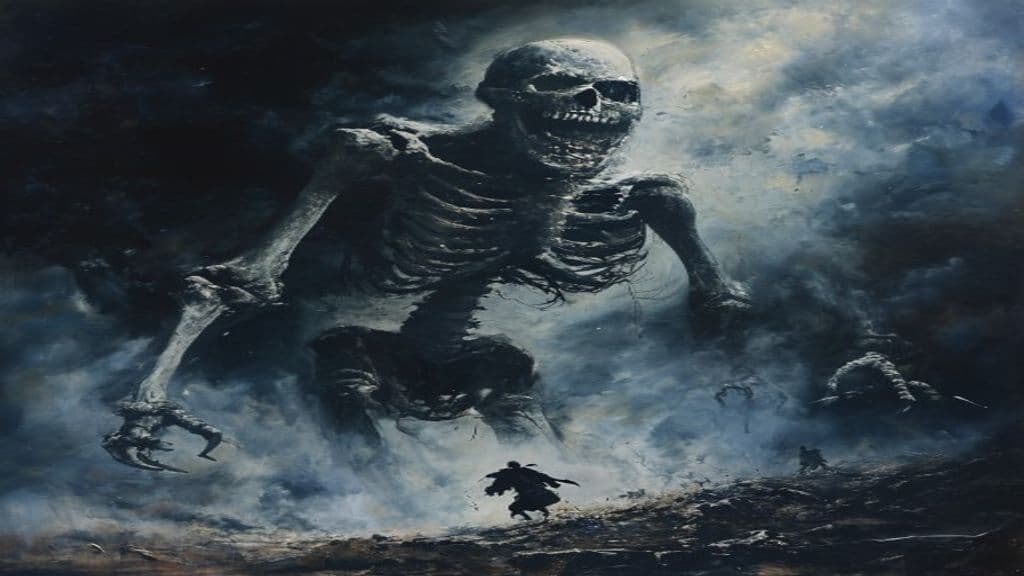
Gashadokuro
A fifteen-times-human-height skeletal yokai formed from the bones of those who starved to death or died on battlefields, their unburied remains fused together into a hungry colossus.
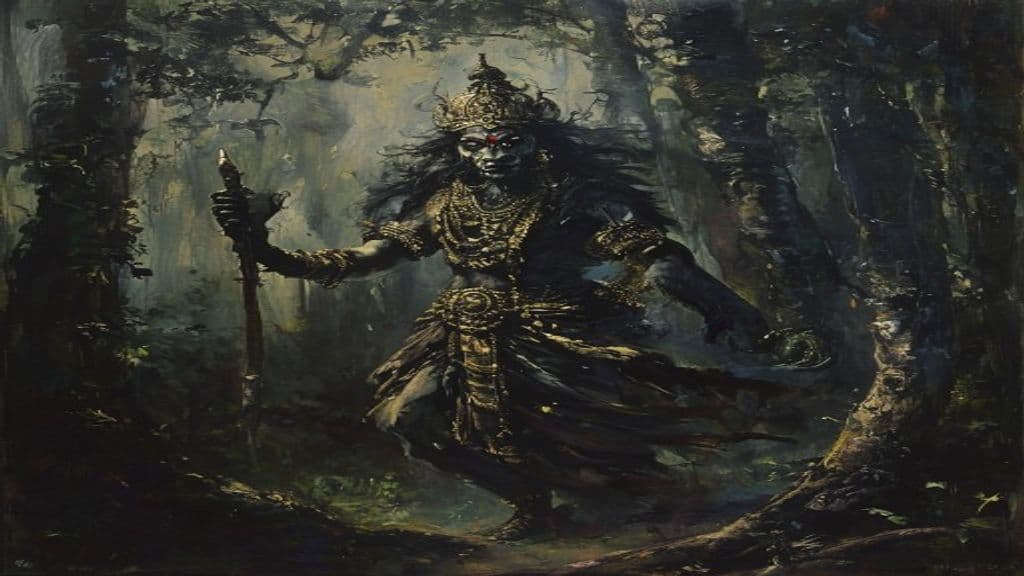
Bakasura (Hindu Tradition)
A malevolent rakshasa from Hindu mythology with supernatural strength and ferocity. (Note: - Power tier: Primordial (due to its cosmic and epic-scale impact in Hindu mythology) - Abilities: Remove "at will" as it's not present in the source material - Weaknesses: Not specified in the source)

Karna
Karna (Sanskrit: Karṇa) is a principal human hero of the Indian epic Mahābhārata: a warrior of extraordinary skill, born to the solar deity Surya and the princess Kunti, raised by a sūta (charioteer) family, famed for his generosity, loyalty to Duryodhana, and tragic fate in the Kurukṣetra War.

Rakshasa (Himalayan variants)
A Himalayan reception of the pan-Indian rakshasa motif: hostile or disruptive non‑human beings known from Sanskrit epic and Puranic literature, here noted where Himalayan sources and discussions intersect with the broader epic tradition. The supplied sources do not document distinct, well‑attested Himalayan folklore variants; the entry therefore presents primarily the epic/legendary profile as transmitted into Himalayan contexts in general references.

Ghoul
A ghoul is a demon-like or monstrous humanoid originating in pre-Islamic Arabian religion, traditionally associated with graveyards and the consumption of human flesh. The concept later entered broader folklore and has been widely reused and transformed in modern fiction and popular culture.
Bharata (Mahābhārata)
Bharata (Sanskrit: भरत) is a legendary human emperor and ancestral king in the Indic epic tradition. Portrayed as a cakravartin‑type sovereign and progenitor, his deeds, rituals, and lineage provide an eponymous foundation for the name Bhārata and for later dynastic identity.
Bhunni
The female guardian-spirit of agricultural fields in Bihar and eastern UP — her presence ensures fertile soil and good harvest, but she is territorial and punishes those who plough without permission, steal crops, or use chemical methods that poison the soil she inhabits.
Bhuta (Bhoot)
Bhuta (also rendered Bhoot or Bhoota) is a South Asian lexical term with at least two related senses in the cited source: a 'bhoota' as the ghost or spirit of a deceased person (a disembodied spirit), and 'mahābhūta' as the term for the classical elements or primordial states of matter (and related Bhuta-Shakti). The supplied source treats the term primarily as a lexical/definitional entry rather than an ethnographic account of regional cults.
Bhutesvara Yakshis
A set of carved yakshi reliefs on stone railing pillars from the Bhuteshwar (Bhutesvara/Bhutesar) mound near Mathura, dated to the 2nd century CE and associated with a Buddhist stupa. The figures are art-historical representations of female yakshis incorporated into the decorative program of a sacred Buddhist enclosure; backs of the same pillars bear Buddha-life and Jataka narrative reliefs.
Bhuvaneshvari
Bhuvaneshvari (Sanskrit: Bhuvaneśvarī) is a principal form of the Great Goddess (Mahadevi) in Hindu/Shakta tantric theology, listed as the fourth of the Ten Mahavidyas and treated in some traditions as an aspect of Adi Parashakti/Tripura Sundari. She is conceived as the sovereign, pervading feminine power who sustains and directs the tri-bhuvana (three worlds) and is the object of temple cult and liturgical recitation (stotram, kavacha, suprabhatam).
Bhuvaneśvarī
Bhuvaneśvarī (also spelled Bhuvaneshvari) is a Hindu goddess identified in Shaktism as the fourth of the ten Mahavidya goddesses and described in sources as an aspect of the supreme feminine principle (Mahadevi/Adi Parashakti). She is theologically regarded as a sovereign cosmic goddess—summarized in linked data as the 'Queen of the Universe'—and is the subject of devotional stotras preserved in modern published collections.
Bhārat Mātā
Bhārat Mātā (Bharat Mata, "Mother India") is the national personification of India represented as a sacralized maternal figure. She functions as an emblem of Indian nationalism and patriotic reverence in visual art, slogans, and public discourse rather than as a theistic deity with documented supernatural agency.
Bhīṣma (Devavrata / Pitāmaha)
Bhīṣma is a central heroic prince and commander in the Sanskrit epic Mahābhārata: son of King Śantanu and the river‑goddess Gaṅgā, famed for a severe lifelong vow (Bhīṣma‑pratigya) and the boon of icchā‑mṛtyu (choice of moment of death). He functions as martial exemplar, regent, and moral counsellor whose fall and long deathbed of arrows structure the Bhīṣma Parva.
Bhūmi (Bhūmi/Bhūdevī)
Bhūmi (Bhūmi/Bhūdevī, also Dharanī, Vasundharā, Prithvī etc.) is the Hindu earth-goddess: the personified, sentient Earth who is source of fertility and sustenance, appears in Vedic and Purānic narratives, and is closely associated with Viṣṇu and his avatars (notably Varāha). She is depicted as a maternal cosmic power whose being reflects the moral and ecological condition of the world.
Bi'an
Bi'an is attested in the provided sources primarily as a named member of the traditional roster called the Nine Sons of the Dragon, appearing in catalogues of mythic names. The figure is also present as a name-form within the broader lexical field of Chinese folk religious beings (for example, appearing alongside death-escort deities in separate sources), but the supplied materials do not furnish an independent, detailed myth or cultic biography for Bi'an.
Bi-Beast
A two-headed android from Marvel Comics, created by an avian subspecies of the Inhumans to serve as an autonomous guardian and agent; it repeatedly reactivates after dormancy and engages in conflicts with human and superhuman forces while being studied or contained by powerful entities.
Bia (no mythological entity documented in provided sources)
The provided source materials do not document a mythological or supernatural being named 'Bia.' Instances of the string 'Bia' in the supplied materials refer to non-mythological uses (a disambiguation page, a biological genus, and unrelated archived texts).
Community Record
- [1]Bhima - Wikipedia. Wikipedia, 'Bhima' article summarizing Mahābhārata materialwiki
- [2]Myth and Folklore: Bhima (encyclopedia entry). Encyclopaedia of Indian Myth and Folklore entry on Bhimaliterary
- [3]Bewildering Stories: Bhima (modern literary fragment). Modern literary fragment referencing Bhimaliterary
- [4]Bali regional retelling notes (Hillmanweb). Notes on Balinese recounting of epic heroes referencing Bhimaother
- [5]Wikidata: Bhima (disambiguation entry). Wikidata entry noting other uses of the name 'Bhima'other