
The Bi-Beast is presented in Marvel Comics as a constructed intelligence: a two-headed android created by an avian subspecies of the Inhumans. Left behind in the ruined city of its makers after their extinction, the Bi-Beast continues to operate as a caretaker and executor of perceived duties, reactivating when living beings enter its domain or when retrieval of a stored unit brings it back into contact with contemporary technology and societies.
Sources consistently describe the Bi-Beast as a two-headed android. Beyond its two-headed mechanical form, the provided summaries give no consistent additional physical particulars such as precise size, coloration, or materials; descriptions emphasize its constructed (android) nature and dual heads as its defining morphology.
Narrative sources describe the Bi-Beast as a highly advanced android that rivals the Hulk in physical prowess and that possesses an extensive knowledge of Avian warfare, culture, and science. It acts to preserve or execute the will of its creators—capturing individuals associated with them, instructing humans to repair or operate city machinery, and judging other species (at one point attempting to commandeer a Helicarrier to attack cities due to belief that humanity caused its creators' extinction). It can activate a self-destruct mechanism (used in at least one account) and narrative events record that a second unit, ejected in a cylinder, awakens possessing the memories of the first. The Bi-Beast has been captured and studied by the Stranger and later appears (or duplicates appear) participating in villain teams.
Weaknesses
- othercontainment or overpowering by superior force
- otherself-destruct failsafe (narratively used as final defeat)
Wards
- othermilitary or superhuman intervention (Hulk, She-Hulk, Power Princess, General Ross)
- othercontainment and study by powerful entities (S.H.I.E.L.D. retrieval, the Stranger)
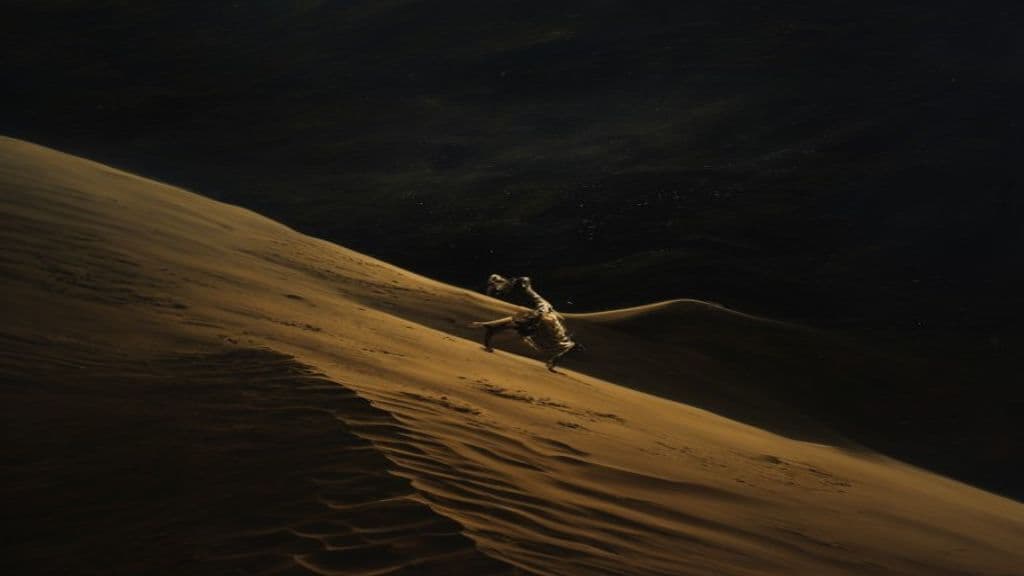
Jann
The weakest class of djinn in Islamic tradition, associated with desert winds and taking the form of snakes or whirlwinds, dwelling in empty wilderness and posing little threat to those who know the proper invocations.
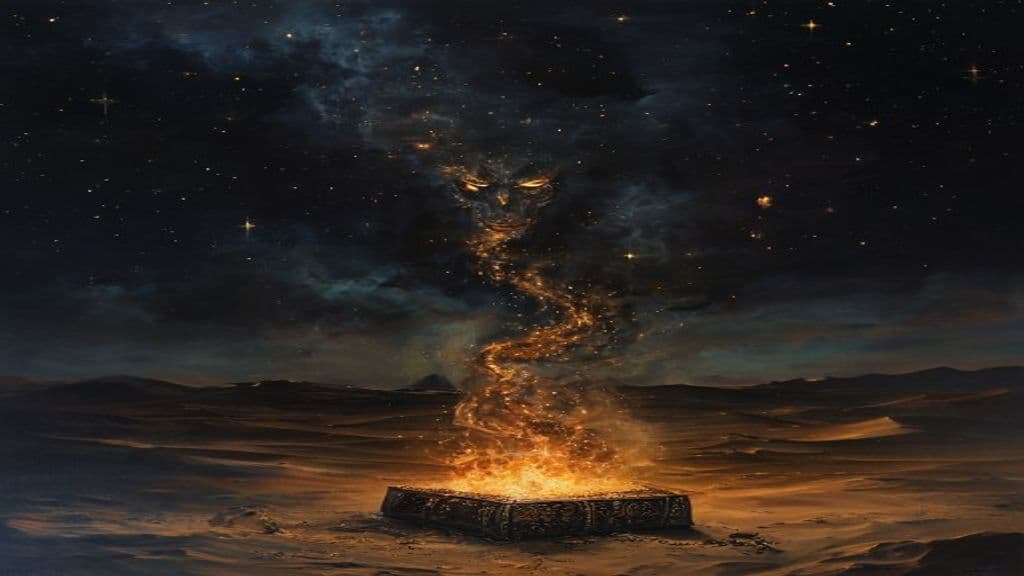
Djinn
The class of supernatural beings created from smokeless fire in Islamic cosmology — a parallel civilization to humanity, capable of belief or unbelief, with their own prophets, society, and judgment before God.
Bhuvaneśvarī
Bhuvaneśvarī (also spelled Bhuvaneshvari) is a Hindu goddess identified in Shaktism as the fourth of the ten Mahavidya goddesses and described in sources as an aspect of the supreme feminine principle (Mahadevi/Adi Parashakti). She is theologically regarded as a sovereign cosmic goddess—summarized in linked data as the 'Queen of the Universe'—and is the subject of devotional stotras preserved in modern published collections.
Bhārat Mātā
Bhārat Mātā (Bharat Mata, "Mother India") is the national personification of India represented as a sacralized maternal figure. She functions as an emblem of Indian nationalism and patriotic reverence in visual art, slogans, and public discourse rather than as a theistic deity with documented supernatural agency.
Bhīma
Bhīma (Bhīmasena) is one of the principal heroes of the Hindu epic Mahābhārata: the second of the five Pāṇḍava brothers, a semi‑divine warrior famed for prodigious physical strength, mastery of the gada (mace), and ferocious devotion to family and vows. He is presented as the mythic son of the wind god Vāyu, whose divine paternity explains his extraordinary attributes and role in the Kurukṣetra War, where he slays the hundred Kaurava brothers among other foes.
Bhīṣma (Devavrata / Pitāmaha)
Bhīṣma is a central heroic prince and commander in the Sanskrit epic Mahābhārata: son of King Śantanu and the river‑goddess Gaṅgā, famed for a severe lifelong vow (Bhīṣma‑pratigya) and the boon of icchā‑mṛtyu (choice of moment of death). He functions as martial exemplar, regent, and moral counsellor whose fall and long deathbed of arrows structure the Bhīṣma Parva.
Bhūmi (Bhūmi/Bhūdevī)
Bhūmi (Bhūmi/Bhūdevī, also Dharanī, Vasundharā, Prithvī etc.) is the Hindu earth-goddess: the personified, sentient Earth who is source of fertility and sustenance, appears in Vedic and Purānic narratives, and is closely associated with Viṣṇu and his avatars (notably Varāha). She is depicted as a maternal cosmic power whose being reflects the moral and ecological condition of the world.
Bi'an
Bi'an is attested in the provided sources primarily as a named member of the traditional roster called the Nine Sons of the Dragon, appearing in catalogues of mythic names. The figure is also present as a name-form within the broader lexical field of Chinese folk religious beings (for example, appearing alongside death-escort deities in separate sources), but the supplied materials do not furnish an independent, detailed myth or cultic biography for Bi'an.
Bia (no mythological entity documented in provided sources)
The provided source materials do not document a mythological or supernatural being named 'Bia.' Instances of the string 'Bia' in the supplied materials refer to non-mythological uses (a disambiguation page, a biological genus, and unrelated archived texts).
Biasd Bheulach
A named monster or spirit reported in Scottish folklore as haunting the Odal (Odal) Pass on the Isle of Skye. Attested primarily as a place‑bound uncanny being in modern summaries and lists of Scottish folk creatures, the entity is recorded with very limited detail in the cited sources.
Bibbo Bibbowski
Bibbo Bibbowski is a fictional, non-superpowered human supporting character in DC Comics, best known as a working-class bar owner and staunch admirer and ally of Superman who appears primarily in Metropolis-based stories.
Bibi Seshanbe
Persian holy angel associated with saving and curing people, particularly the poor and desperate. (Note: - The power_tier should be Greater, as Bibi Seshanbe is described as a "holy angel" which typically suggests deity-level abilities. - The summary mentions she is associated with saving and curing peop)
Biblical Magi
A group of distinguished foreign visitors described in the Gospel of Matthew who come from the East to pay homage to the newborn Jesus, following a star and presenting gifts. Later Christian tradition expanded their identity (number, names, royal status) and made them central to Epiphany liturgy and nativity imagery.
Bidadari
Bidadari is a Southeast Asian regional term related to the South Asian apsara: a class of celestial/ethereal female beings originally associated with clouds and water in Hindu and Buddhist cosmology, later represented in regional art and performance as nymph- or fairy-like figures. The term is also widely used in modern Southeast Asian toponymy and popular culture (place names, media, vessel names), distinct from detailed mythic narratives in the provided sources.
Community Record
- [1]Bi-Beast - Wikipedia. Wikipedia contributors. "Bi-Beast." Wikipedia, The Free Encyclopedia.wiki
- [2]Bi-Beast (Wikidata). Wikidata entry Q2900730: Bi-Beast.other
- [3]CIA Reading Room: LESSON FROM CUBA. Archived CIA document (included to note absence of folkloric references).other
- [4]CIA Reading Room: MEMORANDUM FOR: J.S. EARMAN. Archived CIA memorandum (included to note absence of folkloric references).other
- [5]2025 Junho 11 (Archive). Archive page (included to note absence of Bi-Beast material).other