
The cited sources do not supply an origin narrative for the Biasd Bheulach. What is attested in the available material is only the being's name and its association with Odal Pass on the Isle of Skye; it is presented as one of many named Scottish supernatural beings in modern compilations of folk creatures rather than within a fuller origin myth or genealogy (Wikipedia entry; archived video list).
No physical description is provided in the cited sources. The entries list the Biasd Bheulach by name and locational association only; the sources do not record appearance, size, coloration, anthropomorphic features, or any other visual attributes.
The sources characterize the entity succinctly as a 'monster or spirit that haunts Odal Pass' but do not elaborate on specific abilities, methods of harm, speech, or interactions with travellers. Beyond its identification as a place‑haunting uncanny being, the material supplies no documented behaviors or powers.
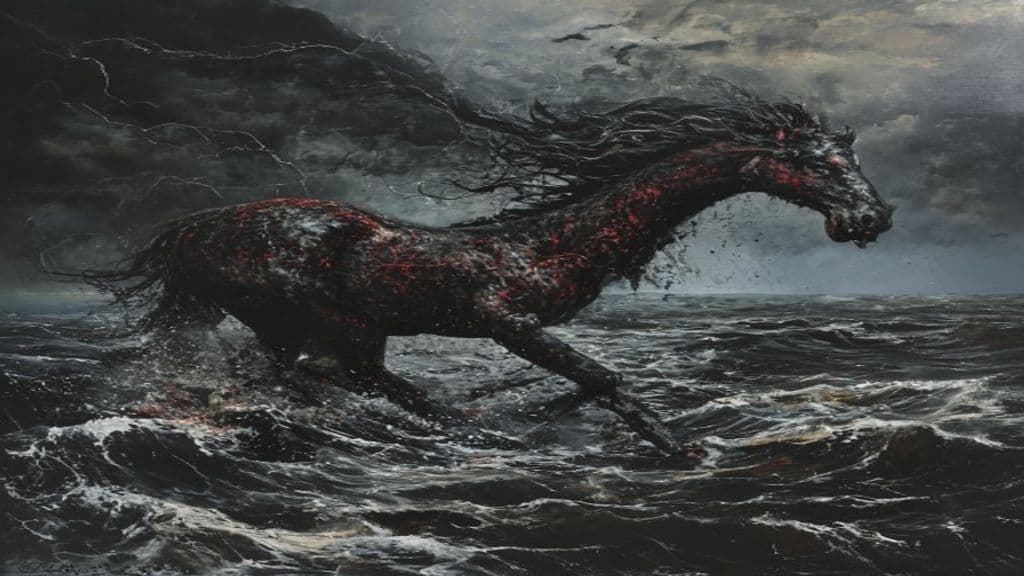
Nuckelavee
The most terrifying creature of Orcadian folklore — a skinless, horse-headed demon of the sea whose breath spreads plague and whose presence causes crops to wither. It cannot cross fresh water.
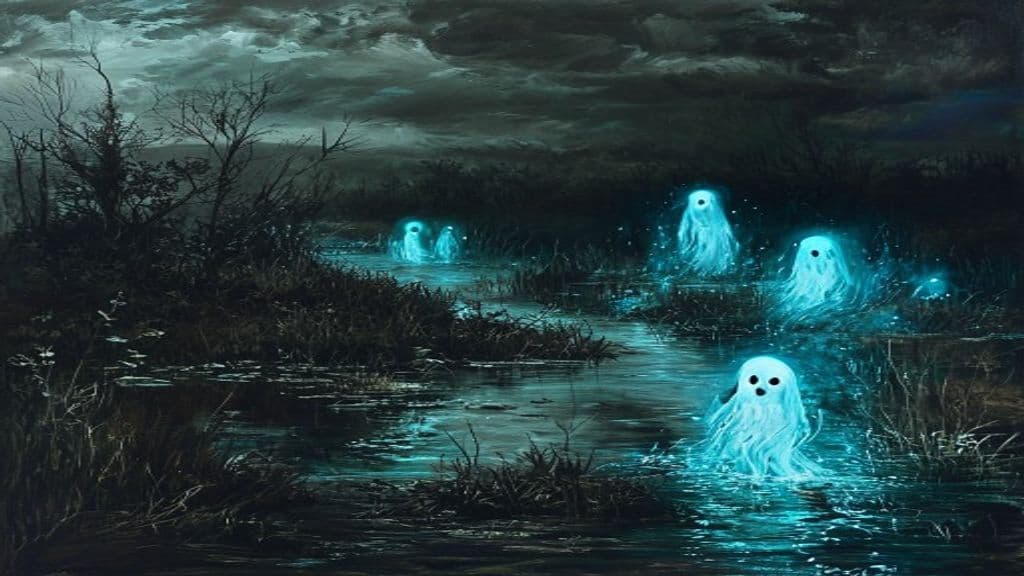
Will-o'-the-Wisp
A wandering light seen over marshy ground at night, leading travellers astray into bogs and fens. Possibly a spirit, possibly the soul of the unbaptised dead, possibly the devil himself.
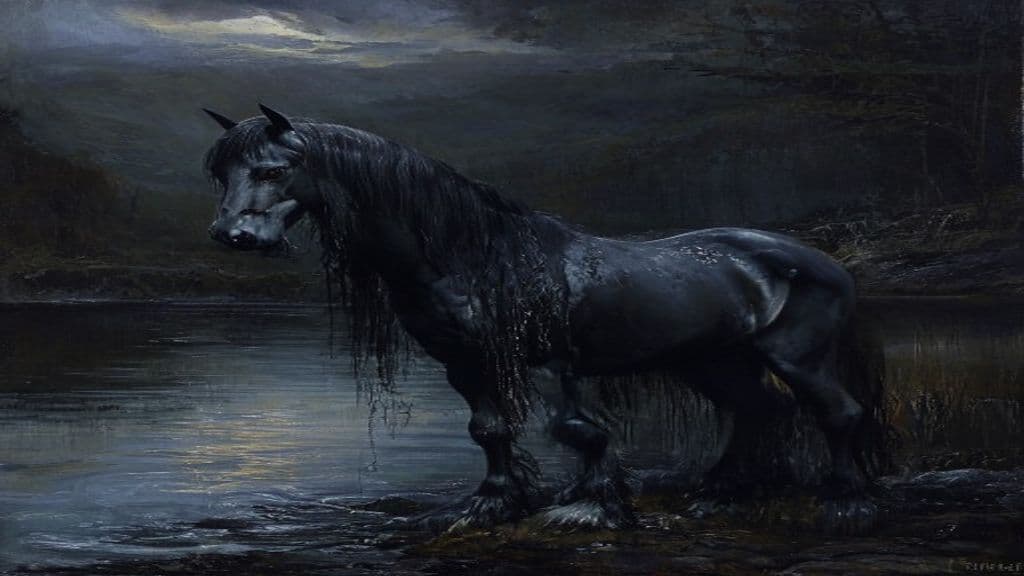
Kelpie
A Scottish shape-shifting water horse that appears as a beautiful tame horse near lochs and rivers, then drowns and devours any rider foolish enough to mount it.
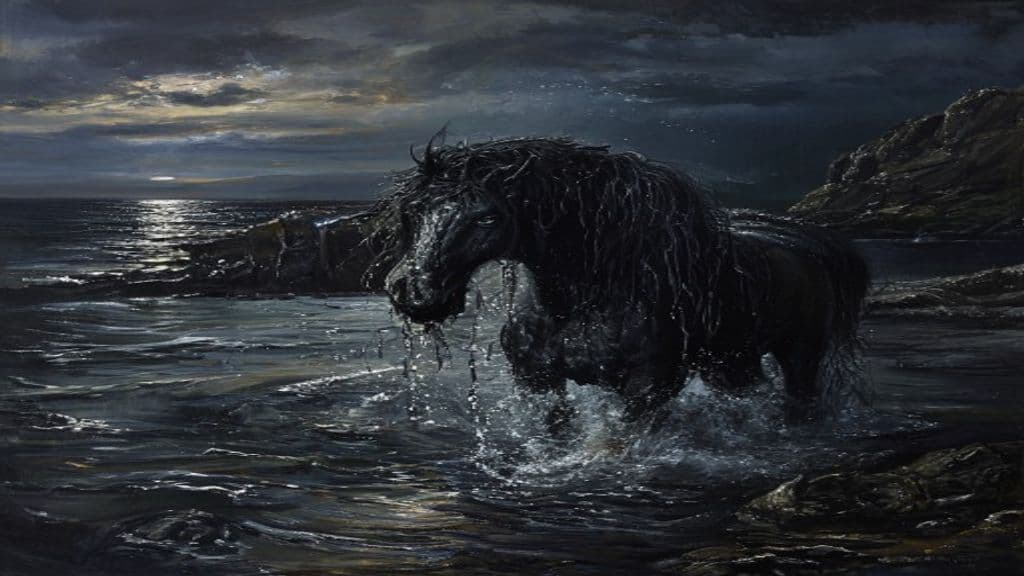
Each-Uisge
The most dangerous water horse in Scottish Highland folklore — haunting sea-lochs and mountain lakes, more violent than the river kelpie, known for consuming its victims whole.

Bean-nighe
A female spirit in Scottish Gaelic folklore who haunts desolate streams and fords, washing the clothing of those who are about to die; regarded as an omen of death and a messenger from the Otherworld.
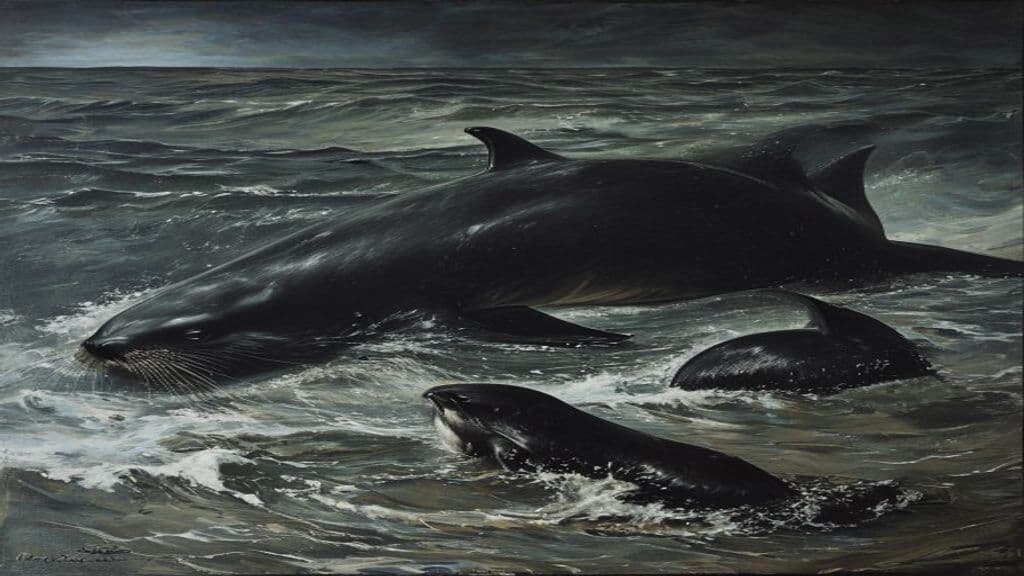
Selkie
A seal-being from northern Atlantic coastal folklore said to shift between seal and human forms by removing or donning a seal skin. Tales focus on intimate relations with humans, the selkie's longing for the sea, and the narrative motif of a hidden skin that prevents return to the ocean.

Ghoul
A ghoul is a demon-like or monstrous humanoid originating in pre-Islamic Arabian religion, traditionally associated with graveyards and the consumption of human flesh. The concept later entered broader folklore and has been widely reused and transformed in modern fiction and popular culture.
Aos Sí
Aos Sí are a broad class of supernatural beings in Gaelic (Irish and Scottish) folklore associated with the mounds and liminal places of the landscape. They are variously described as descendants or later forms of the Tuatha Dé Danann, ancestral or nature spirits, or otherworldly folk who coexist with humans and can be helpful or dangerous when offended.
Bauchan
A household-associated hobgoblin from Scottish Highland folklore, the bauchan is portrayed as ambivalently belligerent and helpful; in at least one recorded tale it accompanies a human household across the Atlantic and can shapeshift into a goat.
Beithir
In Scottish Gaelic tradition the beithir is a very large snakelike creature—often called a serpent or dragon—associated with mountains, corries and bodies of water. It is portrayed as venomous and deadly in local tales, linked in etymology and interpretation to lightning/thunderbolt imagery, and classed among water-associated monsters (fuath).
Bodach
A Gaelic folkloric personage literally meaning "old man" (Old Irish botach) who functions variously as a trickster, bogeyman, household figure and — in some accounts — an omen of death (Bodach Glas). The term also carries historical social meanings (tenant/peasant) and is sometimes identified with higher mythic figures (e.g., Manannán mac Lir) in specific tales.
Brownie
A household spirit from Scottish and related British traditions that performs nocturnal domestic labour in return for small offerings left by the hearth. Brownies are protective, place-tied domestic beings who work while humans sleep and will depart or become mischievous if offended.
Cat sìth
A feline supernatural being in Celtic folklore, especially Scottish tradition, described in some accounts as a large black cat with a white spot on its chest associated with the fairy/otherworld; alternative traditions identify it as a witch able to transform into a cat up to nine times.
Ceasg
A Scottish Gaelic mermaid-like being described as a woman with the upper body of a human and the tail of a grilse (young salmon). In tradition she can form marriages with humans, grant boons to those who capture her, and in some tales appears large and dangerous, able to swallow people whose rescue requires finding and destroying a special life-egg.
Church Grim
A site-bound guardian spirit in English, Scottish and Nordic/Scandinavian folklore that watches over an individual Christian church and its churchyard, defending the consecrated ground from profanation and hostile spirits. Forms and origin accounts vary by region, including a large black dog in English tradition, the bound spirit of an animal (often a lamb) in Scandinavian accounts, and in some Scottish strands the spirit of the most recently buried person acting as a temporary watcher.
Glaistig
A figure from Scottish folklore variously described as a Green Lady, house/estate spirit, herding guardian or a dangerous female lure. Traditions portray the glaistig as ambivalent—beneficent when respected (protecting cattle, households, or bestowing favors) and harmful when offended (luring men, injuring travellers).
Goblin
A class of small, often grotesque humanoid beings in European folk belief that range from household helpers to tricksters and violent figures. Goblins occupy liminal spaces—hearths, cellars, ruins and wild places—and their behavior toward humans depends on region, story, and reciprocal treatment.
Linton Worm
A serpent-like monstrous "worm" from Scottish Borders folklore associated with a hollow on Linton Hill; traditionally described as a large wyrm that ravaged people, livestock and crops and was overcome in a heroic confrontation. The legend is presented in sources as medieval in origin and comparable to other British worm/dragon tales such as the Lambton Worm.
Loch Ness Monster
A persistent anomalous large animal-like presence said to inhabit Loch Ness in the Scottish Highlands, popularly nicknamed 'Nessie'. It occupies a space between older Celtic water-beast motifs and a modern media-amplified cryptid and tourist symbol, with episodic sightings, disputed photographs, and sonar claims since the early 20th century.
Community Record
- [1]Biast Bhealach Odail. Wikipedia, entry 'Biast Bhealach Odail' — 'In Scottish folklore the Biast Bhealach Odail is a monster or spirit that haunts Odal Pass on the Isle of Skye in Scotland.'wiki
- [2]25 Creatures in Scottish Folklore and Myth (video list item). Archive.org upload of a video list including 'Biasd Bheulach' as item 20 in a compilation of named Scottish folkloric creatures; used as evidence of modern cataloguing of the name among Scottish folk beings.other