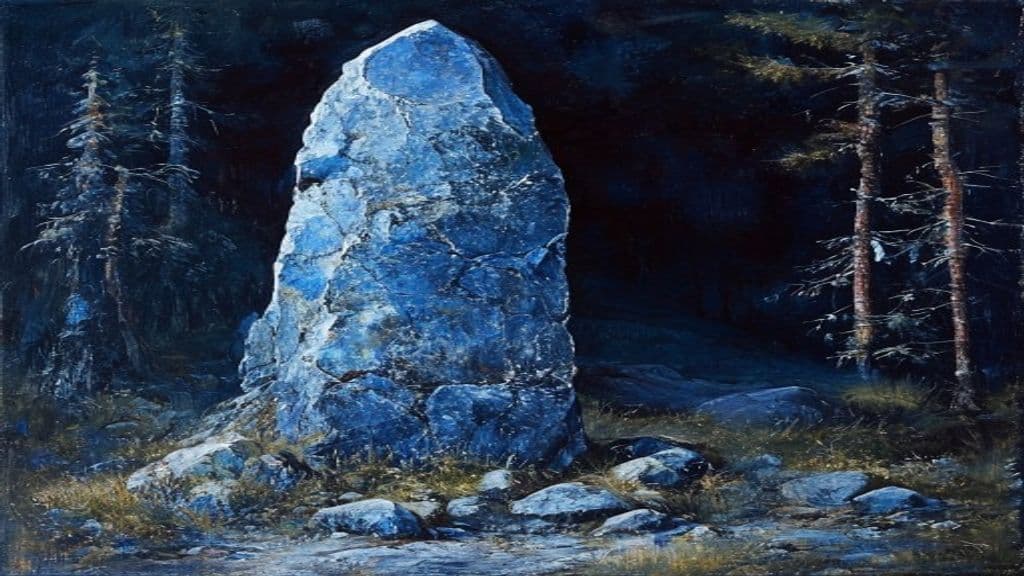
No physical description provided in the source.
Venerated through simple rituals: pouring water on them and leaving food offerings.
Arevakhach’
The Armenian eternity sign is an ancient national symbol representing the Armenians' spiritual and celestial connection. It appears as a geometric figure on khachkars and church walls, embodying the significance of faith and symbolism in Armenian tradition. (Note: - Power tier: Primordial (as it's described as an "ancient" national symbol, but there's no indication that it's deity-level) - Appearance: Not enough detail is provided; the source material only ment)
Baltic Mythology
A complex pantheon of gods, spirits, and supernatural beings in ancient Baltic cultures. (Note: 1. Power tier: Change to "Ancient" as Primordial implies a cosmic entity, which is not supported by the source material. 2. Origin story: Specify that the connection with nature and inspiration from t)
Celtic Sacred Trees
In Celtic tradition, sacred trees are imbued with spiritual significance and serve as symbols, conduits for medicinal properties, or abodes for nature spirits. (Note: 1. Power tier is uncertain; the source material does not explicitly describe the trees' power level. 2. Abilities should be more specific; instead of stating they "possess symbolic significance and se)
Lupae
In Roman tradition, Lupae refers to a female wolf or prostitute symbolizing fertility and protection. (Note: - Power tier: Change to Ancient (deity-level) as Lupae's abilities and symbolism suggest a higher level of power than Primordial. - Abilities: Clarify that Lupae is associated with fertility and prote)
Orko (Basque Thunder God)
Deity associated with thunder and the forces of nature in ancient Basque mythology. (Note: * Power tier: Greater (not Ancient), as there's no indication of deity-level powers. * Abilities: Specify exactly what abilities related to weather control are associated with Orko, instead of making )
Supernatural Beings in Slavic Tradition
In the Slavic tradition, supernatural beings are a part of the natural world, existing alongside humans and other entities. They have a unique relationship with nature, reflecting an interconnected worldview. (Note: 1. The power tier should be Primordial, as it is implied that these supernatural beings are a fundamental part of the natural world and not limited by human regional boundaries. 2. Remove "Their abili)
Tintilinić
Malevolent entity believed to be the soul of an unbaptized child, said to 'stroll through houses at night' in Croatian folklore. (Note: - Power tier: Minor Spirit (description suggests it's a relatively weak entity) - Sensory cues: should include the fact that it "strolls through houses at night", not just the red cap - Weaknesses: no)
Tursaansydän
An ancient, swastika-like symbol in Finnish tradition associated with protection, good luck, and blessings. (Note: - Power tier should be Lowered from Primordial to Ancient, as it is described as an "ancient symbol" and not cosmic in power. - No sensory cues or weaknesses are mentioned in the source material; add )
Blue Nile patas monkey
The Blue Nile patas monkey (Erythrocebus poliophaeus), also called Heuglin's patas monkey, is an Old World monkey species native to the Blue Nile river valley of Ethiopia and Sudan and possibly South Sudan. Described in 1862, it was long treated as conspecific with other patas monkeys until re-elevation to species status in 2017; its distribution, ecology, and population status remain poorly known.
Blue Snowman
The Blue Snowman is a fictional comic-book supervillain in the DC Comics universe who acts as a recurring adversary of Wonder Woman. Portrayed as Byrna Brilyant, the character employs genius-level inventiveness and specialized cold/cryogenic technology—most notably devices that generate "blue snow"—while wearing a distinctive snowman-themed blue costume or exo-suit. The Blue Snowman has no innate supernatural powers; threats are technological and resolved by heroic intervention.
Blue Trinity
Blue Trinity (Russian: Голубая Троица, Golubaya Troitsa) is a fictional team of three Soviet-engineered superhuman operatives in DC Comics, created by Soviet scientists as state-controlled assets in a Cold War narrative; they are described in sources as abnormally strong, emotionally unstable, and raised for loyalty to the Soviet Union.
Bluebeard
Bluebeard (French: Barbe bleue) is a literary folktale character best known from Charles Perrault's 1697 version: a wealthy, powerful nobleman who marries repeatedly and secretly murders his wives, hiding their bodies in a locked chamber. He functions as a cultural archetype and cautionary exemplar about secrecy, patriarchal power, and the dangers facing women in marriage rather than as a supernatural being.
Community Record
- [1]