
There is no single cosmogonic origin recorded in the provided sources. Instead, boginka functions as an umbrella term in Polish/Slavic popular belief for a range of female nature-spirits or demons. Over time the label was applied to a variety of locally named beings (for example rusałka, vila, dziwożona, mamuna, nawka and others), so the category emerges from folk taxonomy rather than a single origin myth. Sources describe them as personifications of wild forces in old-Slavic Polish mythology and as a traditional way of naming and explaining the agency of liminal natural places and social anxieties (especially around childbirth and marginal women).
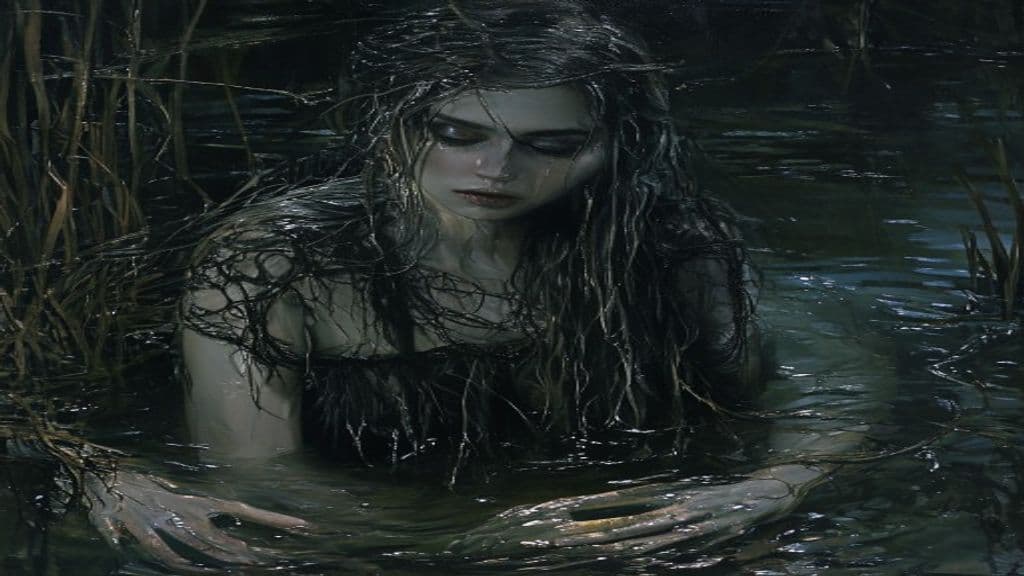
Descriptions in the sources are variable rather than fixed: boginki were typically imagined either as ugly old hags or as pretty young women, often naked. The term was applied across different local types, so no consistent costume or singular physical marker is recorded in the provided materials; appearance depends on the particular local manifestation subsumed under the boginka label.
Within the documented folklore corpus boginki are female personifications of nature that haunt liminal natural locations and may interact harmfully with humans. They are often associated with attacking women during childbirth and with changeling narratives: some boginki (especially under the mamuna label) were said to steal human infants and substitute them with a 'changeling' (terms attested in sources include boginiak, płonek, podrzutek, or odmieniak). Sources characterize them as usually evil or hostile, though the broad category can include neutral variants and—more commonly in modern reinterpretations—protective aspects. Habitats and behaviors recorded in the sources place them at riverbanks, lakes and islands, marshes, mountain passes, forests and fields.
Weaknesses
- otherNot documented in provided sources
Wards
- otherSources state that 'various folk means to fend off boginki' existed, but the provided materials do not record specific substances, symbols, mantras, or rituals
Baba Yaga
Baba Yaga is an ambivalent female figure of East Slavic folktale tradition, depicted variously as a fearsome, child-eating crone or as a helpful, maternal donor. She is associated with the deep forest, a hut described as standing on chicken legs, and the motific accoutrements of a mortar and pestle.
Bald Mountain (Slavic)
A location in Slavic folklore associated with witchcraft and the Witches' Sabbath. (Note: 1. Power tier should be Primordial since it's associated with witchcraft and has connections to deities (witches are often seen as having deity-level powers). Greater is too low of a power level. 2. A)
Bannik
A place-bound spirit of the Slavic banya (bathhouse) that inhabits the steam room and related spaces; he mediates divination, presides over births within the banya, and must be appeased by offerings or he may harm or otherwise vex users and the building.
Błędnica
A Slavic forest demoness who misleads travelers, abandoning them deep in the woods to die of exposure, starvation, or be taken by wild animals. She is typically depicted as a young, attractive woman and is countered in tradition by strong spells or by making sacrifices at home or during the hunt.
Cornflower Wraith
A Slavic field spirit associated with midday who enforces proper conduct in cultivated grain. Described as a young woman in azure with cornflowers in her hair, she punishes workers who trample crops or use sharp tools at the wrong time, often by inducing sleep followed by pain or by causing broken limbs.
Fiery Serpent (Slavic)
A supernatural entity from Slavic folklore, described as a manifestation of fire in the sky or air. (Note: 1. Power tier should be adjusted from Primordial to Ancient, as it appears to be a deity-level entity rather than a cosmic one. 2. Add sensory cues for sounds associated with the entity (e.g., roaring)
Firebird (Slavic folklore)
A marvelous luminous bird from Slavic folktales, the Firebird (zhar-ptitsa) is a glowing, often fire‑colored bird whose appearance initiates quests and whose possession brings both wonder and misfortune. It functions as a coveted wonder and a dangerous omen within tale cycles.
Geira
In Slavic tradition, Geira was a Wendish princess attested by Old Norse sagas who ruled over territory near the border of Germania and married a young Óláfr Tryggvasonr. (Note: * Power tier: Not provided in source material, but can be inferred as Primordial given the lack of detailed information and Geira's significance in Old Norse sagas. * Summary: Inaccurate; correct summ)
Hag
A hag is a folkloric figure typically depicted as an old, wizened woman who appears across European traditions in multiple roles: a nightmare spirit, a witch-like or fairy-type being, a river or household monster, or (in some cases) a form adopted by sovereignty or storm goddesses. The figure functions variously as a cautionary monster, an explanation for sleep paralysis and nightmares, and a liminal test-figure in myth.
Kikimora
A female house spirit in Slavic folklore that functions as a domestic agent: helpful in well-kept homes and disruptive or dangerous where household morals or order fail. Variants include a domestic (house) kikimora paired with the domovoy and a swamp (bolotnaya) kikimora associated with marshland spirits.
Koschei the Deathless
Koschei (also Koshchei, Kashchei), commonly called "the Deathless" or "the Immortal," is an archetypal male antagonist in Russian and wider Slavic folklore. He functions in folk narratives as a legendary villain whose name and legend persist into modern cultural works and references.
Lady Midday (Poludnitsa)
Poludnitsa, often called Lady Midday or Noonwraith in English, is a Slavic field spirit personifying the dangers of the hottest part of summer days. She is associated with grain fields and midday heat and appears in diverse regional tales as a young woman, hag, or girl who harasses or injures people working or resting at noon.
Community Record
- [1]Boginka (Wikipedia). Wikipedia, 'Boginka' article (accessed source material provided in research notes).wiki
- [2]Slavic mythology from Poland (part 4): BOGINKI – Lamus Dworski. Lamus Dworski blog post 'Polish mythology — Boginki' (summarizes Polish folk beliefs about boginki).folk
- [3]Dziwożona (Wikipedia). Wikipedia, 'Dziwożona' article (used in research notes to show overlap with boginka/mamuna swamp-demon motifs).wiki
- [4]Molium #28 (podcast/archive notes). Molium podcast archive (referenced in notes for mentions of lake/island haunting motif).other
- [5]Boginka – NFT Calendar (event summaries). NFT Calendar event listing (used in research notes for modern reinterpretations of boginka as dangerous/protective and social readings).other
- [6]Boginka – Taft maker page (archival mention). Taft ModelWeb page referenced in research notes (brief listing/mention of boginka).other
- [7]Archive: Boginka (audio/archive). Archive recording referenced in research notes (contextual mention).other