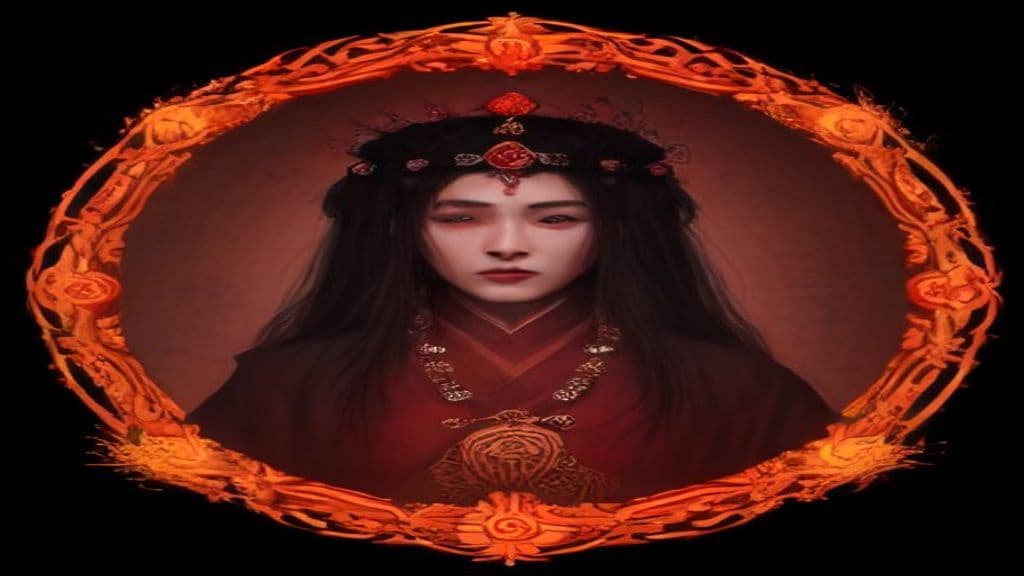
The concept of the city god originates in ancient concerns for the protection of a settlement's physical boundaries—walls and moats—and the community within them. Over time the role evolved from a divine guardian tied to fortifications into a localized civic deity; by the Tang dynasty (618–907) the cult was widespread and continuous. In many places individual Chenghuang were later identified with or became deified former magistrates, local leaders, or exemplars of civic virtue, so that the office combined an original spatial/defensive meaning ('god of the boundary/moat and walls') with an institutional role as a protector and local official in both the world of the living and the locality's counterpart in the afterlife.
Sources emphasize title and function more than a fixed apparition; representations vary by locality. In temple contexts Chenghuangshen is commonly portrayed in the trappings of an official or magistrate (reflecting the deity's juridical and administrative character), and local city-god temples serve as focal points for cult activity. Because descriptions focus on cult, jurisdiction, and administrative rank rather than a single consistent iconography, visual appearance differs across regions and temple traditions.
Chenghuangshen is credited with protecting the people and affairs of the particular village, town, or city under its jurisdiction and with intervening in communal needs (for example, petitioned historically to bring wind and rain). In postmortem belief the city god serves as a local authority over the souls of the deceased from that place: after death souls are described as traveling a postmortem route (Spirit Gate → Yellow Springs road) and arriving before the Chenghuang, who functions as part of a localized bureaucratic ordering of spirits. The office is ranked above the tǔdìgōng (local earth/landlord deity) and operates alongside other afterlife functionaries mentioned in related traditions (for example, figures like the Heibai Wuchang and the Ten Kings) rather than replacing them.
Ao Kuang
Ao Kuang (also attested as Ao Guang) is the Dragon King of the East Sea in Chinese mythology and folk religion, one of a quartet of sea-dragon sovereigns associated in folklore with the cardinal seas. He appears in classical literature and later popular media as a ruler of maritime waters whose favor or displeasure is connected to tides, rain, floods and storms.
Bai Ze
Bai Ze (白澤, Báizé; Japanese Hakutaku) is a legendary sacred creature in Chinese tradition famed as an authoritative recorder of ghosts and gods whose illustrated compendium (Bái Zé Tú) was employed as a household prophylactic against spirit-world harm. The creature’s image and diagrams were used in China and later Japan to identify, ward off, and prescribe avoidance of spectral calamities.
Bi'an
Bi'an is attested in the provided sources primarily as a named member of the traditional roster called the Nine Sons of the Dragon, appearing in catalogues of mythic names. The figure is also present as a name-form within the broader lexical field of Chinese folk religious beings (for example, appearing alongside death-escort deities in separate sources), but the supplied materials do not furnish an independent, detailed myth or cultic biography for Bi'an.
Chang'e
Chang'e (嫦娥), originally attested as Heng'e and linked to the older name Chang Xi, is the female lunar immortal of Chinese myth who resides in the Moon Palace (廣寒宮). Best known from the elixir-of-immortality tale in which she ascends to the Moon and is accompanied there by the Jade Rabbit, she functions across religious and literary contexts as a lunar goddess/immortal and a poetic symbol of solitude and longing.
Chinese dragon (long / loong)
A central legendary zoomorphic being in Chinese myth and culture (Chinese: long / loong), the dragon embodies auspicious cosmic and ancestral power, especially mastery over water and weather, and functions as an imperial and communal emblem across material culture, ritual performance, and state iconography.
Chinese ghosts
Spirits of deceased persons in Chinese folk belief, integrated with ancestor-worship and syncretic Buddhist ideas; often conceived as potentially malevolent if neglected or provoked, while some deceased become honored ancestral spirits through proper ritual care.
Chinese gods and immortals (shenxian)
A heterogeneous corpus of deities (shen) and immortals (xian) in Chinese religious and mythic thought, understood as manifestations or localizations of the cosmic principle (Tian/Tao/qì). They include celestial gods, local tutelaries, deified culture-heroes, and Taoist immortals formed and sustained by temples, ancestral ritual, and popular cult.
Daji
Daji (妲己, Dájǐ) is a figure in Chinese narrative and popular religious-cultural materials who blurs human and spirit categories: historically remembered as the favorite consort of King Di Xin of Shang but in later legend and fiction identified as a fox‑spirit (often a nine‑tailed or thousand‑year fox) that possessed or impersonated the woman and precipitated moral and political decline.
Dragon King
A high-ranking serpent/dragon ruler associated with water, weather, and territorial guardianship across East, South and Southeast Asian folk-religious traditions. Treated as a divine or semi-divine authority (Nāgarāja / lóng / Ryū / Yongwang) who presides over seas, rivers, wells and rainfall and is an object of ritual supplication, especially in rainmaking and agricultural contexts.
Erlang Shen
Erlang Shen (二郎神) is a Chinese folk-religious and Daoist divine warrior associated with flood control, justice, hunting, and the subdual of demons. Venerated as a local river/irrigation protector who was later incorporated into Daoist pantheons and popular literary cosmologies, he is commonly depicted as a third-eyed spear-wielding hero accompanied by a celestial hunting dog.
Five Poisons (五毒, wǔ dú)
A culturally defined set of five hazardous animals in Chinese (and related Vietnamese) folk belief associated with the Dragon Boat Festival/Duanwu (the fifth day of the fifth lunar month). The term names a seasonal cluster of perceived dangers (snakes, scorpions, centipedes, toads, spiders) and denotes traditional prophylactic and talismanic responses; in modern usage the phrase is also repurposed as a political metaphor for five perceived threats to state security.
Guanyin
Guanyin (Guān Yīn, short for Guanshiyin/Guanshiyin 觀世音) is the Chinese manifestation of the bodhisattva Avalokiteśvara associated with compassion. Venerated across Buddhist, Taoist, and Chinese popular-religion contexts, Guanyin is petitioned through temple devotion, recitation, and festivals as a merciful intercessor who 'perceives the sounds of the world.'
Community Record
- [1]City God (China) — Wikipedia. Wikipedia, 'City God (China)'wiki
- [2]Chenghuang 城隍, the City Gods — ChinaKnowledge. Chinaknowledge.de, 'Chenghuang, the City Gods'other
- [3]The Ten Kings Of The Underworld — Gwongzaukungfu. Gwongzaukungfu, 'The Ten Kings of the Underworld'other
- [4]Our Lady of Fatima Parish - The history and mystery of Macao's past. Travel2Next article referencing Macao city-god templesother
- [5]Wikidata: City God (Q702182). Wikidata entry for City Godwiki