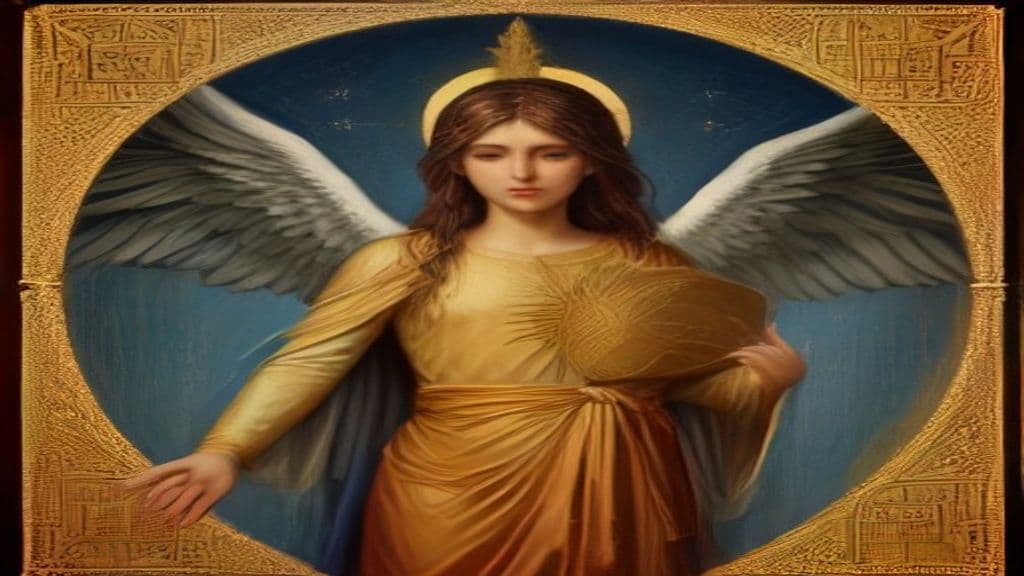
The cherubim concept appears within the Abrahamic scriptural and liturgical corpus as beings associated with the divine presence and sacred spaces. Biblical texts and later interpretive traditions portray them guarding the entrance to the Garden of Eden and attending or shading a deity's throne or sacred objects (e.g., the Ark). Comparative scholarship further notes analogous throne-guard/tree-guard figures across the ancient Near East and Mediterranean, which informs understanding of cherubim imagery in Israelite religion and later Christian liturgy.
Scriptural and interpretive sources describe cherubim as winged, non-human beings; biblical visions (notably Ezekiel) depict angelic figures with multiple wings and striking symbolic imagery (wings, flashes of brightness, and hybrid forms in older iconographic parallels). Art and scholarship record a range of portrayals—from multi-winged, hybrid throne-guard figures to later Western childlike 'cherub' images—reflecting different cultural and historical contexts. Sources emphasize their consistent association with thrones, trees, or sacred objects rather than a single uniform physiognomy.
Across sources cherubim are described primarily as guardians of sacred boundaries and as attendants or throne-bearers surrounding a deity or divine object (for example, guarding Eden, standing over or near the Ark or a divine throne). In liturgical contexts (notably Orthodox Christianity) they are ritually represented by the 'song of cherubim,' which invokes their presence symbolically within worship. Scriptural visionary passages associate them with theophanic imagery (wings, brightness, multiple faces/wheels in related angelic visions) though the provided material does not list discrete magical powers beyond their guardian/attendant roles.
Abel
Abel is the second son of Adam and Eve in the Genesis narrative, a shepherd whose accepted offering and subsequent murder by his brother Cain form the biblical account of the first death. Later interpretive traditions expand his role, treating him as an archetypal righteous victim, a postmortem avenging or adjudicating figure, and in some systems (notably Mandaean) identifying him with an angelic lightbeing.
Abraham
Abraham (originally Abram) is the foundational patriarchal ancestor in the Hebrew Bible whose life establishes a covenantal relationship between his family/people and God. He functions as an exemplar of faith, the progenitor of promised descendants, and a narrative anchor for claims of land, blessing, and communal identity in later religious traditions.
Adam and Eve
Adam and Eve are the primordial human pair in the Abrahamic creation narratives who function as the first man and woman, placed in the Garden of Eden to steward creation. Their eating of the forbidden fruit produces a changed human condition—knowledge of good and evil, shame, pain, labor, mortality—and their story underpins later doctrines such as the Christian doctrine of original sin while being read differently across Jewish and Islamic traditions.
Adonai
Adonai (אֲדֹנָי) is one of the sacred Hebrew names used in Judaism to refer reverently to the singular God. It functions as a liturgical and devotional substitute or form for the divine Name and is treated with linguistic and ritual care in Jewish practice; it also appears in Christian liturgy (e.g., the Advent antiphon “O Adonai”).
Adonay
Adonay (אֲדֹנָי, often transcribed Adonai or Adonay) is a sacred Hebrew appellation meaning roughly "Lord" or "Master," used in Jewish liturgical and scriptural language as a reverent name for the divine. In the provided sources it functions as a theological title within Judaism rather than a personified folkloric being; discussions around it center on reverent usage and the communal care taken with divine names.
Al‑Yasa (Elisha)
Al‑Yasa (Elisha) is a prophetic figure attested in Abrahamic scriptural traditions. In the Hebrew Bible he is described as an Israelite prophet and 'wonder‑worker'; later traditions in Christianity and Islam also recognize him among the line of prophets.
Angel
A spiritual or heavenly being functioning primarily as a messenger and intermediary between a transcendent deity and humanity; angels also act as protectors, guides, and executors of divine will across several Abrahamic and adjacent traditions.
Angel of the Lord
A recurring divine messenger in the Hebrew Bible and New Testament who appears on behalf of the God of Israel, acting as God's representative in speech and deed. The figure—Hebrew מַלְאַךְ יְהוָה (mal’ākh YHWH)—functions as intermediary, guide, protector, judge, and announcer at decisive narrative moments.
Arariel
Arariel is an angel attested in rabbinic tradition as having charge over the waters of the Earth. Later popular and New Age sources expand this terse attribution into devotional uses (invocation for fishing, mental calm), but primary sources recorded here offer only the brief custodial office.
Archangel
An archangel is a ranked heavenly messenger in Abrahamic and related religious literatures, understood in many traditions as a high‑level angelic agent charged with carrying out divine missions. The term and ranked office are framed by Greek etymology (archángelos, 'chief messenger') and by medieval Christian angelology (notably Pseudo‑Dionysius), while named figures such as Michael, Gabriel, and Raphael appear across Jewish, Christian, and Islamic texts and liturgies.
Bar Juchne
A colossal bird from Jewish tradition, described as having a massive wingspan large enough to block out the sun. (Note: * Power tier should be at least Ancient, given its ability to block out the sun. * Origin story section is missing, with no information provided by Source 1. * No specific weaknesses or wards mentione)
Bigthan and Teresh
Bigthan and Teresh are named human court officials—described as eunuchs or chamberlains—in the Book of Esther (Esther 2:21–23). They conspired to assassinate King Ahasuerus; Mordecai exposed the plot, the conspirators were apprehended and executed, and the incident becomes a pivotal narrative device in Esther's account and later commentary.
Community Record
- [1]Cherub. Wikipedia, 'Cherub' article (summary of cherubim in Abrahamic religions and guarding Eden).wiki
- [2]cherub (Wikidata). Wikidata entry describing cherub as 'winged angelic being'.wiki
- [3]Cherubim - OrthodoxWiki. OrthodoxWiki entry noting the 'song of cherubim' sung in the Divine Liturgy representing the cherubim among whom the Lord dwells.wiki
- [4]Cherubim and Seraphim. Wikipedia article documenting modern devotional groups named 'Cherubim and Seraphim' and related commemorative practices.wiki
- [5]The cherubim motif across the ancient Near East and Mediterranean. Comparative discussion noting cherubim/assimilated throne-guard/tree-guard figures across Egypt, Greece, Turkey and Iran and their function under thrones or near sacred trees.other
- [6]Cherubim (International Standard Bible Encyclopedia). Encyclopedic entry summarizing biblical references to cherubim and their roles as guardians and throne-attendants.academic
- [7]Selected scriptural and interpretive fragments referencing cherubim imagery. Archive material including sermonic/exegetical references to cherubim and prophetic-vision imagery (Ezekiel, Revelation, Daniel) cited in the research notes.other
- [8]Category: Mechanical Cherubim (game wiki). Example of modern/fictional reuse of the cherubim name (mechanical cherubim in game fiction).other