Clṻd is not attested in surviving ritual texts or mythic narratives; her existence is reconstructed by scholars from the river-name (reconstructed Brittonic Clṻd / Clọ:tā), associated place-names that became political toponyms (Alt Clud / Alclṻd), archaeological finds in the Clyde basin, and the general Celtic pattern that springs, rivers and lakes commonly had female divine embodiments. If she was ever historically venerated, sources suggest she would have been a local natura or tutelary presence tied to the Clyde and plausibly honoured by communities such as the Iron Age Damnonii and later inhabitants of Alt Clud/Strathclyde. The reconstruction emphasizes that this is an inference from linguistic and material evidence rather than a directly documented cult.
There are no surviving textual descriptions of Clṻd's anthropomorphic appearance in the cited material. Archaeological context provides only indirect visual clues: a tri-cephalic (three-headed) Celtic statue found near the Clyde in 1967 has been interpreted by Ross (1974) as likely depicting a god or gods and perhaps connected to river worship, but this is an interpretive association rather than a direct depiction of Clṻd. Consequently any specific clothing, age, or iconographic attributes for Clṻd remain unrecorded and hypothetical.
No primary-source accounts record specific powers, acts, or interactions attributable to Clṻd. By analogy with widely-attested Celtic water-deities, scholars infer she would have embodied functions associated with the river—provision, cleansing/purification, marking boundaries and the river's physical-symbolic roles. James (2019) proposes an etymological field of 'pure/cleansed' for Clṻd/Clọ:tā, suggesting purity and cleansing as salient conceptual components. These ascribed abilities are conjectural, drawn from name-meaning and comparative patterns rather than documented deeds.
Weaknesses
- otherNo attested weaknesses — sources record no folkloric vulnerabilities or taboos specific to Clṻd; any such claims would be speculative.
Wards
- otherNo attested wards — the provided material contains no documented protective measures, invocations, or taboos directed at or protecting from Clṻd.
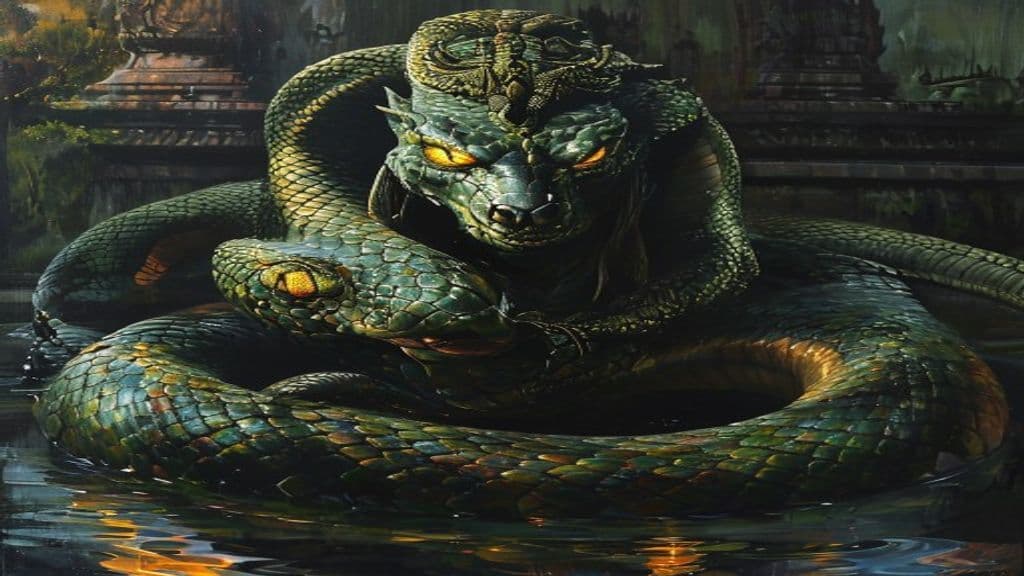
Naga
Divine serpent beings of Hindu, Buddhist, and Jain cosmology — powerful guardians of water, earth, and underground treasures. Revered as deities in South and Southeast Asia.
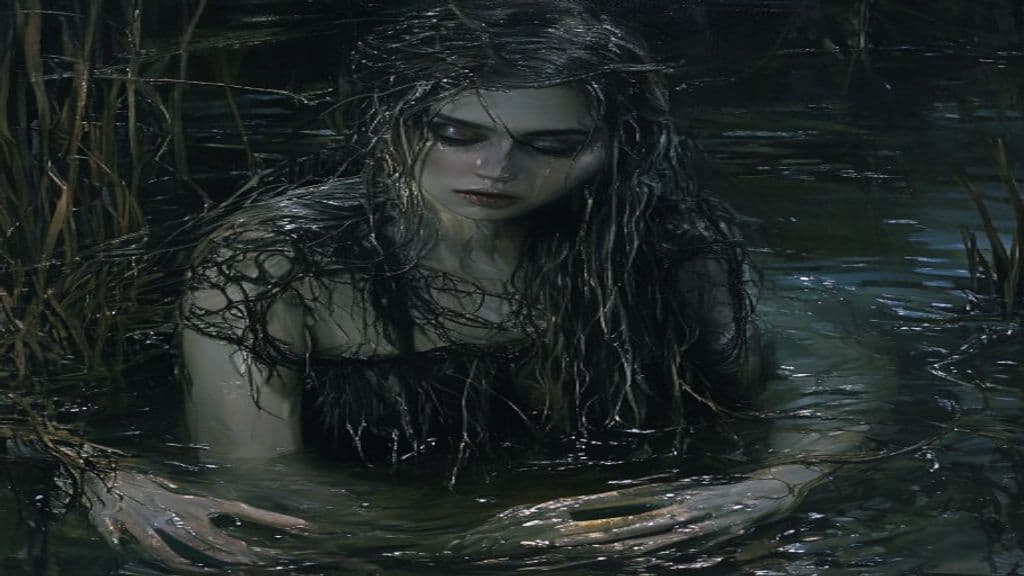
Rusalka
Water spirits in Slavic folklore — the spirits of young women who died by drowning or suicide, bound to rivers and lakes. Beautiful and dangerous, they can bewitch men to their deaths.
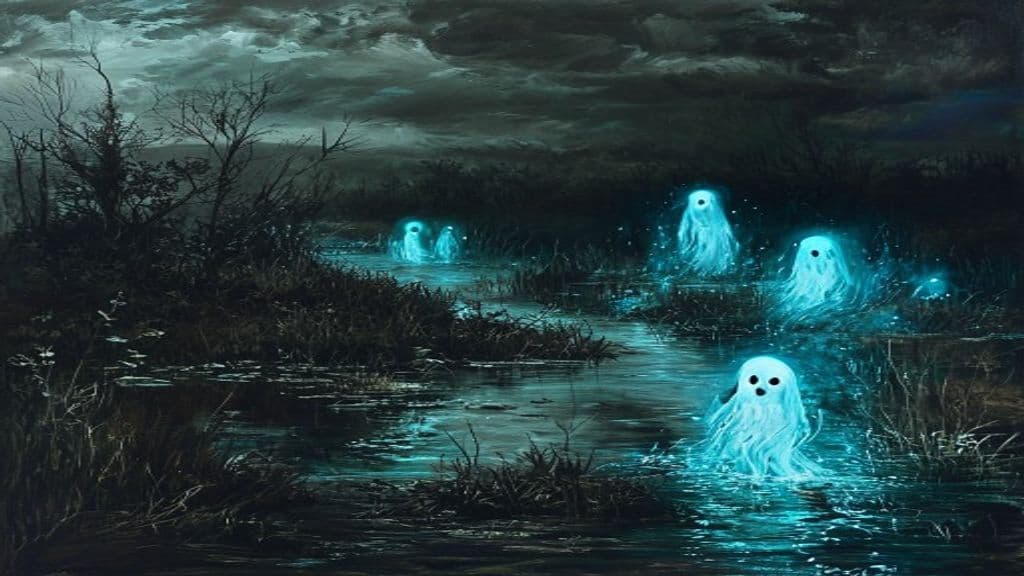
Will-o'-the-Wisp
A wandering light seen over marshy ground at night, leading travellers astray into bogs and fens. Possibly a spirit, possibly the soul of the unbaptised dead, possibly the devil himself.
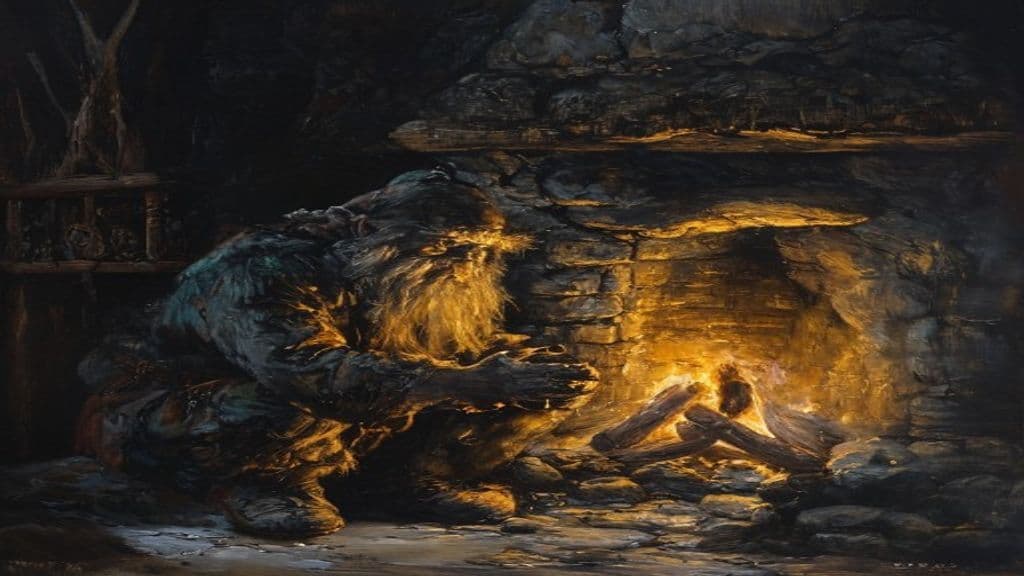
Domovoi
The house spirit of Slavic tradition — a small, invisible guardian of the home bound to a specific dwelling and its family. Protective when respected; dangerous when insulted or forgotten.
Albiorix
Albiorix is a Celtic theonym attested in modern reference works as a Gaulish divine name that, in available summaries, is presented as an epithet or local identification of the Roman god Mars. The surviving remarks in the supplied sources are limited to name listings and disambiguation entries rather than narrative myth or cult detail.
Ankou
The Breton personification of death — the last person to die in a parish each year who drives a creaking cart collecting the dead, whose appearance or sound presages death.
Anu
Anu (also Ana, Anann, Anand) is a mother-figure in early Irish tradition associated with nourishment, territorial fertility and prosperity—especially in Munster—and is variably conflated with other maternal or war-related goddesses in later sources.
Banshee
A female spirit of Irish and Scottish folklore whose wail heralds an impending death in a family of Gaelic descent. Not a cause of death — a witness to it.
Belenus
Belenus (Gaulish Belenos/Belinos; Latin Belenus/Belinus) is an ancient Celtic healing and protective deity whose cult was widespread across Celtic-speaking regions and whose worship continued into the Roman period, often equated with Apollo; he is especially associated with medicinal springs and civic protection (notably Aquileia).
Breton Mythology
A collection of explanatory and heroic tales forming part of the Celtic mythos, rooted in ancient Celtic tradition. (Note: 1. Power tier: Primordial is incorrect; it should be Ancient (deity-level) as Breton mythology is rooted in ancient Celtic tradition but doesn't match the primordial level of cosmic entities. 2. Origi)
Coel Hen
Coel Hen (Old Welsh: Coil, "Coel the Old") is a legendary ancestral-king and eponymous founder in medieval Welsh and Brittonic tradition, placed by genealogies in the Hen Ogledd (the Old North) in the late Roman / early post‑Roman period. He appears at the head of multiple royal pedigrees as progenitor of the Coeling and is later conflated in twelfth‑century pseudo‑histories with a Colchester/Helena strand linking him to Roman narratives.
Condatis
Condatis is a local Celtic deity attested in Roman Britain, known from a small group of Latin votive inscriptions in which he is consistently identified with the Roman god Mars (inscriptions read 'Mars Condatis'). The name derives from the Celtic word condate, 'confluence', and the deity is associated with river‑junctions and related sacred geography; some scholars have proposed a link with healing waters, but direct ritual details are not preserved.
Daolghas
Member of the Fianna, a band of warriors in Irish mythology, with supernatural abilities. (Note: * Power tier: Inconsistent with abilities described; should be Primordial or Ancient due to its cosmic/deity-level powers. * Abilities: Not entirely accurate; it's specifically stated that Daolghas ca)
Dexiua (Dexiva)
Dexiua (also rendered Dexiva) is an ancient local Celtic goddess attested in inscriptions found at Castellar. She is known from epigraphic evidence and is otherwise unattested in surviving mythological narratives or ritual descriptions in the provided sources.
Echtra Cormaic
A tale in Irish mythology recounting the journey of high-king Cormac mac Airt to the Land of Promise, a realm associated with Manannán mac Lir. (Note: 1. The source does not mention Echtra Cormaic's power tier, so it should be removed or marked as unknown. 2. Add an appearance description based on Irish mythological descriptions of high-king Cormac )
Ecne
Ecne is the personification of wisdom in Irish/Celtic mythic tradition, attested in modern summaries as a member of the Tuatha Dé Danann and glossed in Old Irish as 'wisdom' (ecna, ecne). Sources present Ecne genealogically as the offspring of three brothers and as connected to the goddess Anu/Ananna, with variant accounts assigning ambiguous gender and, in one later report, an association with poetry.
Community Record
- [1]Clṻd (Wikipedia). Wikipedia: 'Clṻd /klɨːd/ or Clọ:tā /klɔːtaː/ (Latin: Clōta) is a hypothesised/inferred Brittonic goddess of the River Clyde...' plus cited summaries of James (2019) and Ross (1974).wiki
- [2]Clṻd (Wikidata). Wikidata entry classifying Clṻd as a Celtic goddess; used for taxonomic corroboration in the source notes.other
- [3]Tri-cephalic statue near the Clyde (Ross 1974 interpretation, noted in Wikipedia). Ross (1974) interpretation of a 1967 tricephalic Celtic statue found close to the Clyde as 'very likely to depict a god or gods (perhaps connected to the goddess of the river)'.academic
- [4]Etymology proposal (James 2019) cited in Wikipedia. James (2019) as cited: gives 'Clṻd' meaning 'pure, cleansed' for the river and 'Clọ:tā' meaning 'she who is pure' as a potential goddess-name form.academic
- [5]Rhŷs (1891) / MacKillop (2004) note on Gwawl ap Clud. Sir John Rhŷs (1891) and MacKillop (2004) cited in Wikipedia: suggestion that Gwawl ap Clud in the Mabinogi may be read as 'son of the goddess Clud', a speculative literary connection not direct evidence for the river-deity.literary