Damona is not narrated in surviving ancient mythic literature; she is reconstructed from Latin votive inscriptions and archaeological remains from Roman-period Gaul. She appears exclusively in inscriptions from thermal and mineral spring sanctuaries—most prominently Bourbon-Lancy, Bourbonne-les-Bains (territory of the Lingones), Alesia/Alise-Sainte-Reine, Chassenay (near Arnay-le-Duc), and Rivières (Charente). Epigraphic and material evidence consistently places her as a local goddess of springs and baths who received votive offerings, sometimes in paired cult with a male spring-god (most often Borvo/Bormo, also Albius or Apollo Moritasgus) and sometimes worshipped independently. Linguistically her Latin-attested name derives from a Celtic stem *damo- (compare Old Irish dam, damán; Middle Welsh dafad; Old Cornish dauat) with the theonymic suffix -ona; scholars caution that the bovine etymology provides little direct information about her cultic functions, which are evidenced by sanctuary contexts rather than by any narrative origin tale.
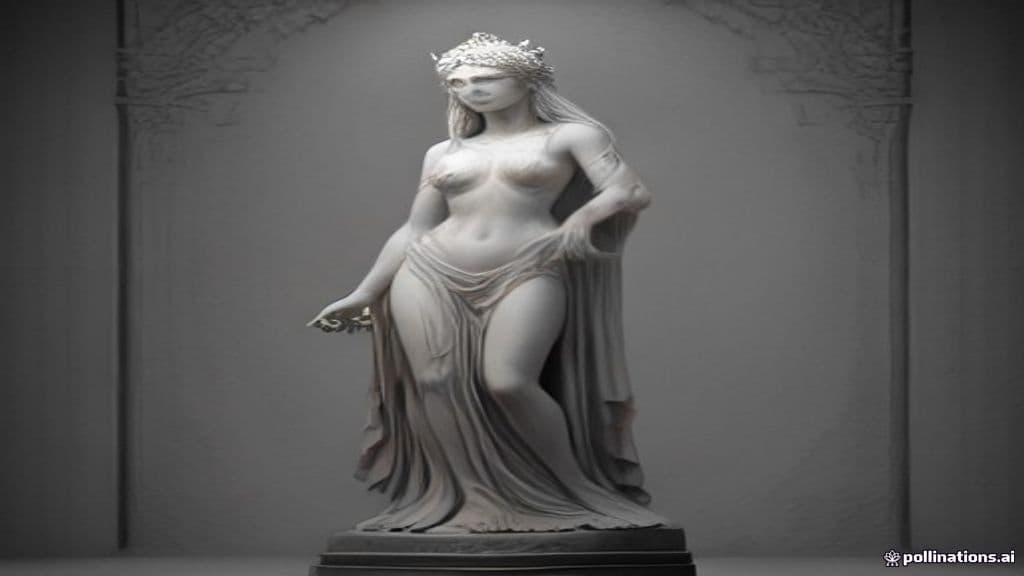
The iconographic evidence for Damona is fragmentary. A cult-statue fragment from Alesia/Alise-Sainte-Reine preserves a carved stone head crowned with ears of grain and a left hand around which a serpent is coiled—these attributes (grain and snake) are the principal physical identifiers in the archaeological record. No full anthropomorphic descriptions survive in ancient literature. Modern scholarship notes parallels in attribute set to other Gaulish spring-goddesses (for example Sirona) and interprets the snake as a healing symbol (comparable to Hygieia) and the ears of grain as a fertility/abundance motif (comparable to Demeter), but these are interpretive comparisons grounded in the preserved attributes and sanctuary contexts.
Damona's primary attested functions are therapeutic and fertility-related. Epigraphic and archaeological contexts locate her power in curative mineral/thermal waters and in the precincts of springs and baths; devotees sought physical cures through bathing and ritual use of sacred waters. At least one inscription from Bourbon-Lancy connects Damona's cult with incubation—the ritual sleep in which a pilgrim sought a healing dream or vision from the deity—indicating that her sanctuaries mediated both material and visionary forms of healing. Votive inscriptions dedicated to Damona (often in conjunction with a male spring-god) document petitionary and thank-offering practices, although specific ritual formulas and detailed procedures are not preserved in the cited material.
Weaknesses
- otherNo attested weaknesses in source material
Wards
- otherNo protective wards or apotropaic prescriptions recorded in the cited sources
Borvo
Borvo (also Bormo, Bormanus/Bormanicus) is a Celtic theonym attested in Roman‑period Gaul and adjacent regions as the god of warm, welling thermal springs; worship is attested almost entirely by votive inscriptions at spa sites and he is commonly paired with the goddess Damona and equated under interpretatio romana with Apollo (and occasionally Hercules).
Sirona
Sirona is attested in modern scholarship as the name of a Celtic goddess known from sculptural and temple-related material; surviving references and images associate her with local cultic presence in parts of continental Europe. The supplied sources document visual attestations (museum/sculpture images and a woodcut) and modern reuses of the name but do not give detailed mythic narratives, functions, or ritual formulas.

Moritasgus (Apollo Moritasgus)
Moritasgus is a Celtic epithet for a healing deity attested in four inscriptions at Alesia. In two of those inscriptions he is explicitly identified with the Greco‑Roman god Apollo, and his consort is named as the goddess Damona.
Acionna
Acionna is a local Gallo-Roman water goddess attested by a single votive inscription found at a spring in the Orléanais region. The inscription, discovered by Jollois in 1822 and datable by style to the 2nd century CE, dedicates a portico and ornaments "AUG(ustae) ACIONNAE" and was recovered from the Fontaine de l'Étuvée in Orléans; archaeological work in 2007 uncovered remains of a Gallo-Roman temple and a section of an aqueduct at the site.
Ambisagrus
Ambisagrus is a local Gaulish deity attested in Gallo‑Roman religion, worshipped at Aquileia in Cisalpine Gaul and identified there with Jupiter Optimus Maximus under Roman interpretatio. The name is tentatively analyzed from Proto‑Celtic elements *ambi‑ + *sagro‑.
Arduinna
Arduinna is a local Gallo-Roman tutelary goddess of the Ardennes (Arduenna) — a divine personification of wooded heights — attested in two inscriptions and later equated with the Roman Diana. Iconography associating her with a boar-riding huntress exists in modern literature but the identification is uncertain.
Bricta
Bricta (also spelled Brixta in inscriptions) is a Gaulish theonym attested in Gallo‑Roman inscriptions from Luxeuil‑les‑Bains (ancient Luxovium). She appears in votive formulae paired with the local water god Luxovios, and her name is linguistically associated with a Gaulish word for "magic."
Buxenus
Buxenus is an epithet of the Gaulish Mars attested in Gallo-Roman religion from a single inscription found at Velleron in the Vaucluse. The evidence is extremely limited and presents Buxenus as a local/regional name or aspect of the indigenous deity equated with Roman Mars.
Dexiva
Dexiva (attested Dexiua, Dexsiua) is a local Celtic theonym attested in inscriptions from the oppidum of Castellar (modern Cadenet, southeastern France). Her cult in the Roman period is attested by votive inscriptions and offerings; she appears as an eponym for the local tribal designation Dexivates and is sometimes invoked alongside other deities (Mars; the Caudellenses).
Icaunis
Icaunis (Dea Icaunis) is the localized Gallo‑Roman goddess of the river Yonne (ancient Icauna), known from a single inscription found at Auxerre in Burgundy. She exemplifies the widespread Roman‑era practice in Gaul of venerating rivers and other natural features as female divine figures.
Loucetios
Gallic god associated with Mars, lightning, and war; worshipped in the Rhine-Moselle region. (Note: 1. Power tier: Primordial is unlikely, given the lack of information about his abilities or behaviors; a more plausible tier would be Greater (powerful regional). 2. Abilities: No direct information a)
Ritona
Ritona (also attested as Pritona) is a named local goddess of Roman‑period Gaul, chiefly attested among the Treveri of the Moselle valley. She is understood from inscriptions and temple remains as a divine patron of fords, river crossings, springs and associated sanctuary spaces, worshipped in formal civic cult contexts at sites such as Augusta Treverorum (Trier) and Contiomagus (Pachten).
Damian Wayne
Damian Wayne is a modern fictional character from American comic books (DC Comics), introduced as the biological son of Bruce Wayne and Talia al Ghul and established as the fifth character to assume the Robin identity. He functions as a legacy figure who embodies tension between the Wayne/Bat tradition and the al Ghul/League of Assassins lineage across main-continuity and Elseworlds stories.
Damno
Damno is a figure in Greek mythographic genealogies identified as an Egyptian princess, daughter of King Belus, who in some accounts marries Agenor and is mother to Isaia (Isaie) and Melia. She functions primarily as a dynastic link in origin myths rather than as an independently active mythic character.
Damu
Damu is a Mesopotamian deity attested from the Ur III period onward whose character shifts over time from an early 'dying/vegetation' figure to a later, better-documented role as a healing god associated with medicine-goddesses and cult centers such as Isin.
Community Record
- [1]Damona — Wikipedia. Wikipedia contributors, 'Damona,' Wikipedia, The Free Encyclopedia.wiki
- [2]Wikidata entry for Damona (Pauly-Wissowa reference). Wikidata: Q60319554 (references Pauly-Wissowa entry noted in research notes).other