No narrative myth or biographical tale is preserved in the surviving evidence. Linguistically the theonym derives from Gaulish Boruō meaning "hot spring" or "warm source", itself from Proto‑Celtic berw‑ ‘boil, brew’ (ultimately Proto‑Indo‑European *bʰerw‑). The name therefore encodes the thermal quality of certain springs and reflects the common ancient practice of personifying important natural resources; numerous place‑names and spa toponyms throughout Gaul and beyond (e.g., Bourbon, Bourbonne, La Bourboule) preserve the deity's name and attest to the longue durée of his local cultic significance.
No standard anthropomorphic biography is preserved beyond iconographic reliefs. Two Roman‑period reliefs are cited: a relief from Entrains depicting the deity with a goblet, a money bag and a plate of fruit (interpreted as markers of abundance and votive economy), and a relief from Vichy showing him seated naked on a rock holding a cup from which liquid bubbles over, visually linking him to bubbling thermal water. No cult costume, priestly regalia or narrative portrait is recorded in the supplied material.
Borvo's primary function is as the divine personification of warm, welling thermal springs held to be curative: worshippers set up votive altars at spa sites to request or thank the deity for healing. Under interpretatio romana he is commonly equated with Apollo in a healing aspect (and once with Hercules), indicating his role as a local source of therapeutic power. Iconographic attributes on some reliefs have been interpreted (scholarly inference) to indicate associations with abundance and prosperity in addition to health.
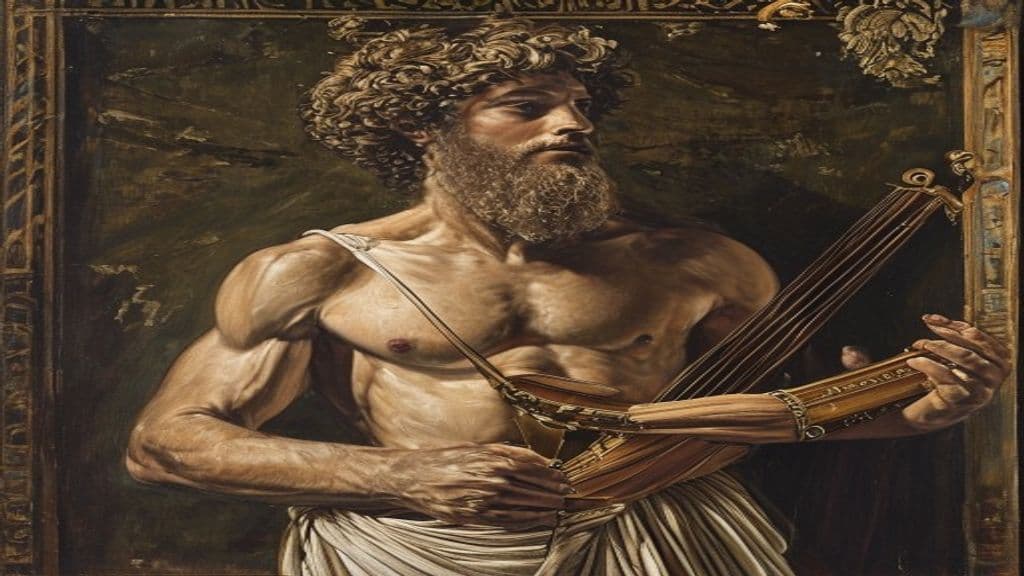
Apollo
Olympian deity of ancient Greek religion associated with prophecy, healing, music, archery, purification, and civic order. Principal patron of the Delphic oracle, protector of youth and flocks, and ambivalently both healer and bringer of plague.
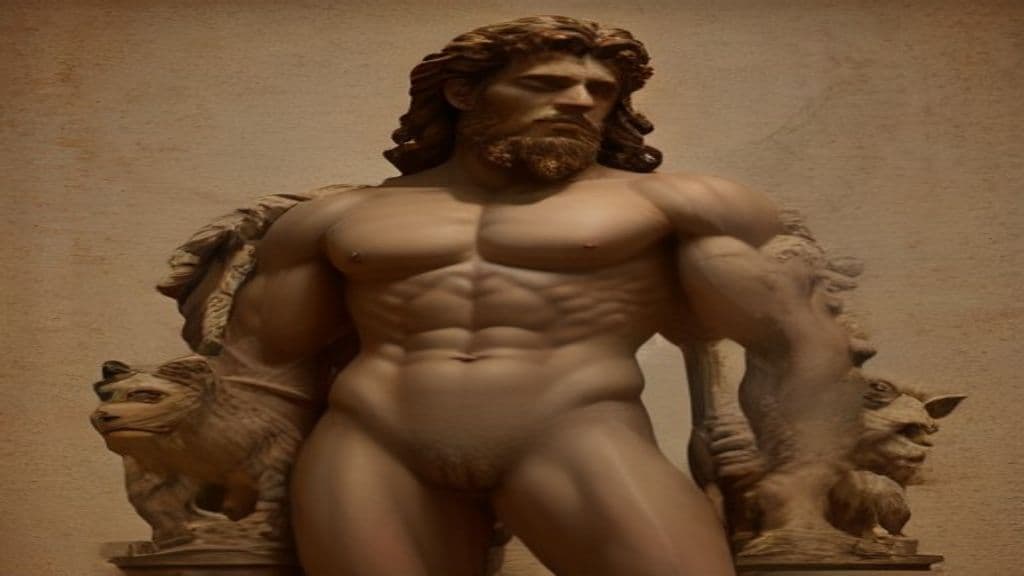
Hercules
Hercules (Latin: Hercules) is the Roman reception of the Greek divine hero Heracles: a semi-divine, divinized heroic figure son of Jupiter and the mortal Alcmena who was widely venerated across Italy. Represented in cult, votive art, and literature, he functions as a protector and martial champion whose identity was adapted through Etruscan and local Italic contexts.
Atepomarus
Atepomarus is a named Gaulish deity attested in epigraphic and mythographic sources. He appears primarily as an epithet attached to Graeco‑Roman gods (notably Apollo and sometimes Mercurius) in healing‑sanctuary contexts and also appears as a legendary founder figure paired with Momorus in a foundation myth of Lugdunum.
Luxovius
Luxovius (Latinized Luxovios) is a local Gallo‑Roman god associated with the waters of Luxeuil (the sanctuary at Luxeuil‑les‑Bains). He is attested in votive inscriptions as a place‑bound healing/spring deity and is paired in the cult with a female consort, Bricta (Brixta). Etymology links his name to a Proto‑Indo‑European *leuk‑ 'light/whiteness', suggesting combined associations of light and curative waters in his character.
Boroboroton
A tsukumogami yōkai that is an animate, tattered futon which comes to life at night. Traditional accounts describe it as rising, throwing its former owner from bed, and attempting to twine around the sleeper's head and neck in revenge for neglect; alternative accounts depict it joining other tsukumogami in noisy gatherings.
Boromir
Boromir is a mortal nobleman and warrior of Gondor in J. R. R. Tolkien's legendarium. He serves as heir-apparent to the Steward of Gondor, joins the Fellowship of the Ring, succumbs briefly to temptation over the One Ring, repents, and dies heroically defending his companions.
Borr
Borr (Old Norse Borr, Börr, Burr; anglicized Bor/Bör/Bur) is a scarcely attested figure in Old Norse theogony: the son of Búri, husband of Bestla, and father of Odin, Vili, and Vé. He appears by name in verse 4 of the Völuspá and in chapter 6 of Gylfaginning but is otherwise functionally an ancestral name with no preserved deeds or attributes in the supplied sources.
Bors
Bors is the name of two related knights in medieval Arthurian literature (father and son), introduced in the 13th‑century Lancelot‑Grail prose cycle and preserved in later retellings such as Malory's Le Morte d'Arthur. The younger Bors de Ganis is notable as one of the three questing knights (with Galahad and Perceval) who achieve the vision of the Holy Grail and as a model of Christian chivalric virtue; the name also appears in modern datasets as a toponym for a commune in Charente, France.
Boruta
Boruta (called "Devil Boruta" in the cited source) is a folkloric character from Polish mythology, folklore, and literature associated with the town of Łęczyca. The available source frames Boruta as a local legendary figure but provides no extended ethnographic detail.
Borysthenes
Borysthenes is the ancient Greek name for the Dnieper River and its personified river-god in classical accounts. In Greek literary and antiquarian sources the name denotes both the physically fertile river near Pontic Olbia and a local river-divinity invoked in genealogies and place‑names.
Borysthenis
Borysthenis (Ancient Greek Βορυσθενίς) is a theonym recorded in Greek discourse with two distinct usages: (1) as the name of one of a localized triad of Muses described as daughters of Apollo (sisters Apollonis and Cephisso), and (2) as an epithet applied to the Scythian earth-and-water goddess Api, indicating her status as 'daughter of the god of the Borysthenēs (Dnipro) river.'
Borzu Nama
A legendary hero from the Shahnameh epic cycle, embodying strength and courage. (Note: * Power tier should be Primordial (as it's a legendary hero from an epic cycle with no clear supernatural abilities). * Summary is accurate. * Appearance: No information available in source material, )
Bosom of Abraham
In Jewish tradition, the Bosom of Abraham is a concept representing a state or location within Sheol where righteous individuals await redemption after death. (Note: * Power tier should be Primordial (as it's a concept within Sheol, which is often described as a cosmic realm) * Origin story needs more context from source material; association with Abraham's righte)
Botis
Botis is a named spirit from Renaissance and early modern ceremonial grimoires, variously ranked as a President, Earl, or Count. Appearing in sources such as the Ars Goetia (Lesser Key of Solomon), the Pseudomonarchia Daemonum, the Munich Manual of Demonic Magic (as Otius), and mentioned in the Grand Grimoire as subordinate to Agaliarept, he is summoned by ritual operators to answer questions, reveal knowledge, and reconcile allies and enemies.
Community Record
- [1]Borvo — Wikipedia. Wikipedia, 'Borvo'wiki
- [2]Borvo — Wikidata. Wikidata entry Q41891341other
- [3]Archive (contextual reference). Archive.org (reference included in research notes)other