
Achyuta is not presented in the supplied sources as an independent origin-story character but as a Sanskrit epithet formed from the negative prefix a- plus the root cyuta (“fallen”), literally meaning “not fallen” or “unfallen.” As recorded in classical lexica and commentarial traditions, the name indexes a theological attribute: one who does not fall from his essential nature, power, or dharma. In scriptural and liturgical use the epithet is applied to Vishnu/Narayana and Krishna, situating those deities within a devotional cosmology that emphasizes divine immutability and reliability; in Pāñcarātra lists the name is embedded among vyūhas (emanations) and thus participates in the theological taxonomy of divine manifestations.
The supplied materials do not assign to Achyuta any independent anthropomorphic or iconographic traits distinct from those of Vishnu or Krishna. Rather, Achyuta functions as a descriptive name used in hymns, the Vishnu Sahasranama, and Bhagavad Gita addresses; any visual depiction would be those conventionally applied to Vishnu/Krishna in broader Hindu art and liturgy, which are not specified in the provided sources. The sources explicitly note that no unique physical appearance is attested for Achyuta as a separate entity.
Sources characterize Achyuta in ontological and theological terms rather than folkloric 'powers.' Key attributes documented include immutability and infallibility — "one who will never lose his inherent nature and powers" (Shankara's gloss as cited) — and the capacity to dispel illusion (moha) and establish the devotee in knowledge, as in Arjuna's Bhagavad Gita address: “O Infallible One, by Your grace my illusion has been dispelled, and I am situated in knowledge.” In Pāñcarātra contexts Achyuta appears among vyūhas, implying a functional role within the ritual-theological ordering of Narayana's manifestations, though the provided material does not enumerate ritualized powers or procedures tied specifically to the name.
Weaknesses
- othernone recorded in sources (Achyuta is an epithet of the divine; no vulnerabilities are ascribed)
Wards
- othernone recorded in sources (sources do not present practices to ward against Achyuta)
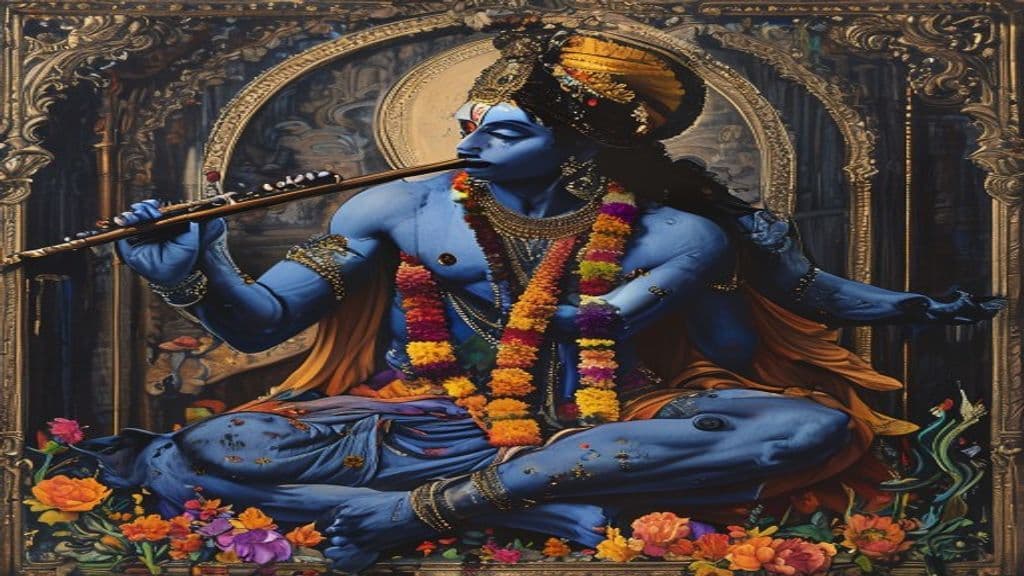
Krishna
Krishna (Sanskrit: Kṛṣṇa) is a major Hindu deity presented in the supplied sources both as the eighth avatāra of Vishnu and, in many traditions, as the Supreme Being (Svayam Bhagavān). He appears in a range of roles—child, cowherd, lover, charioteer, teacher and divine hero—and his life episodes (Krishna-līlā) are central to bhakti devotion, performance arts, and pilgrimage traditions.
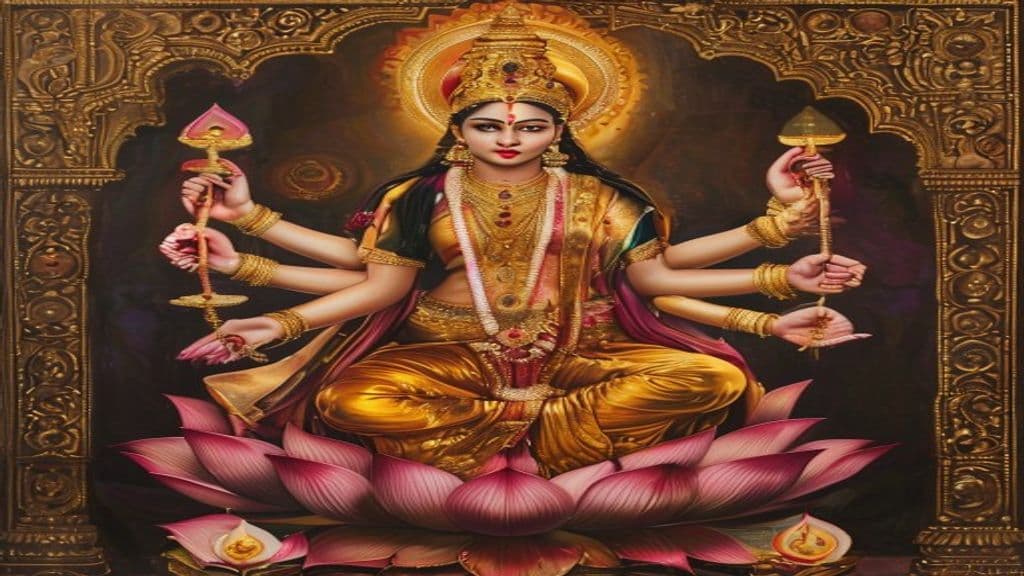
Lakshmi
Lakshmi is a principal Hindu goddess who personifies śrī (auspiciousness) and is revered as the giver of fortune, wealth, prosperity, beauty, fertility, sovereignty, and abundance. She is the consort and shakti of Vishnu in Vaishnavism, part of the Tridevi with Parvati and Sarasvati, and is the focus of popular devotional and festival practices such as Lakshmi Puja during Deepavali and Navaratri.
Aniruddha
Aniruddha is a mythological Vrishni prince and warrior in Hindu narrative (notably the Bhagavata Purāṇa), grandson of Kṛṣṇa and Rukmiṇī, son of Pradyumna and Rukmavatī. He is portrayed as a dynastic hero (a mahārathi), participant in the Uṣā–Bāṇāsura episode, father of Vajra, and—in certain Vaiṣṇava theological schemes—counted among the catur-vyūha and associated with the boar (Varāha) theriomorph.
Avatar (avatāra)
In classical Hindu theology, an avatāra is a divine 'descent' — the event or fact of a superhuman being or deity making a material appearance in the temporal world to accomplish a purpose (commonly to restore dharma). The term (Sanskrit अवतार, avatāra) emphasizes crossing down from the unconditioned into conditioned existence and is central to Vaishnava theology of Vishnu's incarnations while also appearing in other Indian religious contexts.
Dashavatara
Dashavatara (Sanskrit: daśāvatāra) names a canonical set of ten principal incarnations of the Hindu god Vishnu, each a full descent (avatara) taken to restore cosmic order (dharma) at moments of great disorder. The list and order of the ten vary by Purānic and sectarian traditions; the concept functions across mythology, temple cult, and devotional practice.
Devi
Devi (Sanskrit: Devī) is the general term for goddess in Indian religious thought, signifying the divine feminine or Shakti; in different texts and traditions she appears as individual goddesses (e.g., Parvati, Lakshmi, Saraswati) or as the supreme reality (notably in Shaktism and certain Upanishads). Sources treat Devi both as a class/category of female divinities and as a philosophical identification with ultimate reality.
Hindu deities
Hindu deities (Deva/Devi) are the diverse gods and goddesses recognized across Hindu traditions, ranging from Vedic forces of nature to later personalized major gods and goddesses. They function as patrons of rites, embodiments of moral and cosmic principles, and focal points for temple cults, festivals, and devotional traditions while often also being interpreted as aspects of a single Ultimate Reality (Brahman).
Krishna
Krishna (Sanskrit: Kṛṣṇa) is a major Hindu deity presented in the supplied sources both as the eighth avatāra of Vishnu and, in many traditions, as the Supreme Being (Svayam Bhagavān). He appears in a range of roles—child, cowherd, lover, charioteer, teacher and divine hero—and his life episodes (Krishna-līlā) are central to bhakti devotion, performance arts, and pilgrimage traditions.
Lakshmi
Lakshmi is a principal Hindu goddess who personifies śrī (auspiciousness) and is revered as the giver of fortune, wealth, prosperity, beauty, fertility, sovereignty, and abundance. She is the consort and shakti of Vishnu in Vaishnavism, part of the Tridevi with Parvati and Sarasvati, and is the focus of popular devotional and festival practices such as Lakshmi Puja during Deepavali and Navaratri.
Para Brahman
Para Brahman (Sanskrit: परब्रह्म, parabrahma) is a Hindu metaphysical designation for the Supreme Brahman — the highest, ultimate Reality described as beyond all descriptions and conceptualisations. Depending on school it denotes the attribute‑less absolute (nirguṇa) or the supreme personal God (saguṇa) identified with a sectarian deity.
Radha
Radha (Sanskrit: Rādhā; also Rādhikā) is a central goddess-figure in Vaishnavite devotional literature, portrayed as the chief gopi and beloved of Krishna and in many traditions as the supreme feminine principle (an aspect of Lakshmi or the hlādini-śakti). She is a paradigmatic emblem of devotional love (bhakti) whose prominence grows in medieval and early modern Bhakti poetry.
Satyabhāmā
Satyabhāmā is a goddess in the Krishna-centered Vaishnava tradition, presented as one of Krishna's chief/third consorts and as an incarnation of Bhūmi (the Earth) and an aspect of Lakshmi; she appears in scriptural episodes (notably the pārijāta episode in Śrīmad-Bhāgavatam) and in living devotional and performative contexts (temples, classical dance).
Achuhucanac
Achuhucanac is a rain-associated deity attested in brief sources on the pre‑contact religion of the Guanche people of Tenerife. The name is reported to derive from a Guanche compound meaning “that is in the rain,” and at least one source identifies Achuhucanac with the supreme Guanche god Achamán.
Acintya
Acintya is an Indonesian Hindu theological-symbolic representation of the ineffable supreme divine principle. In Balinese and Javanese practice it functions as a way to make ultimate reality present in ritual and art—often aniconically as an empty throne (padmasana) or anthropomorphically as a naked, flame-surrounded figure—rather than as a narrative, intervening deity.
Community Record
- [1]Achyuta - Wikipedia. Wikipedia, 'Achyuta' article (etymology, use as epithet, Shankara gloss, Bhagavad Gita citation, Pancharatra references).wiki
- [2]Bhagavan Namakaumudi Of Lakshmidhar With Commentary By Damodar Das Shastri (Achyuta Granthamala). Archive catalog entry referencing Achyuta Granthamala publications; indicates liturgical and textual traditions where the name appears.other
- [3]Tithyarka By Divakar (1932 Benaras Achyuta Grantha Mala). Archive catalog entry showing Achyuta-related publication in Achyuta Grantha Mala series; used as evidence of textual/liturgical presence of the name.other
- [4]Where does the 'Achyuta Anatha' shloka come from? (Hinduism StackExchange discussion). Community-sourced discussion referencing traditional usages of the name Achyuta in devotional contexts.other
- [5]Achyuta Deva Raya - Wikipedia (name usage). Example of historical personal-name usage of Achyuta; supports point that Achyuta functions as a theonym and personal name in South Asian contexts.wiki