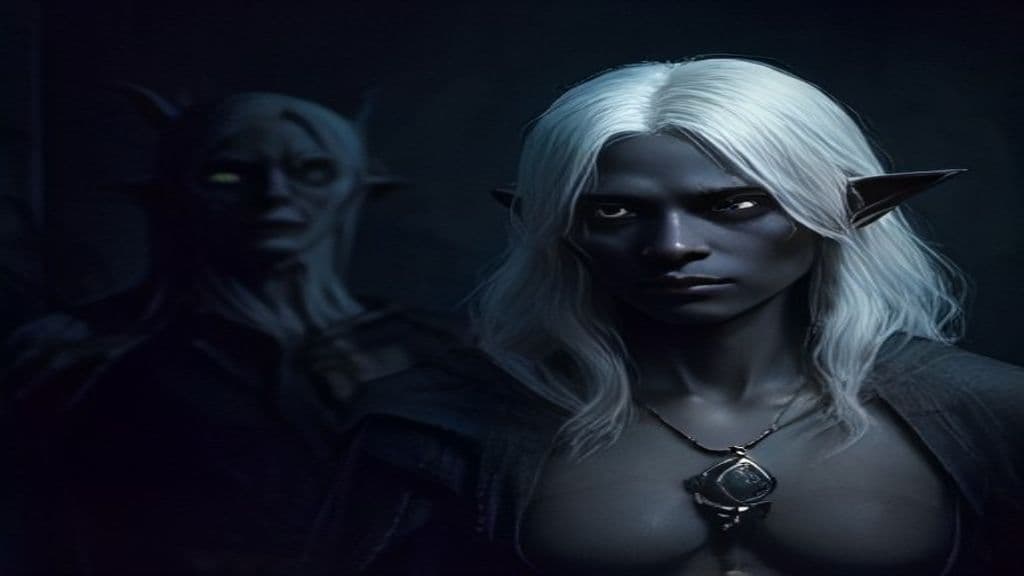
Within the Dungeons & Dragons tradition the drow were elaborated by game authors as a distinct elven subrace adapted to underground life; game histories cite early modules and rulebooks that built the drow into a full culture with cities (e.g., Erelhei-Cinlu), priesthoods, and political hierarchies. Linguistically, the English game-term draws on Orcadian and Shetland Scots dialect 'drow' as an alternative form of 'trow', themselves inherited from Norn and ultimately related to Old Norse draugr and troll — older northern folk categories of subterranean, uncanny, or revenant beings. Sources note that Gary Gygax used the existing folkloric mention of 'drow'/'dark elves' as an ideal basis when creating the game's elaborated drow mythos rather than claiming the word or concept as wholly original to the game.
D&D sources summarized in secondary literature portray drow as dark-skinned with white hair; early portrayals emphasized this stark contrast and associated them visually with subterranean darkness. The Prose Edda's earlier literary precedent for 'dark elves' describes beings who 'live down below the ground' and are described as 'blacker than pitch', a motif echoed in the game's depiction of a people adapted to the depths. Module accounts additionally note distinctive accoutrements tied to drow religion and rank (for example, a golden spider pin inscribed 'Lolth, Death Queen Mother' found on a priestess in module narratives).
In published D&D material summarized by the sources, drow are presented as a subterranean civilization notable for their strong traditions of magic and organized priesthoods; early materials characterized them as adept magic-users with priestess-led cultic structures and political intrigue. Module narratives portray drow as manipulators of subterranean politics and as participants in wider schemes (for example, influencing alliances among other underground peoples and opposing surface races); early descriptions framed them as 'evil' and 'poor fighters but strong magic-users', while later editions moved away from fixed alignment and explored greater social variation. The sources document drow involvement in clerical/magical worship (notably of the spider goddess Lolth in many early portrayals) and extensive social hierarchies within their capital cities and power structures.
Weaknesses
- otherNo specific folkloric or magical weaknesses documented in provided sources
Wards
- otherNo specific folkloric wards or ritual protections against drow are documented in the provided material
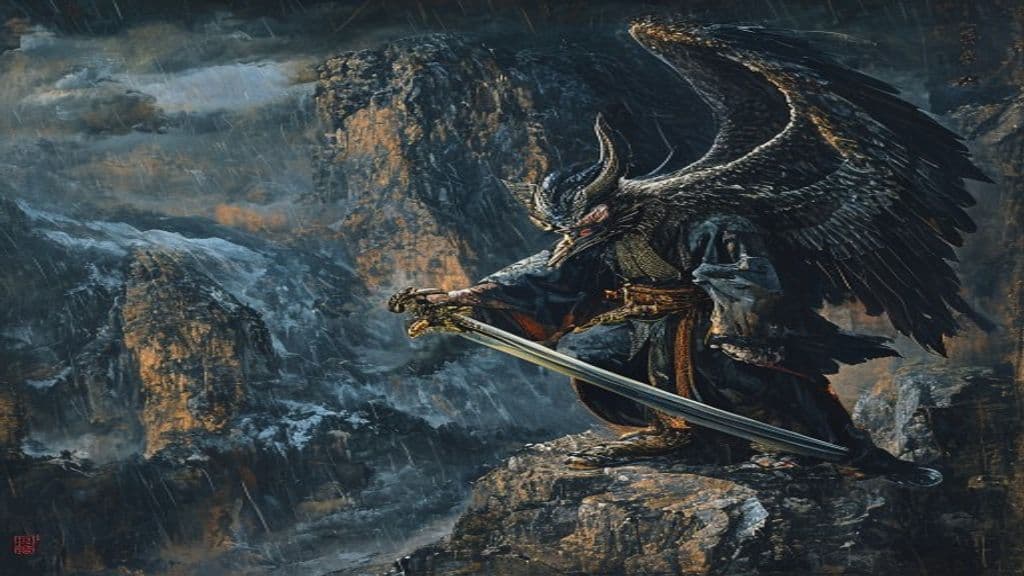
Drax the Destroyer
Drax the Destroyer is a fictional Marvel Comics character: a resurrected human spirit placed into a powerful new body by cosmic forces to serve as a champion created to oppose Thanos. Over decades of publication he functions as a cosmic warrior and member of teams such as the Infinity Watch and the Guardians of the Galaxy, with published power-set changes and multiple media adaptations.
Drekavac
A South Slavic night-haunting revenant-like creature whose name means "the screamer"; traditionally linked to the restless souls of improperly buried or unbaptised dead (including sinful adults and unbaptised children) and reported in many regional variants that foretell death or disease and frighten the living.
Drelnza
Drelnza is listed as a named entry on a compiled list of characters from the Greyhawk campaign setting. The sole provided source supplies only the name; no descriptive, mythological, or functional information about Drelnza is present in that source.
Drioma
A Slavic spirit associated with the evening and night hours, known for interacting with children and adults. (Note: 1. Power tier should be Ancient, not Primordial, as Drioma's abilities are described as entering houses through cracks and fissures, but no cosmic or universal-level powers mentioned. 2. Add sensory c)
Drizzt Do'Urden
Drizzt Do'Urden is a fictional drow (dark elf) character created by R. A. Salvatore for the Forgotten Realms (Dungeons & Dragons). Portrayed across multiple novels and short stories, he is an atypical member of drow society who rejects its evil norms, becomes an exile, and wanders between the Underdark and the surface as a warrior and moral focal figure in the setting.
Drosera (sundews)
Drosera, commonly known as sundews, is a genus of carnivorous plants in the family Droseraceae. The genus contains at least 194 species distributed on every continent except Antarctica and is characterised by glandular, mucilage‑covered tentacles that trap and digest insects to supplement nutrient-poor soils.
Drude
A female nocturnal spirit in German folklore associated with causing nightmares and the sensation of being pressed in sleep (Alpdruck). Treated as a kind of alp or witch-hag in southern German and alpine traditions, with household apotropaics and local counter-practices recorded.
Drudwas ap Tryffin
A human warrior and knight associated with Arthurian and medieval Welsh tradition, noted chiefly for possessing three supernatural birds (Adar Llwch Gwin) given to him by his fairy wife; a late tale records that his literal command to those birds led to his death.
Drudwyn
A fabulous wild boar figure attested in Arthurian/Welsh tradition; the sources provided identify the well-known monster Twrch Trwyth as a 'fabulous wild boar' whose hunt is narrated in the Welsh prose romance Culhwch and Olwen. The name 'Drudwyn' appears in the query but is not attested in the supplied source excerpts.
Drummer of Cortachy
A site-bound ghost associated with Cortachy Castle and the Ogilvy (Earls of Airlie) family, reputed to sound a martial tattoo on a drum — sometimes with ghostly pipes — as a portent of imminent death among the castle's owners. The legend appears in nineteenth- and twentieth-century collections of Scottish ghost stories and in modern summaries.
Dryad
A type of Greek nymph associated with trees—especially oak—often depicted as long‑lived nature spirits whose lives are connected to particular trees in some subtypes. Dryads enforce respect for trees and may punish mortals who harm them without prior appeasement.
Dryalus
Dryalus (Ancient Greek: Δρύαλόν) is an individual centaur named in Hesiod's Shield of Heracles and later summaries; he is listed among the centaur combatants at the wedding of Pirithous and Hippodameia who fought the Lapiths in the Centauromachy. Surviving attestations are brief genealogical and catalogue-type mentions rather than extended mythic narratives.
Community Record
- [1]Drow — Wikipedia. Wikipedia article 'Drow' — etymology, portrayal in Dungeons & Dragons, appearance and publication history summarized therein.wiki
- [2]Archive.org: D&D Male Drow Weapon Master OC. Archive.org item referenced in research notes (non-primary illustration/asset repository); included in source list though not used for ritual or folkloric detail.other
- [3]Archive.org: assorted unrelated items (contextual). Other archive entries listed in the research notes (e.g., unrelated audio and newspapers) — noted as present in the source list but not providing additional drow-specific information.other