
In the Zoharic mystical corpus Eisheth Zenunim appears as an epithet and feminine personification associated with sexual sin. The Zohar (Introduction 1:5a and related Zoharic commentaries summarized in the sources) names her among a set of female figures described as 'mates of Samael' and glosses her title literally as 'Woman of Whoredom' (אֵשֶׁת זְנוּנִים). The primary medieval presentation frames her role symbolically — as a moral/cosmological category tied to licentiousness and impurity — rather than as a narrated biographical figure. In later Western occult reception (Mathers, Crowley summaries cited in the sources), Eisheth is recontextualized as a Qliphothic princess or queen, an interpretive move that places her within ritual magical schemata absent from the original Zoharic citation.
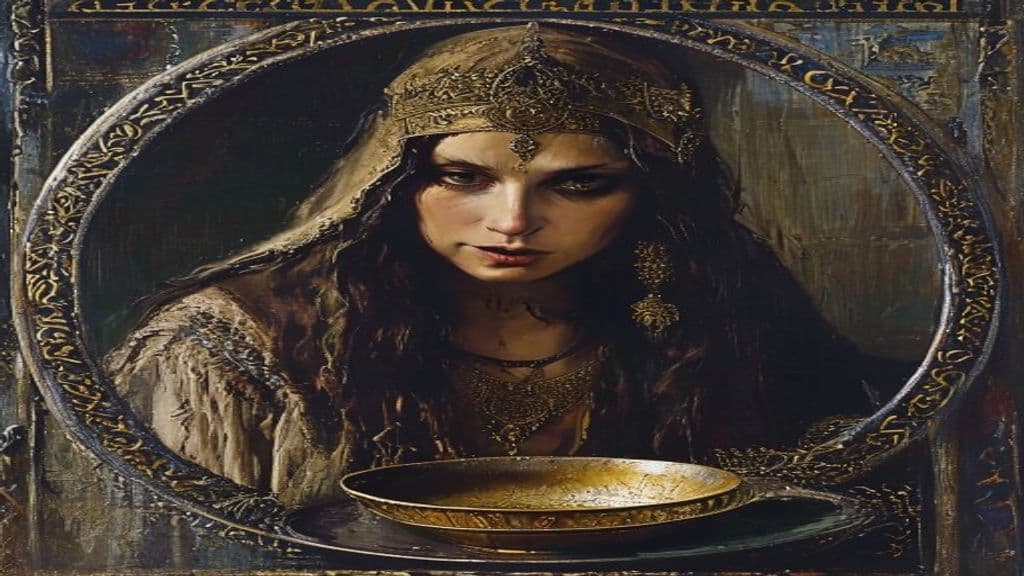
The supplied Zoharic summaries do not provide a detailed physical description of Eisheth; she is named and characterized by role (the 'female of Samael,' 'wife of harlotry') rather than by corporeal features. Derivative and modern sources that assimilate her to succubi or to the 'four queens' sometimes portray her with seductive or fantastical features typical of later demonological and popular imaginings, but such imagery is secondary to and not present in the primary Zoharic passages summarized in the materials.
In the Zoharic framing Eisheth functions as a consort or mate of Samael, implying a symbolic role in seduction, sexual corruption, and the propagation of malign influence within the mystical cosmology. Later occult and popular accounts attribute to her behaviors common to succubus lore (seduction of men, nocturnal visitations, producing demonic offspring, leadership among malignant female spirits), and occult writers place her as a Qliphothic princess with jurisdiction over an aspect of impurity. Specific claims such as 'feeding on souls' or detailed routines of nocturnal visitation are recorded in derivative online and popular sources but are not corroborated in the supplied Zohar citation and are therefore later accretions in the reception history.
Einar (Norse)
A concept representing or embodying the idea of einherjar, elite warriors who ascend to Valhalla in Norse mythology. (Note: 1. The power tier should be Primordial, as Einar represents a concept connected to cosmic/mystical aspects of Valhalla. 2. The appearance description is vague; rephrase it to "No physical description )
Einherjar
Warriors who died in battle and were brought to Valhalla by valkyries, playing a crucial role in the events leading up to Ragnarök. (Note: - Power tier should be Primordial since they are associated with a cosmic event (Ragnarök) and are not described as deities or regional powers. - Abilities: The einherjar don't actually engage in dail)
Einherjer
Einherjer is primarily attested in the provided corpus as a Norwegian Viking metal band whose name is taken from the Old Norse term Einherjar — the slain warriors said to dwell in Valhalla. The sources document the band's formation, recordings, festival appearances, and thematic use of Norse legend; the modern usage functions as a cultural reference to the mythic category rather than as an account of living supernatural beings.
Einherji (Einherjar)
Einherji (plural Einherjar) is a term from Norse mythic vocabulary attested in the supplied sources mainly as a cultural name and as a statted warrior-type in modern roleplaying/bestiary contexts. The provided materials do not include primary Old Norse myth-text descriptions, so the entries here collate only what those modern and secondary sources assert: a connection to Norse warrior-figures and modern reuse in gaming and Icelandic civic naming.
Eioneus
Eioneus (Ancient Greek Ἠιονεύς, Eioneús) is not a single supernatural being but a personal name borne by several distinct figures in Greek myth. Attestations present Eioneus as mortal or semi-divine personages: genealogical ancestors (fathers or grandfathers), an eponymous founder-figure linked to a coastal city, a suitor slain in a heroic contest, and named warriors killed in the Trojan War cycle.
Eir
Eir is an Old Norse female supernatural figure associated with healing and medical skill in medieval Icelandic sources. She appears in the Poetic Edda and Prose Edda (as an ásynja and as a valkyrie-name) and among the maidens of Menglöð on Lyfjaberg ('hill of healing'); attestations are sparse and scholars debate whether these refer to one coherent deity or multiple figures sharing a name.
Eitri
Eitri (also attested as Sindri) is an Old Norse dwarf smith celebrated in the Skáldskaparmál episode for forging three famous artifacts — Gullinbursti, Draupnir, and Mjöllnir — while working with his brother Brokkr. He is presented as a master craftsman whose work directly affects the gods, not as a deity.
Ekek
A nocturnal birdlike human predator from Philippine folklore, the Ekek (or Ek Ek) is a winged creature said to hunt at night for flesh and blood, particularly targeting sleeping pregnant women and draining fetuses with a long proboscis.
Ekke Nekkepenn
Ekke Nekkepenn is a North Frisian folkloric figure, presented in 19th-century sources as a composite character: Christian Peter Hansen depicted him as a sea-dwelling 'merman' with a wife Rahn, while Theodor Storm later used a similar name for a small fiery, maleficent being. The figure combines a local water-man legend with a Rumpelstiltskin-type name-motif in Hansen's retelling.
El
El (ʼEl, ʾil, ʾilu) is a Northwest Semitic term meaning 'god' that also functions as the proper name and title of a senior, patriarchal deity in Canaanite/Ugaritic and related West Semitic traditions. He is portrayed in surviving texts as the father of the gods, presiding over a divine council, a progenitor of major deities and humankind, and a figure whose attributes were later conflated with those of Yahweh in Israelite religion according to scholarly reconstructions.
El Bilga Khatun
El Bilga Khatun was the wife of Ilterish (Ilterish Qaghan), founder of the Second Turkic Khaganate, and mother of Bilge Qaghan and Kul Tigin. She appears in the Orkhon inscriptions and later historiography as a political partner and honored elite figure of the 8th-century Göktürk polity.
El Borak (Francis Xavier Gordon)
El Borak is a fictional American adventurer created by Robert E. Howard, known by the Arabic epithet meaning "The Swift" for his exceptional speed, martial skill, and guile. Set in early 20th‑century pulp adventure contexts across Afghanistan and adjacent regions, he is portrayed as a legendary human operative whose reputation mediates tribal and political conflict rather than a supernatural being.
Community Record
- [1]Eisheth (Wikipedia summary drawing on Zohar and Mathers/Crowley treatments). Wikipedia: Eisheth (article summarizes Zoharic citations and later occult reception)wiki
- [2]Eisheth (Wikidata entry). Wikidata: structured data identifying Qliphothic princess attributionwiki
- [3]Succubus and 'four queens' summaries (derivative folkloric account cited in research notes). Derivative folkloric summaries identifying Lilith, Eisheth, Agrat bat Mahlat, and Naamah as four succubi who mate with Samael (as noted in the compiled research notes)folk
- [4]Archive and popular culture references (collection noted in research notes). Various modern archive, fandom, and popular-culture items that adapt Eisheth in fiction and gaming (mentioned in the research notes list)other
- [5]Community Q&A on Eisheth feeding on souls. StackExchange discussion recording claims not corroborated in primary Zohar citation (noted as uncertain in research notes)other