
The modern label derives from the place-name Elam, which in sources stems from the Sumerian transliteration elam(a), later Akkadian elamtu, and the Elamite haltamti. As a regional religious corpus it developed in the territory centered on Susa and the Susiana lowlands and evolved across the long history of Elamite polities from early attestations in the third millennium BCE through the neo-Elamite and Achaemenid eras, interacting with neighboring Sumerian, Akkadian, Hurrian and later Persian religious environments (source: Wikipedia: Elam; MPRL multilingualism chapter; The Elamite World bibliography).
As a system rather than a single being, Elamite religion appears archaeologically and textually through cultic centers (notably Susa), votive and funerary assemblages, royal inscriptions in multiple languages (including an Elamite version of the Behistun inscription), and the attested names and portrayals of individual deities such as Humban and the astral goddess Pinikir. The provided sources note inscriptions and scholarly editions (e.g., Elamite Behistun edition) and bibliographic treatments of funerary and cultic material as the primary evidentiary bases for reconstructing Elamite religious material culture (sources: Wikipedia: Elam; A New Edition of the Elamite Version of the Behistun Inscription; The Elamite World bibliography).
Rather than 'powers' in the personal sense, Elamite religion functioned socially and politically: it organized cults and state ritual, provided funerary rites and cosmological frameworks, and facilitated the transmission and adaptation of deities (e.g., Pinikir) into neighboring repertoires. Individual deities within the tradition held varied cultic prominence over time — for example Humban is attested from the earliest sources and grew in importance in the neo-Elamite period, while Pinikir is identified as an astral goddess originating in Elamite belief who later appears in Hurrian contexts — indicating the tradition's role in regional religious exchange and state ideology (sources: Humban; Pinikir; Wikipedia: Elam; The Elamite World bibliography).
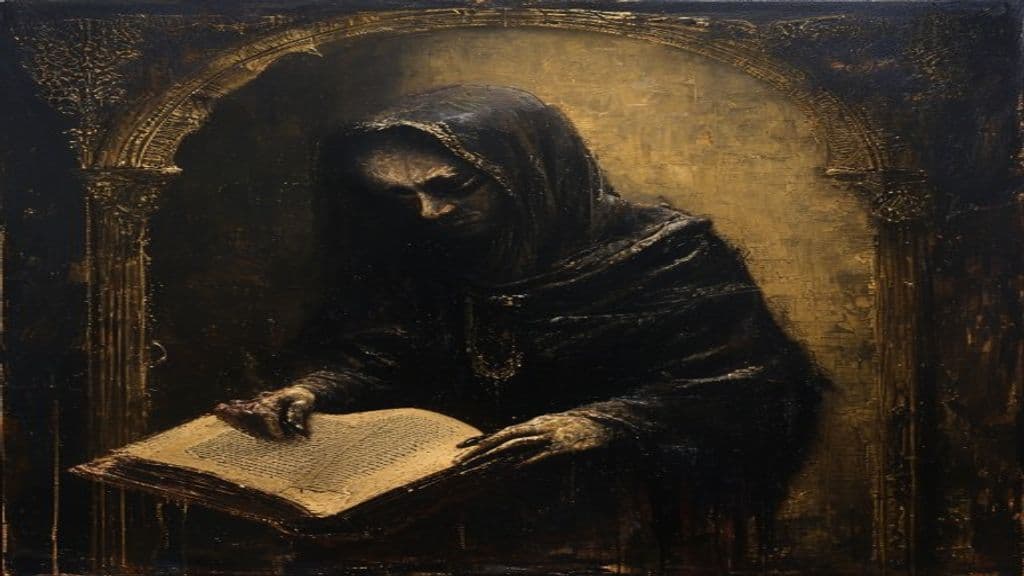
Inshushinak
Inshushinak is the principal tutelary deity of the city of Susa in Elamite tradition, functioning as the city's lord, protector, royal legitimizer, and divine judge with associations extending into funerary and underworld contexts.
Ishmekarab
Ishmekarab (Išmekarab / Išnikarab) is a Mesopotamian deity associated with justice, oath‑enforcement, and divine judgment. Attested in Assyrian lists of divine judges and in Elamite/Susa contexts, the figure is invoked in legal and curse formulas and appears in scholarship as participating in juridical/afterlife roles in some Susa texts.
Tutelary Deities
Tutelary deities are guardians or patrons bound to a particular place, community, office, lineage, or social role. The category spans single local gods, local epithets of major gods, groups of protective deities incorporated into institutional religions, and localized spirits enshrined in temples or shrines.
El Tío
El Tío ('The Uncle') is the subterranean lord and local spiritual power of mines in the Bolivian Altiplano (especially Cerro Rico, Potosí). Miners propitiate him with statues and offerings because he is believed to both protect and punish; his identity overlaps with the indigenous Supay and is shaped by colonial and mining contexts.
Elagabal/El‑Gabal (Elagabalus, Heliogabalus)
Elagabal (El‑Gabal), Latinized as Elagabalus and syncretized as Heliogabalus, is the Emesene mountain and sun god represented by a sacred cult‑stone (baetyl). A local Baal‑type deity of Emesa (modern Homs), the cult was historically notable for its transplantation and promotion to Rome during the reign of the emperor commonly called Elagabalus (218–222 CE).
Elaine
Elaine is a personal name applied to several female characters in the Arthurian literary cycle (for example Elaine of Astolat, Elaine of Corbenic, and a Queen Elaine of Garlot). In the cited materials these Elaines are legendary human figures — queens, lovers, or nuns — whose roles vary by tale rather than a single supernatural being.
Elaine of Astolat
Elaine of Astolat is a mortal noblewoman from Arthurian romance who dies of unrequited love for Sir Lancelot; her body is set adrift in a small boat clutching a lily and a final letter and is discovered at Camelot. Her episode appears in multiple medieval variants and was later reworked in Victorian poetry and visual art.
Elaine of Corbenic
A noblewoman in the Arthurian Grail-cycle who functions as the Grail Maiden/Grail Bearer; daughter (in many accounts) of King Pelles of Corbenic, she shows the Holy Grail to Lancelot, engineers (with aid) the conception of Galahad, and later brings a mad Lancelot to the Grail to be healed.
Elatha
Elatha is a figure in Irish medieval myth portrayed as a king of the Fomorians who also fathers several leading members of the Tuatha Dé Danann. He is depicted as a noble, luminous maritime prince associated with gold and light imagery and appears in narratives such as the Second Battle of Mag Tuired and genealogical accounts explaining the ancestry of figures like Bres, the Dagda, Ogma, and Lir.
Elatus
Elatus (Ancient Greek: Ἔλατος) is a personal name borne by multiple distinct figures in ancient Greek mythic tradition — including an Arcadian founder-eponym, a Lapith prince, a centaur slain in combat with Heracles, and several minor epic personae (charioteer, Trojan ally, suitor). The name functions as an onomastic label across genealogical, foundation, and heroic-age narratives rather than designating a single recurring supernatural class.
Elcmar
Elcmar (also Ecmar, modern Ealcmhar) is a member of the Tuatha Dé Danann portrayed in Irish narrative tradition as a high-ranking household official — chief steward of the Dagda — husband of the goddess Boann, lord of Brugh na Bóinne, and participant in cycles of rivalry and retribution with figures such as the Dagda, Aengus, and Midir.
Eldad and Medad
Eldad and Medad are Israelite men named in Numbers 11 who prophesied within the Israelite camp while the seventy elders went to the tabernacle to receive prophetic spirit. The episode is used in biblical and later traditions to discuss the distribution of prophecy and is elaborated in rabbinic and early Christian apocryphal literature with varied prophetic attributions.
Community Record
- [1]Elam. Wikipedia: Elamwiki
- [2]Pinikir. Wikipedia: Pinikirwiki
- [3]Humban. Wikipedia: Humbanwiki
- [4]A New Edition of the Elamite Version of the Behistun Inscription. Archive: A New Edition of the Elamite Version of the Behistun Inscriptionother
- [5]The Elamite World – Bibliographia Iranica. The Elamite World – Bibliographia Iranica (bibliographic entries on Elamite religion, ritual, funerary practices)other
- [6]Multilingualism in the Elamite Kingdoms and the Achaemenid Empire. MPRL: Multilingualism, Lingua Franca and Lingua Sacra (chapter on Elamite multilingual contexts)academic
- [7]Die iranischen Eigennamen in den Achämenideninschriften (1897). Archive: Die iranischen Eigennamen in den Achämenideninschriften (1897)other
- [8]Der elamische Gott Memnon (1917). Archive: Der elamische Gott Memnon (1917)other
- [9]The Elamite civilization: A cultural and political powerhouse of ancient Iran. Fabrizio Musacchio: The Elamite civilizationother