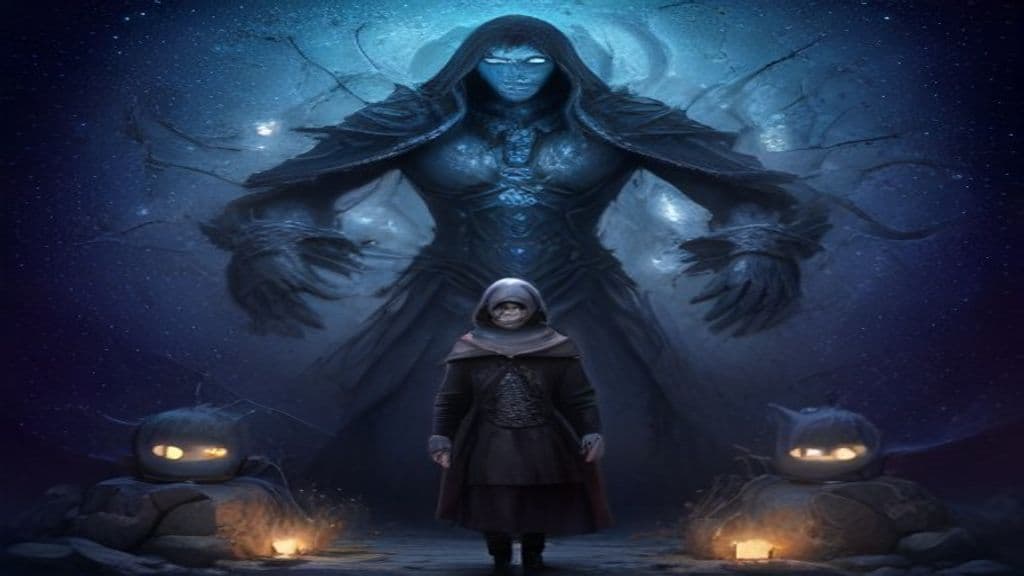
The entry combines two separate referents tied by the Hebrew word אמת. In C. S. Lewis's The Last Battle, Emeth is introduced as a young Calormene officer, second in command under Rishda Tarkaan, who objects to the deceit surrounding an impostor presentation of Aslan and ultimately seeks the true deity; his moral sincerity is acknowledged by Aslan in Aslan's Country. Separately, in a retelling of the golem legend attributed in the source to the Kabbalist Elijah Ba'al Shem of Chelm, the Hebrew word אמת is written on a clay man's forehead to bring it to life; the narrative records that erasing the initial letter א (aleph) changes the inscription to מת (death), collapsing the golem.
As a Lewisian character: described in source summaries as a young Calormene officer, second in command of a detachment under Rishda Tarkaan who enters the stable created by Shift and Rishda and later appears in Aslan's Country; the supplied materials give no detailed physical description beyond his role, actions, and cultural identity as a Calormene soldier. As a written formula in the golem legend: the inscription אמת is placed on the forehead of a clay man's form crafted by Rabbi Elijah Ba'al Shem; the clay figure is described simply as a man's form made of clay that 'grows and grows' until the rabbi erases the aleph.
Emeth (Lewis): no supernatural powers are attributed in the source material; his significance is moral and soteriological — his sincerity and virtuous acts performed under the name of Tash are accepted by Aslan. The inscription אמת (golem legend): functions as an activating formula — writing the full word אמת on the clay figure's forehead brings the golem to life; erasing the initial letter א converts the word to מת ('death'), which causes the golem's clay body to collapse. The account emphasizes the performative potency of Hebrew letters rather than agency residing in the word as an independent spirit.
Weaknesses
- symbolerasure of א in the inscription אמת → מת (changing 'truth' to 'death')
Wards
None recorded.
Tengu
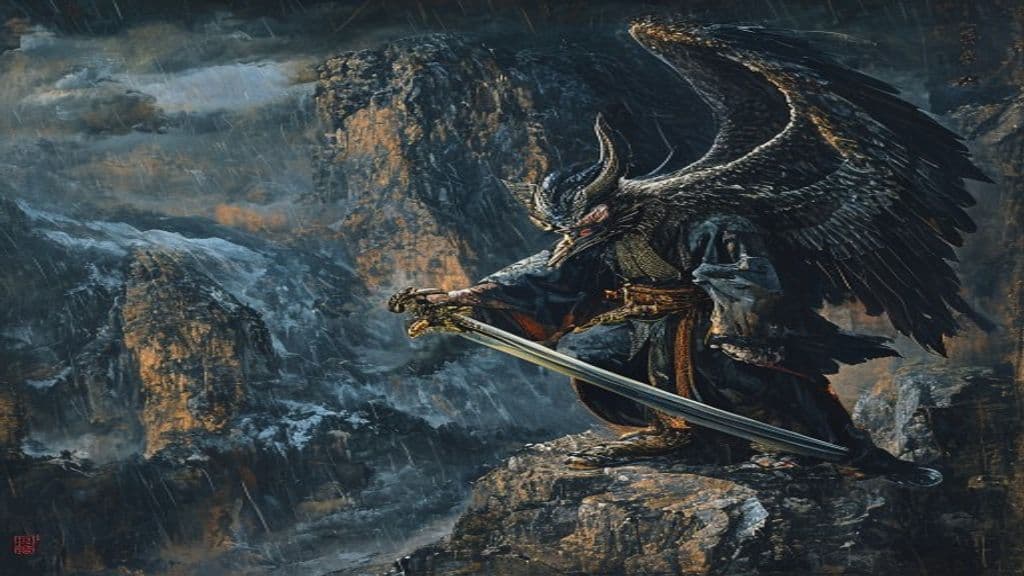
Proud, warrior-like mountain spirits of Japan, associated with martial arts, pride, and the wild mountains. Neither fully good nor evil — they test and train warriors and monks, but punish the arrogant.
Aslan
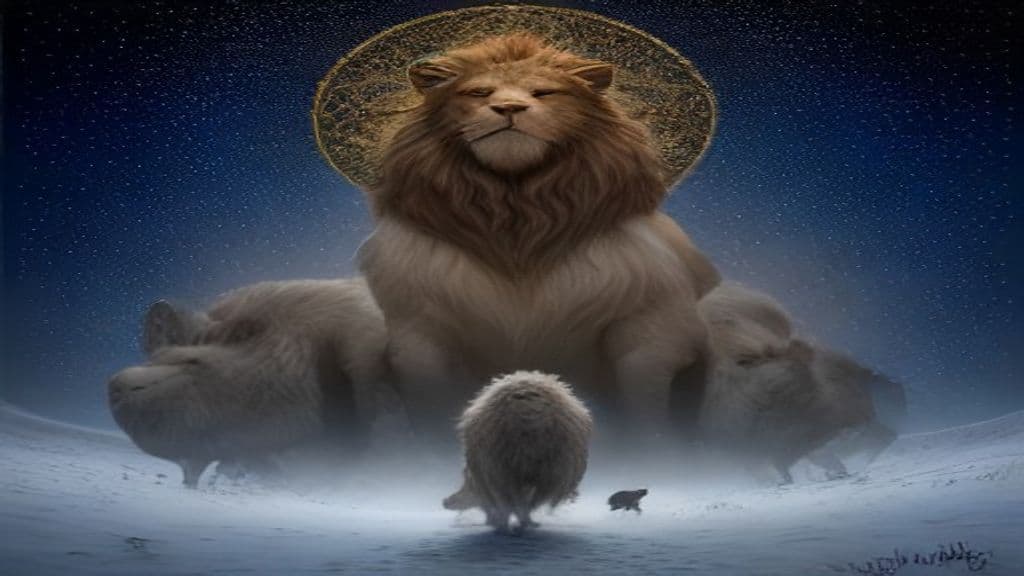
Aslan is the singular, talking lion figure at the center of C. S. Lewis's The Chronicles of Narnia, functioning as creator, king, judge, savior, and moral authority within that fictional cosmology. The name also appears in unrelated contexts (personal names, a lion-like alien in Traveller RPG) but those are distinct referents.
Elymus
Elymus is primarily a botanical genus of perennial grasses (family Poaceae) whose species include wild ryes and quackgrasses; the name also appears in classical mythic reference as a personal name (the purported ancestor of the Elymians and as a man slain by Gorge). The available sources treat Elymus as a taxonomic label and a mythic personal name, not as a defined supernatural being within a living folk cosmology.
Elyon
Elyon (ʻElyōn, עֶלְיוֹן) is an ancient Northwest Semitic divine title/name meaning “the Upper/Most High.” In Israelite and neighboring Levantine texts it functions variably as an epithet of the God of Israel, as a high deity in regional treaty and mythic lists, and as a theological/poetic term emphasizing divine supremacy and cosmic height.
Emain Ablach
A mythical island paradise in Irish mythology, associated with Manannán Mac Lir and said to be an idyllic landscape filled with swans and yews. (Note: * Power tier: Reduce to Greater (Primordial implies a cosmic entity, Ancient implies deity-level, which may be excessive for an island paradise) * Origin story: Clarify that it's associated with Manan)
Emathion
Emathion is an onomastic figure in Greek and Roman literature: a name applied to several mortal personages of the heroic age (kings, courtiers, princes, and companions) rather than to a single supernatural being. Occurrences include a king of Aethiopia/Arabia killed by Heracles, a king of Samothrace who sent troops to Dionysus, an aged Ethiopian courtier slain in the Perseus–Phineus brawl, and a companion of Aeneas recorded in the Aeneid.
Emela-ntouka
A cryptozoological animal from Central African tradition, feared for its deadly capabilities. (Note: 1. Power tier: Based on its name and association with elephants, it's likely a Greater entity, not Lesser. 2. Abilities: The source doesn't describe its powers beyond being an "elephant killer", imply)
Emere (Yoruba tradition)
A being that can traverse between the spiritual and physical worlds at will, misrepresenting death as life. (Note: 1. Power tier should be Primordial -> Greater (since Emere is "more powerful than witches" but not explicitly described as cosmic or deity-level). 2. Appearance description should be more specific tha)
Emma Frost
Emma Frost is a fictional human mutant character from American comic books published by Marvel Comics, depicted as a high-level telepath who can transform into an organic diamond form. Introduced in 1980, she has appeared as both antagonist (notably the Hellfire Club's "White Queen") and later as a central member and leader of the X-Men.
Emperor Ku
A legendary mytho-historical sage-sovereign in early Chinese tradition, presented as a descendant of the Yellow Emperor and counted in many lists among the culture-hero rulers (commonly one of the Five Emperors). He is credited with ordering ritual musical technologies, instituting court ceremonial practice, and founding lineages that later legitimated dynasties.
Emperor Shun
Emperor Shun (舜), also called Di Shun or Yu Shun, is a legendary sage-king in early Chinese tradition, counted among the Five Emperors. Sources portray him as a moral exemplar whose filial piety, modesty, ritual offerings, and administrative reforms model ideal rulership and the ordering of society.
Emperor Yao (堯)
Emperor Yao is a legendary sage-king of early Chinese tradition, counted among the Five Emperors. He is famed as a moral exemplar who confronted the Great Flood, instituted calendrical/astronomical officials, and—by traditional accounts—selected Shun as his successor after testing his virtue.
Emperor Zhi (帝挚 / 帝摯, Dì Zhì)
A quasi‑historical prehistoric sovereign in classical Chinese chronicle tradition, recorded as a son of Emperor Ku who reigned poorly for nine years before being deposed and succeeded by his younger half‑brother Yao. Treated by later historiographers as a negative exemplar in dynastic moral narratives rather than a supernatural being.
Emphytus
Emphytus is attested in two distinct registers in the provided sources: (1) as a named Giant (one of the Gigantes) listed among the offspring of Earth (Gaia) and Tartarus in a classical genealogical catalogue (Hyginus), and (2) as a modern biological genus name (Emphytus Klug, 1816) applied to a group of sawflies (family Tenthredinidae) recorded in European faunas and in the fossil record.
Community Record
- [1]Emeth (Wikipedia). Wikipedia entry 'Emeth' (summary of C. S. Lewis's The Last Battle and reference to Hebrew אמת in golem legend).wiki
- [2]Wikidata: Emeth. Wikidata item for Emeth, cross-referencing literary and lexical data.wiki
- [3]Selected archival and secondary references (aggregated notes). Secondary discussion citing Lewis and related theological reading (archive.org copy).other