
The Ennead is a group of nine deities that form the pantheon worshipped at Heliopolis. It represents a complex web of relationships and generations within the divine family, reflecting the Egyptian cosmological worldview.
There is no physical description of the Ennead as it refers to a group of deities rather than a singular entity.
As a collective group of gods and goddesses, the Ennead exhibits various powers and behaviors attributed to its individual members. However, these powers are a result of their collective presence, not just individually attributed to them.
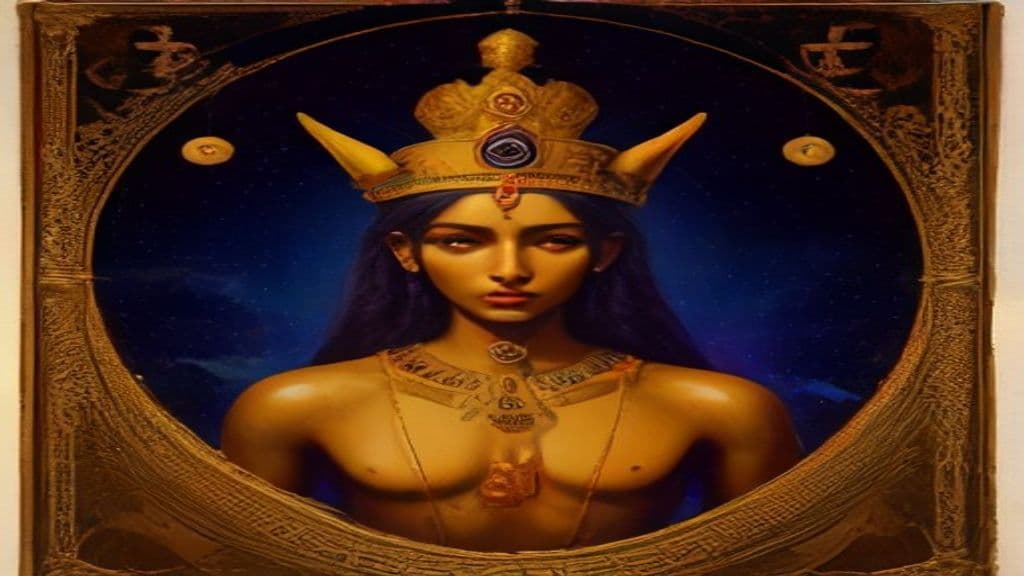
Atum
Atum is the primordial self-created deity of ancient Egyptian religion who emerges from the primeval waters (Nu) and brings forth the first gods. Associated with the primeval mound (benben) and the evening aspect of the sun, Atum functions as an origin and as a figure tied to funerary literature and royal afterlife ideology.
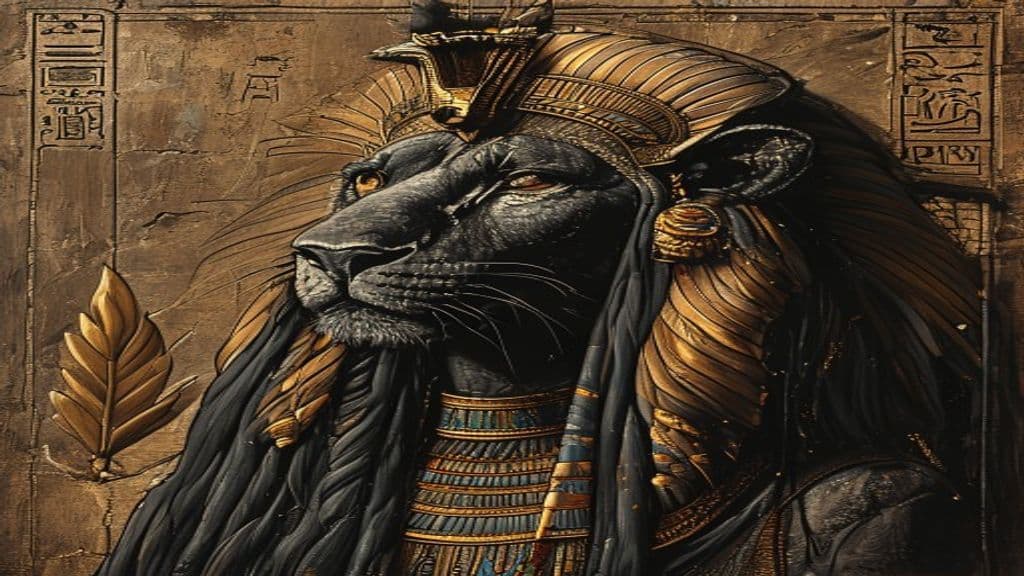
Tefnut
Tefnut is an ancient Egyptian goddess of moisture (moist air, dew, and rain), a leonine and solar-associated member of the Heliopolitan Ennead. She is a primordial offspring of the creator (Atum/Ra), twin and consort of Shu, and mother of Nut and Geb, functioning both as a life-giving moisture deity and as one of the leonine 'Eye of Ra' goddesses who can assume a fiery protective or wrathful aspect.

Geb
Geb (Egyptian gbb/Gebeb) is the ancient Egyptian personification of the Earth and a member of the Heliopolitan Ennead. He functions as the fertile, chthonic ground that produces crops and snakes, an early divine king who later judges in the divine tribunal, and the husband of the sky goddess Nut.
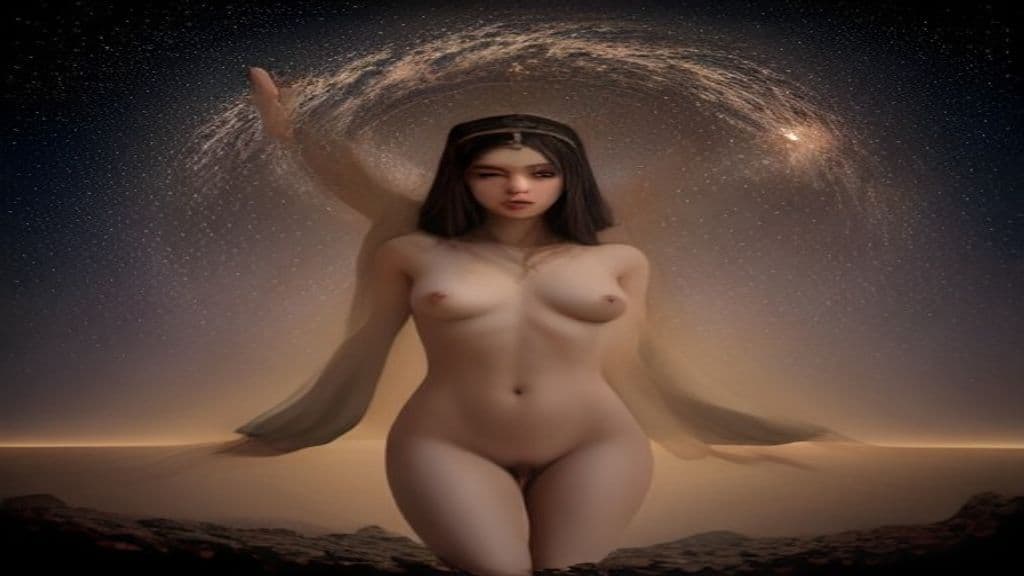
Nut
Nut (Ancient Egyptian: Nwt; Coptic: Ⲛⲉ) is the ancient Egyptian goddess who personifies the sky, stars, and cosmos and is associated with motherhood and astronomical symbolism. She is commonly depicted as a star-covered woman arched over the earth, forming the vault of heaven.
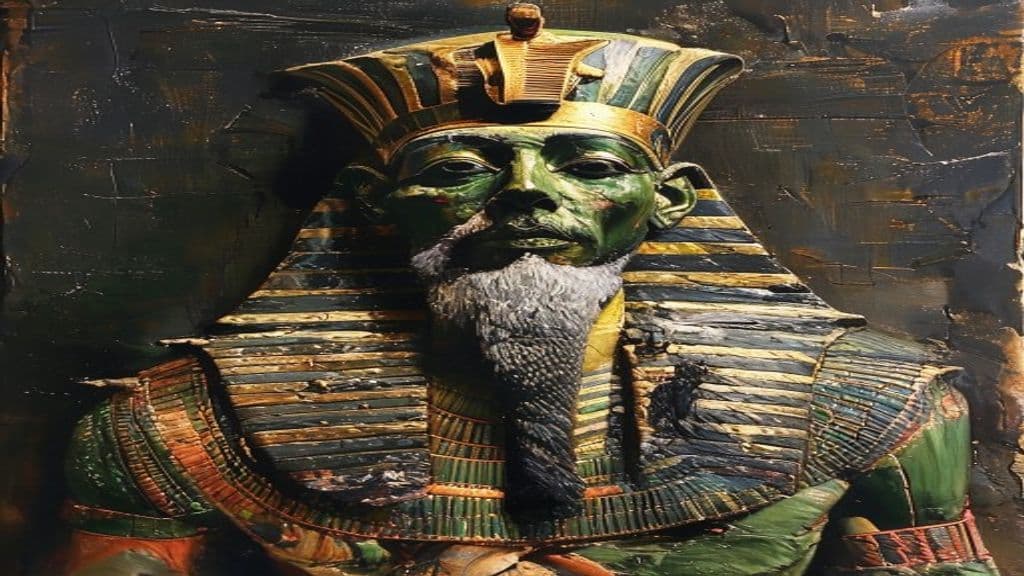
Osiris
Osiris is the major ancient Egyptian god of fertility, vegetation, death, resurrection, and the afterlife. He functions as sovereign of the realm of the dead, a guarantor of postmortem renewal and agricultural fertility, and the archetypal divine figure with whom deceased kings and mortals ritually unite to gain continuity after death.
Isis
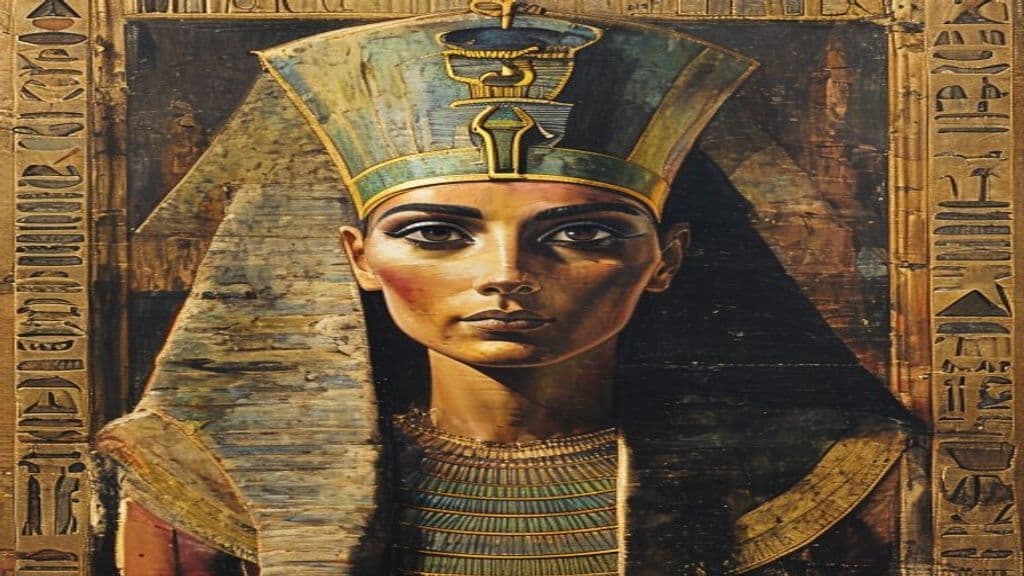
Isis is a major goddess of ancient Egyptian religion, a member of the Heliopolitan Ennead who functions as sister and consort of Osiris, mother and protector of Horus, a funerary and royal protector, and a locus of potent magic whose cult spread through the Hellenistic and Roman Mediterranean.

Shu
Shu is a primordial deity of the Heliopolitan Ennead in ancient Egyptian religion, commonly identified with the atmosphere, air, and the space that separates sky and earth. He is portrayed in sources as spouse and brother of the goddess Tefnut and is credited in summaries with roles including separating Nut (sky) from Geb (earth), generating wind, and associations with light, dryness/heat, peace, and lions.
Chaos/Nun (Ancient Egyptian)
Primordial, formless substance underlying the created world in Ancient Egyptian creation myths. (Note: 1. Power tier should be Primordial (as it's a primordial substance underlying all creation), but Primordial is typically reserved for cosmic entities, so consider revising to Ancient, as Chaos/Nun has)
The Book of the Faiyum
An ancient Egyptian literary work celebrating the Faiyum region and its patron deity, Sobek. (Note: - Power tier should be Lesser (since it's a written work with no supernatural powers). - Sensory cues, weaknesses, and wards need to be removed since they are not mentioned in the source material. - S)
The Book of the Thousand Nights and a Night
A collection of Middle Eastern and South Asian stories and folk tales compiled in Arabic during the Islamic Golden Age. (Note: - Power tier should be Greater, as there is no indication that the Book of the Thousand Nights and a Night has cosmic powers. - The summary mentions the collection reflecting the cultural context and )
The Corruptor (Jackson Day)
A Marvel Comics supervillain, Jackson Day became the Corruptor after exposure to psychoactive chemicals in a pharmaceutical factory fire; his bodily secretions can subvert the inhibitions and will of others, enabling mass social manipulation and criminal organization.
The Cup of Jamshid
A cup in Persian mythology associated with divination and connected to mythological figures across Persian, Zoroastrian, and Hindu traditions. (Note: - Power tier should be Primordial, as it is associated with mythological figures across multiple traditions and is linked to ancient rulers. - Appearance should be revised to note that no physical des)
The Dagda
A principal deity of early Irish myth, commonly presented as the foremost member or chief of the Tuatha Dé Danann. Associated with abundance (fertility, food, cattle), seasonal and temporal order, musical and druidic knowledge, and a liminal role between life and death via named magical items.
The Dreaming
A foundational religio-cultural worldview in Australian Aboriginal traditions designating an 'Everywhen' in which ancestral figures inhabited, created, and continue to give meaning to land, life, law and social identity. It is expressed locally under many indigenous terms and is best understood as an ongoing cosmological order rather than a single anthropomorphic being.
The Exodus
A foundational myth in Jewish tradition describing the liberation of the Israelites from ancient Egypt, considered a transformative event of divine intervention. (Note: - Power tier should be Primordial is incorrect; the Exodus is not an entity with abilities or behaviors, so it doesn't fit any of the power tiers. - Appearance should be mentioned as "Not depicted" si)
The Fall of Man (Jewish Tradition)
A transformative event in Jewish tradition where Adam and Eve disobey God's command, introducing guilt, shame, and expulsion from the Garden of Eden. (Note: - Power tier: Primordial -> Ancient (The Fall is a transformative event for humanity, but it doesn't have cosmic implications) - Weaknesses: Remove this section or rephrase as "Contradictions" since G)
The Ferryman (Greek Tradition)
A supernatural being in Greek tradition tasked with ferrying souls across a body of water after death, associated with Aesop's fables. (Note: - Power tier should be Greater, as ferrying souls across a body of water doesn't imply cosmic-level abilities. - The origin story is unclear; consider rephrasing or adding that no specific origin stor)
The Fifth World (Navajo tradition)
A concept representing the current era of human existence within a cyclical creation myth, as part of Navajo traditions. (Note: - Power tier should be Ancient (deity-level), as it's a concept within a cultural tradition, not a Primordial power. - Abilities need to reflect that it doesn't possess active powers or behaviors; per)
The Flooding of the Nile
A vital natural phenomenon in Ancient Egypt, essential for agriculture and seen as a divine act bringing fertility to the land. (Note: - Power tier should be Ancient (deity-level), not Primordial (cosmic). - Summary is accurate, but lacks mention of its impact on agriculture and fertility. - There is no origin story or appearance inf)
Community Record
- [1]Enneadwiki