
In Ancient Egyptian creation myths, the universe emerges from Chaos/Nun, a formless, watery substance. From this primordial state, the sun god Atum and other gods emerge.
Chaos/Nun lacks a specific physical description, but can be imagined as a vast, formless expanse of water that underlies all creation.
Chaos/Nun serves as the underlying state from which creation emerges, influencing the cosmos through its formlessness and instability. Its presence is characterized by the absence of order and structure.
Weaknesses
- conditioninstability
Wards
None recorded.
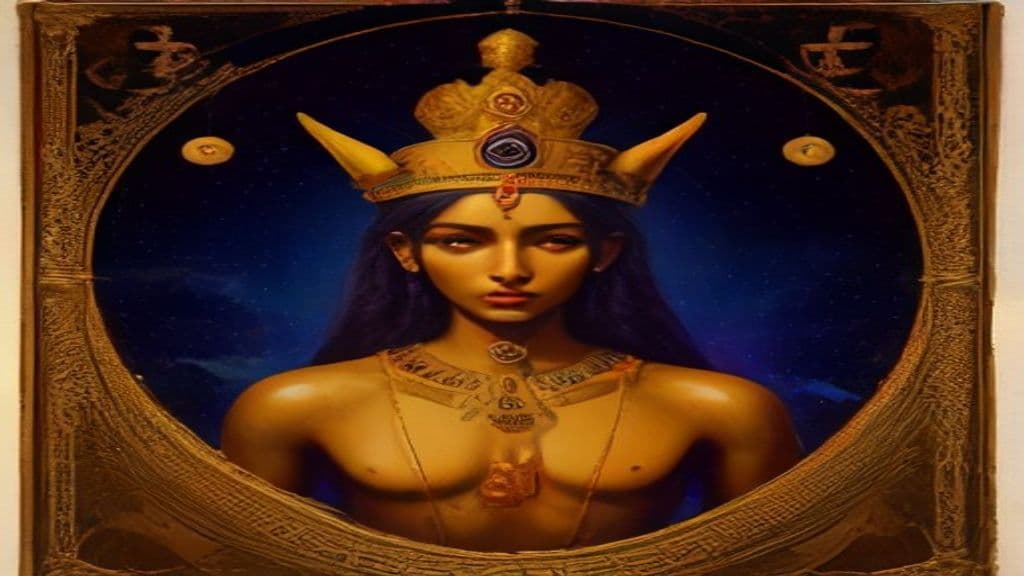
Atum
Atum is the primordial self-created deity of ancient Egyptian religion who emerges from the primeval waters (Nu) and brings forth the first gods. Associated with the primeval mound (benben) and the evening aspect of the sun, Atum functions as an origin and as a figure tied to funerary literature and royal afterlife ideology.
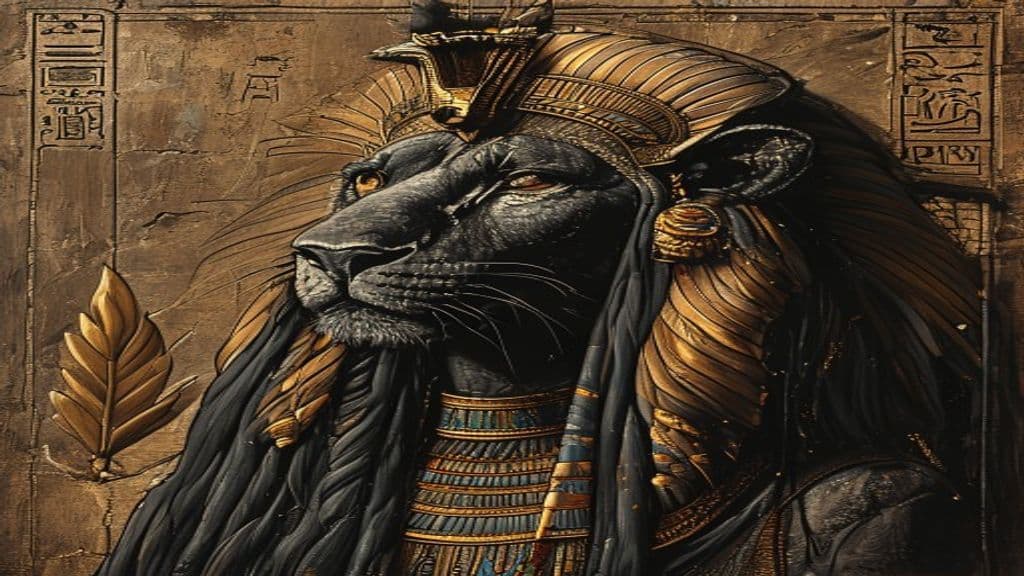
Tefnut
Tefnut is an ancient Egyptian goddess of moisture (moist air, dew, and rain), a leonine and solar-associated member of the Heliopolitan Ennead. She is a primordial offspring of the creator (Atum/Ra), twin and consort of Shu, and mother of Nut and Geb, functioning both as a life-giving moisture deity and as one of the leonine 'Eye of Ra' goddesses who can assume a fiery protective or wrathful aspect.

Shu
Shu is a primordial deity of the Heliopolitan Ennead in ancient Egyptian religion, commonly identified with the atmosphere, air, and the space that separates sky and earth. He is portrayed in sources as spouse and brother of the goddess Tefnut and is credited in summaries with roles including separating Nut (sky) from Geb (earth), generating wind, and associations with light, dryness/heat, peace, and lions.
The Ennead
A group of nine deities in Egyptian mythology, representing a complex web of relationships and generations within the divine family, worshipped at Heliopolis. (Note: - Power tier should be Ancient (deity-level) rather than Primordial (cosmic), as the Ennead consists of deities with specific powers and attributes. - The article should specify that Horus is not alwa)
Chandraprabha
Chandraprabha is the eighth Tīrthankara of Jainism in the present half‑cycle (avasarpini). Venerated as an arihant/siddha, he attained Kevala Jnana and nirvana and functions as a liberated exemplar in Jain devotional, literary and iconographic traditions.
Chaneque
Chaneques are small, place-bound sprite-like beings in Mexican and wider Mesoamerican folklore, described as owners or inhabitants of particular dangerous places and as guardians of nature and households. Traditions portray them ambivalently: they may protect harvests and homes when propitiated, yet can mislead travelers, displace souls, cause illness, or physically harass people in some accounts.
Chang'e
Chang'e (嫦娥), originally attested as Heng'e and linked to the older name Chang Xi, is the female lunar immortal of Chinese myth who resides in the Moon Palace (廣寒宮). Best known from the elixir-of-immortality tale in which she ascends to the Moon and is accompanied there by the Jade Rabbit, she functions across religious and literary contexts as a lunar goddess/immortal and a poetic symbol of solitude and longing.
Changeling
A changeling is a human-like substitute left by nonhuman beings (fairies, trolls, demons, etc.) after they abduct a human—most often an infant. Found throughout much of European folklore, the changeling functions as an uncanny domestic replacement whose presence explains sickness, developmental difference, or sudden loss.
Chann Pardesi
Chann Pardesi is the title of a 1981 Punjabi-language film from India; the provided sources document the film's production, cast, plot summary, and official promotional/trailer certification. The materials do not identify 'Chann Pardesi' as a supernatural being or wandering spirit within Punjabi folklore.
Chaos gods (tradition)
A class of mythic figures or modern fictional entities associated with primordial or elemental chaos. In comparative mythology they denote personifications of cosmic disorder; in modern fictional settings (notably Warhammer 40,000 fandom) the term is used for emergent intelligences formed from concentrated collective emotion or psychic energy.
Chariclo
Chariclo is a name assigned to one or two nymph figures in Ancient Greek myth. In surviving sources she appears either as the wife of the centaur Chiron and member of a Chironian household (nurse of Achilles in some scholia) or as a devotee/attendant of Athena who is the mother of the seer Tiresias; both roles place her among domestic, caregiving, and intercessory minor divine figures rather than as an independent cultic deity.
Charisius
Charisius is an Arcadian prince in Greek myth, counted among the fifty sons of King Lycaon and traditionally credited as the eponymous founder of Charisia (Charisiae) in Arcadia. He is attested only in genealogical and toponymic lists and is not described as a supernatural being or cult figure in the available sources.
Charites
In ancient Greek tradition the Charites (singular Charis) are divine female personifications who embody grace, beauty, festivity and the social arts of banquet, dance and song. Treated primarily as a collective presence and attendants of major Olympian gods (notably Aphrodite and Apollo), they feature in regional cults and poetic traditions as figures who enhance attractiveness, conviviality and ritual joy.
Charlie-27
A comic-book character from Marvel's Earth-691 31st-century setting: a Jupiter-descended human with engineered adaptations for high gravity who serves as a militia captain and founding member of the original Guardians of the Galaxy. Appears in comics beginning 1969 and adapted in the MCU film Guardians of the Galaxy Vol. 2.
Charnabon
Charnabon (also attested as Carnabon) is a figure from Greek mythic fragments described as a mortal king of the Getae/Thrace who treacherously attacked the culture-hero Triptolemus during the latter's mission to disseminate agriculture; Demeter punished him and, in the tradition, placed him among the stars as the constellation Ophiuchus.
Community Record
- [1]Ancient Egyptian Creation Myths. Wikipediawiki