
The Erlkönig, as presented in the provided materials, originates in Johann Wolfgang von Goethe's ballad "Erlkönig" (composed for the Singspiel Die Fischerin, 1782) and functions within that poem as the interlocutor and assailant of a child. The supplied sources do not provide a prior mythic origin or an ethnographic account that situates the figure in older, named folk rites; instead the entity is transmitted and understood primarily through Goethe's literary text and its musical settings (notably Schubert) and subsequent commentary, which label the character a 'king of the fairies' or a demonic fairy-king without offering a systematic prehistory.
The poem gives only a single explicit visual cue: the child asks, "Den Erlenkönig mit Kron' und Schweif?" (literally, the Erlkönig with crown and train/tail), indicating perception of a crown and a trailing garment or appendage. Beyond that line the supplied sources do not provide a detailed physical description; later summaries and commentary infer a courtly, kingly aspect ("king of the fairies"), but such trappings are interpretive extensions rather than additional descriptive details in the texts provided.
In Goethe's ballad the Erlkönig speaks directly to the child, offering enticements — "Du liebes Kind, komm, geh mit mir! / Gar schöne Spiele spiel' ich mit dir; / Manch' bunte Blumen sind an dem Strand, / Meine Mutter hat manch gülden Gewand" — and claims female attendants who will "wiegen und tanzen und singen dich ein." When persuasion fails he threatens force: "Und bist du nicht willig, so brauch' ich Gewalt." The child subsequently reports being touched ("jetzt faßt er mich an"), and by the time the father reaches home "In seinen Armen das Kind war tot," linking the presence or action of the Erlkönig to the child's death. The poem also stages the encounter so that the father's sensory interpretations (a streak of mist, the wind in dry leaves, the grey willows) differ from the child's perceptions, leaving ambiguous whether the cause is purely supernatural assault, a psychosomatic fatal fright, or an interplay between uncanny perception and natural phenomena.
Weaknesses
- otherNo weaknesses recorded in supplied sources
Wards
- otherNo protective rituals or warding formulas are provided in the supplied sources
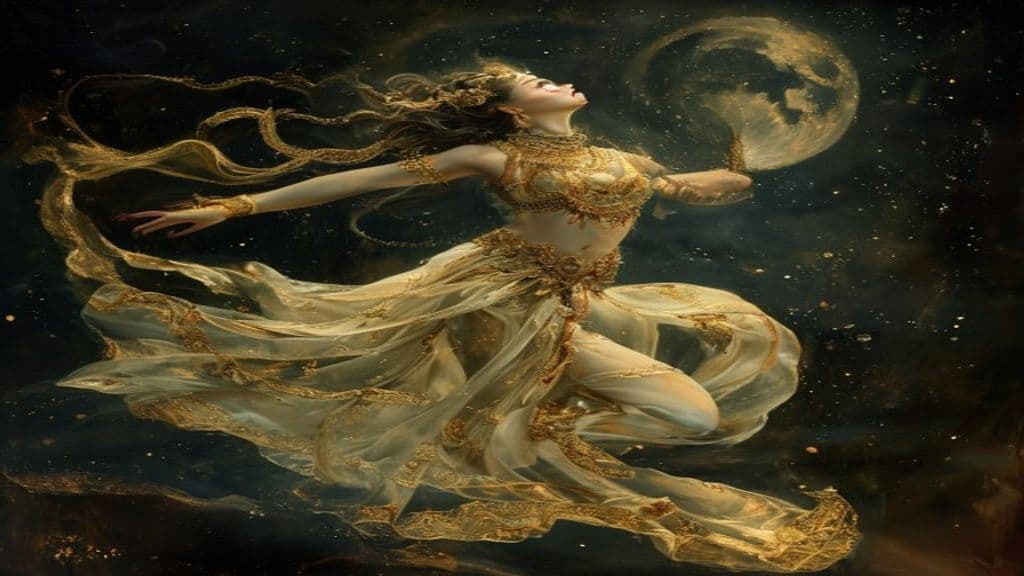
Apsara
Celestial dancers and water nymphs of Hindu cosmology — beautiful semi-divine beings who dance at the court of Indra and, by his command, descend to earth to distract sages from excessive asceticism.
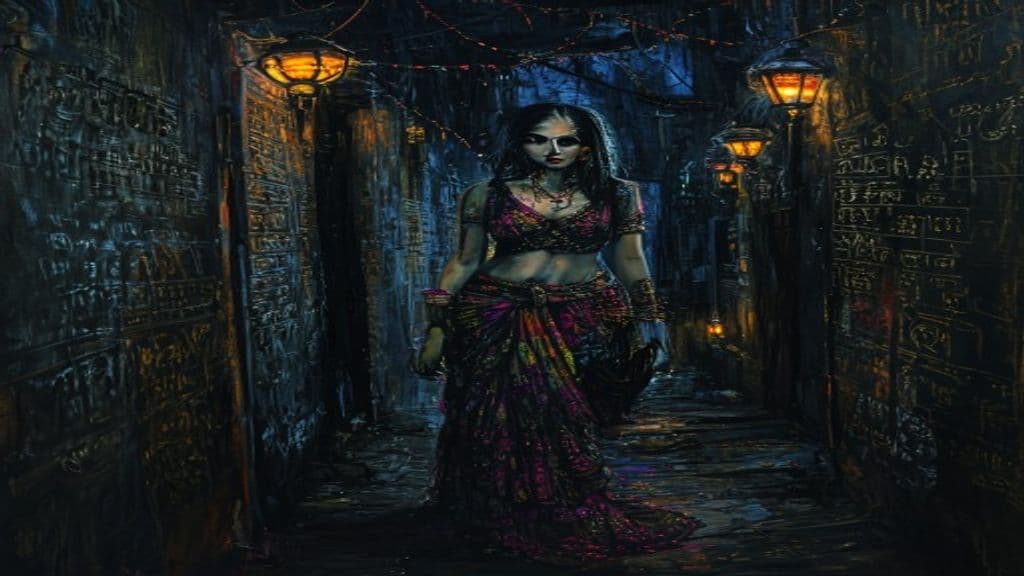
Stree
A vengeful female spirit from Chanderi who abducts men during festival nights. Warded off by the inscription 'O Stree, kal aana' — her legend, still practised on walls across Madhya Pradesh, inspired the 2018 Bollywood horror-comedy.
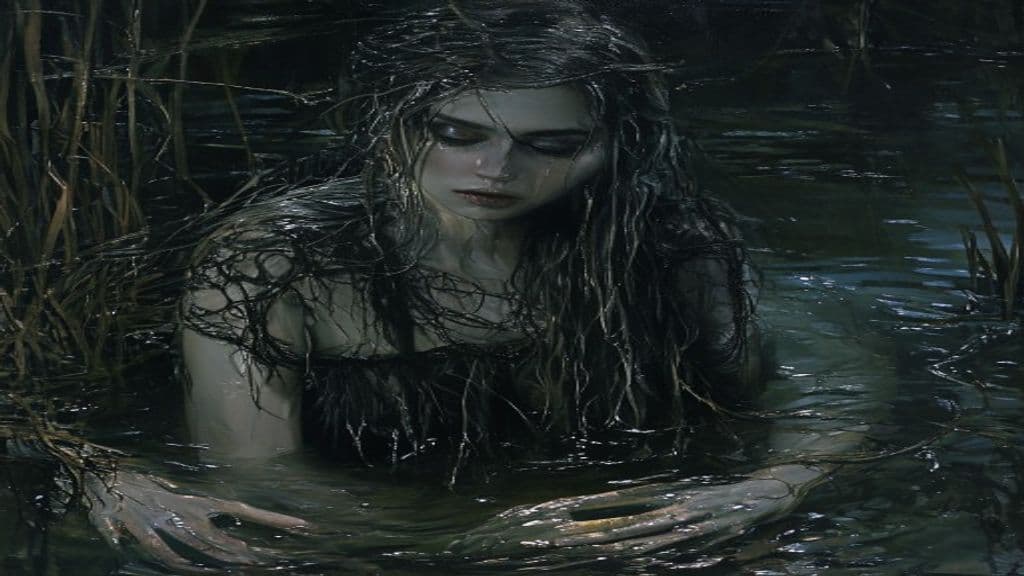
Rusalka
Water spirits in Slavic folklore — the spirits of young women who died by drowning or suicide, bound to rivers and lakes. Beautiful and dangerous, they can bewitch men to their deaths.
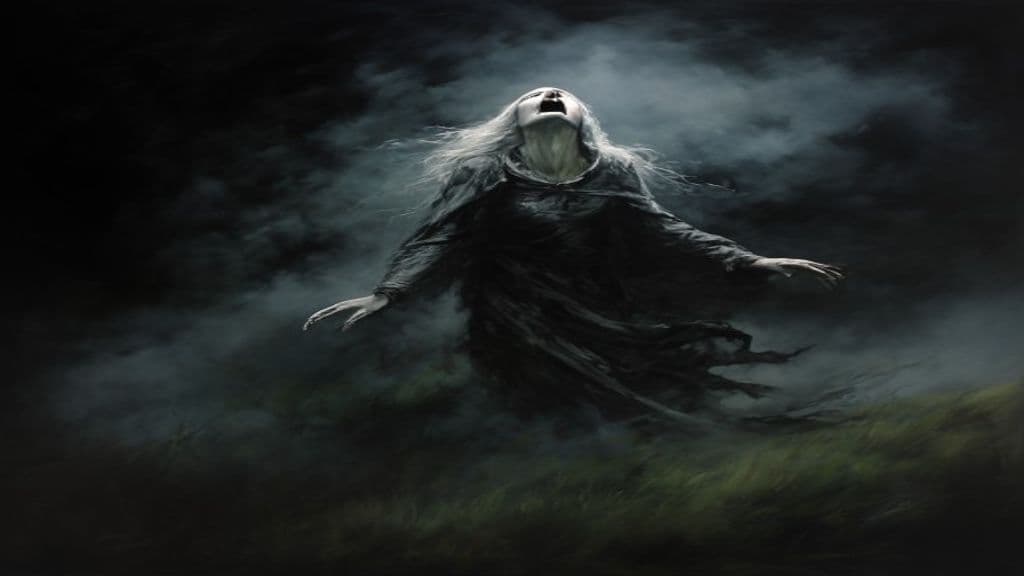
Banshee
A female spirit of Irish and Scottish folklore whose wail heralds an impending death in a family of Gaelic descent. Not a cause of death — a witness to it.
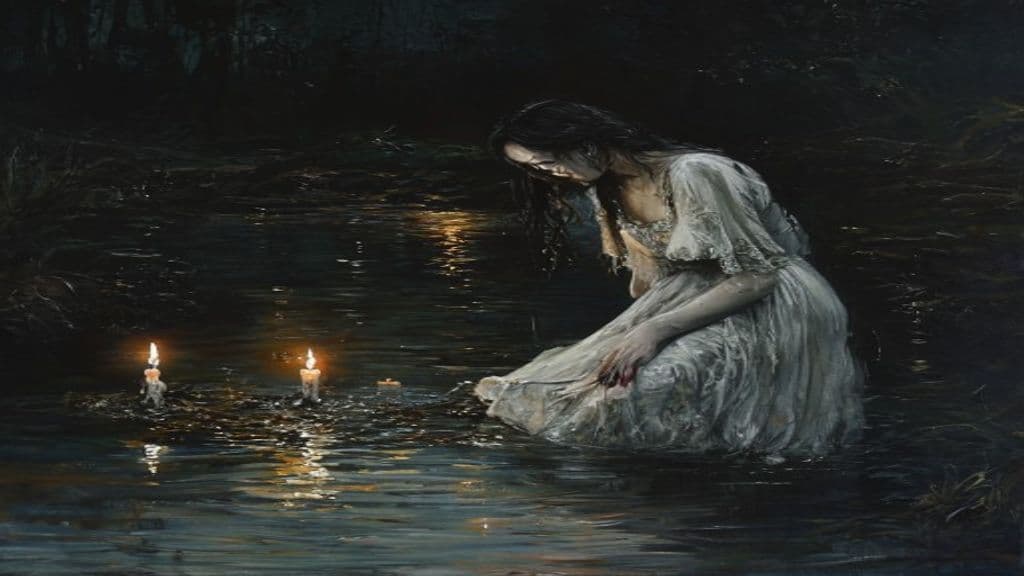
La Llorona
The Weeping Woman of Mexican folklore — the ghost of a mother who drowned her children and now wanders rivers and lakes, weeping for them and taking other children she finds at night.
Eris
Eris is the Greek goddess and personification of strife and discord who acts to stir up jealousy, envy, and conflict among gods and humans. She appears in mythic narratives as an instigator of disputes (notably the wedding of Peleus and Thetis) and is genealogically credited in Hesiod with at least one offspring, Lethe.
Eris Morn
Eris Morn is a human non-player character in Bungie’s Destiny video-game series who serves as the Vanguard’s specialist on the alien faction called the Hive. A Hunter and member of the Hidden, she is portrayed as the sole survivor of an ill-fated fireteam and functions in-game as an advisor, quest-giver, and vendor whose trauma-informed knowledge shapes Guardians' operations against the Hive.
Erkliğ Han
Erkliğ Han is a Turkic–Altai celestial lord associated with space, stars, meteorites (falling stars), and the planet Venus. Traditionally titled a Han (ruler), he is described in source material as responsible for visible stellar phenomena, linked in some lists with virility and read as a martial symbol by analogy to his action at sunrise.
Erlang Shen
Erlang Shen (二郎神) is a Chinese folk-religious and Daoist divine warrior associated with flood control, justice, hunting, and the subdual of demons. Venerated as a local river/irrigation protector who was later incorporated into Daoist pantheons and popular literary cosmologies, he is commonly depicted as a third-eyed spear-wielding hero accompanied by a celestial hunting dog.
Erlik
Erlik (Erlig, Erlik Khan; Mongolian Erleg/Yerleg) is the chthonic ruler of the underworld in Turkic and related steppe mythologies, associated with death, disease, and malignant spirit-agents. He functions as judge and lord of the lowest realm (Tamag), opposes upper-world figures like Ülgen, and demands sacrifices to avert his taking of souls.
Erlking
A sinister Germanic spirit of forest and mist who takes children — appearing to them as a welcoming figure while adults see nothing, the child dying in its parent's arms.
Ermac
Ermac is a fictional character from the Mortal Kombat video game franchise, presented in‑universe as an amalgam of the souls of deceased warriors who serves as a supernatural combatant. The character originated from a developers' diagnostics label and fan rumor which the franchise later incorporated into official canon; Ermac is noted for a red ninja appearance and telekinetic powers.
Ermanaric
Ermanaric is a historically attested Greuthungian Gothic king of the fourth century who later becomes a central figure of Germanic heroic legend (Old English Eormenric, Old Norse Jǫrmunrekkr). Sources present him as a powerful, warlike ruler whose cruelty (notably the execution of Svanhild/Sunilda) provokes cycles of violent vengeance in later poetry and saga.
Ernmas
Ernmas is an ancestral maternal figure among the Tuatha Dé Danann recorded in medieval Irish sources. She is attested chiefly as the mother of two important triads (Ériu, Banba, Fódla and Badb, Macha, Mórrígan) and several sons, and is said in at least one source to have been killed during the first battle of Mag Tuired.
Erra
Erra (also Irra) is an Akkadian/Babylonian deity associated with mayhem, pestilence and episodes of political upheaval. Centerpiece of the first-millennium BCE Erra epic, he is attended by the advisor Išum and the destructive group called the Seven (Sibitti/Sebetti), and in tradition is sometimes assimilated to the god Nergal.
Erragal
Erragal (also Errakal, Errakalkal, Errakar, Erkal) is a Mesopotamian deity attested from the Isin‑Larsa through Neo‑Babylonian periods. He is polyvalent in function: identified with a star in the MUL.APIN tradition and invoked apotropaically in incantation series, associated in some texts with storm/destructive power and, in some contexts, linked to the underworld; scholarly opinion differs on whether he is distinct from, derived from, or an epithet of Erra.
Erudinus
Erudinus is a named local pagan god attested by a single Roman-period votive altar inscription found at Monte Dobra near Torrelavega in Cantabria. The altar, discovered in 1925, bears a dedicatory text placing an altar "DEO ERVDINO" and is dated by Roman calendrical and consular formulae (sources disagree whether the inscription was once thought to date to 399 AD but is now dated to 161). No myths, attributes, iconography, or ritual prescriptions for Erudinus survive beyond the inscription and its archaeological context.
Community Record
- [1]Erlkönig - Wikipedia. 'Erlkönig' is a poem by Johann Wolfgang von Goethe. It depicts the death of a child assailed by a supernatural being, the Erlking, a king of the fairies.wiki
- [2]Der Erlkönig (archive recording page). Archive recording of Goethe's 'Der Erlkönig' and related performances referenced in the provided materials.literary
- [3]LEGGERO INVISIBLE (LIGHT INVISIBLE) (archive). Archive item listed among provided materials referencing musical/literary reception of the poem.other
- [4]Erlkönig [German ballade][Japanese version] (archive). Archive media of Goethe's 'Erlkönig' illustrating the poem's textual and performative transmission.literary