Geist is not a singular mythic being but an ordinary German noun with a long lexical history. Etymologically attested in Old High German as geist and cognate with West Germanic gaistaz and English 'ghost', the word served as the vernacular translation of Latin spiritus (Greek πνεῦμα) in Christian contexts and gradually acquired philosophical meanings in modern German thought (e.g., Weltgeist, Volksgeist). Its semantic field historically linked apparitional, religious, and intellectual registers rather than narrating a single origin myth.
Sources do not record a standardized folkloric appearance for a singular Geist-entity. Lexical notes indicate that der Geist is used slightly more often than das Gespenst to refer to a 'flying white creature' in everyday German usage, and adjectives like geisterhaft or gespenstisch describe 'ghostly' appearance. Beyond this lexical tendency, the provided materials supply no consistent corpus of physical traits for Geist as a folkloric being.
Because Geist is a polysemous term, reported abilities vary by register: in the ghostly sense it denotes an unseen animate presence associated with haunting or 'spooking' (spukender Totengeist); in theological registers it denotes an immaterial animating principle (as with the Holy Spirit) that influences persons or cosmos; and in philosophical discourse it names an intelligible, mediating principle in history and culture (Weltgeist, Volksgeist). The sources do not provide a folkloric catalogue of specific supernatural powers (e.g., possession, standardized poltergeist behaviors), though the compound poltergeist exists in the same lexical family to denote noisy, disruptive phenomena.
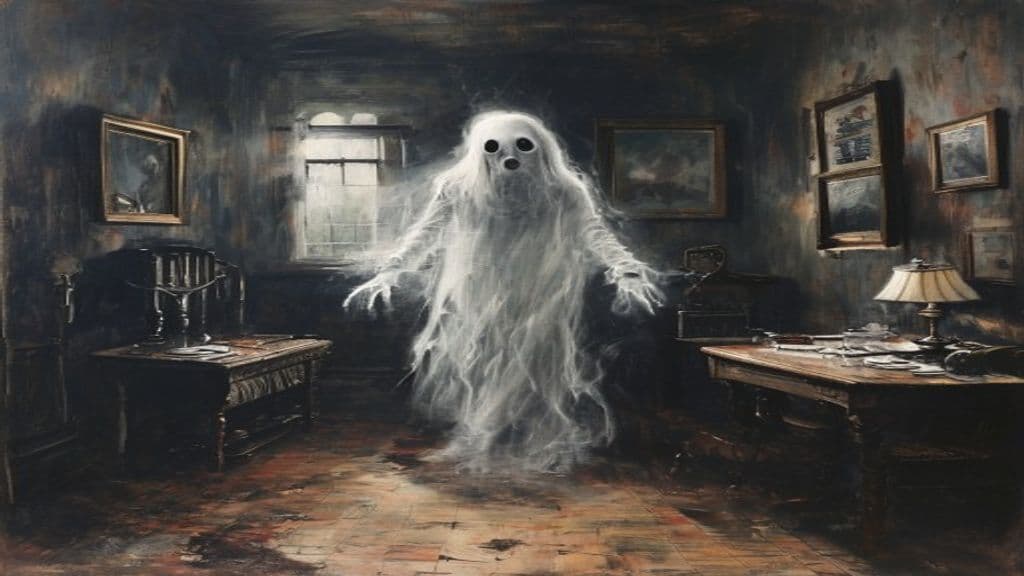
Poltergeist
A poltergeist is a German-derived ghostlore label for an unseen agent associated chiefly with noisy, kinetic, and disruptive physical phenomena in domestic settings. Modern summaries and case literature emphasize episodic outbreaks of object movement, loud noises, and occasional assaults or electrical/foul-smell disturbances, with competing explanations ranging from spirit activity to hoax, psychogenic projection, or natural physical causes.
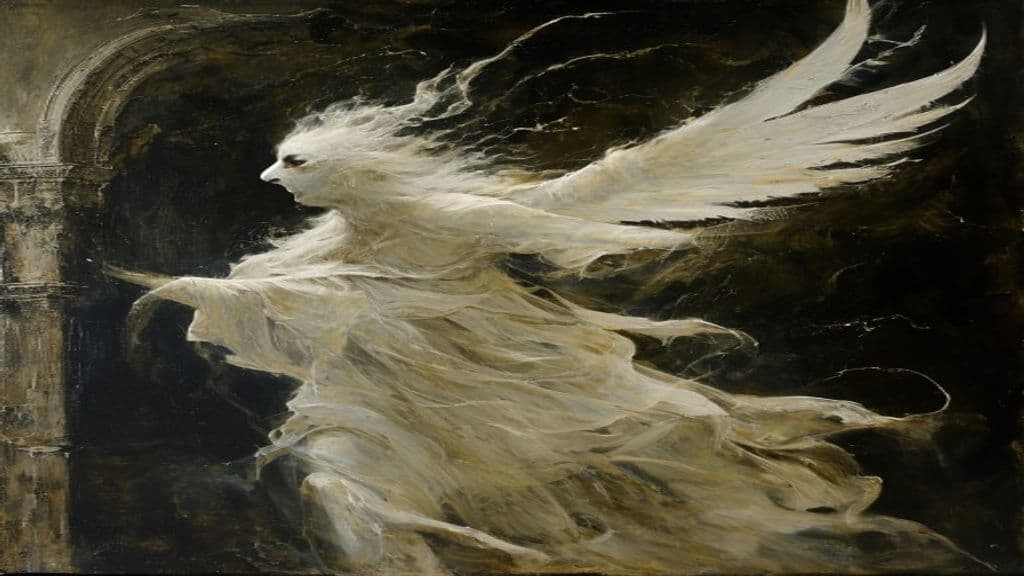
Geist
A German-language term with overlapping senses: a ghostly or haunting presence, an immaterial religious spirit (e.g., the Holy Spirit), and an intellectual or cultural animating principle (mind, Weltgeist, Zeitgeist). Its precise meaning depends on context and historical usage.
Gegants from Montblanc
Gegants from Montblanc are large parade effigies (gegants, 'giants' in Catalan) associated with Montblanc and the wider Catalan festival tradition. They function as civic and performative symbols in public celebrations and are not treated as supernatural beings in the provided sources.
Gegants from Ripoll
Gegants from Ripoll refers to the local manifestation of the Catalan gegants (giants) tradition associated with the town/area of Ripoll in Catalonia. The provided sources are travel and regional descriptions that mention the regional context but do not supply detailed folkloric texts about the Ripoll gegants themselves.
Gegants from Tarragona
No information on the gegants of Tarragona is present in the provided source. The supplied material concerns the city of Terrassa and does not describe gegants, their appearance, history, rituals, or cultural role in Tarragona.
Gegants i Nans de l'Arboç
Gegants i Nans de l'Arboç are processional giants and dwarfs — large, human-form effigies used in public parades and festivals in the town of l'Arboç. They are civic, ceremonial objects created and carried by people for communal celebration rather than autonomous supernatural beings.
Gegants vells de Cervera
The Gegants vells de Cervera are processional giants — large anthropomorphic parade figures from the town of Cervera in Catalonia, Spain. They belong to the Catalan tradition of gegants used in civic and ceremonial processions and are presented in sources as cultural artifacts rather than animate supernatural beings.
Geira
In Slavic tradition, Geira was a Wendish princess attested by Old Norse sagas who ruled over territory near the border of Germania and married a young Óláfr Tryggvasonr. (Note: * Power tier: Not provided in source material, but can be inferred as Primordial given the lack of detailed information and Geira's significance in Old Norse sagas. * Summary: Inaccurate; correct summ)
Gelanor
Gelanor is a name attested in two distinct contexts in the supplied sources: (1) as an alternate personal name for Pelasgus, an Inachid king of Argos in Greek mytho-historical tradition; and (2) as the Latinized scientific name of a genus of arachnids. Neither source presents Gelanor as a supernatural being.
Gelede (Gẹlẹdẹ)
Gelede is a Yoruba public masquerade spectacle and the ritual institution that honors and manages the spiritual power of 'Mothers' (senior women, female ancestors and deities). As a multi-media performance of carved and painted headdresses, masks, dance and music, Gelede functions to celebrate fertility and motherhood, educate the community, and placate potentially dangerous female powers.
Gello
A child-strangling demoness of Greek and Byzantine tradition, the spirit of a young woman who died before marriage, now preying on pregnant women and newborns.
Gelonians (Geloni)
The Gelonians (Geloni) are described in Herodotus and later summaries as a settled, urbanized people of the forest‑steppe north of the Black Sea who inhabited the city of Gelonus. In Herodotus' ethnographic account they are distinguished from neighbouring nomads by agriculture, crafts, wooden temples, and a triennial Bacchic/Dionysian festival; archaeological verification of some claims (e.g., sanctuaries) is noted as lacking in the supplied sources.
Gemory (Gremory)
Gemory (also Gremory, Gamori, Gomory, and variants) is a named Goetic spirit catalogued in medieval and early modern European grimoires. Described as a crowned woman riding a camel, she is attributed powers over hidden treasures, knowledge of past/present/future, and procuring love; her rank and legion counts vary between sources.
Genderuwo
Genderuwo is a Javanese/Indonesian supernatural humanoid spirit, commonly depicted in modern sources as a large, hairy, muscular creature with reddish or black skin and bulging eyes; it is described as able to appear, disappear, and assume human form. It is treated in regional folklore and popular culture as one member among many named hantu (supernatural beings) in the Malay–Indonesian mythic landscape.
Community Record
- [1]Geist. Wikipedia, 'Geist' entrywiki
- [2]Geist - Alchetron, The Free Social Encyclopedia. Alchetron summary entry for 'Geist'other