
No narrated mythic genealogy is preserved in the recorded sources. Ethnographic accounts present German as a vegetation/seasonal spirit whose ritual death and subsequent revival are understood to ensure the regeneration of nature and the coming of rain; scholars interpreting the rite suggest the effigy may be a metaphorical replacement of an earlier human-sacrifice schema.
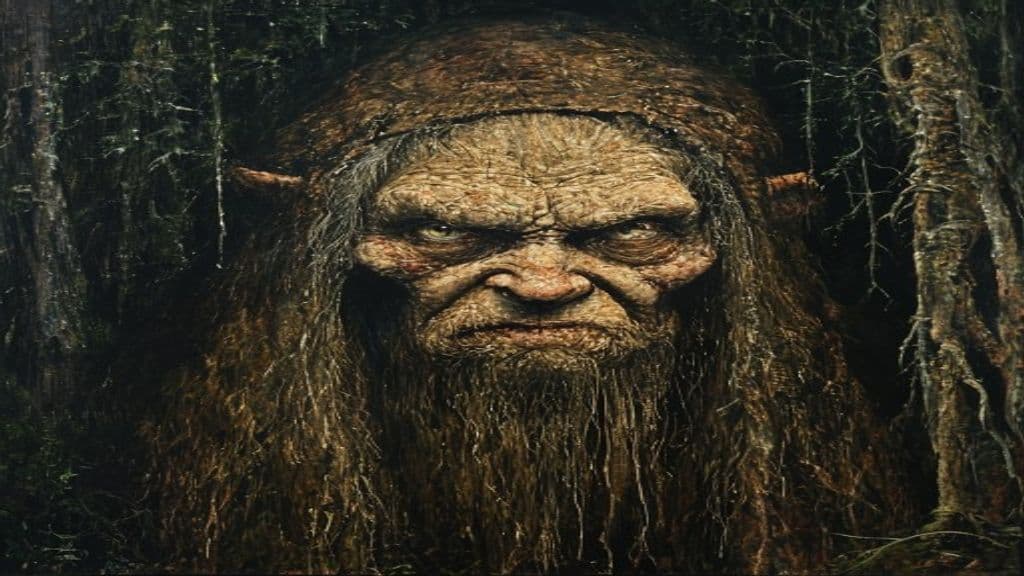
German is known in the ethnographic record chiefly via a ritual effigy or doll made of rags, fired clay, or dried fruits, often rather large and explicitly marked with male genitals. Northern Bulgarian accounts record dolls about 20–50 cm long, sometimes laid on a slate, adorned with flowers, placed in a little coffin, and buried with funeral observances. No consistent independent anthropomorphic depiction outside these ritual representations is attested in the sources.
In local belief German is credited with influence over precipitation—bringing beneficial rain or destructive hail and, by extension, affecting agricultural fertility. Ritual acts (making, burying, floating, or digging up the effigy) are presented in sources as the community's means to cause rain, stop drought, or otherwise negotiate his favor or the weather; in Christianized contexts he is identified with Saint Germanus, who is locally invoked for protection from hail (and sometimes lightning).
Weaknesses
- ritualsymbolic burial or disposal of the effigy
- ritualritual invitation/placation at the woodpile (Christmas Eve invocation)
Wards
- ritualChristmas Eve invitation ritual (head of household calls German, offers loaf called 'good luck', slivovitz, wine, lights candle, sips and tastes to signify a shared meal)
- ritualmaking and burying/placing the effigy in a coffin or setting it afloat (girls' drought rite to cause rain)
Ala
A female weather-being in South Slavic folk cosmology (Bulgaria, Serbia, North Macedonia) associated with hail, destructive storms, and voracious appetite; she is said to lead hail-producing clouds to destroy crops and is sometimes blamed for eclipses by attempting to devour the Sun or Moon.
Drekavac
A South Slavic night-haunting revenant-like creature whose name means "the screamer"; traditionally linked to the restless souls of improperly buried or unbaptised dead (including sinful adults and unbaptised children) and reported in many regional variants that foretell death or disease and frighten the living.
Vampire (tradition)
A class of revenant beings in southeastern and eastern European folk belief that subsist by feeding on the vital essence (generally blood) of the living. Recorded chiefly in early modern to modern oral traditions, these vampires are typically described as reanimated corpses whose presence explains unexplained illness, death, and post-mortem disturbances in their communities.
Genius Loci
In classical Roman religion the genius loci is the protective, guiding spirit inherent to a particular place. It functions as the object of local cult and sacrifice intended to secure the well-being and continuity of houses, neighborhoods, and by extension political territory.
Georgian Mythology (Overview)
A general overview of Georgian mythology, its history, and cultural context. No specific supernatural entity is mentioned. (Note: - Remove the entire article as it does not refer to a specific supernatural entity - Power tier should be "Primordial" or left blank since there is no specific entity mentioned)
Geraestus the Cyclops
Geraestus (Geraistos) is a named member of the Cyclopes in Greek tradition whose tomb near Athens is cited in mythic histories. He is chiefly attested as the occupant/identifier of a grave that functions as the location for an extreme ritual (the sacrificial slaying of the daughters of Hyacinth) ordered by an oracle during a famine and pestilence in the generation of Aegeus and the Minos conflict. The name also appears as a toponym in Homeric itineraries.
Geraint
Geraint is a personal name borne by overlapping human figures in Welsh and Brittonic tradition: a valiant warrior celebrated in early medieval poetry, the protagonist of the Arthurian romance Geraint and Enid, and a king of Dumnonia attested in a saints' vita. The name links heroic, courtly, and hagiographic registers rather than a supernatural taxonomy.
Geraint son of Erbin
Geraint son of Erbin (Middle Welsh: Geraint uab Erbin / Geraint mab Erbin) is a medieval Welsh legendary hero celebrated in early Middle Welsh englynion for his deeds at the Battle of Llongborth and later as the protagonist of the prose romance "Geraint and Enid," an adaptation of Chrétien de Troyes' Erec and Enide. He functions in the Welsh literary tradition as a martial exemplar situated in the heroic past rather than as a supernatural being.
Germanic Dragon
A large, serpentine creature from Germanic mythology that hoards gold and shares characteristics with cosmic beings. (Note: 1. Power tier should be Ancient instead of Primordial, as the source describes them sharing characteristics with "other dragons in European mythology", implying a level below cosmic. 2. Remove "venomo)
Germanic Heroic Age
A cultural and historical period in Germanic societies, reflected in their poetry and stories, which often expressed the values and customs of the time. (Note: 1. "Minor Spirit" is an incorrect power tier; no mythological beings are associated with this entity. 2. Remove mention of appearance and abilities as they do not apply to a historical/cultural period)
Geryon
Geryon is a monstrous, martial figure from Greek heroic-age mythology who dwells on the far-western island Erytheia and guards a valuable herd of red cattle; he is best known as the opponent slain by Heracles in the Tenth Labour. Classical sources present multiple, conflicting physical descriptions; later reception (notably Dante) recasts the name as an allegorical composite monster.
Geshtinanna
Geshtinanna is a Sumerian goddess functioning as the underworld's chief scribe and a specialist in scribal arts and dream interpretation; mythically she is the sister of Dumuzi and participates in his death‑and‑return cycle, once residing in the netherworld for part of the year in his stead.
Community Record
- [1]German (mythology) - Wikipedia. Wikipedia contributors, 'German (mythology)', Wikipedia, The Free Encyclopedia, https://en.wikipedia.org/wiki/German_(mythology)wiki
- [2]U znaku Moloha: antropološki ogled o žrtvovanju. Jovan Janićijević, U znaku Moloha: antropološki ogled o žrtvovanju (1995) — cited in Wikipedia article on German (mythology)academic
- [3]Лутка и обред (Lutka i obred). Ljiljana Pešikan-Ljuštanović, 'Лутка и обред' (project Rastko) — cited in Wikipedia article on German (mythology)academic