
No origin story for an entity called 'Gishiki Hachimen Daiō' is provided in the supplied sources. The documentation instead contains a well-attested legend of Momiji (紅葉), a kijo or female demon of Japanese folklore whose narrative (Momiji Densetsu) is associated with Mount Togakushi and nearby localities in Nagano Prefecture. Separately, the element 'Daiō' (大王, 'great king') appears in contemporary place-names such as Daio Wasabi Farm in Azumino City; the sources do not claim a folkloric being named 'Daiō' as the origin of that toponym. The supplied materials therefore support two distinct threads—Momiji as a regional kijo legend and 'Daiō' as a modern toponymic element—without evidence that these combine into a single mythic origin for 'Gishiki Hachimen Daiō'.
There is no attested physical description of any entity named 'Gishiki Hachimen Daiō' in the provided materials. The sources that are available describe Momiji only as a kijo ('female demon') in narrative terms and do not provide detailed visual attributes, costume, or morphology. Likewise, the toponym 'Daiō' appears in place-name contexts and not as a described supernatural form.
No powers, behaviors, or supernatural abilities are recorded in the provided sources for an entity called 'Gishiki Hachimen Daiō'. The related legend of Momiji, however, is summarized as presenting Momiji as an adversarial supernatural figure whom the hero Taira no Koremochi battles and defeats on Mount Togakushi; the excerpts do not specify Momiji's particular magical capacities or methods of attack.
Weaknesses
- otherNo weaknesses recorded for 'Gishiki Hachimen Daiō' in the supplied sources
- otherNo specific weaknesses or wards for Momiji are recorded in the provided excerpts
Wards
- otherNo wards recorded for 'Gishiki Hachimen Daiō' in the supplied sources
- otherNo documented warding rituals for Momiji in the supplied sources
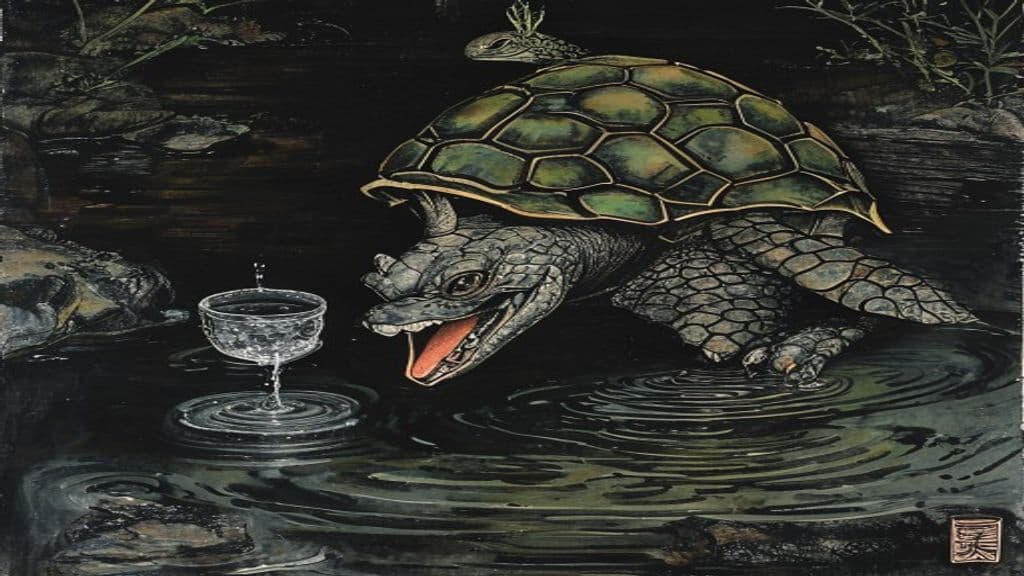
Kappa
A water-dwelling imp of Japanese folklore with a bowl of water on its head. Mischievous but bound by strict codes of politeness; dangerous near rivers.
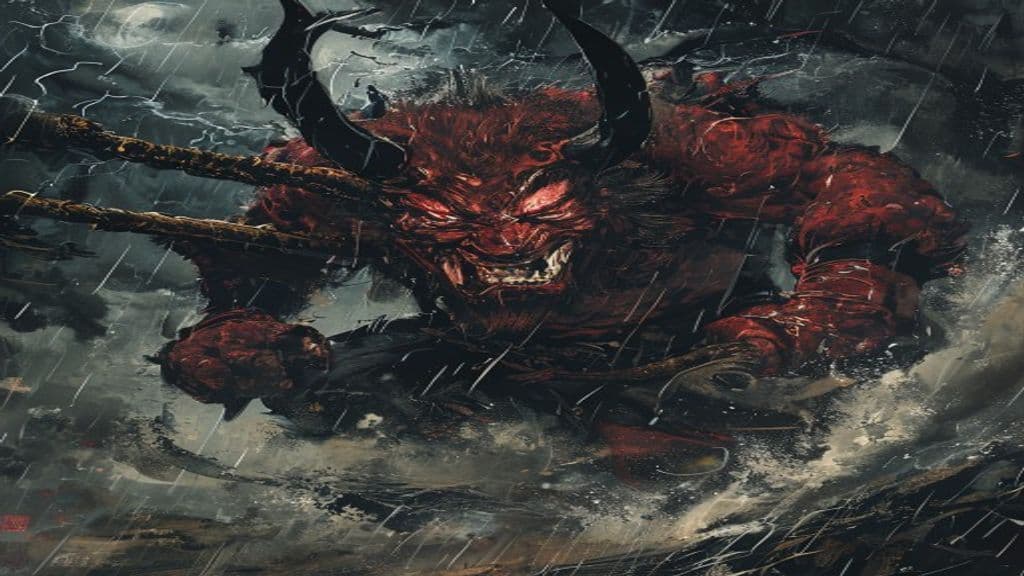
Oni
Powerful supernatural beings of Japanese folklore — associated with misfortune, disease, and the punishment of sinners in hell. Fearsome, often depicted as guardians of the underworld.
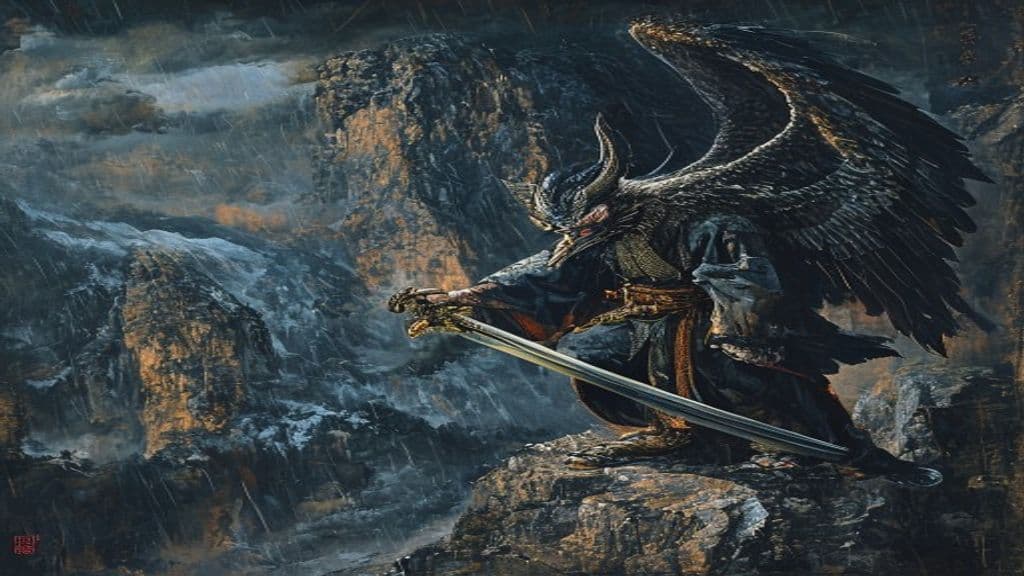
Tengu
Proud, warrior-like mountain spirits of Japan, associated with martial arts, pride, and the wild mountains. Neither fully good nor evil — they test and train warriors and monks, but punish the arrogant.

Yuki-onna
The Snow Woman of Japanese folklore — a spirit born of blizzards who appears to travelers lost in snowstorms. Beautiful and lethal, she can show mercy or bring death depending on her mood.
Ginnungagap
In Old Norse myth, Ginnungagap is the primordial void or gaping chasm that existed before creation; positioned between the cold north (Niflheim) and the fiery south (Múspellheim), it is the liminal space where ice and sparks met and from which the primordial beings and the ordered world emerged.
Girra (Gibil)
Girra (Sumerian Gibil) is the Mesopotamian god/personification of fire, attested in offering lists and temple contexts from the Early Dynastic period through the Kassite period and later Assyrian and Uruk sources. He embodies both the purificatory and destructive aspects of fire and functions within temple ritual and purification practice; his emblem is a torch.
Girtablilu (Scorpion-man)
A hybrid human–scorpion figure attested in Akkadian-language mythic texts; the supplied source states that scorpion-men feature in several ancient Mesopotamian myths, including the Enûma Elish and the Standard Babylonian Epic of Gilgamesh.
Girtablullu
Girtablullu is an Akkadian-era hybrid monster described in secondary sources as a 'scorpion-man' (human head and arms with a scorpion body). It is attested in modern summaries of Mesopotamian mythic lists and is noted in secondary material as both one of the hybrid monstrous personages in Akkadian literature and as an apotropaic creature associated with the sun/justice god Utu/Shamash.
Girtablî (Girtablîlu)
An entity name attested in modern metadata as an Akkadian mythological figure associated in modern references with scorpion-men; the provided source is a single Wikidata entry and supplies no further attested details about the being's nature, appearance, powers, or cult.
Giselher of Burgundy
Giselher of Burgundy (also Gislaharius) is a historical and literary Burgundian prince attested in early medieval genealogies and as a character in the Middle High German epic the Nibelungenlied. He is presented as a son of King Gebicca and brother to Gundomar/Gernot and Gundaharius/Gunther; in the Nibelungenlied he is betrothed to Dietlind of Bechelaren. Historical sources place him among Burgundian rulers of the 410s and note that he died before 436.
Gitche Manitou
A term from Algonquian-language traditions referring to the 'Great Spirit' or supreme spiritual principle; used both for a highest or collective spiritual force that underlies many individual spirits (manitous) and as a name applied to a creator or giver of life in Anishinaabe contexts.
Giv (Gev)
Giv (Persian: گیو), also rendered Gev, is a legendary Iranian knight and one of the main human heroes in the New Persian epic Shahnameh. He is presented as a noble paladin of the House of Goudarz, father of Bizhan, brother of Roham, and a loyal companion of kings such as Key Khosrow.
Gjenganger
A Scandinavian revenant — a deceased person who 'goes again' and returns to the realm of the living. Historically depicted as a corporeal, often violent returning dead in saga material and later as a more ghost‑like or disease‑associated presence in post‑medieval folklore.
Gladiator (Kallark)
A historical social role in Roman civic and funerary ritual: armed combatants (Latin: gladiatores) who fought in public spectacles (munera) for commemorative, political, and entertainment purposes. The available sources treat gladiators as human performers and social actors rather than supernatural beings.
Glaistig
A figure from Scottish folklore variously described as a Green Lady, house/estate spirit, herding guardian or a dangerous female lure. Traditions portray the glaistig as ambivalent—beneficent when respected (protecting cattle, households, or bestowing favors) and harmful when offended (luring men, injuring travellers).
Glasir
Glasir is a named tree or grove in Old Norse mythic geography that stands before the doors of Valhalla in Asgard; its foliage is described as red gold and it functions in skaldic and Eddic poetry as a kenning for gold.
Community Record
- [1]Momiji (oni) - Wikipedia. Wikipedia contributors. 'Momiji (oni).' Wikipedia, The Free Encyclopedia.wiki
- [2]Daio Wasabi Farm - Japan Guide. Daio Wasabi Farm entry, Japan-Guide.other
- [3]Daio Wasabi Farm - Where to try REAL wasabi in Japan. NotesOfNomads. 'Daio Wasabi Farm — Where to try REAL wasabi in Japan.'other
- [4]Heian Period Japan blog — Ariakeyama Ariakesan Nagano. Heian Period Japan blog, 'Ariakeyama Ariakesan Nagano.'other