
According to the sources, the entity described as 'God the Son' is presented as the eternal, pre-existent Logos ('In the beginning was the Word') who stands with God before creation and through whom creation came to be. The same person is said to become incarnate in history as Jesus of Nazareth (commonly dated in scholarly ranges such as c. 6/4 BC–AD 30/33) and to accomplish purification for sins before being exalted to sit 'at the right hand of the Majesty in heaven.' The precise English label 'God the Son' is a post-biblical theological designation that arises in Latin and creedal formulations (e.g., the Athanasian tradition and later theological writers such as Augustine) rather than appearing verbatim in Scripture.
Sources do not provide a consistent sensory portrait of the Son in pre-incarnate or exalted form; Johannine and creedal language supplies metaphysical imagery rather than literal physical detail. The Son is described as the Logos ('Word') in John 1:1 and as 'the radiance of God’s glory and the exact representation of His being' in creedal and theological summaries, language that conveys divine radiance and representation rather than a concrete bodily description. Where appearance is historical, the Son is identified with Jesus of Nazareth, a first-century human figure found in the Gospels and summarized in biographical resources as living in the early first century CE.
The sources attribute to the Son creative agency (the Logos through whom 'all things were created' and by whom creation is sustained), revelatory function (the Word who discloses the Father), and soteriological action (having provided purification for sins and being the locus of eternal life for believers). Scriptural excerpts summarized in the materials underline that 'whoever has the Son has life' and that belief in the Son is the mark of being 'born of God.' The corpus also connects the Son in his incarnate ministry with healing and restoration narratives recorded in the Gospels and in preaching archives, though the provided materials do not catalog procedural rites tied to those events.
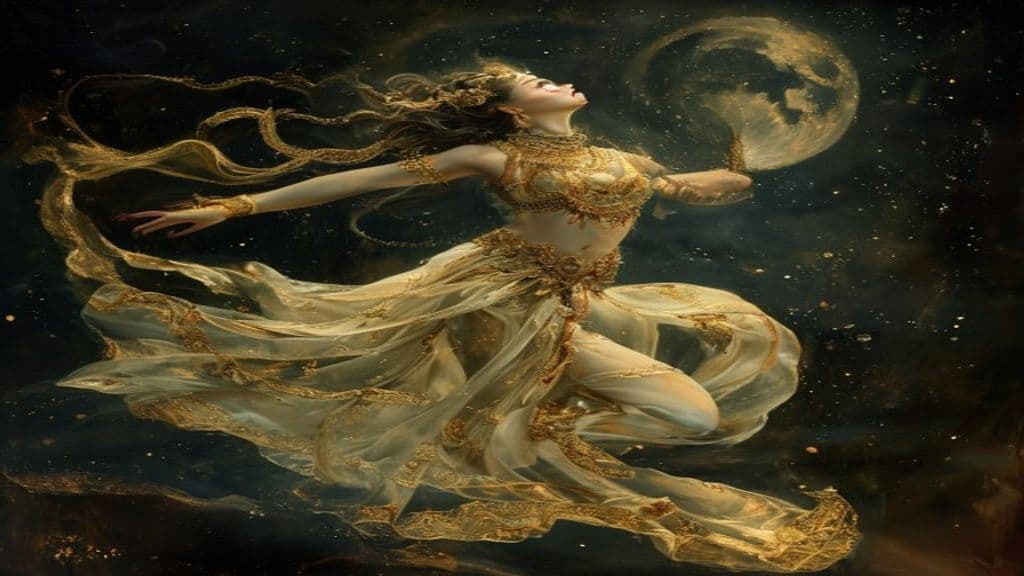
Apsara
Celestial dancers and water nymphs of Hindu cosmology — beautiful semi-divine beings who dance at the court of Indra and, by his command, descend to earth to distract sages from excessive asceticism.
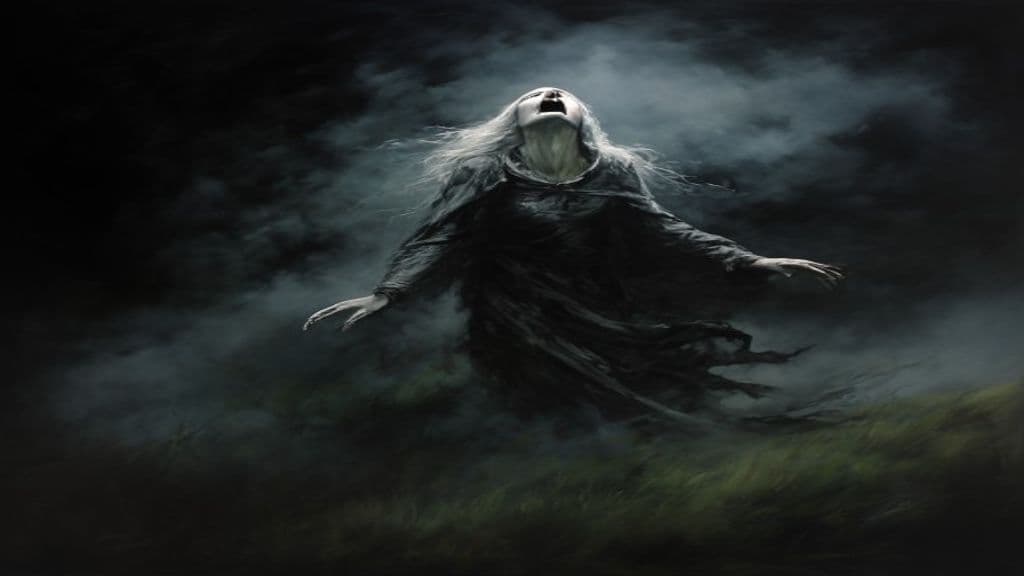
Banshee
A female spirit of Irish and Scottish folklore whose wail heralds an impending death in a family of Gaelic descent. Not a cause of death — a witness to it.
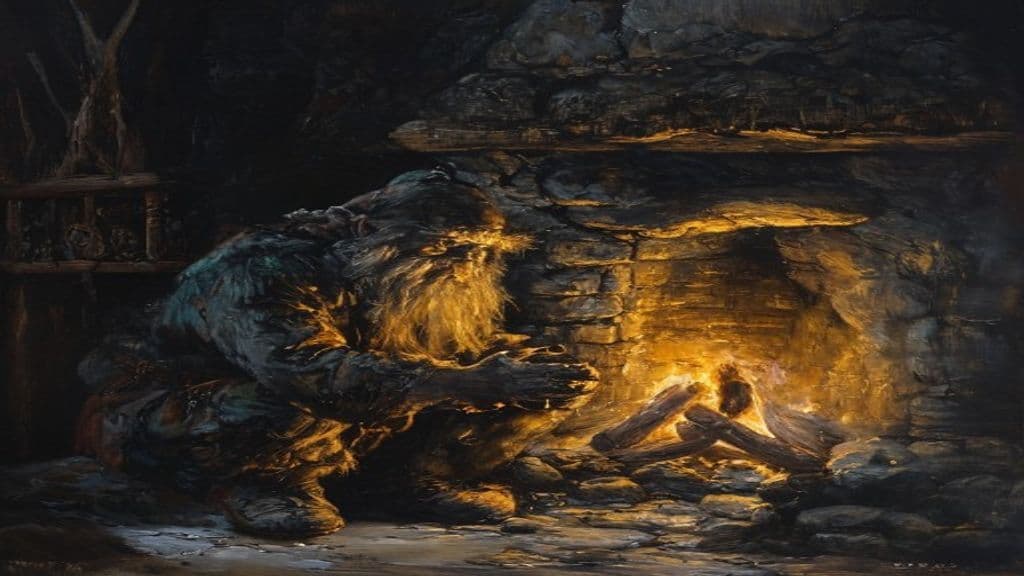
Domovoi
The house spirit of Slavic tradition — a small, invisible guardian of the home bound to a specific dwelling and its family. Protective when respected; dangerous when insulted or forgotten.
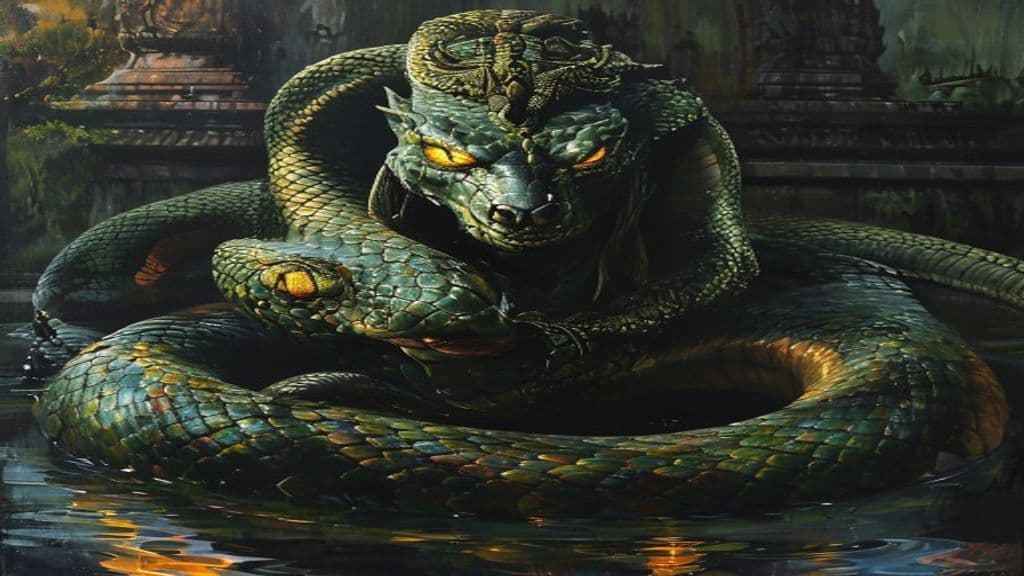
Naga
Divine serpent beings of Hindu, Buddhist, and Jain cosmology — powerful guardians of water, earth, and underground treasures. Revered as deities in South and Southeast Asia.
Goblin
A class of small, often grotesque humanoid beings in European folk belief that range from household helpers to tricksters and violent figures. Goblins occupy liminal spaces—hearths, cellars, ruins and wild places—and their behavior toward humans depends on region, story, and reciprocal treatment.
Gochihr
In Zoroastrian tradition, Gochihr is a powerful dragon associated with water and chaos. (Note: The power_tier should be adjusted to "Primordial" based on the provided source, but with the understanding that Primordial entities are often cosmic in nature and Gochihr's association with water and )
God (Christianity)
In the Christian tradition represented in the sources, God is the eternal, supreme being who created and preserves all things, is both transcendent and immanent, and is understood in mainstream theology as one God in three Persons (Father, Son, Holy Spirit). Christian doctrine emphasizes God's action in history (covenant with Abraham, revelation in scripture, the Incarnation of the Son, and the sending of the Spirit).
God L
God L is a major Classic and Postclassic Maya deity associated with long‑distance trade, wealth (notably cacao and merchandise), age (the 'Mam' or grandfather figure), and underworld/night forces expressed through jaguar and owl symbolism. He appears in codices, ceramics, and monumental reliefs where he combines mercantile, shamanic/magic, and martial aspects.
God in Buddhism (concept)
A doctrinal and conceptual topic concerning the status of a creator or ultimate deity within Buddhist thought. Most sourced summaries state that Buddhism does not include belief in a creator deity, while noting that some schools posit transcendent, unborn, or unconditioned ultimate realities.
God the Father
In Christian doctrine, 'God the Father' names the First Person of the Trinity who is described as creator, origin, and paternal principle in relation to the Son and the Holy Spirit. Trinitarian formulations present the Father as consubstantial, co‑equal and co‑eternal with the Son and Spirit, while non‑Trinitarian traditions interpret the Father differently (e.g., as supreme, as a distinct being, or as title‑variants). Scriptural material frames the Father as the heavenly addressee of prayer and the source of life, authority and moral order.
Goddess
A goddess is a female deity — a sacred female divine figure found across many polytheistic and religious traditions. The term functions as a classificatory label for diverse culturally specific female divinities and metaphysical female principles, ranging from local patronesses to supreme cosmic realities.
Goddess I (Taube designation)
Goddess I is an important Maya deity, chiefly attested in the Dresden Codex and in Classic‑period imagery. She is represented as a youthful woman who presides over feminine vital functions—eroticism, human procreation, and marriage—with an aged aspect associated with weaving.
Godform (tradition)
A contemporary occult and artistic category: a created or assumed divine persona evoked by ritual, visualization, or creative practice. 'Godform' appears across modern occult instruction, paid ritual offerings, online forums, and artistic projects as a technique or object for psychospiritual work, group ritual, or aesthetic deification.
Goewin
Goewin is a named figure in Welsh mythology appearing in the tale Math fab Mathonwy (one of the Four Branches of the Mabinogi). She serves as the virgin attendant whose duty is to hold the feet of King Math, a condition tied to his life and rule; the narrative of her assault and its redress drives key justice and succession events in the tale.
Gofannon
Gofannon is a figure in Middle Welsh literature attested as a master metal-worker and named son of the goddess Dôn. He appears in Welsh tale-cycles in roles tied to smithcraft (for example sharpening a plough) and in a narrative incident in which he unknowingly kills his nephew Dylan Ail Don.
Gogmagog
Gogmagog (also Gog-Magog) is a named giant of British folklore and appears in collections of giant‑tales as an example of the very large humanoid figures that populate myth and legend. In the supplied sources he functions as a legendary giant figure referenced in compendia rather than as a fully described character with a single, detailed tradition.
Community Record
- [1]God the Son (Wikipedia). Wikipedia, 'God the Son'.wiki
- [2]Jesus Christ (Wikidata). Wikidata entry for Jesus Christ (dates summarized).other
- [3]Archive - Jesus Graciously Heals | John 5:1-18. Archive sermon/excerpt summarizing Johannine claims about the Son and healing narratives.other
- [4]Archive - A Journey Of Faith : Elijah Part II - God's Power On Display | 1 Kings 17: 2-24. Archive sermon referencing prophetic healing typology related to Christological preaching.other
- [5]Jesus – God the Son (Answering Islam / Shamoun). Apologetic discussion addressing the phrase 'God the Son' and scriptural use of 'Son of God'.other
- [6]Additional secondary discussions and summaries. Essay on historical development from 'Son of God' to the creedal formula 'God the Son'.other