The name derives from Middle High German gütel / güttel, originally signifying a small idol (a 'little god') and later acquiring associations with the adjective gut ('good'). Over time dialectal corruptions produced many regional name-forms. In some local beliefs the Heugütel (hay-Gütel) is explicitly identified as the soul of a child who died unbaptized; conversely, other regional variants are understood as indigenous household sprites, little earth-manikins, or pond-associated water-sprite figures. Thus the Gütel concept folds together an older term for a little deity/house idol with localized Christian-era concerns about unbaptized child-souls and domestic spirit-helpers.
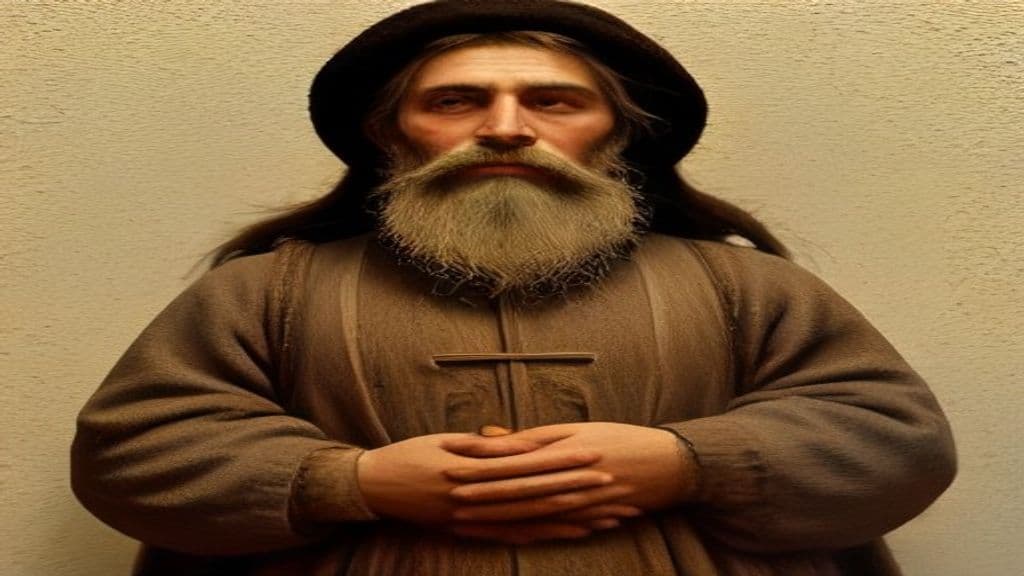
Accounts vary by locality rather than presenting a single fixed form. Early attestations describe a hunchbacked kobold-like manikin. Heugütel of hay-lofts are reported as bearded little old manikins and are also described in sources as sometimes appearing colored black; that same Heugütel is characterized as usually half-naked in some reports (and can be driven away by clothing). In Lower Lusatia the beings are portrayed as tiny Erdmannlein (dwarf earth-men). Water-associated variants are linked to ponds or pits (Gütchenteich / Gütchengrube) from which newborns are said to come. Heugütel may leave small child-like footprints in ash. Haargütel/Hoorgitel forms are tied to hair-related mischief rather than a single described bodily form.
Gütel occupy a spectrum of domestic functions: many accounts present them as obliging, child-friendly household spirits that help in house and stable and even cradle or dally with sleeping children. Other regional variants are mischievous or harmful: teasing or playing with sleeping children in ways blamed for restlessness, chills, ague, seizures or measles; tangling horse manes and women's hair; entering stables at night and tormenting livestock so cows growl and horses bite or kick. A Saxon variant (Jütel / Jüdchen / Mützchen) practices aufhocken—leaping upon a traveller's back and forcing them to carry the spirit, leaving the victim faint and ill. A loud heavy plunge at night associated with a Gütel can be read as an omen of impending death, and the spirit may be propitiated by substitutionary offerings.
Weaknesses
- conditionprompt baptism of newborns
- substancegreased stove door (with bacon rind)
- othergift of new clothes (drives Saxon Jüdel/Heugütel away)
- otherlaced straw from the bed of the woman in childbirth placed at doors
Wards
- ritualplace leftover bathing water in a little pot on the stove
- ritualhang eggshells and playing cards on the crib
- ritualplace a bow and arrows in the cellar and barn for the spirit to play with
- substancegrease the stove door with a bacon rind
- rituallace a straw from the bed of the woman in childbirth at every door
- othergive a gift of new clothes (Saxony) — drives spirit away but withdraws household blessing
- conditionensure pious Christian household life (Heugütel reportedly stays only in pious homes)
Gwyllgi
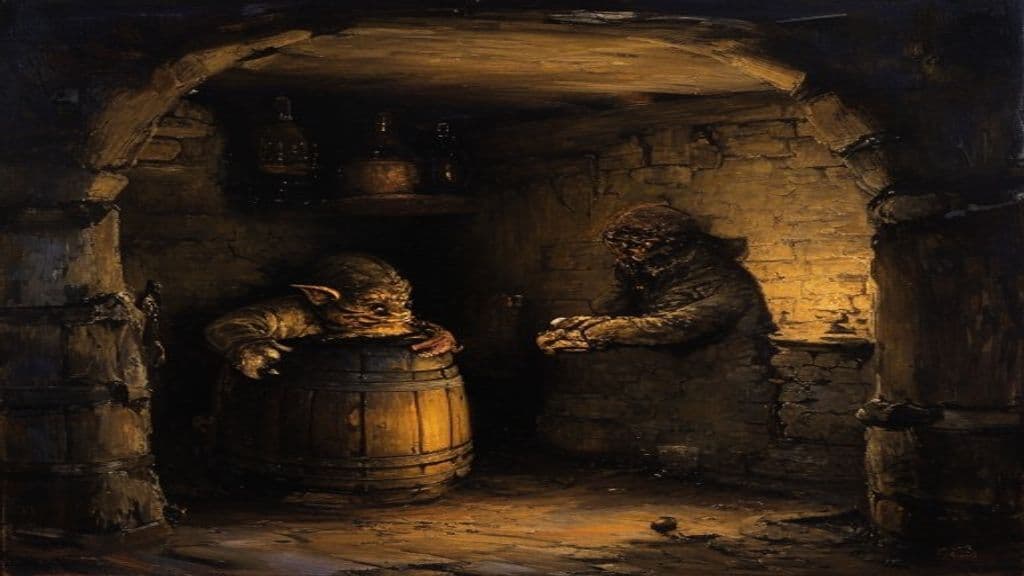
The 'Dog of Darkness' of Welsh folklore — a monstrous black hound with baleful red or yellow eyes that haunts lonely roads at night, its appearance an omen of death.
Gyas
Gyas is a named mortal captain in Virgil's Aeneid, portrayed as one of Aeneas's seafaring leaders and a competitor in the funeral‑games boat race (Book 5). He is remembered for ordering his helmsman Menoetes to steer tightly and then casting him overboard when the order was not followed; later he is briefly reported to have beheaded Ufens (Book 12.460).
Gyges (of Lydia; Ring of Gyges tradition)
Gyges is a named human figure from Greek classical tradition: a founder/early king of Lydia (Gyges of Lydia) and the protagonist of the 'Ring of Gyges' moral thought-experiment. He is treated in historiography (notably Herodotus) as a political actor whose story is later used in philosophical discussion about invisibility, secrecy, and justice.
Gytrash
A regional English folk spirit or spectre, the Gytrash is a shape‑changing roadside apparition from northern England—chiefly the West Riding of Yorkshire—most commonly reported in the form of animals (horses, mules, dogs, even an 'evil cow') that appear to travelers on lonely roads and may either mislead or guide them. The creature appears in dialect scholarship and 19th‑century Brontë family notes and fiction.
Géant (REJECT — not attested as a discrete supernatural entity)
The term 'Géant' in the provided sources is a French common noun meaning 'giant' and is attested chiefly as a descriptor used in place-names, festival puppets, commercial brands, and technical acronyms. The supplied materials do not document a cohesive folkloric supernatural being named 'Géant' with defined mythic origin, appearance, powers, or ritual practices; therefore this entry records the absence of evidence for a discrete legendary entity under this name in the provided sources.
Gün Ana
Gün Ana (literally 'Sun Mother') is the Turkic personification of the Sun attested in Kazakh, Kyrgyz, and related Turkic traditions as a maternal, life-giving sky-being associated with fertility, warmth, health, and protection of the vulnerable; she is placed cosmologically in the upper heavens and figures in creation accounts involving solar light.
Gādhi
A sage in Hinduism, father of Vishvamitra and associated with ancient knowledge. (Note: 1. Power tier: Primordial (not Ancient) - as there are no supernatural abilities attributed to Gādhi. 2. Appearance: add information about Gādhi's physical appearance or description in Hindu texts. 3.)
Gāyatrī
Gāyatrī is the personified form of the Gāyatrī Mantra in Vedic–Puranic Hindu tradition: simultaneously a 24‑syllable Vedic metre, the hymn composed in that metre, and a goddess—often titled Vedamātā, the mother of the Vedas—who embodies sacred Vedic speech and knowledge.
HMS Friday
HMS Friday is an urban myth — a contemporary maritime legend that purports to tell of a Royal Navy ship deliberately commissioned and sailed on Fridays to disprove the superstition that beginning a voyage on a Friday is unlucky. The story is false: there was never a Royal Navy ship named HMS Friday, and the tale functions as a folkloric cautionary anecdote rather than a historical event.
Haagenti
Haagenti is a named spirit from the grimoire tradition (the Lesser Key of Solomon/Ars Goetia) described as a high-ranking infernal president who instructs humans and effects alchemical transmutations; modern fantasy and gaming sources adapt and reimagine him in varied ways.
Haashchʼééshzhiní (Black God)
A creator deity in Navajo folklore responsible for placing the stars and possessing supernatural powers. (Note: 1. Power tier should be Primordial, but this needs clarification as it's not explicitly stated in the sources. 2. Abilities section only mentions placing stars and inventing the fire drill. The source)
Hachikazuki
Hachikazuki is the human heroine of a Japanese Otogi-zōshi folktale (literary folktale) in which a noble-born maiden conceals her beauty by wearing a bowl on her head, endures mistreatment, works in menial service, and is ultimately revealed and married to a prince. The character is treated in sources as a folktale protagonist and narrative archetype (a persecuted heroine), not as a supernatural being.
Community Record
- [1]Gütel. Wikipedia contributors, 'Gütel,' Wikipedia, The Free Encyclopedia.wiki
- [2]Gütel (Wikidata entry). Wikidata entry Q64411317other