
As reported in circulating accounts, the legend places events sometime in the 19th century: a Royal Navy ship was allegedly named HMS Friday, with her keel laid on a Friday, launched on a Friday and sent on her maiden voyage on Friday the 13th under a Captain James Friday; she was then said to have been never seen or heard from again. The scholarly and reference treatment of the tale identifies it as an urban myth: there is no historical record of any Royal Navy ship named HMS Friday. The precise origin of the story is unclear, but its popularity increased after comedian Dave Allen recounted it on BBC television in 1971 and it was later retold in Paul Aurandt Jr.'s 1983 book Destiny. The tale functions narratively to dramatize and reassert the sailor's taboo against sailing on Friday, even as it is itself a fabricated exemplum.
Because HMS Friday never existed, no contemporary or archival physical description of the vessel is available in the cited sources. Retellings commonly supply narrative details to make the anecdote plausible — for example, the repeated motif of major construction and voyage milestones occurring on Fridays and the recurring name of a captain, often given as "James Friday" — but these are variations of the story rather than verified attributes of a real ship. Different tellings may add or omit such elements; no consistent hull type, tonnage, rig, port of origin, or other material detail is attested in the reference sources.
The legend attributes no supernatural powers to HMS Friday. In the narrative, the ship's only ostensible "action" is that after her purported maiden voyage she "was never seen or heard from again." This disappearance is a storytelling device used to vindicate maritime superstition in the anecdote; the sources record no paranormal interactions, possessions, or agency beyond the rhetorical role the non-existent vessel plays in cautionary circulation. The story's folkloric "effect" is rhetorical and moralistic rather than a description of actual supernatural capabilities.
Weaknesses
- otherarchival research / skepticism
Wards
None recorded.
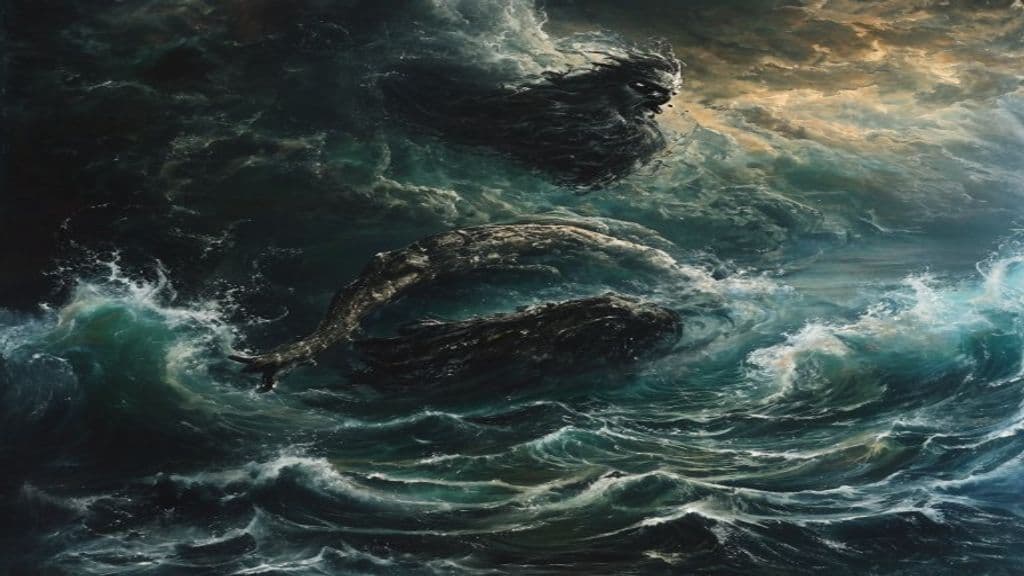
Marid
The most powerful class of jinn in Islamic tradition — beings of the sea, associated with the deep ocean, storms, and the granting of wishes at terrible cost. The classic genie of the Arabian Nights.
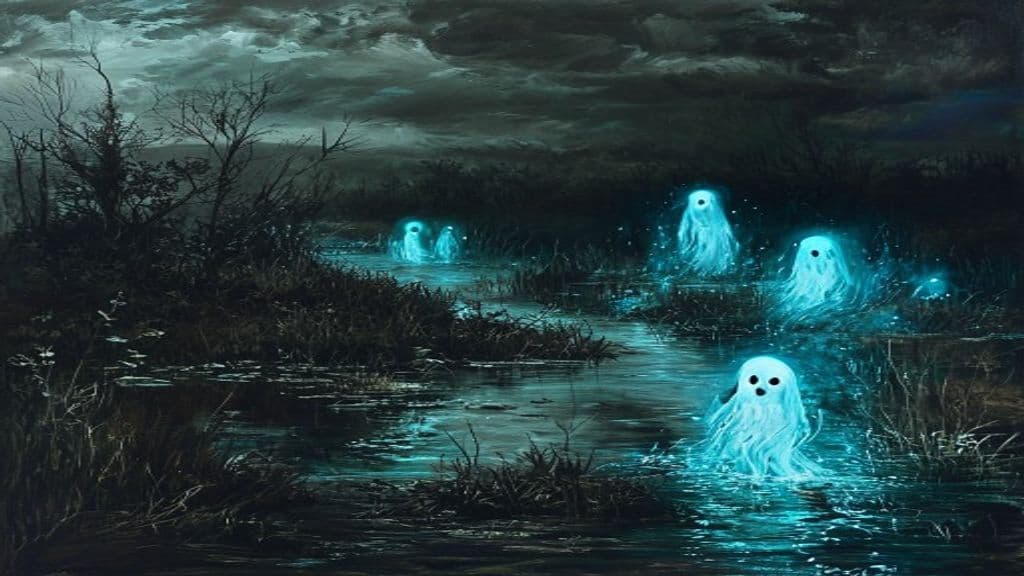
Will-o'-the-Wisp
A wandering light seen over marshy ground at night, leading travellers astray into bogs and fens. Possibly a spirit, possibly the soul of the unbaptised dead, possibly the devil himself.
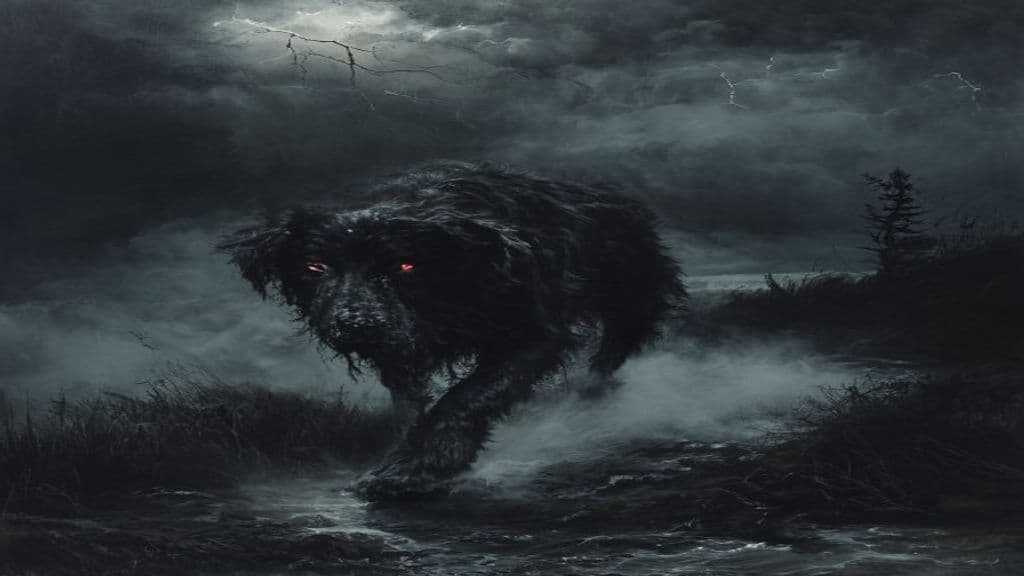
Black Shuck
A spectral black dog of East Anglian legend, with glowing red or green eyes. Its appearance is an omen of death. Its howl has been heard on clifftops during storms for centuries.
Black‑Eyed Children
A modern American urban‑legend phenomenon describing childlike figures with completely black eyes who are reported to request entry to homes or rides. Presented in contemporary paranormal media and internet storytelling, accounts characterize them as allegedly nonhuman (undead, demonic, alien, or otherwise) but provide no empirical verification.
Headless Rider (Kubinashi Rider)
A modern urban-legend revenant of a motorcyclist who suffered a decapitating accident and is said to reappear along the route or at the time of death, often riding a motorcycle without a head. The cycle adapts older headless‑rider motifs to motorized roadways and functions as a contemporary cautionary and liminal apparition.
Phantom kangaroo
A modern folkloric and cryptozoological label applied to reports of kangaroos, wallabies, or their tracks appearing in places outside their native range. Accounts range from documented feral/introduced populations and escaped captive animals to sensational, apparitional, or misidentified sightings discussed in urban‑legend and Fortean contexts.
Géant (REJECT — not attested as a discrete supernatural entity)
The term 'Géant' in the provided sources is a French common noun meaning 'giant' and is attested chiefly as a descriptor used in place-names, festival puppets, commercial brands, and technical acronyms. The supplied materials do not document a cohesive folkloric supernatural being named 'Géant' with defined mythic origin, appearance, powers, or ritual practices; therefore this entry records the absence of evidence for a discrete legendary entity under this name in the provided sources.
Gün Ana
Gün Ana (literally 'Sun Mother') is the Turkic personification of the Sun attested in Kazakh, Kyrgyz, and related Turkic traditions as a maternal, life-giving sky-being associated with fertility, warmth, health, and protection of the vulnerable; she is placed cosmologically in the upper heavens and figures in creation accounts involving solar light.
Gütel
A variable household and folk spirit from German regional belief-forms that appears as a domestic sprite, hay-loft manikin, little earth-being, or the soul of an unbaptized child; its character ranges from helpful household attendant to mischievous or harmful tormenter depending on locality.
Gādhi
A sage in Hinduism, father of Vishvamitra and associated with ancient knowledge. (Note: 1. Power tier: Primordial (not Ancient) - as there are no supernatural abilities attributed to Gādhi. 2. Appearance: add information about Gādhi's physical appearance or description in Hindu texts. 3.)
Gāyatrī
Gāyatrī is the personified form of the Gāyatrī Mantra in Vedic–Puranic Hindu tradition: simultaneously a 24‑syllable Vedic metre, the hymn composed in that metre, and a goddess—often titled Vedamātā, the mother of the Vedas—who embodies sacred Vedic speech and knowledge.
Haagenti
Haagenti is a named spirit from the grimoire tradition (the Lesser Key of Solomon/Ars Goetia) described as a high-ranking infernal president who instructs humans and effects alchemical transmutations; modern fantasy and gaming sources adapt and reimagine him in varied ways.
Haashchʼééshzhiní (Black God)
A creator deity in Navajo folklore responsible for placing the stars and possessing supernatural powers. (Note: 1. Power tier should be Primordial, but this needs clarification as it's not explicitly stated in the sources. 2. Abilities section only mentions placing stars and inventing the fire drill. The source)
Hachikazuki
Hachikazuki is the human heroine of a Japanese Otogi-zōshi folktale (literary folktale) in which a noble-born maiden conceals her beauty by wearing a bowl on her head, endures mistreatment, works in menial service, and is ultimately revealed and married to a prince. The character is treated in sources as a folktale protagonist and narrative archetype (a persecuted heroine), not as a supernatural being.
Hachiman
Hachiman is a long‑venerated syncretic Japanese tutelary deity whose identity spans Shinto kami worship and Buddhist practice. Traditionally associated with the deified spirit of Emperor Ōjin, Hachiman functions as a protector of warriors (notably the Minamoto and samurai), Buddhist temples, the imperial house, and the nation, and appears in both native shrine cults and as the Buddhist 'Great Bodhisattva Hachiman.'
Community Record
- [1]HMS Friday. Wikipedia contributors. "HMS Friday." Wikipedia, The Free Encyclopedia. https://en.wikipedia.org/wiki/HMS_Fridaywiki
- [2]Friday. Wikipedia contributors. "Friday." Wikipedia, The Free Encyclopedia. https://en.wikipedia.org/wiki/Fridaywiki