
In the canonical Goetic tradition (the Lesser Key of Solomon/Ars Goetia) Haagenti is listed among the Seventy-Two spirits catalogued in that corpus and given the formal office of a 'Great President of Hell,' ruling thirty-three legions of demons. Alternate names such as 'Haage' and 'Hgog' are attested in the same corpus and later summaries. Later fictional and gaming material (Greyhawk, Pathfinder, other roleplaying and trope compilations) reinterpret Haagenti's origins—portraying him variously as a demon prince of vice, an ancient forged construct, or other cosmological types—but these are adaptations layered atop the Goetic listing rather than alternative traditional origin accounts.
The Ars Goetia description depicts Haagenti as a large bull with the wings of a griffin who, at the conjurer's request, changes into a man. Modern and gaming sources vary in visual detail: some present him as an eagle-winged minotaur or as a snake-man/yuan‑ti variant in certain retellings; these alternative forms appear in later adaptations rather than in the primary Goetic description.
According to the Ars Goetia summary, Haagenti 'makes men wise by instructing them in every subject,' transmutes all metals into gold, and changes wine into water and water into wine. These teaching and transmutation functions are the core powers recorded in the grimoire tradition. Later fantasy and game sources emphasize related themes—alchemy, the pursuit of knowledge, and sometimes associations with gluttony or other vices—but those thematic expansions are modern reinterpretations of the Goetic entry.
Weaknesses
- otherNo Haagenti-specific weaknesses recorded in provided sources (primary Goetic summaries do not list particular vulnerabilities).
Wards
- ritualNo Haagenti-specific warding formulas recorded in provided sources (the grimoire tradition uses general evocation preparations and banishing procedures, but no Haagenti‑named protections are cited).

Djinn
The class of supernatural beings created from smokeless fire in Islamic cosmology — a parallel civilization to humanity, capable of belief or unbelief, with their own prophets, society, and judgment before God.
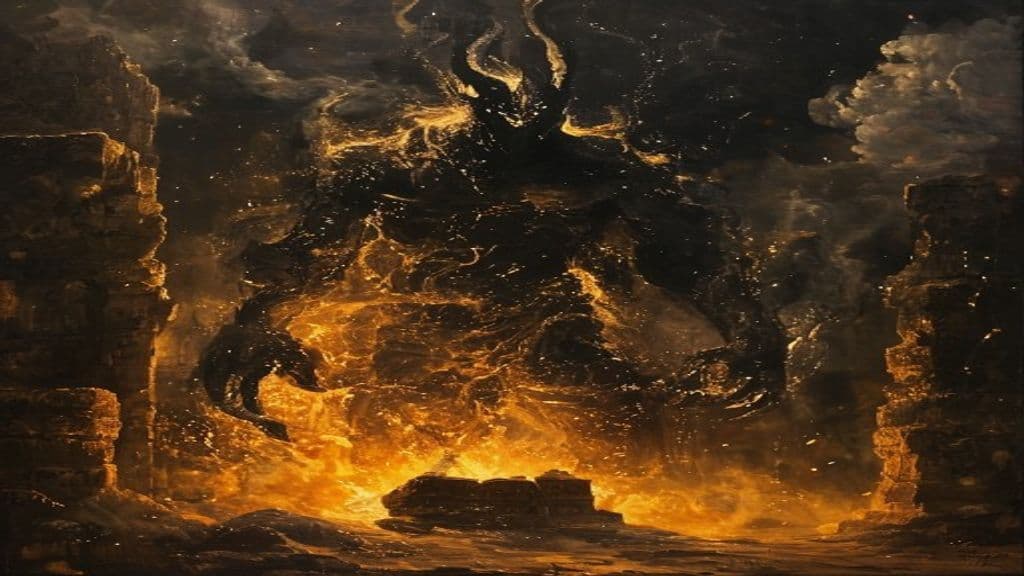
Ifrit
One of the most powerful classes of jinn in Islamic and pre-Islamic Arab tradition — a fire-born being of immense strength and cunning, capable of great works of engineering and terrible violence.
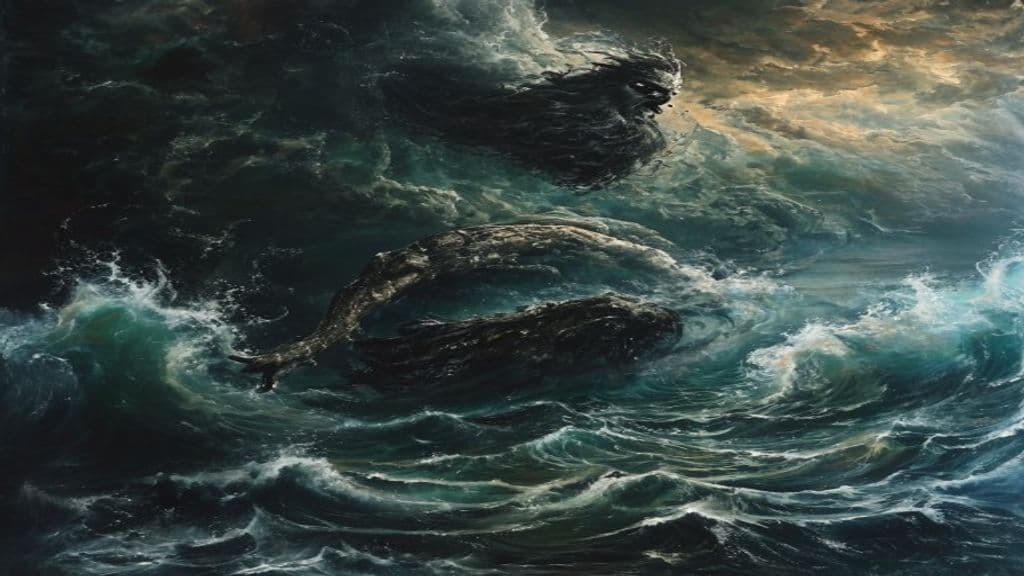
Marid
The most powerful class of jinn in Islamic tradition — beings of the sea, associated with the deep ocean, storms, and the granting of wishes at terrible cost. The classic genie of the Arabian Nights.
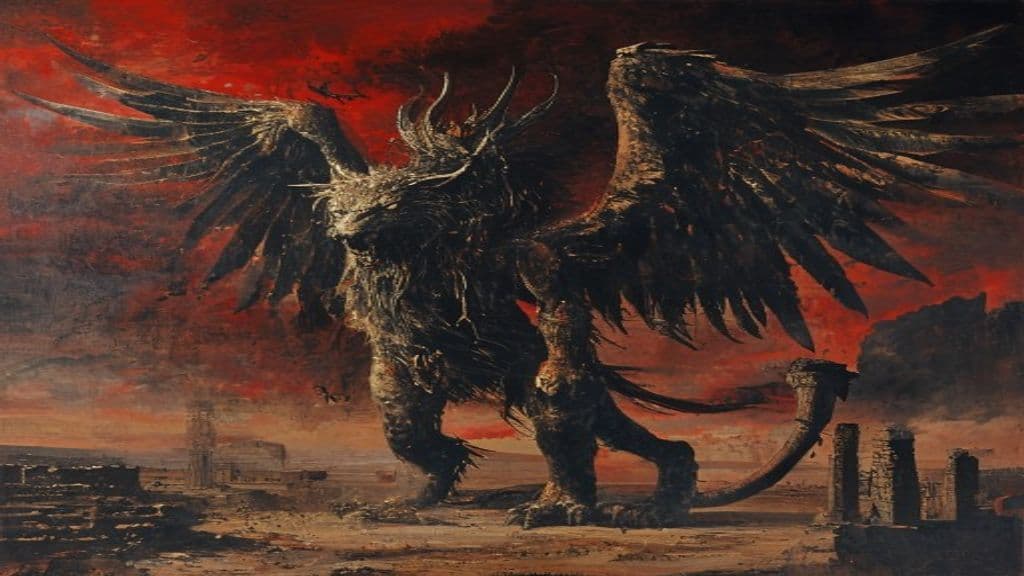
Pazuzu
The king of the wind demons of ancient Mesopotamia, lord of the southwest wind — paradoxically invoked as a protector against Lamashtu and other demons despite being evil himself.
Géant (REJECT — not attested as a discrete supernatural entity)
The term 'Géant' in the provided sources is a French common noun meaning 'giant' and is attested chiefly as a descriptor used in place-names, festival puppets, commercial brands, and technical acronyms. The supplied materials do not document a cohesive folkloric supernatural being named 'Géant' with defined mythic origin, appearance, powers, or ritual practices; therefore this entry records the absence of evidence for a discrete legendary entity under this name in the provided sources.
Gün Ana
Gün Ana (literally 'Sun Mother') is the Turkic personification of the Sun attested in Kazakh, Kyrgyz, and related Turkic traditions as a maternal, life-giving sky-being associated with fertility, warmth, health, and protection of the vulnerable; she is placed cosmologically in the upper heavens and figures in creation accounts involving solar light.
Gütel
A variable household and folk spirit from German regional belief-forms that appears as a domestic sprite, hay-loft manikin, little earth-being, or the soul of an unbaptized child; its character ranges from helpful household attendant to mischievous or harmful tormenter depending on locality.
Gādhi
A sage in Hinduism, father of Vishvamitra and associated with ancient knowledge. (Note: 1. Power tier: Primordial (not Ancient) - as there are no supernatural abilities attributed to Gādhi. 2. Appearance: add information about Gādhi's physical appearance or description in Hindu texts. 3.)
Gāyatrī
Gāyatrī is the personified form of the Gāyatrī Mantra in Vedic–Puranic Hindu tradition: simultaneously a 24‑syllable Vedic metre, the hymn composed in that metre, and a goddess—often titled Vedamātā, the mother of the Vedas—who embodies sacred Vedic speech and knowledge.
HMS Friday
HMS Friday is an urban myth — a contemporary maritime legend that purports to tell of a Royal Navy ship deliberately commissioned and sailed on Fridays to disprove the superstition that beginning a voyage on a Friday is unlucky. The story is false: there was never a Royal Navy ship named HMS Friday, and the tale functions as a folkloric cautionary anecdote rather than a historical event.
Haashchʼééshzhiní (Black God)
A creator deity in Navajo folklore responsible for placing the stars and possessing supernatural powers. (Note: 1. Power tier should be Primordial, but this needs clarification as it's not explicitly stated in the sources. 2. Abilities section only mentions placing stars and inventing the fire drill. The source)
Hachikazuki
Hachikazuki is the human heroine of a Japanese Otogi-zōshi folktale (literary folktale) in which a noble-born maiden conceals her beauty by wearing a bowl on her head, endures mistreatment, works in menial service, and is ultimately revealed and married to a prince. The character is treated in sources as a folktale protagonist and narrative archetype (a persecuted heroine), not as a supernatural being.
Hachiman
Hachiman is a long‑venerated syncretic Japanese tutelary deity whose identity spans Shinto kami worship and Buddhist practice. Traditionally associated with the deified spirit of Emperor Ōjin, Hachiman functions as a protector of warriors (notably the Minamoto and samurai), Buddhist temples, the imperial house, and the nation, and appears in both native shrine cults and as the Buddhist 'Great Bodhisattva Hachiman.'
Hadad (Haddu / Adad / Iškur)
Hadad is the ancient Near Eastern storm and rain deity attested across Levantine and Mesopotamian traditions (Ugaritic Haddu, Akkadian Adad, Sumerian Iškur). He is a high-ranking weather-lord associated with rain, thunder, fertility of fields, and a dual capacity to nourish crops and to unleash destructive storms; he plays central roles in temple cult, royal ideology, and mythic battles (notably the Ugaritic Baal Cycle).
Hadad the Edomite
Hadad the Edomite is a human political figure in the Hebrew Bible described as a surviving member of the Edomite royal house who fled to Egypt, was elevated at Pharaoh's court, and later returned to oppose King Solomon; the narrative frames him as one of the adversaries the LORD "raised up" against Solomon after Solomon's apostasy.
Hades
In ancient Greek religion and mythology, Hades is the god who rules the subterranean realm of the dead and presides over all things beneath the earth, including subterranean riches. He is a son of Cronus and Rhea and one of the generation of Olympian gods, allotted the underworld after the Titanomachy.
Community Record
- [1]Haagenti (Wikipedia). Wikipedia: Haagentiwiki
- [2]Wikidata: Haagenti. Wikidata entry for Haagentiwiki
- [3]President Haagenti - 72 Demons of The Lesser Key of Solomon: The Ars Goetia | Demonology - Solomon's Temple Investigation Marathon 505 (Archive). Archive: 'President Haagenti' (summary from Ars Goetia tradition)other
- [4]DuQuette & Hyatt - Aleister Crowley's Illustrated Goetia (1992, 2000 ed.2) (Archive table of contents & commentary). DuQuette & Hyatt, Illustrated Goetia (table of contents confirming inclusion among the Seventy-Two Spirits)other
- [5]Haagenti - Great Library of Greyhawk. Greyhawk wiki — modern/game adaptation/visual variationliterary
- [6]Haagenti - PathfinderWiki. PathfinderWiki — roleplaying/game adaptation emphasising alchemy/knowledge themesliterary
- [7]Ars Goetia - All The Tropes. AllTheTropes — trope-summary noting variants such as 'eagle-winged minotaur' depictionother
- [8]Various roleplaying/fiction writeups (assorted online entries and campaigns). Assorted RPG and fiction entries cited in research notes (examples of modern reinterpretation)literary