
The entity is presented in Malay folkloric sources not as a cosmogonic deity but as a familiar spirit bound to and serving a human practitioner — often associated in the cited literature with black magic practitioners. Its name combines Malay hantu (best rendered 'spirit' rather than merely 'ghost') and raya ('great' or 'high'), signaling a spirit of unusual potency and usefulness to a human owner rather than a supreme ruler of spirits. Sources describe the Hantu Raya primarily through its social role (a servant-double) and transactional relationship with humans rather than a single origin narrative or creation myth.
Folktale summaries describe a true or monstrous form as humanoid with a black hairy body except for the face, rough grey skin, long sharp teeth and red eyes. However, the Hantu Raya commonly manifests physically as an exact double of its owner when performing tasks or providing an alibi, so it may appear either in the monstrous description recorded in summaries or deceptively as a human duplicate of its master.
The Hantu Raya acts as a physical double of its owner, substituting for the master in social and domestic contexts (for example remaining with a wife in place of an absent husband) and providing alibis. It is said to possess superhuman strength and efficiency, enabling it to perform heavy labor (such as fieldwork) more effectively than mortals. The spirit is described as bestowing considerable power on its master and functioning as a highly useful familiar in transactional relationships; in return it requires regular spirit-offerings and may cause harm if obligations are neglected. Folk explanations also attribute certain misfortunes (notably some childbirth deaths) to the activity of a Hantu Raya.
Weaknesses
- conditionfailure to receive timely offerings
Wards
- substanceancak (spirit-offering containing yellow glutinous rice, eggs, roasted chicken, rice flakes and a doll)

Genderuwo
Genderuwo is a Javanese/Indonesian supernatural humanoid spirit, commonly depicted in modern sources as a large, hairy, muscular creature with reddish or black skin and bulging eyes; it is described as able to appear, disappear, and assume human form. It is treated in regional folklore and popular culture as one member among many named hantu (supernatural beings) in the Malay–Indonesian mythic landscape.

Pelesit
A Malay familiar spirit traditionally conceived as a small insect (generally a cricket or sometimes a grasshopper) kept by a human owner—usually a woman—and used as an instrument of magical harm. The pelesit chirps and may enter a victim's mouth tail-first; its chirping can call a more dangerous spirit (the polong).

Polong
A Malay familiar spirit produced from human blood and kept in a bottle by a human owner; it is deployed to afflict victims by possessing them, typically preceded by a smaller insect-like helper (pelesit). Victims are cured when the spirit is called off by its owner or through a shamanic exorcism that forces the polong to name its human 'parent.'
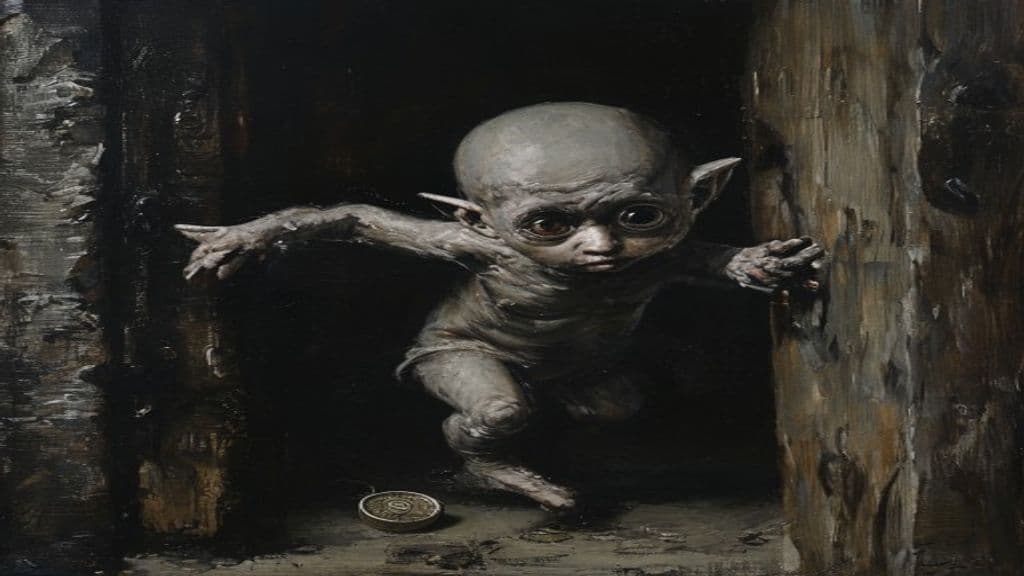
Toyol
A malevolent fetal spirit used as a supernatural familiar in Malay and Javanese black magic — typically stolen or purchased from a dukun, fed blood, and set to steal from neighbors.

Hantu Tinggi
A Malay spirit-type characterized by extraordinary height, Hantu Tinggi is an ancient forest/swamp-associated unseen being in Malay-speaking areas of Malaysia. Folklore describes it as similar to Hantu Raya or Genderuwo but vastly larger; protective practice reported in sources centers on Qur'anic recitation and seeking traditional or Islamic healers.
Bisan
A female Malay/Jakun nature spirit who presides over camphor-bearing trees. She signals the presence of camphor by cicada-like song, is jealous of those seeking the resource, and must be propitiated or confused to allow harvest.
Hantu Tinggi
A Malay spirit-type characterized by extraordinary height, Hantu Tinggi is an ancient forest/swamp-associated unseen being in Malay-speaking areas of Malaysia. Folklore describes it as similar to Hantu Raya or Genderuwo but vastly larger; protective practice reported in sources centers on Qur'anic recitation and seeking traditional or Islamic healers.
Langsuyar
A female revenant in Malay and related archipelagic traditions said to be the ghost of a woman who died in connection with pregnancy or childbirth. The langsuyar is described variously as a beautiful long‑haired woman or as a floating head with trailing entrails; she is vampiric in behavior, associated with night‑birds and certain trees/ferns, and managed by corpse‑preparations, charms, and exorcistic measures.
Polong
A Malay familiar spirit produced from human blood and kept in a bottle by a human owner; it is deployed to afflict victims by possessing them, typically preceded by a smaller insect-like helper (pelesit). Victims are cured when the spirit is called off by its owner or through a shamanic exorcism that forces the polong to name its human 'parent.'
Hantu Air
A water spirit in Indonesian animist tradition, associated with maintaining the balance of watery places and influencing weather. (Note: - Power tier: Greater (Hantu Air's abilities are more powerful than a local spirit but not cosmic in scope) - Abilities: While it can influence weather, the source material does not explicitly mention)
Hantu Bongkok
A bloodthirsty ghost or evil spirit from pre-colonial-era Indonesian folklore in Palembang, South Sumatra. (Note: * Summary: Accuracy confirmed, but it's worth noting that a brief mention of its bloodthirsty nature could be added. * Power tier: Should be "Ancient" since Hantu Bongkok is described as an evil spiri)
Hantu Penanggal (Penanggalan)
A nocturnal vampiric entity in Malay ghost myth, the penanggalan appears as a floating disembodied woman's head with trailing organs and entrails and is said from a distance to twinkle like a ball of flame.
Hantu Pocong
A Southeast Asian folkloric ghost understood as a dead body wrapped in an Islamic burial shroud (kain kafan), commonly associated with improper funerary procedure or unresolved death-related matters. Representations range from a hopping wrapped corpse in popular media to esoteric readings that interpret the phenomenon as residual energetic or liminal-layer disturbance.
Hantu Tetek
Hantu Tetek is named in Malay-language sources as a local hantu (ghost/spirit) variant within the broad family of female revenant or vampiric spirits found in Malay-region folklore. The available source treats it as one of many hantu types but provides no detailed, attested description specific to Hantu Tetek itself.
Hanuman
Hanuman is a divine vanara (monkey‑like being) in Hindu literature, foremost companion and devoted servant (Rama-dūta) of Lord Rama in the Ramayana. Revered in later Bhakti traditions, he is worshipped as a protector and exemplar of devotion, strength, and service.
Hanuman langur
A biological primate species (Semnopithecus entellus) widely distributed across India and parts of Pakistan, commonly called the Hanuman langur or sacred langur and culturally associated with the Hindu deity Hanuman. Sources treat it as an animal of ecological, ethological, and cultural interest rather than a supernatural being.
Haoma
Divine plant in Zoroastrianism and Persian culture with significant spiritual importance, originating from Indo-Iranian religion. (Note: * Power tier should be Primordial, as Haoma is considered a divine being with significant spiritual importance, rather than deity-level (Ancient). * Origin story: The etymology of the word 'Haoma' is )
Community Record
- [1]Hantu Raya. Wikipedia, 'Hantu Raya' article (summary on appearance, doubling behavior, ancak offering, etymology, and related beings).wiki
- [2]Hantu Raya (Wikidata). Wikidata entry for Hantu Raya (identifier and cross-references).other
- [3]Hantu Raya : The Sea Spirit - Mythlok. Mythlok summary discussing Hantu Raya as a spirit-familiar and comparisons with other Malay spirits.folk
- [4]Hantu Tinggi. Wikipedia, 'Hantu Tinggi' article (used for comparison noting similarity to Hantu Raya/genderuwo in some regions).wiki
- [5]Carve Magazine — 'Hantu Raya' by Nicola Sheppey. Literary/arts reference showing contemporary cultural usage and dramatization of the Hantu Raya motif.literary
- [6]Kakiseni — Hantu Raya Tebuk Mat Rashid. Theatre/event listing referencing Hantu Raya in modern Malaysian cultural production.other