
According to the supplied accounts, a polong is created by keeping the blood of a murdered man in a spherical bottle with a narrow neck; over a period of one to two weeks the maker utters incantations over the bottle and the blood becomes a polong. The created spirit refers to its human maker as its 'mother' or 'father' and is kept hidden outside the owner's house when not in use.
Traditional descriptions depict the polong as taking the form of a miniature woman the size of the first joint of the finger. The creature is stored in a small, spherical-necked bottle when not deployed and is concealed outside the owner's dwelling.
The polong functions as a hired or household spirit-agent sent to afflict a specified human target. Its attacks are narratively linked to a smaller companion, the grasshopper-like pelesit, which is said to enter the victim's mouth and chirp; the polong then follows and possesses the person. During possession the victim becomes frenzied: sources describe frothing at the mouth, tearing at clothing, attacking nearby people, and behaving as if insane. Some accounts add that victims are left with bruises, markings and often blood from the mouth (these latter details are noted as present in some sources). In exorcism the polong can speak through the possessed person in a falsetto voice to identify its owner, and it may attempt to resist by making the afflicted attack the shaman or by falsely accusing another person.
Weaknesses
- ritualOwner calls the polong off
- ritualExorcism by a shaman (dukun or bomoh) who asks the polong who its parent is
Wards
- ritualExorcism by a shaman (dukun or bomoh)

Pelesit
A Malay familiar spirit traditionally conceived as a small insect (generally a cricket or sometimes a grasshopper) kept by a human owner—usually a woman—and used as an instrument of magical harm. The pelesit chirps and may enter a victim's mouth tail-first; its chirping can call a more dangerous spirit (the polong).

Hantu Raya
A Malay spirit-familiar (hantu) described as a "great" or potent double that serves and substitutes for a human master, especially associated in sources with practitioners of black magic. It performs labor, provides alibis, and requires regular offerings to be kept under control.
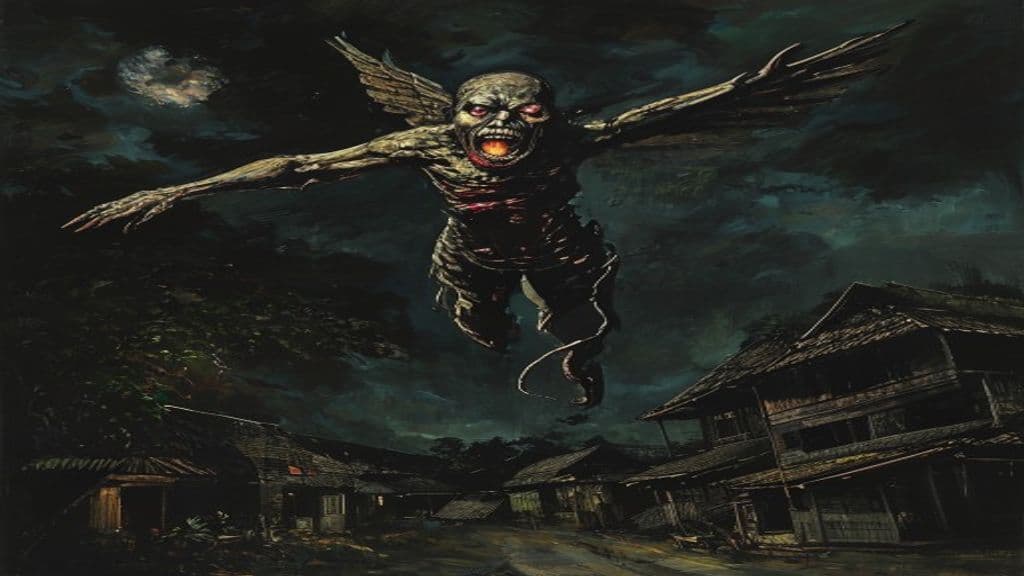
Penanggalan
A Malay vampire consisting of a detached human head with dangling organs that flies at night to feed on the blood of infants and new mothers, then soaks its organs in vinegar to reattach.
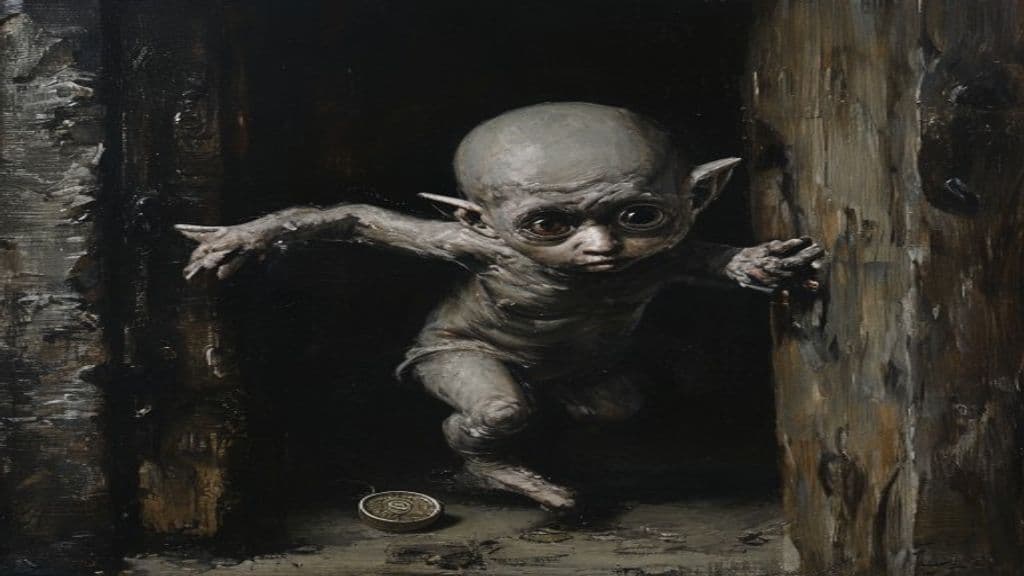
Toyol
A malevolent fetal spirit used as a supernatural familiar in Malay and Javanese black magic — typically stolen or purchased from a dukun, fed blood, and set to steal from neighbors.
Bisan
A female Malay/Jakun nature spirit who presides over camphor-bearing trees. She signals the presence of camphor by cicada-like song, is jealous of those seeking the resource, and must be propitiated or confused to allow harvest.
Hantu Raya
A Malay spirit-familiar (hantu) described as a "great" or potent double that serves and substitutes for a human master, especially associated in sources with practitioners of black magic. It performs labor, provides alibis, and requires regular offerings to be kept under control.
Hantu Tinggi
A Malay spirit-type characterized by extraordinary height, Hantu Tinggi is an ancient forest/swamp-associated unseen being in Malay-speaking areas of Malaysia. Folklore describes it as similar to Hantu Raya or Genderuwo but vastly larger; protective practice reported in sources centers on Qur'anic recitation and seeking traditional or Islamic healers.
Langsuyar
A female revenant in Malay and related archipelagic traditions said to be the ghost of a woman who died in connection with pregnancy or childbirth. The langsuyar is described variously as a beautiful long‑haired woman or as a floating head with trailing entrails; she is vampiric in behavior, associated with night‑birds and certain trees/ferns, and managed by corpse‑preparations, charms, and exorcistic measures.
Pohjola
Location in Finnish mythology and a central figure in the Kalevala epic. (Note: 1. Summary should mention that Pohjola is a central figure in the Kalevala epic, but also clarify that it is a location, not just a character. 2. Power tier: Lesser (not Greater), as Pohjola does not )
Polevik
A Slavic field spirit associated with cultivated fields and agricultural labour. Traditional accounts depict Polevik as a field-dwelling being encountered by peasants and travellers (especially at noon or sunset) that can mislead, punish, or occasionally be negotiated with by offerings.
Polkan
Polkan (Полкан, Палкан) is a legendary East Slavic folktale hybrid—variously half-human/half-horse or half-human/half-dog—known from the Bova Korolevich (Buovo) narrative cycle as an exceptionally powerful warrior who first opposes and then becomes the sworn companion and protector of the hero.
Polly Plummer
Polly Plummer is a fictional human character created by C. S. Lewis who appears as a child in The Magician's Nephew (set 1900) and later as an adult in The Last Battle. She is a practical, emotionally steady companion to Digory Kirke, participates in inter-world travel via Uncle Andrew's rings and the Wood between the Worlds, and after her death in The Last Battle is transported to Aslan's country.
Poltergeist
A poltergeist is a German-derived ghostlore label for an unseen agent associated chiefly with noisy, kinetic, and disruptive physical phenomena in domestic settings. Modern summaries and case literature emphasize episodic outbreaks of object movement, loud noises, and occasional assaults or electrical/foul-smell disturbances, with competing explanations ranging from spirit activity to hoax, psychogenic projection, or natural physical causes.
Poludnitsa (Lady Midday / Noonwraith)
A Slavic folkloric personification of the dangers of the midday hour, depicted as a young woman who appears in agricultural fields at noon and is held responsible for heat-related collapse, neck pains, and occasional madness.
Polyboea
Polyboea (Ancient Greek Πολύβοια) is a name applied to several related personae in Greek myth and local cult — most notably a maiden of Amyclae (sister of Hyacinthus) who died a virgin and was reputed to have been taken to Elysium or admitted into the train of Artemis. The same name appears elsewhere in mythic genealogies and, in modern taxonomy, as a genus of Asian nursery-web spiders.
Polybotes
Polybotes (Ancient Greek: Πολυβώτης) is one of the Gigantes in Greek myth, an earth-born giant who fought the Olympian gods during the Gigantomachy and — in the most attested tradition — was pursued by Poseidon and crushed beneath an island (Nisyros or, in some variants, Cos). He appears in literary summaries and in archaic and classical vase imagery as a named combatant opposing Poseidon or Zeus.
Community Record
- [1]Polong (Wikipedia). Wikipedia, entry 'Polong'wiki
- [2]Polong (legacy Aonprd bestiary entry). Legacy Aonprd bestiary entry 'Polong'other
- [3]Bezoar Mustika Pearls: polong, bezoar stones mustika pearls.. Bezoar Mustika Pearls: 'polong' pagefolk
- [4]Bottled Bloodsucker – Vampires (Vampires.com). Vampires.com: 'Bottled Bloodsucker' (discussion of polong)other