
Sources describe the pelesit as rooted in pre-monotheistic Malay animism and as a familiar spirit created and owned by humans. Two ritual procedures are reported for acquiring a pelesit; both are said in the sources to involve reciting correct incantations and biting off the tongue of a dead child, the severed tongue thereafter being ritually kept and transformed into the pelesit. Ownership is usually gendered—generally a woman—and the pelesit belongs to a wider set of household/hereditary familiars in Malay belief.
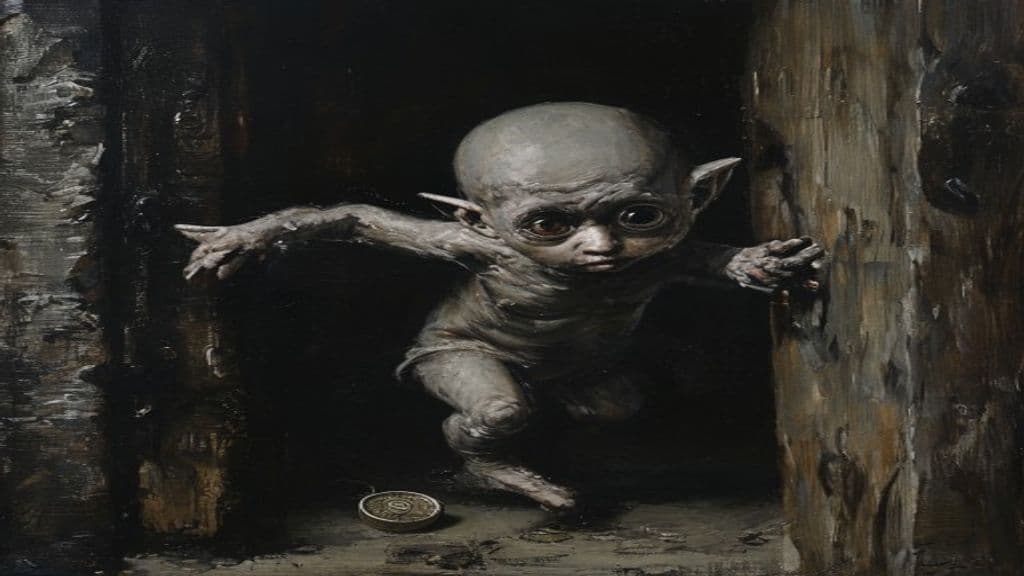
The pelesit is generally described as a small insect spirit—usually represented as a cricket and occasionally as a grasshopper—and small enough to be kept in a bottle. The Malay term pelesit is said to derive from lesit, meaning to buzz or whizz, so the entity's identity is tied to the insectual buzzing sound; available sources do not provide humanoid or large-form descriptions.
By itself the pelesit is said to enter a person's mouth tail-first and chirp inside the victim, provoking a characteristic symptom in which the afflicted will 'insanely rave about cats.' That internal chirping also functions as a summons for the polong; when the polong answers, it may render the victim unconscious or insane. The pelesit thus often serves as an intermediary or calling device to a more powerful familiar rather than as a world-altering force. Owners keep the pelesit contained and feed it (see ritual practices) to maintain control.
Weaknesses
- ritualBurial of containing bottle
- ritualRecall by owner (compelled by a shaman/bomoh/dukun)
Wards
- ritualShamanic exorcism (bomoh or dukun incantation and interrogation)
- conditionContainment and feeding by owner (bottle-keeping with turmeric rice or blood from the ring finger)

Polong
A Malay familiar spirit produced from human blood and kept in a bottle by a human owner; it is deployed to afflict victims by possessing them, typically preceded by a smaller insect-like helper (pelesit). Victims are cured when the spirit is called off by its owner or through a shamanic exorcism that forces the polong to name its human 'parent.'
Toyol
A malevolent fetal spirit used as a supernatural familiar in Malay and Javanese black magic — typically stolen or purchased from a dukun, fed blood, and set to steal from neighbors.

Hantu Raya
A Malay spirit-familiar (hantu) described as a "great" or potent double that serves and substitutes for a human master, especially associated in sources with practitioners of black magic. It performs labor, provides alibis, and requires regular offerings to be kept under control.
Kuntilanak (Pontianak)
A Malay‑world female revenant or vengeful spirit associated with women who died in childbirth or stillbirth; depicted as a pale, long‑haired woman in a blood‑stained white dress who preys on the living (men, pregnant women, women in childbirth, and in some variants virgins/young women). The figure appears across Indonesia, Malaysia, Singapore and neighboring areas and features in oral tradition and popular media.
Orang Minyak
Orang Minyak ('oily man') is a Malay folkloric figure — a nocturnal human-shaped assailant described as coated in shiny black grease who abducts and is blamed for rapes of young women. Accounts vary between supernatural cursed figures and human criminals or warlocks, and the legend functions as a cautionary nocturnal threat in Malay-speaking communities.
Pelasgians
In Greek tradition, the Pelasgians were a collective term for indigenous people inhabiting Greece before the emergence of the Greeks. (Note: 1. Power tier should be Primordial is incorrect; given that there's no information about their abilities or behaviors, they should not have a power tier assigned. 2. Appearance should state "No physic)
Pelasgos
Pelasgos is an eponymous ancestral figure (and ethnic label Pelasgians/Pelasgoi) from Greek mythohistory used to account for the antiquity and origins of certain peoples and cults in Greece. He appears across regionally variable traditions as a foundational progenitor rather than a supernatural monster or spirit.
Pelasgus
Pelasgus (Πελασγός) is a mythic ancestral and eponymous founder figure in ancient Greek tradition credited in various local accounts with founding cities, teaching agriculture, receiving Demeter, and giving his name to the Pelasgians and regions such as Pelasgiotis. He appears across competing regional genealogies (Argive, Arcadian, Thessalian) rather than as a standardized supernatural being.
Pele
Pele is the Hawaiian goddess of fire, lightning, wind, and volcanoes, traditionally credited in Hawaiian narratives as the creator of the Hawaiian Islands and addressed with honorifics such as "Madame Pele" and "Tūtū Pele." She figures in genealogies of Hawaiian deities and in myths that explain volcanic activity and island formation.
Pele's Curse
A supernatural concept that manifests as an implied threat of bad luck associated with taking native Hawaiian materials away from Hawaii. (Note: 1. Power tier: Greater (the curse can have significant consequences for those who disregard it) 2. Abilities: specify that the bad luck is said to manifest as accidents, mishaps, or other unfortunate )
Peleus
Peleus (Ancient Greek Πηλεύς) is a mortal heroic king of the Greek heroic age—son of Aeacus and an oread, husband of the sea-nymph Thetis, and father of Achilles—figuring as a founder-ancestor and culted hero in later local practice. He is portrayed in epic narrative as a warrior-king, Argonaut, and participant in the web of marriages and purifications that link human rulership to divine beings.
Peliades (Daughters of Pelias)
In Greek myth, the Peliades (Greek: Πελιάδες) are the daughters of King Pelias who, deceived by Medea's staged 'rejuvenation' demonstration, dismembered their father believing he would be restored to youth. The story survives in fragmentary literary references, summaries of Euripides' lost play Peliades, and later mythographic accounts.
Pelias
Pelias (Πελίας) is a mortal king of Iolcus in Greek myth who usurped power in Thessaly, sent Jason to fetch the Golden Fleece, and was ultimately killed through Medea's deception when his daughters dismembered him in an attempted false rejuvenation.
Pelopia
Pelopia (Ancient Greek: Πελόπεια) is an ancient Greek female personal name applied to several distinct mortal women in different mythic cycles (Theban/Niobid, Iolcan/Argonautic, Ares‑related, and the Thyestean/Atreid cycle). The name marks genealogical and narrative roles—daughters, sisters, and mothers—whose stories intersect major dynastic tragedies rather than a single coherent supernatural persona.
Pelops
Pelops is a mythic heroic-royal figure of ancient Greek tradition, an eponymous founder-ancestor of the Peloponnesus, ruler of Pisa/Olympia, and progenitor of dynasties (notably the House of Atreus). He is both a cult hero venerated at Olympia with chthonic libations and a narrative focal point whose deeds generate a long-lasting familial curse.
Community Record
- [1]Pelesit. Wikipedia, 'Pelesit' entry (as cited in research notes)wiki
- [2]Pelesit (Wikidata). Wikidata entry for pelesit (as cited in research notes)wiki
- [3]Ghosts in Malay culture. Wikipedia, contextual overview of Malay ghost traditions (as cited in research notes)wiki
- [4]Archive mentions and cultural references. Selected archived references and popular-culture mentions cited in research notesother
- [5]Archive: ALBUM XPDC DARJAH SATU 1990. Cultural reference cited in research notesother
- [6]The Bottled Bloodsucker’s Pet – Vampires. Popular overview site referencing pelesit motif (as cited in research notes)other
- [7]Book Review: The Girl and the Ghost by Hanna Alkaf. Modern fiction reference noting pelesit motif (as cited in research notes)literary
- [8]Pelesit: An Immersive Theatre Performance – Kakiseni. Contemporary cultural event referencing pelesit (as cited in research notes)other