
The sources treat Hindu gods as a class within a long-standing religious tradition rather than as a single unified origin narrative. Individual gods have distinct origins in particular texts: Mitra is attested in Vedic literature (Rigveda) and in the Mitanni inscription where he is invoked as a protector of treaties, and is generally listed among the Adityas, the sons of the goddess Aditi (Source 6). Other major deities are positioned within canonical genealogies and functional trios (for example, the modern reference to the Hindu trinity — Brahma, Vishnu, Shiva — in a contemporary dramatic adaptation), indicating layered mythic genealogies and roles across sources (Source 9). The general encyclopedia overview emphasizes that devotees may treat any given deity as supreme or as one among many depending on theological orientation (Source 1).
Appearance varies widely by deity and by regional/iconographic tradition. The sources give Ganesha as a clear visual example: "the chubby, gentle, wise, elephant-headed Hindu god," depicted with an elephant head on a corpulent human body and associated iconographic attributes tied to beginnings and scholarship (Source 8). The published summary for Mitra in the sources does not supply a physical description (Source 6). More broadly, the encyclopedia overview implies that appearance is specialized per deity and tradition rather than uniform (Source 1).
Abilities and social functions differ by deity and by devotional framing. Ganesha is described as the patron of beginnings and intellectuals and is "revered before major undertakings," indicating a customary power to bless ventures and remove obstacles in popular practice (Source 8). Mitra is historically invoked as a protector of treaties (Mitanni inscription, Rigveda), indicating a role in upholding oaths and social contracts in ancient contexts (Source 6). The general sources stress that conceptions of divine power are flexible: some traditions treat a deity as supreme (Ishvara/Bhagavān), others as one divine being among many (Deva/Devi), which shapes perceived abilities and authority (Source 1).
Weaknesses
- otherNo universal weakness; varies by deity and tradition — sources do not describe universal vulnerabilities to be exploited
Wards
- ritualDevotional discipline and ritual observances (mangalacharan, japa, aarti, bhog, dandavat pranam, tri-sandhya) — practices recorded as devotional prescriptions in a contemporary Hindi devotional excerpt rather than as wards against gods (Source 4)
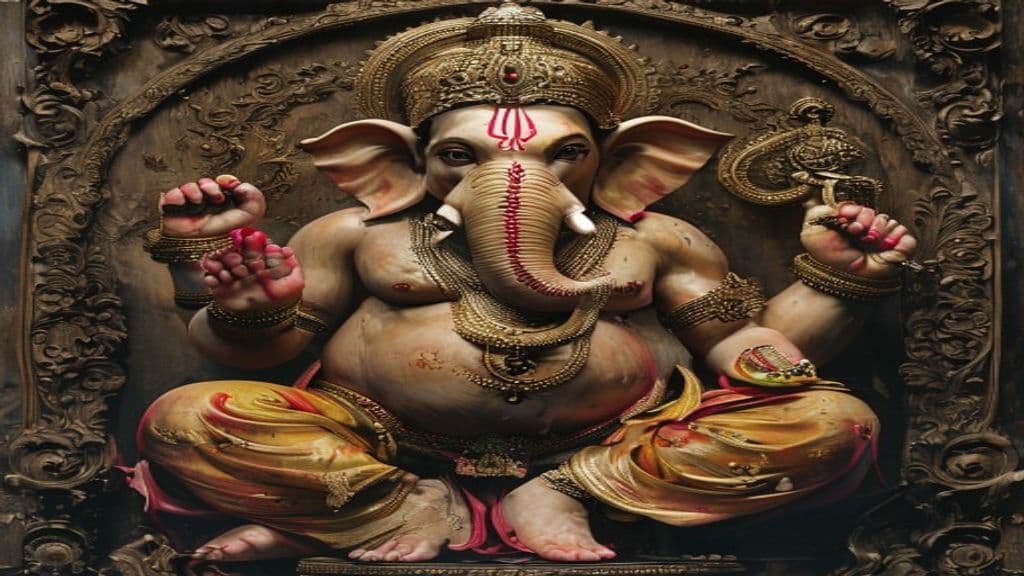
Ganesha
Ganesha (Gaṇeśa), also called Ganapati or Vinayaka, is a widely revered Hindu deity identified by an elephant head who functions as remover of obstacles, patron of arts and learning, and god of beginnings; he is son of Shiva and Parvati and head of the gaṇas in many traditional accounts.
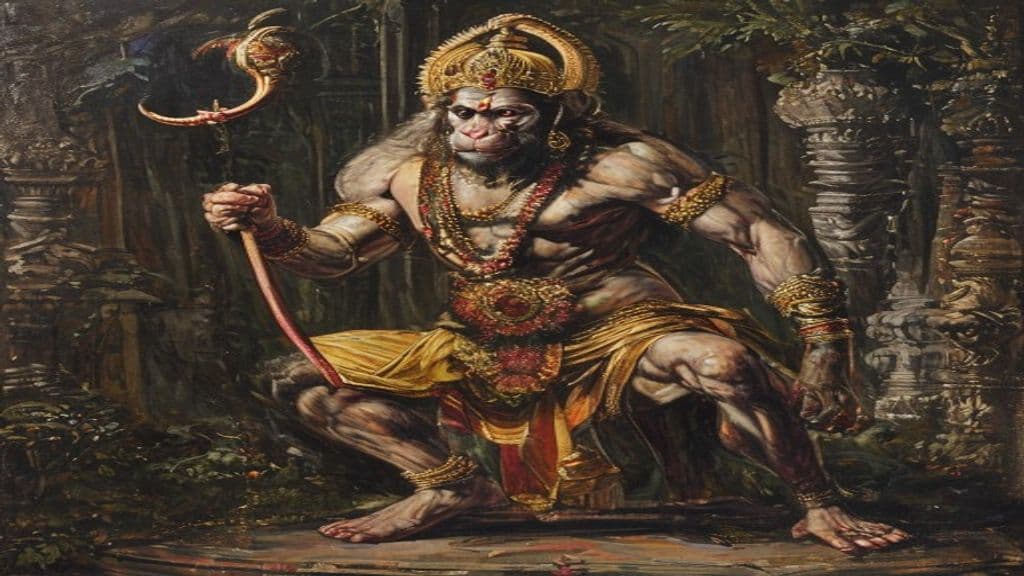
Hanuman
Hanuman is a divine vanara (monkey‑like being) in Hindu literature, foremost companion and devoted servant (Rama-dūta) of Lord Rama in the Ramayana. Revered in later Bhakti traditions, he is worshipped as a protector and exemplar of devotion, strength, and service.
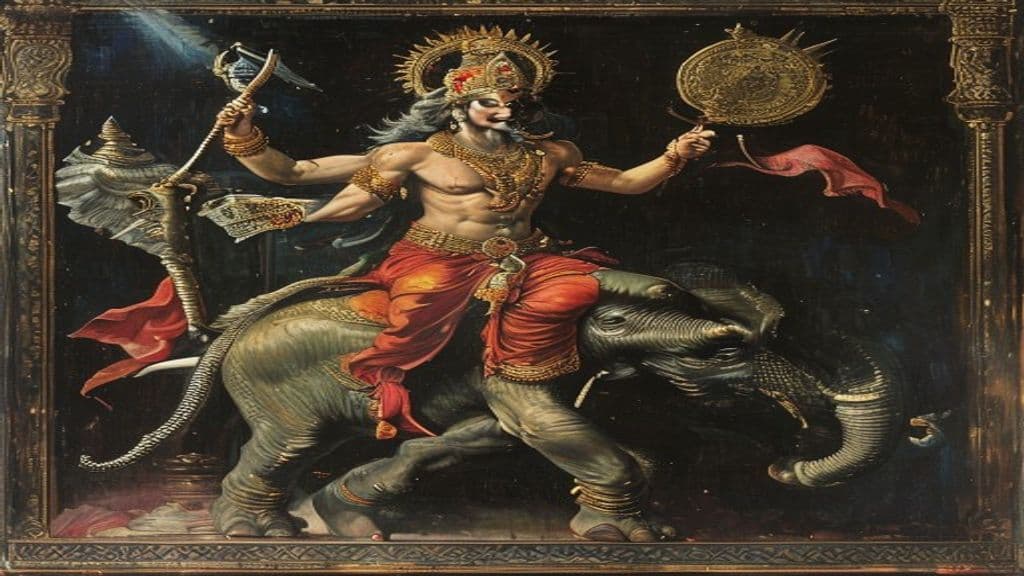
Indra
Indra is a major Vedic deity, king of the devas and lord of Svarga (heaven), associated primarily with the sky, storms, lightning, rain, rivers and martial heroism; he is central in the Rigveda and later appears across Hindu, Buddhist and Jain cosmologies with varying status.
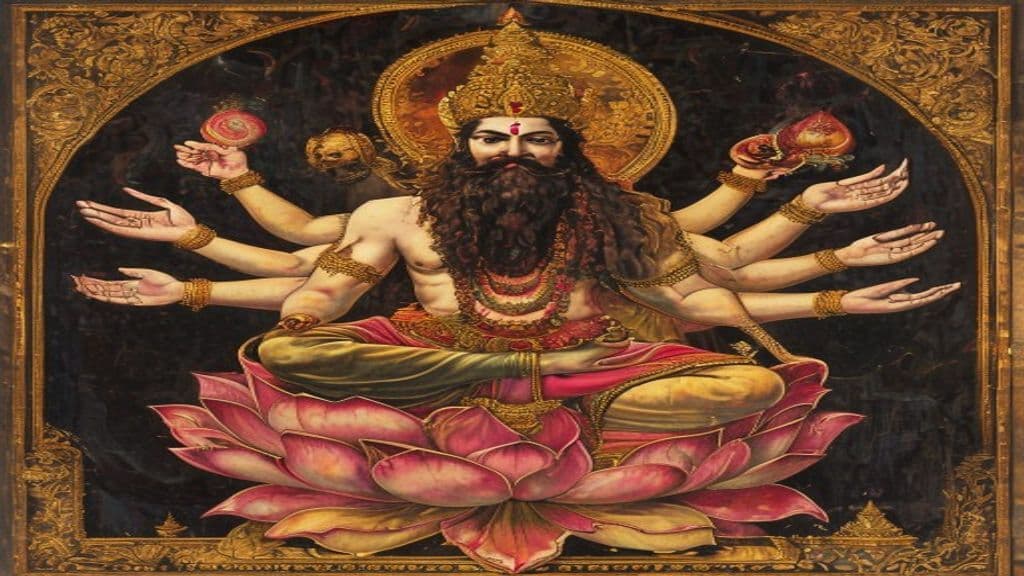
Brahmā
Brahmā is the personified Creator god in Hindu textual tradition, presented as the creative member of the Trimurti (with Viṣṇu and Śiva). In Purānic cosmogonies he is said to emerge as Svayambhu from Hiranyagarbha (the golden egg) and to produce the world and living beings; the term is distinct from the impersonal metaphysical brahman.
Adi (asura)
Adi is attested in modern reference works as the name of an Asura who 'appears in the Matsya Purāṇa.' Beyond this single-line citation in secondary sources, no descriptive material about the figure is provided in the supplied research notes.
Adi Shakti
Adi Shakti (also Adi Parashakti, Mahadevi, Adya Shakti) is the primordial feminine power in Hindu/Shakta theology, regarded as the ultimate reality (Para Brahman) and the source from which all goddesses and gods manifest. She is both an impersonal cosmic principle (Mulaprakriti) and a focus of devotional invocation in temples, mantras, and pilgrimage sites such as Shakti Peethas.
Adi Vinayaka
Adi Vinayaka (Ādi Vināyaka; also called Nara Mukha Vinayaka) is a named iconographic and devotional form of the Hindu god Ganesha portraying the deity with a human head, described in sources as the form before the episode of decapitation by Shiva. It is rarely worshipped and appears in a small number of South Indian shrines and in devotional/musical repertoires.
Aditi
Aditi is a major Vedic goddess in Hindu tradition who personifies the boundless, infinite cosmic principle and functions as the maternal matrix from which many celestial deities (the Ādityas and other groups) are born. In the Vedic hymns she is invoked as a protective liberator who guards petitioners, provides wealth and safety, and frees devotees from hindrances such as sin and sickness.
Agni
Agni is the Vedic personification of fire in Hindu tradition: a sacred, mediating principle that manifests as terrestrial fire, atmospheric lightning, and celestial sun, and that receives and conveys sacrificial offerings. Prominent in the Rigvedic corpus, Agni functions as sanctifier, witness of rites of passage, and a transformational inner principle in later Upanishadic literature.
Ahalya
Ahalya is a mytho-legendary woman of South Asian (primarily Hindu) narrative tradition, described as created by the god Brahma, married to the sage Gautama, seduced (or tricked) by Indra, cursed by her husband, and ultimately redeemed by Rama. Her tale is a locus for themes of creation, desire, curse/penance, and redemption and she is counted among the ritual-mnemonic panchakanya.
Aindri (Indrani / Shachi / Paulomi)
Aindri (commonly rendered in sources as Indrani, also called Shachi or Paulomi) is a Hindu goddess presented as the queen-consort of Indra. She is depicted in the available material as a courtly queen associated with beauty, pride and kindness who also appears in at least one account as an active martial participant in the devas' battles with asuras.
Akshayavata
In Hindu mythology, Akshayavata is a sacred banyan tree and/or lake that symbolizes eternal life. It is mentioned in both Hindu and Jain traditions and associated with the Puranas. (Note: - The power tier should be "Greater" or at least "Ancient", as it is associated with the Puranas, which are considered ancient texts. - No specific physical description is provided, but that doesn't m)
Alakshmi
Alakshmi is an inauspicious female supernatural figure in Hindu tradition, presented as the negation or shadow-counterpart of the prosperity-goddess Lakshmi. She personifies poverty, grief, jealousy and social discord and is managed in domestic ritual and festival practice.
Alamelu
Alamelu (also Alamelu Manga / Alarmel Mangai) is a South Indian devotional name for the goddess Padmavati, identified in sources as an avatar of Lakshmi and the consort of Venkateswara; the name is also used widely as a female personal name and in titles of cultural works in Tamil and Telugu contexts.
Amrita (Buddhist tradition)
In the context of Indian religions, particularly within Hinduism and Buddhism, Amrita is a divine elixir that grants immortality and eternal life. (Note: - Power tier should be Ancient (deity-level), not Primordial. - Origin story appears accurate but lacks specificity on when Amrita was first mentioned in the Rigveda; add more detail. - Abilities are )
Ananta (Infinite)
Ananta (Sanskrit: अनन्त, 'without end') is primarily an epithet of Vishnu and a symbolic principle of infinity that is personified as the cosmic serpent Shesha. In Puranic imagery Ananta/Shesha forms the multi‑headed couch and canopy for Vishnu as he rests on the cosmic waters between cycles of creation (pralaya), and thus underwrites cyclical cosmogenesis.
Community Record
- [1]Hindu deities (Wikipedia). "Hindu deities are the gods and goddesses in Hinduism. Deities in Hinduism are as diverse as its traditions."wiki
- [2]Mitra (Hindu god) (Wikipedia). "Mitra (Sanskrit: मित्र IAST: Mitrá ) is a Hindu god and generally one of the Adityas... In the Mitanni inscription, Mitra is invoked as one of the protectors of treaties. In the Rigveda..."wiki
- [3]The Great Hindu God with the head of an elephant. "Ganesh, or Ganesha, the chubby, gentle, wise, elephant-headed Hindu god, is one of the most popular deities in Hinduism. He is the patron of beginnings and intellectuals. He is revered before major undertakings."other
- [4]Hindi devotional excerpt — rules essential for the devotee (archive). List of devotional prescriptions including सुबह उठकर मंगलाचरण करना; त्रिसंध्या वंदन; दंडवत प्रणाम; भोग, आरती; मासिक साध संगति (Source 4, Hindi excerpt).folk
- [5]Hindu Gods Get Summons From Court - American Renaissance (news item). News report noting a judge issued advertisements summoning Ram and Hanuman for a property dispute, illustrating civic invocation of deities (Source 7).other
- [6]The Displaced Hindu Gods Trilogy (dramatic adaptation). Modern dramatic work inspired by the Hindu trinity (Source 9).other
- [7]Buddhist vihara decoration question (Buddhism StackExchange). Note on appearance of Surya and Indra in Buddhist vihara decoration, illustrating cross-religious iconographic presence (Source 11).other