
Hyang is rooted in the animistic-dynamic cosmologies of the Indonesian archipelago that predate and persisted alongside later Hindu, Buddhist, and Islamic influences. The term and concept developed in ancient Java and Bali more than a millennium ago as part of indigenous belief in powerful unseen entities; in later syncretic systems the hyang idea was reinterpreted into abstracted supreme principles (for example Sang Hyang Tunggal or Sang Hyang Widhi Wasa) while retaining older senses of ancestral and place spirits. The unseen abode of these beings is called Kahyangan (Old Javanese ka-hyang-an), and place-names and temple types (e.g., Parahyangan, pura kahyangan jagad) record the sacral geography of hyang belief.
Descriptions emphasize a luminous and sacred personal presence in some contexts, especially within Balinese formulations where the hyang is sometimes "portrayed like the sun in a dream" and often referenced in masculine terms. Elsewhere hyang need not have a fixed anthropomorphic form: they can be deified ancestors, guardian-place spirits attached to trees, stones, mountains, or more abstract divine principles. Old Sundanese nga-hyang carries a sense of disappearance or being unseen, underscoring that hyang are often conceived as invisible or manifesting intermittently.
Hyang possess supernatural power and are variously conceived as sources of blessing, the cause of beauty or worldly welfare, ancestral powers that remain involved in descendants' affairs, or—within some theological formulations—principles connected to the origin of existence. They may be benevolent or malevolent; pre-modern natives are described as believing in unseen entities capable of both help and harm. Hyang are venerated, invoked, and sometimes intentionally summoned in ritual contexts (for example Sanghyang trance dances) and can function as guardian spirits for particular locales or as deified ancestors with ongoing influence.
Weaknesses
None recorded.
Wards
- ritualSembahyang (sembah-hyang)
- ritualLocal shrine and guardian cults (Danghyang / Dhanyang / Danyang)
- ritualKahyangan temple rites (pura kahyangan jagad / mountain shrine ritual practice)
- ritualSanghyang trance dances (e.g., Sanghyang Dedari, Sanghyang Jaran) as controlled ritual engagements
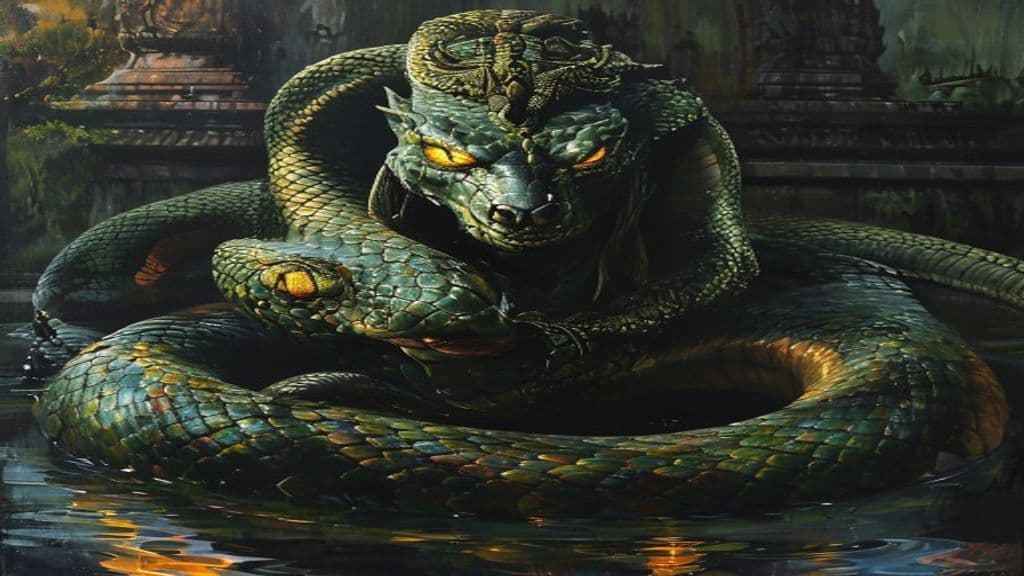
Naga
Divine serpent beings of Hindu, Buddhist, and Jain cosmology — powerful guardians of water, earth, and underground treasures. Revered as deities in South and Southeast Asia.

Apsara
Celestial dancers and water nymphs of Hindu cosmology — beautiful semi-divine beings who dance at the court of Indra and, by his command, descend to earth to distract sages from excessive asceticism.

Djinn
The class of supernatural beings created from smokeless fire in Islamic cosmology — a parallel civilization to humanity, capable of belief or unbelief, with their own prophets, society, and judgment before God.

Jann
The weakest class of djinn in Islamic tradition, associated with desert winds and taking the form of snakes or whirlwinds, dwelling in empty wilderness and posing little threat to those who know the proper invocations.
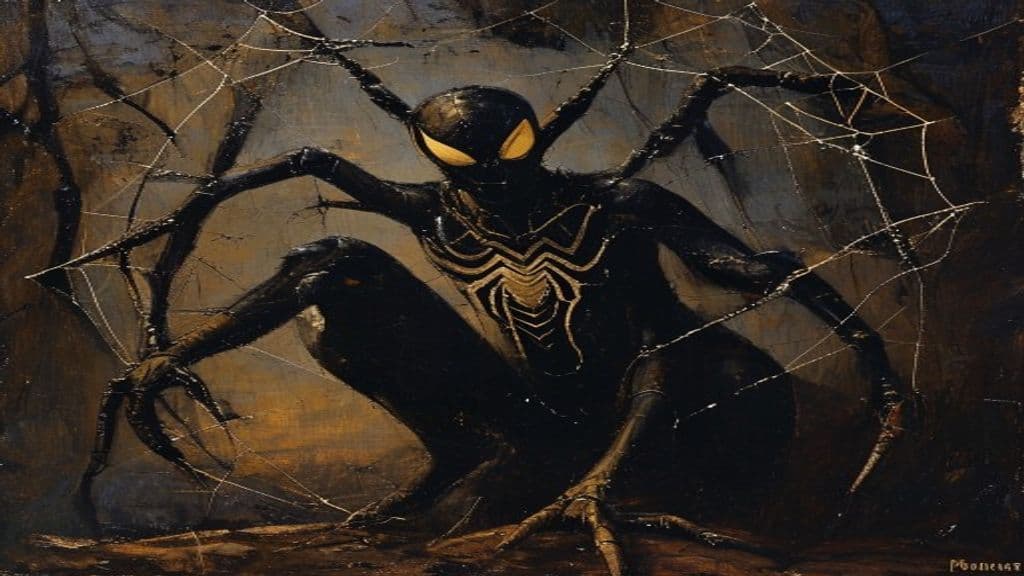
Anansi
The spider trickster god of Akan folklore — cunning, mischievous, and wise. Keeper of stories and teacher of human beings, brought through the slave trade into Caribbean and African-American tradition.
Huītzilōpōchtli
Huītzilōpōchtli is the principal Aztec (Nahua) solar and war deity, patron of the Mexica and Tenochtitlan. In Aztec cosmology he is a cosmic warrior whose continued vigor is sustained by ritual nourishment—notably human blood and hearts—administered in formal festivals and sacrifices.
Hušbišag
Hušbišag (Hushbishag) is a Mesopotamian netherworld goddess attested as a member of the underworld household; she is named as the wife of Namtar and mother of Hemdikug and is described in one literary passage as a 'handmaid of the dark gods' who may welcome the dead.
Hwanung
Divine being in Korean tradition, son of Hwanin, Lord of Heaven. Associated with human development and progress. (Note: - Power tier: Primordial may be too high given the description of abilities (institution of laws, teaching arts and medicine) which more closely align with a Greater (deity-level, but not cosmic) or A)
Hwin
Hwin is a fictional talking mare from C. S. Lewis's The Chronicles of Narnia, prominently featured in The Horse and His Boy (1954). She is a Narnian free-talking beast characterized by humility, clear thinking, and gentle temperament, who was captured in Calormen as a foal and later escapes back to Narnia.
Hyades
A sisterhood of mythic figures in ancient Greek tradition identified with an open star cluster in the constellation Taurus; popularly called 'the rainy ones' because their seasonal risings and settings were associated with rain and the rainy season. They appear in myth as nurses/escorts (notably caring for the infant Dionysus) and in astronomy as the Hyades star cluster.
Hyakki Yagyō
An idiom and folkloric motif in Japanese tradition describing a mass nocturnal procession of supernatural creatures (yōkai and related beings) that march through human streets at night. Depictions and stories vary: sometimes an orderly parade, sometimes a chaotic riot, and encounters are commonly described as dangerous to humans.
Hydaspes
Hydaspes is the Hellenic personification of the river now known as the Jhelum (Vitasta) in north‑western India; in Greek epic and late antique poetry he appears as a river-god (Potamos) and local naiads who participate in the narrative of Dionysus’ Indian campaign.
Hydra (Lernaean Hydra)
The Hydra (commonly cited as the Lernaean Hydra) is presented in the supplied sources as a many-headed serpentine monster from Greek myth. The available material is limited to brief reference entries and modern reuses of the name; detailed mythic narratives and attributes are not present in the supplied excerpts.
Hygd
Hygd is a legendary queen of the Geats attested in the Old English epic poem Beowulf. In the poem she functions as an ideal hostess and cup-bearer and as a wise political counselor who models queenly virtues and intervenes in a succession crisis following King Hygelac's death.
Hylaeus
Hylaeus is a name attested across unrelated referents in classical myth, biological taxonomy, and popular culture rather than a single supernatural being: brief mythic proper names (a centaur and one of Actaeon’s dogs), a cosmopolitan genus of bees (yellow‑face or masked bees), and a named pet dog in the videogame Caves of Qud.
Hylas
Hylas is a mortal youth in classical Greek myth, famed as the beloved companion and arms-bearer of Heracles and (in some accounts) an Argonaut. His myth centers on his disappearance at the freshwater spring of Pegae in Mysia, where naiads either abduct, entice, or transform him, a story remembered in local festivals and widely alluded to in later literature and art.
Hylonome
Hylonome (Ancient Greek: Ὑλονόμη) is a female centaur from Greek mythology known primarily from Ovid's Metamorphoses (Book 12) as one half of a pair of centaur lovers; after her husband Cyllarus is killed in the battle between the Centaurs and the Lapiths she kills herself from grief.
Community Record
- [1]Hyang. Wikipedia: Hyangwiki
- [2]Sang Hyang Widhi Wasa. Wikipedia: Sang Hyang Widhi Wasawiki
- [3]Hyang (Wikidata). Wikidata: Hyangother