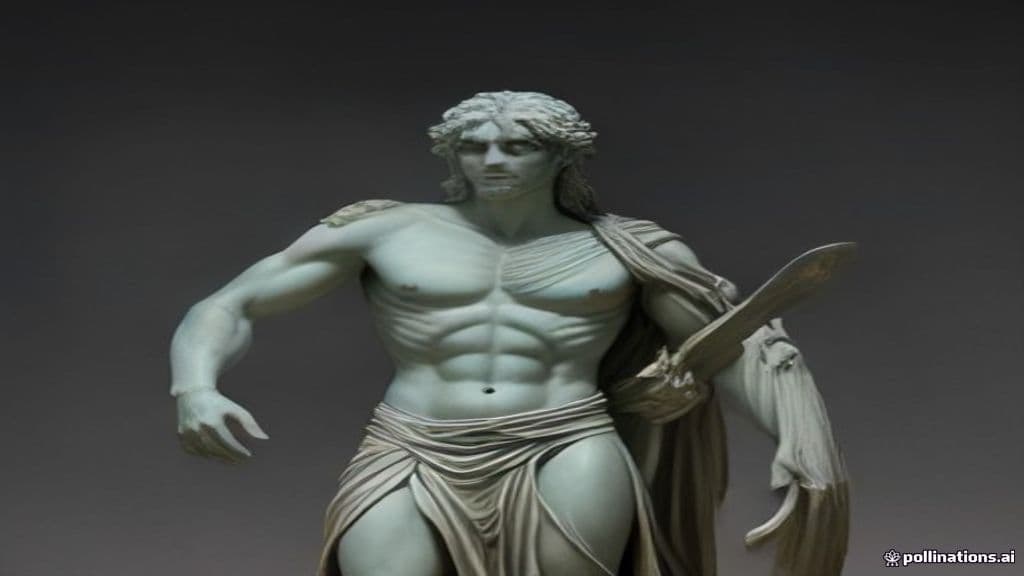
Iphimedon is presented in the surviving sources not as a created supernatural being but as a member of a royal household: he is named as a son of King Eurystheus of Tiryns (also king of Mycenae in some traditions) and Antimache. His 'origin' is therefore dynastic — born into the house of Eurystheus that serves as the narrative backdrop for Heracles' labors. No birth narrative, foundation tale, or mythic origin beyond these genealogical attestations is preserved in the provided material.
The cited sources supply no physical description of Iphimedon. He is attested only by name within lists of Eurystheus' children and as a minor participant in the genealogical fabric of the Heraclean milieu. Any detail about age, dress, stature, or distinguishing marks is absent from the excerpts available.
Sources do not attribute supernatural abilities, special skills, or notable deeds to Iphimedon. He functions as a named member of a royal family in catalogues of kinship. A fragmentary Pantheon entry suggests he 'fell in the battle against the…' but the opponent and circumstances are not preserved in the provided excerpt; beyond this incomplete notice there are no accounts of actions, powers, or a distinctive character-role in extant citations.
Eurystheus
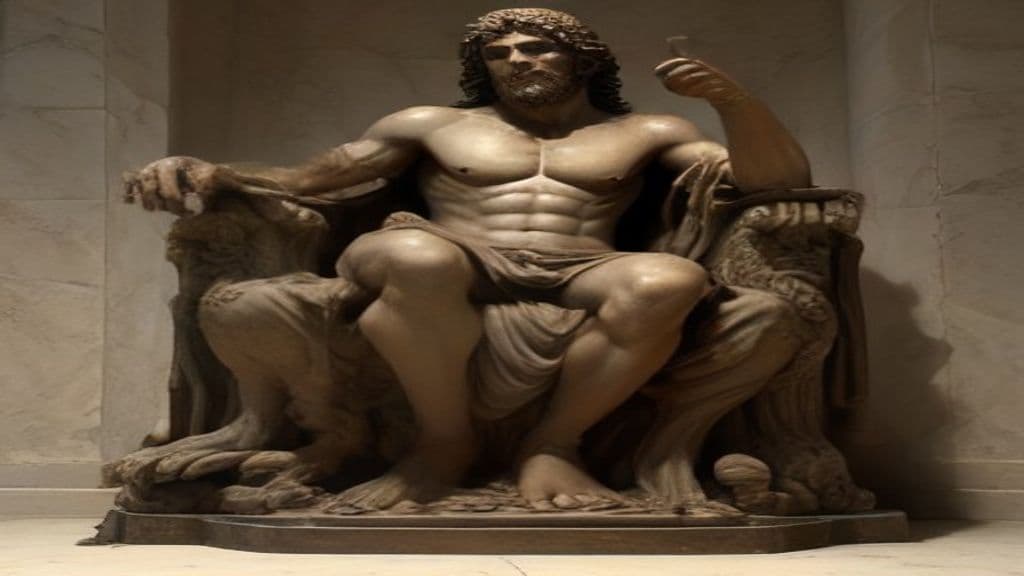
Eurystheus (Ancient Greek: Εὐρυσθεύς) is a mortal king in the Heracles cycle who functions as the divinely authorized adjudicator and assigner of Heracles' labours. Located in the Argolid (commonly king of Tiryns, sometimes associated with Argos or Mycenae), he embodies institutional authority through which oracular and divine sanctions are executed.
Admete (Admeta)
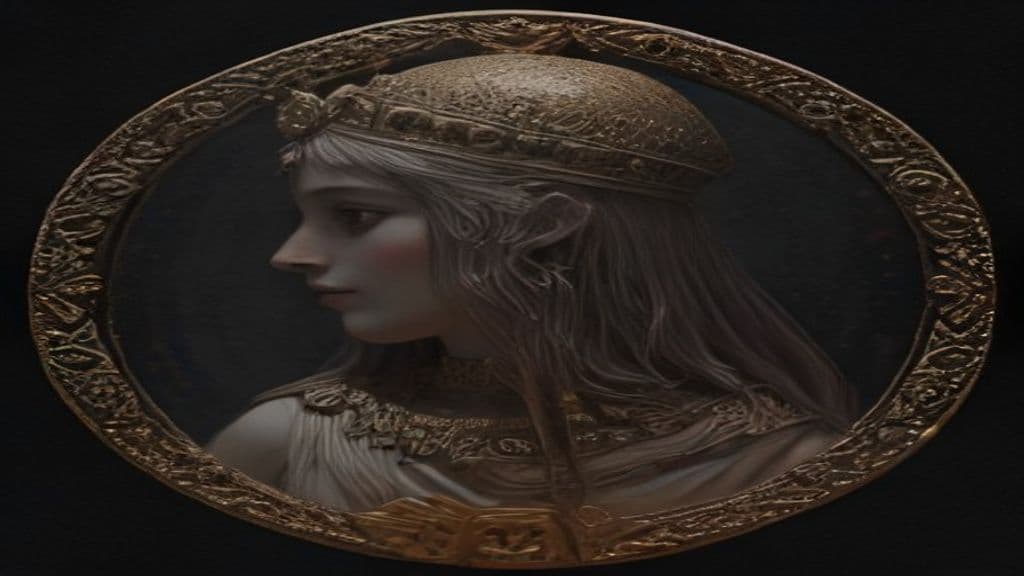
Admete (Ancient Greek: Ἀδμήτη) is a mortal princess of the house of Eurystheus in the Heraclean cycle and, in alternate local tradition, a priestess of Hera associated with the transfer and purification of a cult image to Samos. She functions in surviving accounts as a named requester whose wish prompts one of Heracles' labors and as the human custodian of a sacred image in a Samian foundation story.
Aletes of Mycenae
Aletes is a mortal figure in Greek heroic legend, son of Aegisthus and Clytemnestra, who assumes the throne of Mycenae during Orestes' exile and is later killed when Orestes returns to reclaim the kingship.
Catreus
Catreus is a mortal figure in Greek myth, presented in mythographic sources as the eldest son of King Minos and Pasiphaë and a king of Crete whose life is shaped by an oracle predicting that one of his children would kill him; efforts to avoid that fate, and variants of the tale, link him etiologically to later heroic genealogies.
Cleobule
Cleobule (Ancient Greek: Κλεοβούλη, Kleoboúlē) is a conventional female personal name in ancient Greek mythic genealogies borne by several distinct women. The name appears in multiple, sometimes conflicting traditions as mothers or wives who establish lineage for various heroes and figures in the Homeric/Trojan War cycle and regional myths.
Deipyle
Deipyle (Ancient Greek Δηιπύλη) is a mortal woman of the Argive royal house in Greek myth, daughter of Adrastus and Amphithea, who in many accounts marries Tydeus and is cited as mother of the hero Diomedes. She functions primarily as a genealogical link in heroic narratives rather than as a supernatural being.
Ischepolis
Ischepolis is a minor mortal figure in Greek mythology, named as a son of Alcathous of Megara and counted among the hunters who joined the Calydonian boar hunt; he is recorded as having been killed by the boar and is claimed in Megarian tradition to be buried in the prytaneum.
Megapenthes (son of Menelaus)
Megapenthes (Ancient Greek Μεγαπένθης) is a mortal figure in Greek mythic-historical tradition, identified as an illegitimate son of Menelaus of Sparta by a bondwoman. He appears in Homeric household scenes in the Odyssey and in later genealogical summaries concerning Spartan dynastic arrangements; he has no supernatural attributes in the supplied sources.
Priam
Priam is the legendary king of Troy in Greek and Roman epic tradition, an aged sovereign and father figure whose grief, supplication, and death are central episodes in the narratives of the Trojan War. He is portrayed as a mortal ruler embedded in a cosmos of gods and fate rather than as a supernatural being.
Proetus
Proetus (Ancient Greek: Προῖτος, Proitos) is a personal name borne by several legendary mortal figures in Greek mythic genealogies and local traditions—principally kings or princes associated with Argos/Tiryns, Corinth, Thebes, and Nauplia—rather than a single supernatural being.
Pterelaus
Pterelaus is a mytho-historical king of the Taphians (Taphos) in Greek heroic legend whose family’s cattle-raid and defeat are narrated as antecedents to Amphitryon’s expedition and the circumstances of Heracles’ birth. In some variants he is described as invulnerable while a single magical golden hair remained in his head; removal of that hair (by his daughter Comaetho in some summaries) permitted his death.
Stratichus (Stratius)
Stratichus (Ancient Greek: Στράτιχος), also called Stratius, is a minor mythological figure — a prince of Pylos and one of the sons of King Nestor. He is named among Nestor's children in Homeric and mythographic listings (notably in contexts summarizing The Odyssey and in genealogical compilations such as Apollodorus) but is not the subject of independent myths in the provided sources.
Teuthras
Teuthras (Ancient Greek: Τεύθρας) is a legendary king of Mysia in the Greek mythic-historical tradition, eponymous for the district or town Teuthrania/Teuthraea. He appears in genealogical and epic-cycle narratives as a local ruler who hosts Auge and provides refuge and succession to the hero Telephus, with variant accounts of familial relations across sources.
Iphimedeia
Iphimedeia is a Thessalian princess of Greek heroic tradition whose role links mortal lineages with divine power and chthonic memory. She is best known as lover of Poseidon and mother (in some accounts) of the twin giants Otus and Ephialtes (the Aloadae), and she appears both in epic underworld catalogues and as a named focus of local cultic remembrance (tombs, paintings, honors).
Community Record
- [1]Iphimedon (ToposText entry). ToposText - Iphimedon entry (genealogical listing)other
- [2]Iphimedon | Pantheon.org. Pantheon.org entry for Iphimedon (includes fragmentary note about death in battle)wiki
- [3]Person: Iphimedon (Myths UVic). Myths and Heroes (University of Victoria) catalog entry listing Iphimedon among Eurystheus' childrenother
- [4]Admete (Wikipedia; contains family listing). Wikipedia article on Admete, which lists siblings including Iphimedonwiki
- [5]Wikidata: Iphimedon (Pauly-Wissowa reference). Wikidata entry pointing to Pauly-Wissowa/RE bibliographic record for Iphimedonother
- [6]Perseus (Wikipedia; Heraclean cycle context). Wikipedia Perseus article referenced for broader heroic-cycle context in which the house of Eurystheus appearswiki
- [7]King Eurystheus of Tiryns and Mycenae (GreekMyths-GreekMythology). Reference work on Eurystheus that enumerates his children including Iphimedonother
- [8]Eurystheus - Greek Mythology Link. Genealogical listing of Eurystheus' offspring including Iphimedonother
- [9]Admete, Daughter of Eurystheus (GreekMyths-GreekMythology). Page on Admete that names her siblings (including Iphimedon) in the Eurystheus family listsother