
Jatasura is attested within the narrative world of the Mahabharata as a member of the rakshasa class rather than through a separate cosmogonic origin tale. In the epic episode cited in Section 34 and related retellings, he appears during the Pandavas' travels in their period of exile. The sources present him as one of the hostile supernatural beings—rakshasas—who intervene in human affairs and test the protagonists; no separate creation or progeny story for Jatasura is provided in the supplied materials.
In the Mahabharata episode summarized in the sources, Jatasura first appears in the social guise of a Brahmin in order to gain access to the Pandavas and their weapons. When his plot is discovered or when the opportunity to seize the group arises, he 'assumed a monstrous form' and revealed a non‑human, fearsome aspect. The narrative describes his engagement in violent physical struggle—seizing weapons and persons and grappling with Bhima using gigantic trees and large rocks—though the supplied excerpts do not offer specific anatomical details such as color, number of limbs, or facial description.
The episode attributes to Jatasura deceptive skill in assuming the appearance of a Brahmin as a tactic to obtain trust and access to the Pandavas' arms and company. His actions include attempted theft of weapons and the abduction/assault of Draupadi and three Pandava brothers (Yudhishthira, Sahadeva, and Nakula). Upon being revealed, he transforms into a monstrous form and demonstrates superhuman strength and combat prowess, engaging Bhima in a destructive wrestling fight that involves throwing or using large natural objects. The narrative also records that Yudhishthira's moral reproaches discomposed him during the encounter, a situational effect rather than a catalogued vulnerability.
Weaknesses
- conditionmoral reproach (situational discomposure)
- conditionarmed martial response (physical combat)
Wards
- othervigilance against deceptive guests
- otherarmed defense / immediate martial action
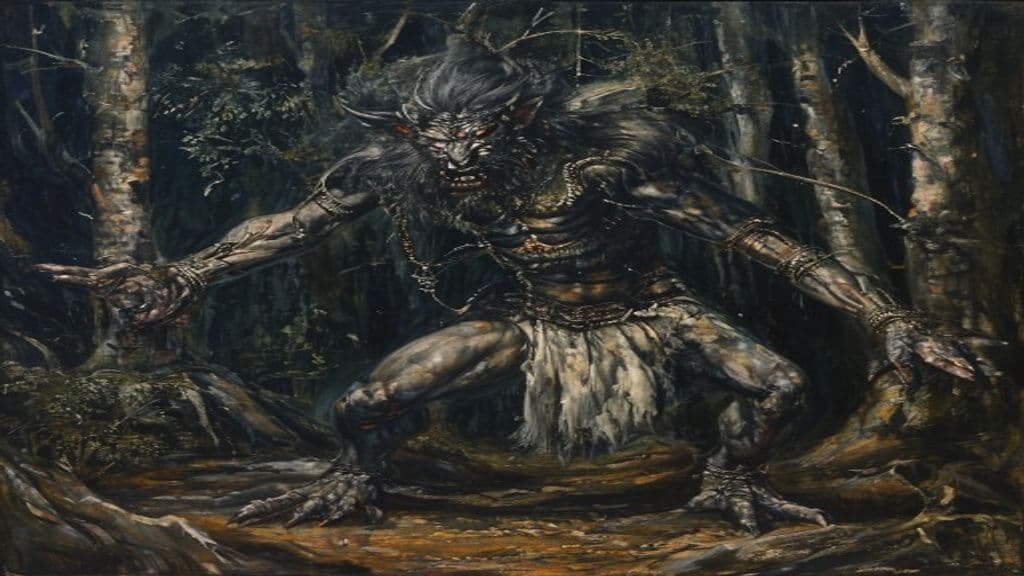
Hidimba
Hiḍimba is a powerful demon king in the Indic epic Mahābhārata who dwells in the forest, preys on humans (including cannibalistic behavior), and is slain in single combat by the Pandava Bhīma. In regional tradition the cultic attention shifts to his sister Hiḍimbī (Hiḍimbā Devī) and their son Ghaṭotkaccha, whose shrines and festival roles are prominent in Himachal Pradesh.
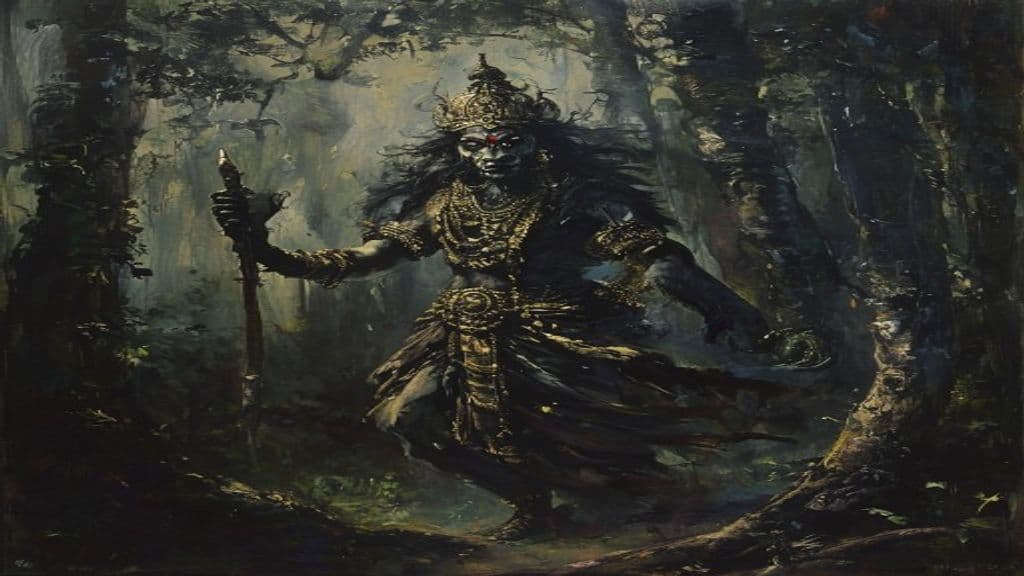
Bakasura (Hindu Tradition)
A malevolent rakshasa from Hindu mythology with supernatural strength and ferocity. (Note: - Power tier: Primordial (due to its cosmic and epic-scale impact in Hindu mythology) - Abilities: Remove "at will" as it's not present in the source material - Weaknesses: Not specified in the source)
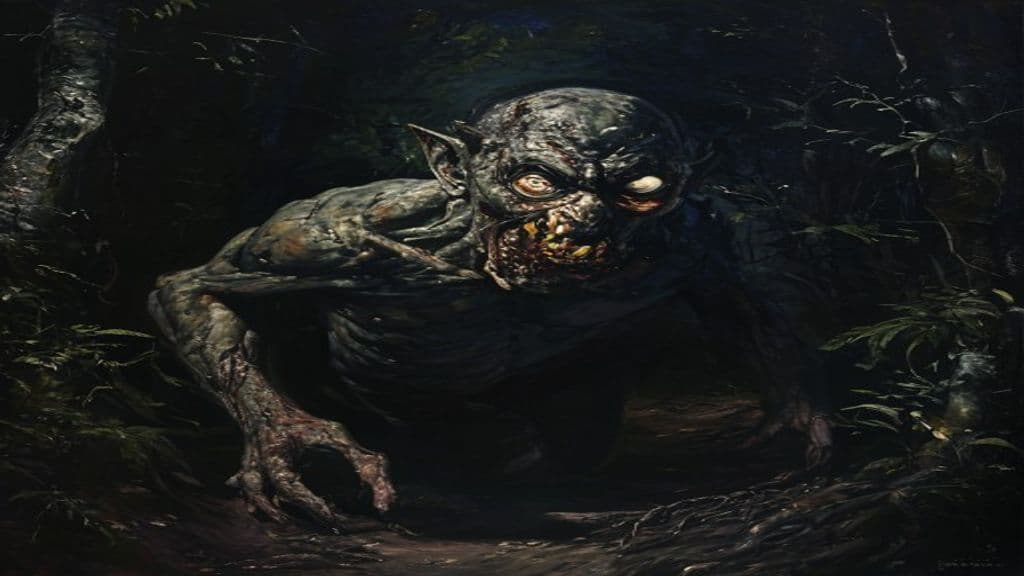
Pishacha
Flesh-eating spirits of Hindu mythology that haunt cremation grounds and are associated with disease, madness, and possession. The lowest class of demon in the Vedic hierarchy.

Rakshasa (Himalayan variants)
A Himalayan reception of the pan-Indian rakshasa motif: hostile or disruptive non‑human beings known from Sanskrit epic and Puranic literature, here noted where Himalayan sources and discussions intersect with the broader epic tradition. The supplied sources do not document distinct, well‑attested Himalayan folklore variants; the entry therefore presents primarily the epic/legendary profile as transmitted into Himalayan contexts in general references.

Ghoul
A ghoul is a demon-like or monstrous humanoid originating in pre-Islamic Arabian religion, traditionally associated with graveyards and the consumption of human flesh. The concept later entered broader folklore and has been widely reused and transformed in modern fiction and popular culture.
Draupadi
Draupadi is a central figure of the Indian epic Mahabharata: princess of Panchala born from a royal yajna, the common wife of the five Pandava brothers, and in many accounts a partial incarnation of the goddess Shri and close friend (sakhi) of Krishna. Her narrative role includes the public humiliation in the Kuru court, exile, participation in the events leading to the Kurukshetra War, later queenship of Indraprastha, and final ascent toward heaven in which she falls first.
Japanese dragon
A class of large serpentine beings in Japanese myth that function variously as water deities, regional kami, Buddhist nāga/dragon kings, and shapeshifting supernatural creatures associated with seas, rivers, rain and related powers.
Japanese wolf
An endemic subspecies of gray wolf historically inhabiting Honshū, Shikoku, and Kyūshū, remembered in Japanese natural history and folklore as both a biological predator and a liminal spiritual figure associated with mountain deities and occasional protective roles toward travelers.
Japhetites
In the Jewish tradition, Japhetites refer to the descendants of Japheth, one of the three sons of Noah in the Book of Genesis. (Note: - Power tier: Primordial is not supported by the source material; a more accurate power tier would be Greater (powerful regional). - Abilities: The abilities section should be removed or rephrased to )
Jarella
Jarella is a fictional princess of the sub‑atomic world K'ai in Marvel Comics, best known as a beloved romantic partner and moral anchor for the Hulk. She functions in the stories as a noble, athletic leader-figure of K'ai whose people combine outwardly primitive culture with remnants of advanced technology and sorcery.
Jas de Keistamper
Jas de Keistamper is a large festival figure described as a "giant" that appears on the marketplace in Boxtel each King's Day. The available documentation treats it as a civic parade or festival figure rather than a supernatural entity.
Jason
Jason (Ancient Greek: Ἰάσων, Iásōn) is a mortal hero of Greek myth, leader of the Argonauts whose quest for the Golden Fleece establishes his place in the heroic age. He is depicted as a prince of Iolcos, son of Aeson, and husband of the sorceress Medea.
Jaun Zuria
Basque mythical figure, founder of the Lordship of Biscay with martial and territorial abilities. (Note: 1. Power tier: Greater (not Ancient) as Jaun Zuria's abilities are described as defeating regional invaders, not cosmic-level events. 2. Abilities: Clarify that his martial abilities are specifically )
Jaṭāyu
Jaṭāyu is a demigod in the Hindu epic the Rāmāyaṇa who takes the form of a vulture. He is presented as the younger son of Aruṇa and Shyeni, brother of Sampati, and fought Rāvaṇa in an attempt to rescue Sītā before dying of wounds; Rāma performs his final funeral rites.
Jean le Messager
Not an attested supernatural being; rather, a recurring French-language phrase attested across bibliographic, artistic, musical, operatic and sigillographic sources. The corpus shows usages of 'Le Messager' as a title (newspaper, artwork), a role-label in opera, and as part of archival cataloguing ('Jean // le Messager'), with no evidence supporting a folkloric or cosmological entity named Jean le Messager.
Jeff the Killer
Jeff the Killer is a user-created horror character that originated within online creepypasta culture in October 2008. Presented across stories, images, and role-play, he functions as an Internet-born urban legend and meme — a violent human antagonist circulated through fan fiction, image edits, and social-media posts rather than a figure from traditional folklore.
Jegudiel
Jegudiel (Hebrew: יַחְדִּיאֵל Yaḥdīʾēl) is presented in Eastern Christian tradition as one of the seven Archangels. He is associated with praise of God, bears iconographic attributes of a crown and a three‑thonged whip (or rod/staff), and functions as a patron and advisor for those who labor and for leaders such as kings and judges.
Community Record
- [1]Jatasura (Wikipedia). Wikipedia, article 'Jatasura' (accessed via provided research notes)wiki
- [2]Jatasura Vadha (Archive). Archive.org, 'Jatasura Vadha' (Mahabharata episode material referenced in notes)literary
- [3]Jatasura — Mythology entry. Mythology/folklore encyclopedia entry on Jatasura (as cited in research notes)folk
- [4]Rakshasa - New World Encyclopedia. New World Encyclopedia summary of rakshasa tradition (modern secondary synthesis)other