
The provided sources do not supply a narrative origin or cosmogonic myth for Kasanaan. Lexical and encyclopedic entries treat kasanaan as the Tagalog word for a punitive lower-world place (glossed in English as hell, inferno, netherworld, underworld, abyss) and place it within the Tagalog cosmological grid as a destination or realm for sinful souls. Modern summaries sometimes associate the locale with an overseer figure (Sitan) but primary lexical attestations in the supplied materials do not present a traditional creation or origin story for Kasanaan.
Sources do not give detailed landscape or iconographic descriptions. Kasanaan is characterized in the available material as 'a place of grief and affliction,' 'a place inhabited by demons and wicked souls suffering due to sins,' and in one summary as 'a village in the lower world,' implying a localized settlement-like conception of the punitive realm rather than a purely abstract moral category.
As presented in the sources, Kasanaan functions as a locus of punishment: it is the place 'where [it] punishes the sinful' and the abode of demons and wicked souls afflicted for their sins. The entity is treated as a realm rather than an agent; punitive or afflictive effects are ascribed functionally to the place (and, in modern secondary accounts, to associated guardians or agents such as Sitan), but the sources do not attribute independent volitional agency or enumerated supernatural powers to Kasanaan itself.
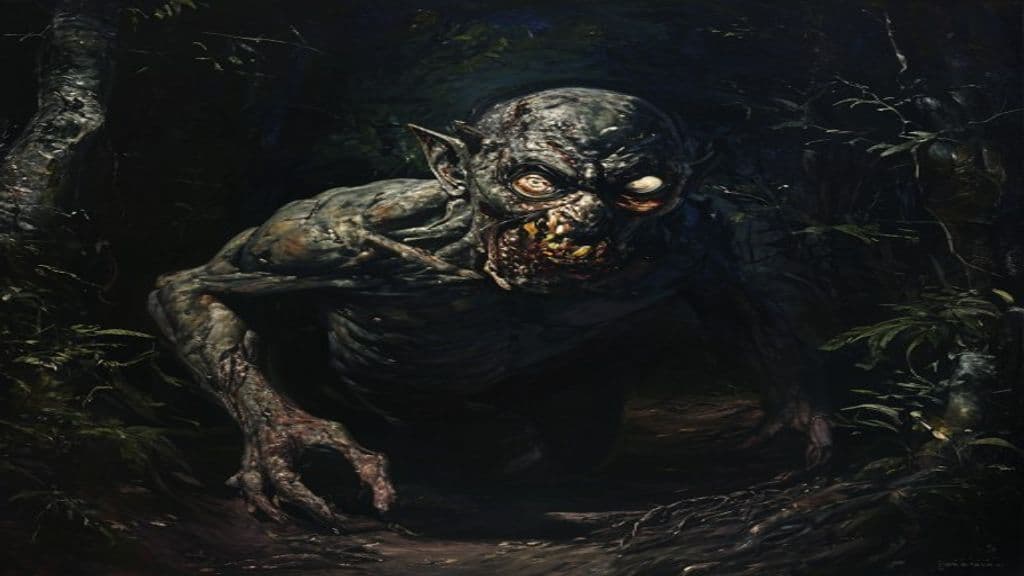
Pishacha
Flesh-eating spirits of Hindu mythology that haunt cremation grounds and are associated with disease, madness, and possession. The lowest class of demon in the Vedic hierarchy.
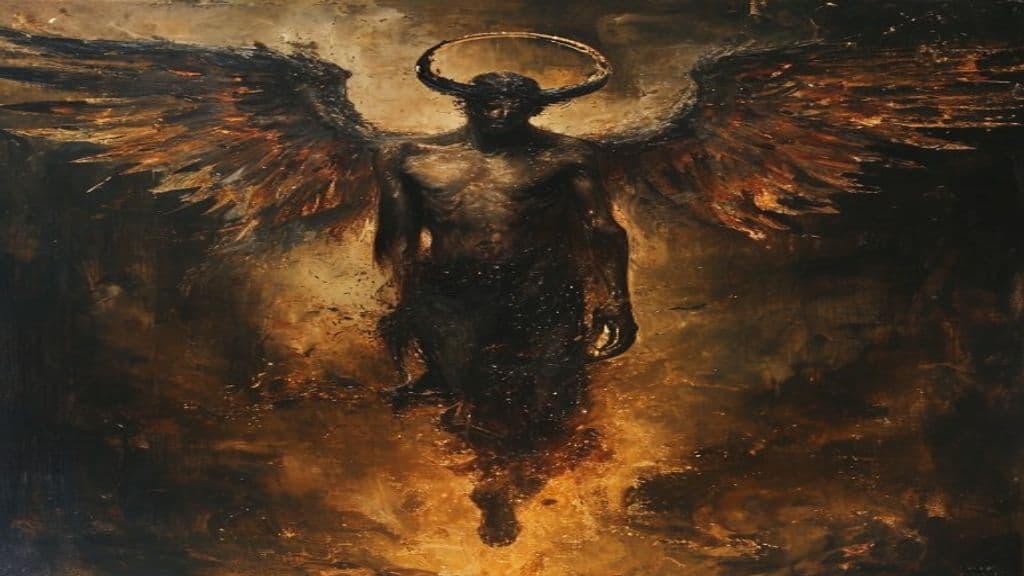
Iblis
The primordial deceiver in Islamic theology; a jinn who refused God's command to bow before Adam and was expelled from heaven. The source of all temptation and whispered suggestion.
Batibat
The Batibat is a vengeful, tree-dwelling female spirit in Philippine (Ilocano and Tagalog) folklore associated with causing suffocative sleep afflictions, nightmares, and sleep paralysis when trees that house it are felled and used near human sleeping spaces.
Bernardo Carpio
A Philippine legendary culture-hero associated etiologically with earthquakes; portrayed variously as a giant trapped between mountains whose struggles cause tremors or as a prodigiously strong human-sized hero. The current Hispanized name dates to the colonial period and overlays older pre‑colonial earthquake beliefs.
Karumariamman
Karumariamman (Tamil: கருமாரியம்மன், Karumāriamman), also called Karumari, is a South Indian village mother-goddess associated with rain, smallpox, skin diseases, health and cure. Treated as a local manifestation of the Great Goddess (Parvati/Kali/Adishakti/Mariamman), she is principal at Thiruverkadu and is venerated in village cults and diasporic South Indian communities.
Karuppannaswamy
Karuppannaswamy is a Tamil folk guardian deity (kāval deivam) revered as a fierce protector, local enforcer of justice and communal guardian in rural and diasporic Tamil communities. He is typically venerated at village-boundary shrines and through oral, festival and shrine practices rather than Sanskritic temple liturgy.
Karuppu Sami
Karuppu Sami (also Karuppannaswamy, Karuppasamy, Karupparayan) is a principal Tamil village guardian deity (grama devata) venerated chiefly in rural Tamil Nadu and Kerala and among Tamil diasporas. He functions as a fierce protector, Kaaval Deivam (guardian deity), and upholder of justice and dharma, and is the focus of temple and shrine cults represented in statues and images.
Karura
A Japanese Buddhist divine creature with a human torso and avian head, derived from the Sanskrit garuḍa. Portrayed as an enormous, fire-breathing predator of serpents and incorporated into Buddhist guardian retinues and ritual-iconographic contexts in Japan.
Kasa-obake
A Japanese yōkai usually depicted as an animate umbrella (kasa) that acts as a playful trickster. Best known from visual and literary culture from the Edo period onward, it is commonly shown with one eye, one leg, and a long tongue and is not generally presented as malicious.
Kashvad
Legendary hero from the Persian tradition, known for his valor and military prowess. (Note: 1. Power tier: Downgrade from Ancient to Greater, as Kashvad is described as a heroic warrior with exceptional bravery and military skills, but not necessarily a deity-level being. 2. Weaknesses: Add )
Kashyapa
Kashyapa (Sanskrit: Kaśyapa; Pali: Kassapa) is a revered ancient rishi in Vedic–Hindu literature and is also recognized in Buddhist canonical lists. Portrayed as a composer of some Rigvedic hymns, head of a Soma hymn school, and a progenitor in Puranic genealogies, he functions as an archetypal ancestral seer and culture‑founder associated especially with Kashmir.
Kassapa (name-group: Buddha, ascetics, and rulers)
Kassapa appears in South and Southeast Asian sources as a personal name borne by distinct figures: a canonical Buddha (Kassapa / Kassapa Dasabala), a set of ascetic brothers (Uruvelā‑Kassapa, Nadi Kassapa, Gaya Kassapa) who led monastic followings, and historical rulers (e.g., Kassapa II of Anuradhapura, Kumara Kassapa of Pagan). The supplied material treats Kassapa as reused personal/name‑title across religious and secular contexts rather than a single supernatural spirit.
Kassite deities
Kassite deities are the named divine figures attested in Kassite-language and Mesopotamian sources of the second and first millennia BCE. They appear mainly as onomastic elements and occasional cult figures (notably Šuqamuna and Šumaliya), occupying a liminal position between Kassite ethnic identity and the Mesopotamian religious landscape.
Kataw
Kataw is a Visayan class of merfolk in Philippine folklore closely associated with sirena/sireno traditions. Some secondary sources and local summaries describe Kataw as occupying a higher social rank among aquatic beings and as associated with the rulership of an aquatic realm called Bantay Tubig, though detailed primary legends and ritual material are scarce in the supplied sources.
Community Record
- [1]Kasanaan | Facts, Information, and Mythology. "A village in the lower world, a place of grief and affliction. It is where punishes the sinful." Pantheon.org entry on Kasanaan.wiki
- [2]Kasanaan in English: Definition of the Tagalog word kasanaan. "a place inhabited by demons and wicked souls suffering due to sins • hell • inferno • netherworld • underworld • abyss • perditio." Tagalog.com dictionary entry for kasanaan.other
- [3]Sitan | Villains Wiki. "Sitan is ... the guardian of Kasanaan (the ancient Tagalog version of Hell) and all of the souls within." Villains Wiki summary (modern retelling/secondary).wiki
- [4]Origins of SITAN: Deity of Kasanaan (the lower world) in Tagalog Mythology • THE ASWANG PROJECT. Discussion of modern attributions linking Sitan to Kasanaan and commentary on possible Christian influence and complex lineage (secondary analysis).folk
- [5]Tagalog religion. Overview noting Tagalog religion consists of Austronesian elements later supplemented by Hinduism, Mahayana Buddhism, and Islam; provides cultural context for cosmological terms like kasanaan.wiki
- [6]Souls in Filipino cultures. Contextual material on concepts of souls and otherworld destinations in Philippine cultures used to situate kasanaan within broader unseen-world beliefs.wiki