
The Karura in Japanese Buddhism is a localized form of the Sanskrit garuḍa and is named by direct transliteration (迦楼羅). An alternative Japanese name, konjichō (金翅鳥, literally "gold-winged bird"), links the figure to the Sanskrit suparṇa and signals continuity with South Asian large bird myths. In Buddhist cosmological geography the Karura is associated with Shumisen / Mount Meru. Sources describe the Karura as one of the creatures proselytized and recruited into Buddhist protective units — specifically the Hachibushū (八部衆, "Devas of the Eight Classes") — indicating its assimilation from an Indic mythic predator into a converted guardian within Japanese Buddhist ritual and iconography.
Iconographically the Karura is conventionally depicted with a human torso and an avian (birdlike) head, commonly winged and enormous in scale. It appears in mandalas (for example the Womb Realm / Taizōkai mandala) and in temple statuary and masks. Some statues show stylistic variation: for example, a Kōfuku-ji depiction is described as wearing Tang Chinese-style armor and is represented wingless. The Karura is also associated with a flaming nimbus or halo motif (called the "karura flame") that appears behind some Buddhist figures in visual programs. The karura (garuda) mask is used in the ancient courtly dance art gigaku, showing its presence in performative as well as pictorial media.
Sources describe the Karura as enormous and fire-breathing and portray it mythically as a predator of serpents/dragons (nāgas), reflecting the garuḍa–nāga antagonism from Hindu myth. In Japanese Buddhist narrative contexts only a dragon possessing a Buddhist talisman or one who has converted to Buddhist teaching can escape unharmed from the Karura. Beyond its predatory description, the Karura is also described as a proselytized and converted being recruited into protective retinues (the Hachibushū), indicating a dual role as both fearsome predator in myth and temple guardian within Buddhist ritual assemblages.
Weaknesses
- conditionConversion to Buddhism (applies to dragons/serpents)
- symbolPossession of a Buddhist talisman (applies to dragons/serpents)
Wards
- symbolBuddhist talisman (護符)
- conditionConversion/acceptance of Buddhist teaching
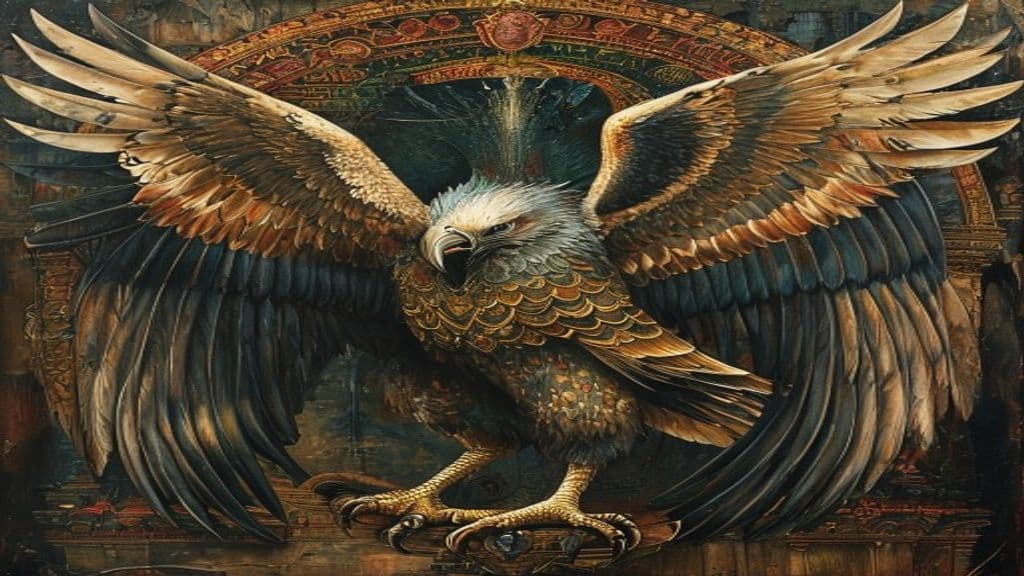
Garuda
Garuda is a divine, eagle-like being in South Asian traditions best known as the vahana (mount) of the god Vishnu. In Vedic, Purānic and later texts he appears as a powerful, solar-associated bird-personage who is both an individual mythic personality (son of the sage Kaśyapa and Vinatā) and an archetype invoked in temple iconography and theological metaphor.
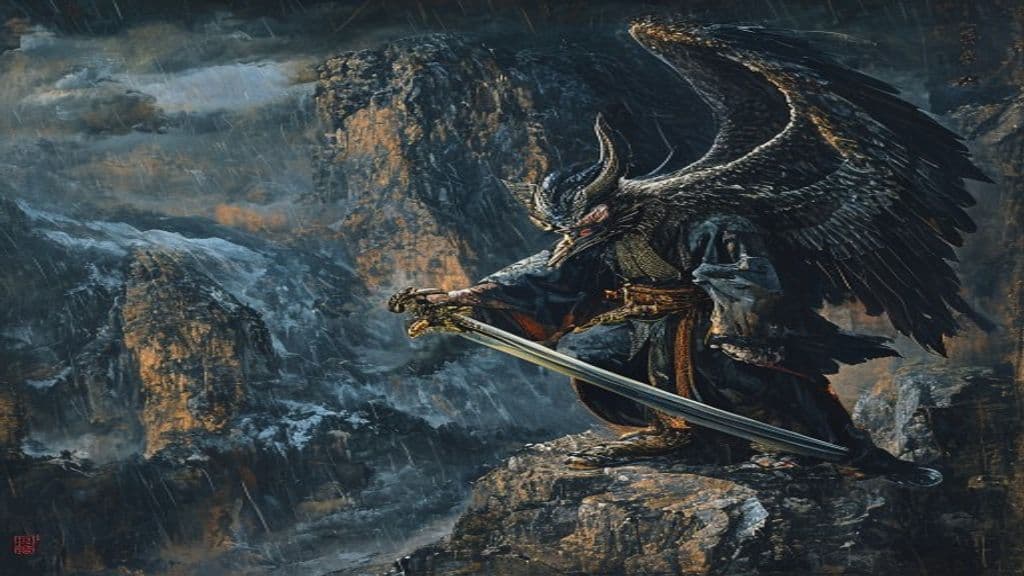
Tengu
Proud, warrior-like mountain spirits of Japan, associated with martial arts, pride, and the wild mountains. Neither fully good nor evil — they test and train warriors and monks, but punish the arrogant.
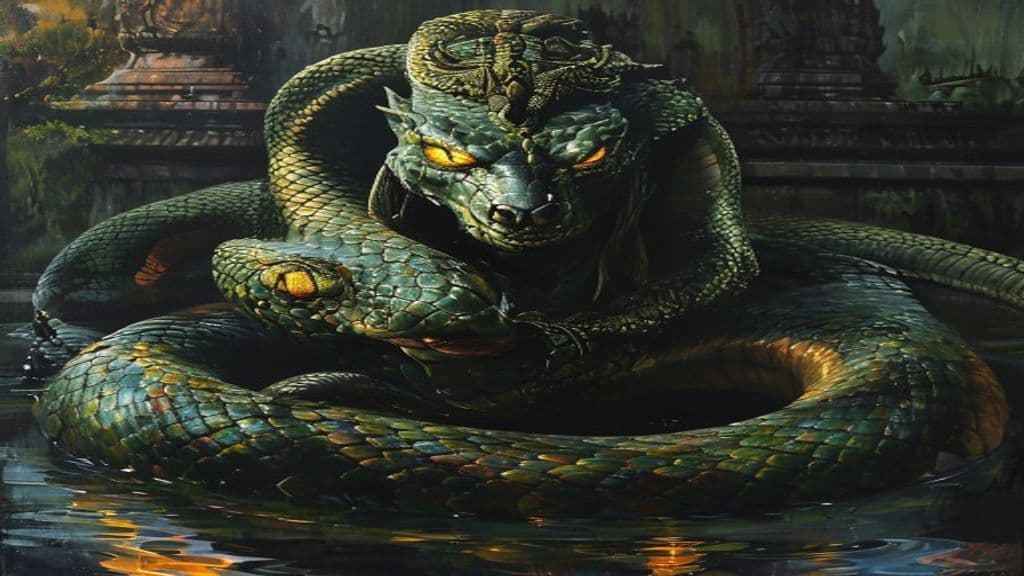
Naga
Divine serpent beings of Hindu, Buddhist, and Jain cosmology — powerful guardians of water, earth, and underground treasures. Revered as deities in South and Southeast Asia.
Akuma
Akuma (悪魔/あくま) in Japanese sources is an evil spirit, devil, or demon associated with misfortune and mental disturbance. The term appears in Buddhist texts and Heian-period literature and was later used to translate the Christian figure of Satan, as well as the Buddhist Mara.
Datsue-ba
A supernatural old-woman ogress figure in Japanese Buddhist underworld imagery who sits by the Sanzu River and strips the deceased of their garments (or, in some accounts, their skin) as part of post-mortem judgement. She functions as a liminal, procedural agent within Ten Kings / Six Realms iconography rather than as a creator or cosmic force.
Five Wisdom Kings
A class of wrathful, mantric protector-deities in East Asian Mahāyāna (notably Japanese) Buddhism, identified with the Sanskrit Vidyārāja and Japanese Myō-ō and described in sources as guardians of the cosmic Buddha Dainichi (Vairocana) and of esoteric teachings.
Gohō dōji
A guardian attendant spirit in Japanese Buddhist folklore depicted as a youthful protector devoted to defending the Dharma and assisting followers of Buddhist teaching. Attested in medieval narrative collections and illustrated emaki, the figure appears as a cultic attendant associated with dharmapāla-type protection.
Japanese dragon
A class of large serpentine beings in Japanese myth that function variously as water deities, regional kami, Buddhist nāga/dragon kings, and shapeshifting supernatural creatures associated with seas, rivers, rain and related powers.
Kalaviṅka
A Buddhist fantastical creature described as a human-headed, bird-bodied being famed for its exquisite, Dharma-preaching voice; represented across South, East, and Southeast Asian Buddhist art and liturgical contexts with regional iconographic variation.
Otake Dainichi Nyorai
Japanese manifestation of Vairocana, embodying wisdom and compassion. (Note: 1. Power tier should be Ancient (deity-level) rather than Primordial (cosmic). 2. Appearance should be noted as "Not specified" due to lack of source material. 3. Abilities, sensory_cues, weaknesses, )
Tennin
Tennin (天人) are celestial, person-like beings in the Japanese Buddhist framework who serve as heavenly attendants, dancers, and companions to Buddhas and bodhisattvas. The concept derives from an Indo-Chinese-Buddhist lineage (compare apsaras) and appears widely in Japanese religious art, Noh theater, and local narrative motifs such as the hagoromo (feather-robe) story.
Tentōki and Ryūtōki
Tentōki (天燈鬼) and Ryūtōki (龍燈鬼) are small demon‑like attendant figures in Japanese Buddhist temple iconography. Typically shown as oni‑like beings carrying lanterns, they function as subjugated attendants who offer light to the Historical Buddha and symbolize the Shitennō’s power to repel evil.
Yūrei
Yūrei (幽霊) are spirits of the dead in Japanese folklore who remain bound to the world of the living rather than having completed transition to an afterlife. They are a culturally specific category of ghost/spirits, often discussed alongside related terms such as bōrei and shiryō and appearing widely in literary, visual, and local legend contexts.
Karuppu Sami
Karuppu Sami (also Karuppannaswamy, Karuppasamy, Karupparayan) is a principal Tamil village guardian deity (grama devata) venerated chiefly in rural Tamil Nadu and Kerala and among Tamil diasporas. He functions as a fierce protector, Kaaval Deivam (guardian deity), and upholder of justice and dharma, and is the focus of temple and shrine cults represented in statues and images.
Kasa-obake
A Japanese yōkai usually depicted as an animate umbrella (kasa) that acts as a playful trickster. Best known from visual and literary culture from the Edo period onward, it is commonly shown with one eye, one leg, and a long tongue and is not generally presented as malicious.
Community Record
- [1]Karura. Wikipedia, "Karura"wiki
- [2]Karura - Man-bird Deity in Japanese Buddhism. OnMark Productions, "Karura - Man-bird Deity in Japanese Buddhism"other
- [3]Wikidata: Karura. Wikidata item Q82198other