
In the Ramayana-cycle tradition surveyed in the sources, Kesari is a member of the vanara class who marries Anjana (an apsara named Managarva who, according to legend, was cursed by Brahmā and became a vanara). The narrative of Hanuman’s birth is narrated in Shaiva and related traditions as involving Shiva and Parvati taking vanara form and Vayu transferring the foetus to Anjana’s womb; within broader popular tradition Hanuman is described as the son of Anjana and Kesari, with divine agency (Shiva/Vayu) invoked in theological accounts of his conception and birth.
The provided materials identify Kesari as a male vanara — that is, a member of the simian-like vanara social-species of the epic — and as a ruler and commander, but they do not supply specific physical descriptions such as colouration, height, or distinguishing marks. Modern summaries and interpretive works treat Kesari primarily by social and familial role rather than by detailed iconographic traits; extant sources examined here therefore emphasize his status and relationships rather than bodily appearance.
Sources portray Kesari chiefly in social, martial and familial capacities: as a ruler associated in legend with Mount Meru/Sumeru, later described as Chief Commander among the vanaras at Kishkindha, a respected elder honoured by other vanaras and a friend of Jamvanta, king of bears. He is represented as husband to Anjana and father (or father-figure) of Hanuman. Some modern summaries attribute wartime participation in Rama’s campaign (including slaying demons), but the primary-text basis for such specific martial exploits by Kesari is not provided in the supplied materials and is queried by readers.
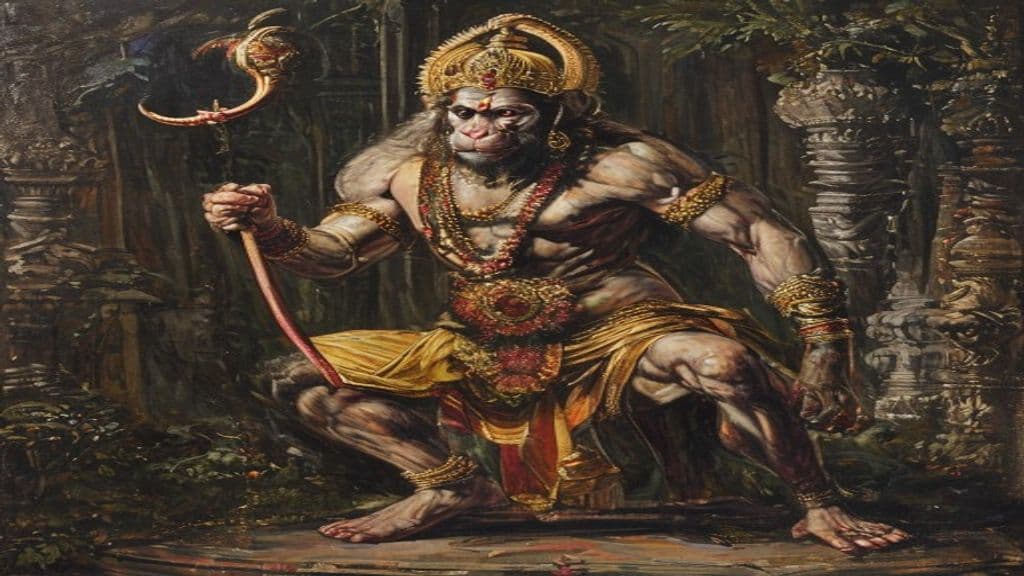
Hanuman
Hanuman is a divine vanara (monkey‑like being) in Hindu literature, foremost companion and devoted servant (Rama-dūta) of Lord Rama in the Ramayana. Revered in later Bhakti traditions, he is worshipped as a protector and exemplar of devotion, strength, and service.
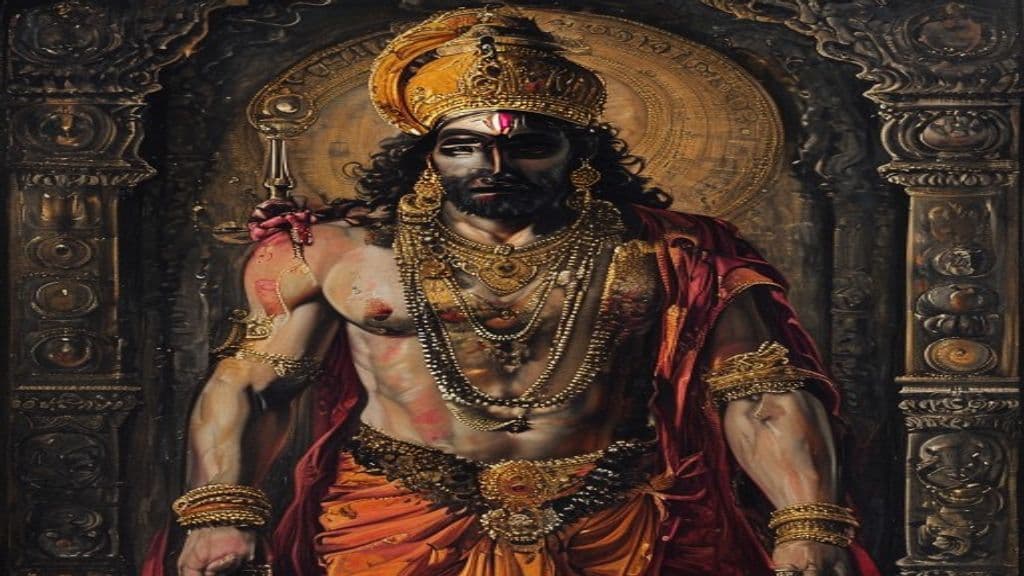
Rāma
Rāma is a major divine-hero in Hindu tradition, worshipped as the seventh avatar of Viṣṇu and the central protagonist of the Ramayana. He is portrayed both as the ideal man (maryāda puruṣottama) and, in Rama-centric sects, as the Supreme Being; his life-story (birth in Ayodhyā, 14-year exile, Sītā's abduction, and the defeat of Rāvaṇa) functions as a primary exemplar of dharma.
Keneō
Keneō (懸衣翁), literally "clothes hanging old man," is an underworld attendant in Japanese popular Buddhist tradition who sits at the edge of the Sanzu River. Described in sources as an Oni-like figure, he receives the garments of arriving souls, hangs them on a riverside branch whose bend registers the weight of sin, and participates with Datsue-ba in postmortem punishments.
Kenmet
Kenmet (Egyptian Knm.t) is a named figure attested in ancient Egyptian temple, dramatic, and decanal/astronomical texts. The attestations place Kenmet within mythic and stellar ordering contexts — as a named component associated with the divine stars and decanal schemata rather than as a fully attested cultic deity with independent biography.
Keong Emas
A princess magically transformed and contained within a golden snail shell, associated with the Panji cycle of Javanese folklore. (Note: - Power tier: Primordial (not Ancient), as it's described as a princess trapped in a magical object rather than having deity-level powers. - Abilities: Lack of information about abilities or behaviors)
Keres
In Greek myth the Keres (Κῆρες; singular Κήρ) are night-born, malevolent death-spirits associated with violent death, pestilence, and the ravaging aspects of mortality; they are often portrayed as a swarm of blood‑thirsty female spirits that hover over battlefields and seize the dead and dying.
Kerey Han
Kerey Han (also spelled Kirey Han) is a named son of Erlik in Turkic mythic genealogies who is associated with sowing sedition and setting people against one another; he is listed among Erlik's nine sons who hold specific duties and are said to assist shamans who descend into the underworld.
Kerubiel
Kerubiel is named in modern summaries of the apocryphal Book of Enoch tradition as a highly exalted throne-attendant angel who is described as the principal regent over the Cherubim and as one of the most exalted princes of heaven, associated with divine light, fire, and the Shekinah.
Keter
Keter (Hebrew: כֶּתֶר, "crown") is the highest of the ten sefirot in Jewish Kabbalistic cosmology, the first emanation from the Ein Sof that functions as the primal divine will or initial impulse toward creation. It is described as utterly concealed — "the most hidden of all hidden things" — and as the origin point from which subsequent sefirot emerge.
Khachkar Spirit (cross-stone guardian)
No primary or folkloric sources in the provided research identify a named supernatural 'Khachkar Spirit' or consistent guardian spirit associated with khachkars. What is documented in the supplied materials is the khachkar as a carved Armenian cross-stone monument (a material cultural object), including an archaeological example dated to 982 found in Wadi al-Natrun, Egypt, demonstrating Armenian presence outside Armenia.
Khan Garuda
Khan Garuda (Garuda) is a divine avian being from Indic religious cosmology, principally known as the mount (vahana) and attendant of the god Vishnu. The figure appears across Hindu, Buddhist, and Jain textual traditions and is embedded in mythic genealogies as a son of Kashyapa and Vinata and brother of Aruna.
Khan of Heaven (Tian Kehan / Tengri Khagan)
A politico-religious title used in Tang‑era diplomacy that linked imperial rulership to the supreme sky/heaven concept (Chinese Tian / Turkic Tengri). It functioned as a formula of recognition conferring celestially sanctioned authority on the Tang emperor in relations with Turkic and other Inner Asian polities between the early 7th century and the late 8th century.
Khandoba’s attendants
A referred category for attendant figures associated with the regional Hindu deity Khandoba in Maharashtrian tradition. The supplied sources discuss Khandoba himself but do not describe attendants such as Kaatoba; therefore no specific attendant identities, roles, or practices are attested in the provided material.
Khara
Khara is a rakshasa (forest-dwelling non-human) commander in the Ramayana tradition, presented as the brother of Shurpanakha who leads an expedition of rakshasas from the Dandaka forest against Rama during the Aranya Kanda. He is defeated and killed by Rama in the narrative episodes of Sargas 22–23.
Community Record
- [1]Kesari (Ramayana) — Wikipedia. Wikipedia, 'Kesari (Ramayana)'wiki
- [2]Kesari (Ramayana) — Wikipedia (alternate page). Wikipedia, 'Kesari (Ramayana)'wiki
- [3]Sundara Kanda - Kundalini Yoga (archive). Archive.org, Sundara Kanda - Kundalini Yoga (interpretive material referencing Ramayana symbolism)other
- [4]Kundalini Yoga & Gayathri Mantra in Valmiki Ramayana (archive). Archive.org, interpretive work on Ramayana symbolismother
- [5]Hinduism StackExchange — Kesari in Lanka war (question). Hinduism StackExchange, question regarding Kesari's participation in the Lanka war (used as evidence of modern uncertainty about primary-text attestation)other
- [6]Valmiki Ramayana - Sundara Kanda - Sarga 35 (prose). Valmiki Ramayana online edition, Sundara Kanda Sarga 35 (primary epic text location referenced in notes)literary
- [7]Miscellaneous Ramayana summaries and biographical notes (compiled sources list). Wikipedia entry compiled from secondary summarieswiki