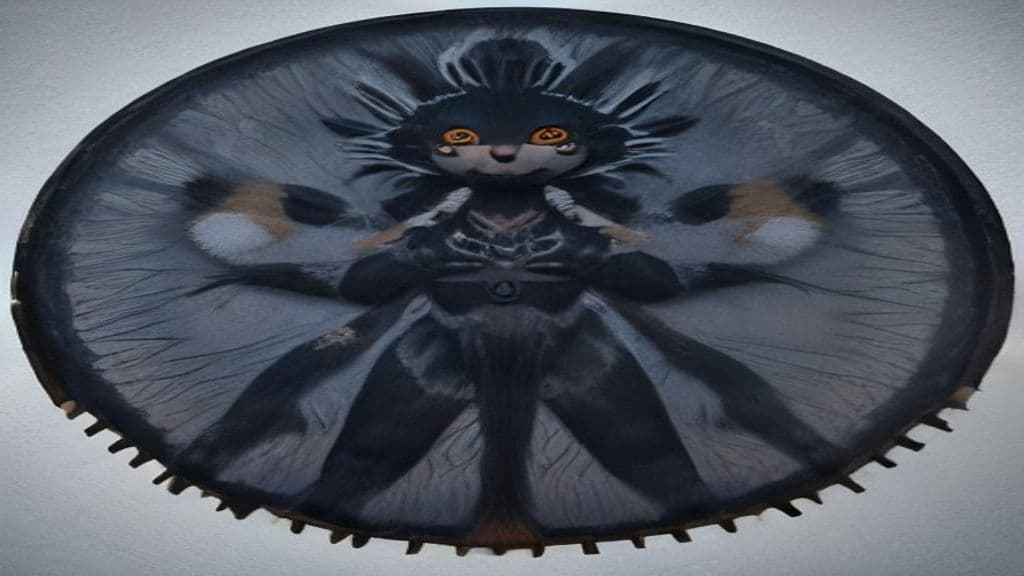
The available sources do not record a mythic genesis or narrative origin for the kikituk. Ethnographic summaries characterise the kikituk functionally: it is an animal carving or effigy that becomes spirit-infused through a shaman's agency and thereby serves as an active instrument in shamanic practice. Rather than a creature with a separate cosmogonic tale, the kikituk is presented as a material embodiment or focus of a shaman's animalistic spirit, invested and animated by the practitioner for specific purposes.
Sources consistently describe the kikituk as an animal carving or effigy; it is not presented as a naturally living animal but as a crafted object that symbolizes a shaman's animalistic spirit. The cited accounts do not provide details on specific species depicted, size, materials, carving styles, coloration, or ornamentation. In short, the kikituk is an effigy that functions as the material locus of a shamanic spirit rather than a richly described visual type in the available summaries.
Reported abilities are limited in the available sources to its role as an animated spiritual weapon. A shaman is said to bring the effigy to life, cast it at an enemy, and the kikituk will 'destroy the opponent's heart and wait to be retrieved.' This description indicates directed agency and a lethal effect focused on the heart, followed by return or recovery by the shaman. The sources do not enumerate other powers (for example, shape-changing, speech, independent volition outside the shaman's command, or additional offensive/defensive capabilities), and such attributes are not documented in the provided materials.
A'akuluujjusi
A'akuluujjusi is an Inuit primordial creator mother who fashioned the non-human animals and adjusted their physical traits so they could be hunted by people.
Agloolik
Agloolik (Inuktitut: ᐊᒡᓗᓕᒃ) is an Inuit spirit that dwells beneath Arctic sea ice and functions as a tutelary guardian of seals. Hunters and fishermen petition Agloolik for success; prayers before fishing are said to bring blessings of prey.
Kigatilik
Kigatilik is an entity in Inuit religion commonly described in sources as a "demon" and reported as a fanged being that kills angakkuit (shamans). The available attestations are very brief and do not provide detailed mythology or rituals.
Nanook
Nanook is the Inuit name applied to the polar bear and, in Inuit religious descriptions, the spiritual master associated with bears who regulates human–bear relations, deciding whether hunters deserve success and punishing violations of hunting taboos.
Nerrivik
Nerrivik (also Nerivik) is an Inuit sea-mother figure—an elder female supernatural who is the owner/provider of sea creatures and the patron of fishermen and hunters. She appears in Greenlandic and Canadian Inuit traditions as a principal sea goddess (regional equivalents include Sedna, Arnapkapfaaluk, and Arnakuagsak). Her origin myths explain her residence at the bottom of the sea and a mutilated condition (one-handed) resulting from being cast off a boat.
Pinga
Pinga is an Inuit goddess associated with the hunt, the well‑being of animals (especially caribou in Caribou Inuit contexts), and with medicine. She is described in modern summaries as sky‑associated — often rendered 'She Who is On High' — and functions as an overseer of ethical hunting practice whose disposition can influence hunting success.
Kidōmaru
Kidōmaru (鬼童丸 / 鬼同丸) is an oni-class antagonist appearing in Kamakura-period and later Japanese setsuwa and warrior-cycle narratives. He functions as a cunning ambusher and bandit opposite Minamoto no Yorimitsu and his retainers in tales that place him in mountain caves, fields, and occasional domestic intrusions.
Kihovauhkonen
A seer or prophet in Finnish mythology, tasked with foreseeing and warning of impending cataclysmic events. (Note: 1. Power tier: should be Lesser (local spirit) based on typical depiction in folklore. 2. Ability description: while it makes prophecies, there's no indication of a Primordial power level for such abi)
Kikimora
A female house spirit in Slavic folklore that functions as a domestic agent: helpful in well-kept homes and disruptive or dangerous where household morals or order fail. Variants include a domestic (house) kikimora paired with the domovoy and a swamp (bolotnaya) kikimora associated with marshland spirits.
Kikokiko (Kikokikoog)
The provided source materials do not contain information about an entity called Kikokiko or Kikokikoog. The name string "kikokiko" appears incidentally in a Māori translation in one supplied source, but there is no evidence in the supplied materials linking this string to an Algonquin supernatural being, nor are there descriptions, origin stories, abilities, or rituals for such an entity in the provided texts.
Kilili
Kilili is a Sumerian-origin liminal female spirit or minor goddess attested in Mesopotamian textual and material sources. She functions as an attendant or messenger of the major goddess Ishtar and is associated with windows, haunted/liminal places, and avian (owl) imagery; she also received localized cult offerings in Neo-Assyrian and Neo-Babylonian contexts.
Killer Shrike
Killer Shrike is a comic-book supervillain identity in Marvel Comics, primarily embodied by Simon Maddicks. A soldier-turned-corporate special agent and mercenary, he dons powered armored equipment (including an implanted anti-gravity generator and wrist-mounted power blasters) and serves as a recurring mid-tier antagonist in stories involving Spider-Man and other Marvel heroes; he first appeared in The Rampaging Hulk #1 (Jan 1977).
Community Record
- [1]Kikituk. Wikipedia, "Kikituk"wiki
- [2]Kikituk (Wikidata). Wikidata entry Q104864870, label 'creature in Inuit mythology'other
- [3]Evil in our midst : a chilling glimpse of our most feared and frightening demons (archive listing). Archive listing for 'Evil in our midst' (catalogue entry includes 'Kikituk, Inuit of Alaska')other
- [4]kiova project - kosovo {ep/lp release #3} (archive listing). Archive listing (musical track titled 'Kikituk'); contains no ethnographic informationother