
Simon Maddicks, born in Williamsburg, Virginia, served in the U.S. Army and was later selected as a special agent by corporate interests (Brand Corporation / Roxxon). Maddicks was given powered armor and surgically enhanced by Brand scientists—including an implanted anti-gravity generator—and became a mercenary and professional criminal operating under the alias Killer Shrike. He has been injured in combat (notably badly injured and put into a coma after Ulysses Bloodstone short-circuited his weapons) and later had his memory restored by Brand agents led by Stephen Weems (Modular Man).
Killer Shrike typically wears a powered armored suit described as constructed of an insulated steel alloy that protects him from turbulence and small-caliber fire. The suit features twin wrist-mounted power-blasters equipped with titanium claws and electricity-generation capability; Maddicks also possesses a surgically implanted anti-gravity generator at the base of his spine enabling flight. Visual variants exist where the original costume is sold or used by others, and the suit has appeared in different hands across storylines.
Killer Shrike's capabilities are technological and physical rather than supernatural: flight via an implanted anti-gravity generator (activated by neural link in the primary incarnation), enhanced physical conditioning and strength resulting from surgical enhancement, wrist-mounted twin power-blasters with claws and electrical discharge, and armored protection against turbulence and small-arms fire. He is a trained hand-to-hand combatant and proficient with firearms and knives, functioning as an operative for corporations or criminal organizations and serving in teams such as Masters of Evil variants, Thunderbolts, and Sinister Six line-ups.
Weaknesses
- otherarmor/power systems vulnerabilities (electrical short, disabling of weapons)
- otherphysical incapacitation and medical injury (can be rendered comatose)
Wards
- conditionconventional combat countermeasures and technological denial (disabling or short-circuiting suit systems)
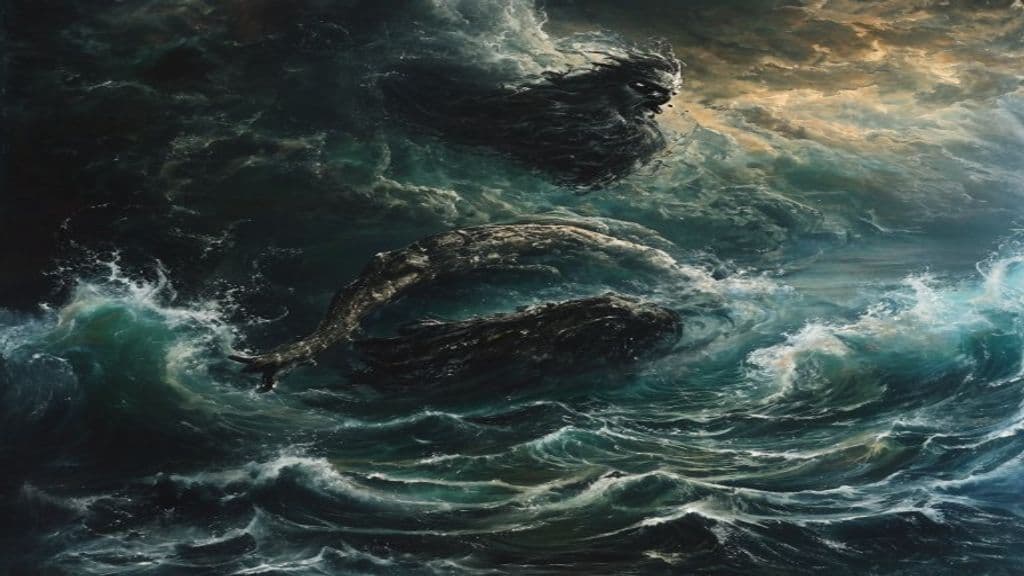
Marid
The most powerful class of jinn in Islamic tradition — beings of the sea, associated with the deep ocean, storms, and the granting of wishes at terrible cost. The classic genie of the Arabian Nights.
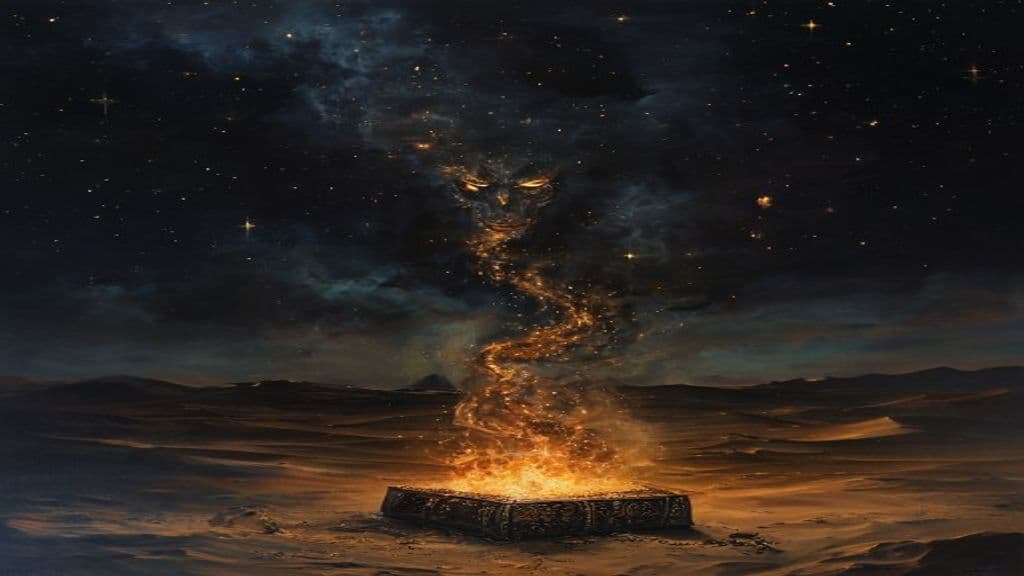
Djinn
The class of supernatural beings created from smokeless fire in Islamic cosmology — a parallel civilization to humanity, capable of belief or unbelief, with their own prophets, society, and judgment before God.
Jann
The weakest class of djinn in Islamic tradition, associated with desert winds and taking the form of snakes or whirlwinds, dwelling in empty wilderness and posing little threat to those who know the proper invocations.
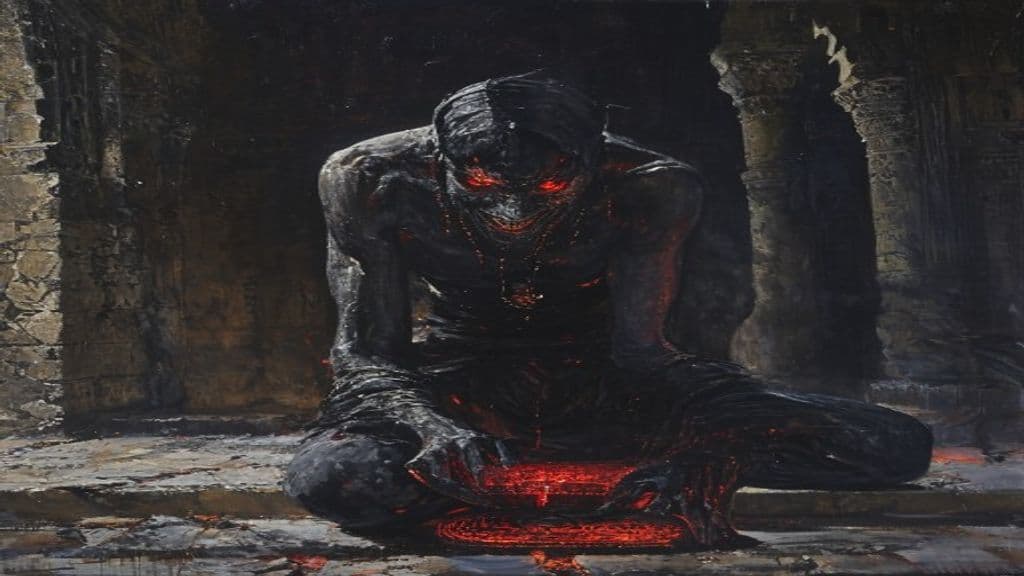
Shaitan
A class of corrupted djinn who follow Iblis and dedicate themselves to leading humans astray — distinct from Iblis himself, the Shayatin are a species of evil djinn who whisper doubts and temptations into the minds of the living.
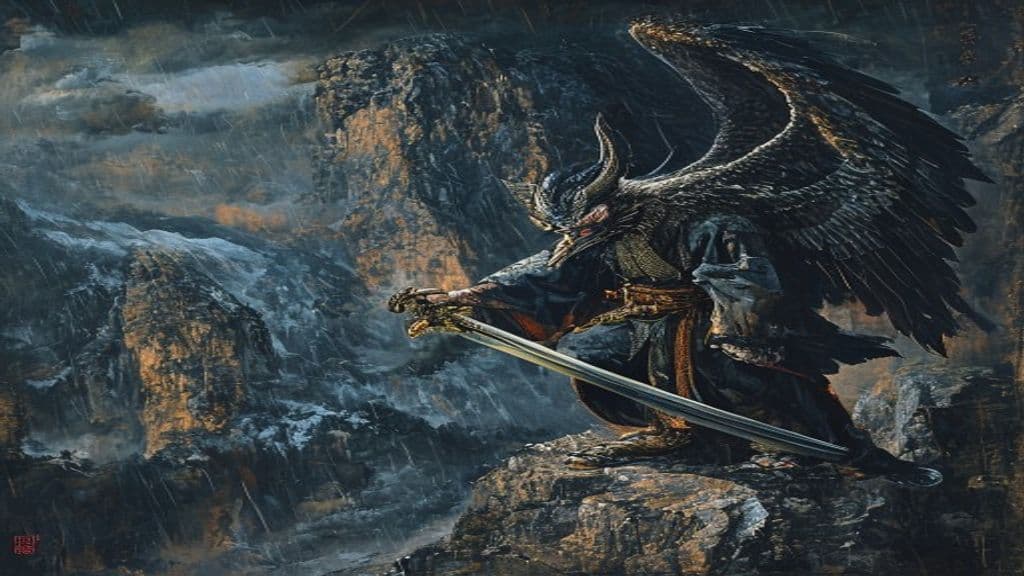
Tengu
Proud, warrior-like mountain spirits of Japan, associated with martial arts, pride, and the wild mountains. Neither fully good nor evil — they test and train warriors and monks, but punish the arrogant.
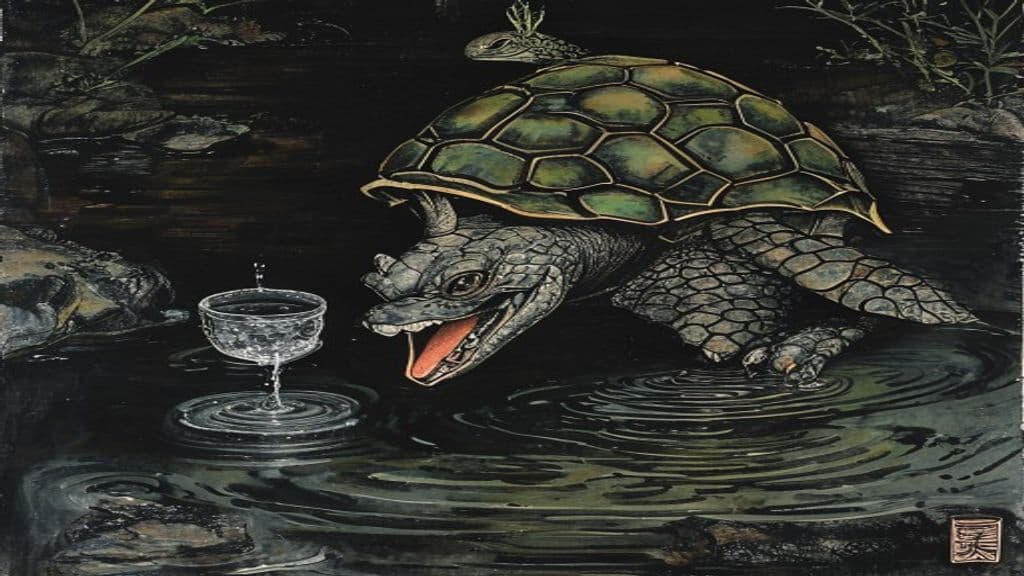
Kappa
A water-dwelling imp of Japanese folklore with a bowl of water on its head. Mischievous but bound by strict codes of politeness; dangerous near rivers.
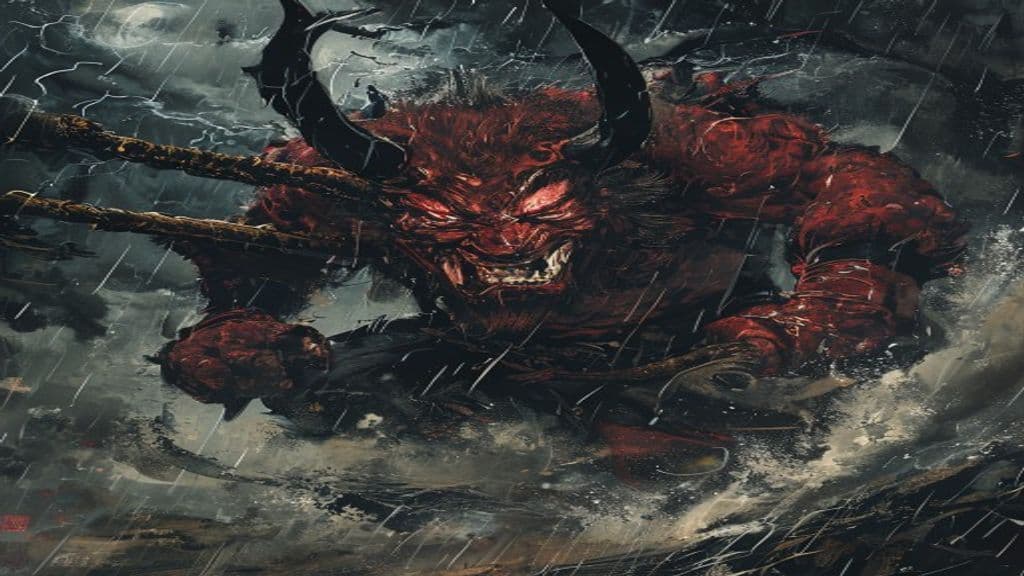
Oni
Powerful supernatural beings of Japanese folklore — associated with misfortune, disease, and the punishment of sinners in hell. Fearsome, often depicted as guardians of the underworld.
Kigatilik
Kigatilik is an entity in Inuit religion commonly described in sources as a "demon" and reported as a fanged being that kills angakkuit (shamans). The available attestations are very brief and do not provide detailed mythology or rituals.
Kihovauhkonen
A seer or prophet in Finnish mythology, tasked with foreseeing and warning of impending cataclysmic events. (Note: 1. Power tier: should be Lesser (local spirit) based on typical depiction in folklore. 2. Ability description: while it makes prophecies, there's no indication of a Primordial power level for such abi)
Kikimora
A female house spirit in Slavic folklore that functions as a domestic agent: helpful in well-kept homes and disruptive or dangerous where household morals or order fail. Variants include a domestic (house) kikimora paired with the domovoy and a swamp (bolotnaya) kikimora associated with marshland spirits.
Kikituk
A kikituk is an Inuit shamanic animal effigy or carving that is invested with spirit-force by a shaman and used as a spiritual weapon; the shaman brings the effigy to life, casts it toward a target where it is said to destroy the opponent's heart, and then retrieves it. Sources present the kikituk as a spirit-infused object functioning as the material focal point of a shaman's animalistic power in Inuit practice.
Kikokiko (Kikokikoog)
The provided source materials do not contain information about an entity called Kikokiko or Kikokikoog. The name string "kikokiko" appears incidentally in a Māori translation in one supplied source, but there is no evidence in the supplied materials linking this string to an Algonquin supernatural being, nor are there descriptions, origin stories, abilities, or rituals for such an entity in the provided texts.
Kilili
Kilili is a Sumerian-origin liminal female spirit or minor goddess attested in Mesopotamian textual and material sources. She functions as an attendant or messenger of the major goddess Ishtar and is associated with windows, haunted/liminal places, and avian (owl) imagery; she also received localized cult offerings in Neo-Assyrian and Neo-Babylonian contexts.
Killer in the Backseat
A modern urban-legend narrative in which a concealed human attacker hides in the rear passenger area of an automobile, discovered or exposed when another driver or attendant warns the lone driver (often by flashing high beams) or when she stops and is checked. The tale functions as a late-20th/21st-century cautionary story about solitary travel rather than a supernatural entity.
Kim Gyo-gak
A historical Silla prince who became a Buddhist monk and is believed by Mount Jiuhua monks to have been the terrestrial manifestation (reincarnation) of the bodhisattva Ksitigarbha (Chinese: Jijang). His life at Mount Jiuhua is credited with transforming the mountain into a major Ksitigarbha sacred site.
Kim Quy
Kim Quy (Chữ Hán: 金龜, "Golden Turtle") is a mythical golden turtle figure in Vietnamese legend who appears in narratives tied to royal foundation and sacred weapons. In the best-known tales Kim Quy provides magical aid to rulers or appears as the envoy of an aquatic deity (the Dragon King) to reclaim a divine sword.
Kimaris
Kimaris (also Cimeries, Cimeies, Cimejes and related forms) is a named spirit appearing in Renaissance and early modern grimoire catalogs (notably the Ars Goetia and Johann Weyer's Pseudomonarchia Daemonum) described as a martial, serviceable spirit who can be invoked by ritual magicians to teach, form warriors, and locate hidden treasures. Variant manuscript traditions (e.g., a Coptic attestation) sometimes present the name in a non-hostile, godlike helper role.
Kimpurushas
Kimpurushas (Sanskrit: किंपुरुष, Kimpuruṣa) are a class of non-human beings in Hindu epic and Purāṇic literature, described in the supplied sources as hybrids with human bodies and lion heads. They appear as attendants of Kubera and as singers who praise avatāras and virtuous deeds; some traditions treat them as identical or closely related to kinnaras while other Purāṇas distinguish them.
King Arthur
King Arthur is a central figure of the medieval Matter of Britain: a legendary king and folk‑hero presented variously as a post‑Roman military leader of the Britons, a chivalric monarch of great courtly fame, and a figure entwined with later otherworldly motifs (Avalon, Excalibur, Merlin). Sources range from early Welsh annals and poetry to Geoffrey of Monmouth, continental romances, and later English retellings.
Community Record
- [1]Killer Shrike - Wikipedia. Wikipedia, 'Killer Shrike' entrywiki
- [2]Modular Man - Wikipedia. Wikipedia, 'Modular Man' entrywiki
- [3]Killer Shrike | MarvelDirectory. MarvelDirectory entry for Killer Shrikeother
- [4]Killer Shrike (Hobgoblin) (Earth-616) | Marvel Database. Marvel Database (Fandom) entrywiki
- [5]Killer Shrike | Villains Wiki. Villains Wiki entrywiki
- [6]Spectacular Spider-Man #57 review (SpiderFan.org). Spectacular Spider-Man (Vol. 1) #57 reviewother
- [7]Oriole (Air Force) - Marvunapp. Marvunapp appendix on Oriole (Air Force), referenced in related character contextother
- [8]Tanager (Air Force) - Marvunapp. Marvunapp appendix on Tanager (Air Force), referenced in related character contextother