
Kimaris appears as a named member of the ranked roster of spirits in Renaissance and early modern demonological and necromantic catalogs. The Ars Goetia (Lemegeton) and Johann Weyer's Pseudomonarchia Daemonum list him as a marquis who serves with legions and performs practical tasks for evokers; Thomas Rudd's compilations (Harley MS 6482) include Cimeries among spirits attributed to Solomonic operative frameworks and connect a variant name Cimeriel to angelic nomenclature in Enochian tables. A Coptic manuscript (London oriental mss 6796) preserves a compound form Akathama Chamaris in which the figure is addressed as a godlike helping spirit rather than an explicitly evil demon. A modern speculative etymology (Wade Baskin) links the name to the classical ethnonym 'Cimmerians,' but this derivation is presented as conjectural in secondary literature.
In the principal grimoire tradition summarized in the sources, Kimaris is described concisely as a 'godly warrior riding a black horse' (Ars Goetia/Pseudomonarchia Daemonum summary). The supplied materials do not record further consistent iconographic details (such as facial features, armor specifics, or weapons) across manuscripts; variant name-forms in other manuscripts (e.g., Tuvries in the Munich handbook) preserve martial associations but do not add reliable additional physical description in the provided summaries.
Across the Ars Goetia and related goetic catalogs Kimaris is credited with locating lost or hidden treasures, teaching the trivium (grammar, logic, rhetoric), and 'making a man into a warrior of his own likeness' (i.e., imparting martial skill or forming warriors). The Ars Goetia and Pseudomonarchia attribute to him the rank of marquis and command of legions (twenty legions in some accounts). A Munich necromantic manuscript (Clm 849) records a closely related form named Tuvries who is given thirty legions and an additional power to cause quick crossings of seas and rivers. Thomas Rudd's lists connect Cimeries to Solomonic operative usage, while a Coptic attestation (London oriental mss 6796) frames Akathama Chamaris as a godlike helping spirit rather than an overtly malevolent being.
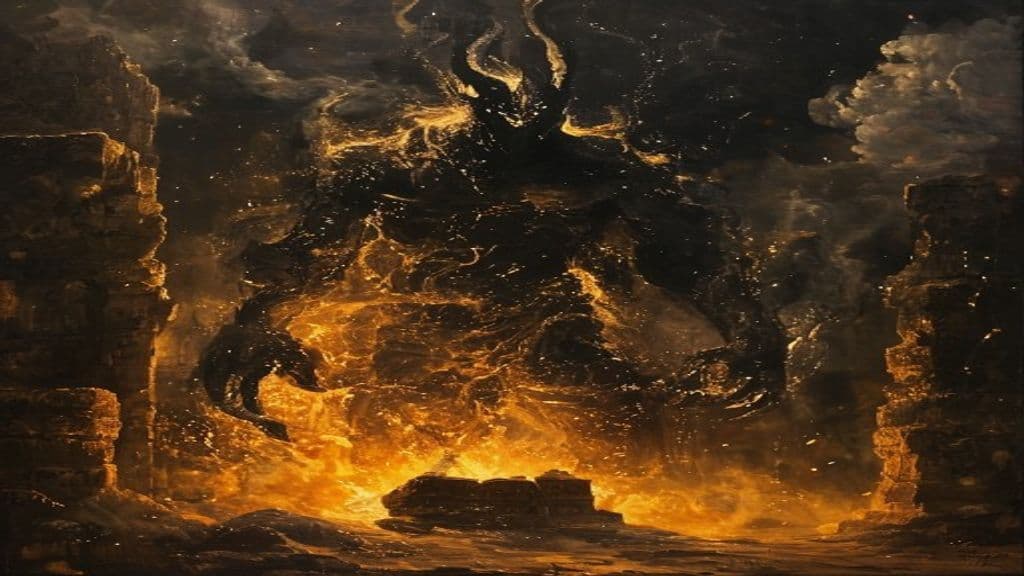
Ifrit
One of the most powerful classes of jinn in Islamic and pre-Islamic Arab tradition — a fire-born being of immense strength and cunning, capable of great works of engineering and terrible violence.
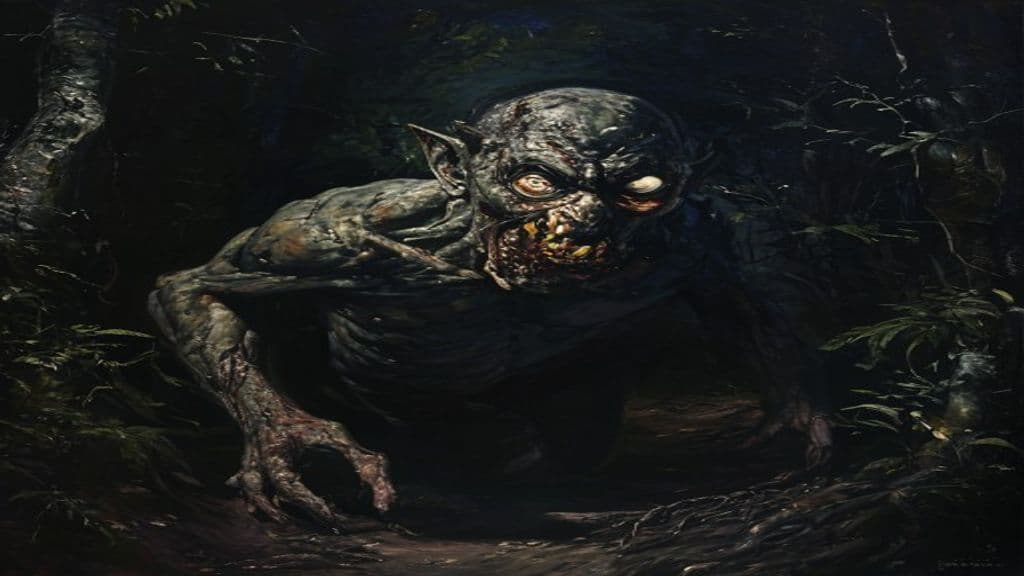
Pishacha
Flesh-eating spirits of Hindu mythology that haunt cremation grounds and are associated with disease, madness, and possession. The lowest class of demon in the Vedic hierarchy.
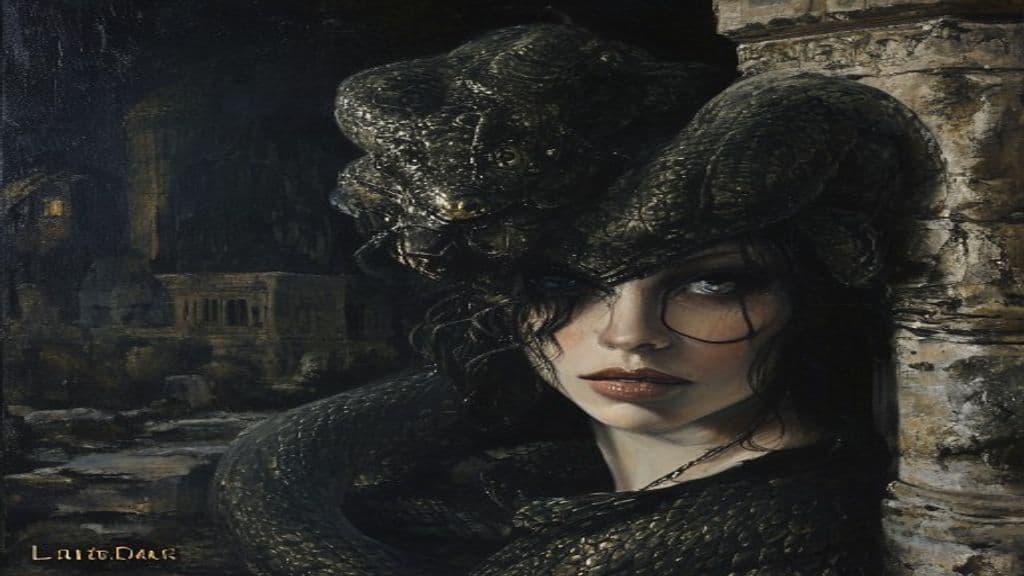
Lamia
A child-devouring demon of Greek mythology — once a queen of Libya and lover of Zeus, driven mad by Hera's destruction of her children and transformed into a monstrous hunter of other women's children.

Rakshasa (Himalayan variants)
A Himalayan reception of the pan-Indian rakshasa motif: hostile or disruptive non‑human beings known from Sanskrit epic and Puranic literature, here noted where Himalayan sources and discussions intersect with the broader epic tradition. The supplied sources do not document distinct, well‑attested Himalayan folklore variants; the entry therefore presents primarily the epic/legendary profile as transmitted into Himalayan contexts in general references.

Ghoul
A ghoul is a demon-like or monstrous humanoid originating in pre-Islamic Arabian religion, traditionally associated with graveyards and the consumption of human flesh. The concept later entered broader folklore and has been widely reused and transformed in modern fiction and popular culture.
Kikokiko (Kikokikoog)
The provided source materials do not contain information about an entity called Kikokiko or Kikokikoog. The name string "kikokiko" appears incidentally in a Māori translation in one supplied source, but there is no evidence in the supplied materials linking this string to an Algonquin supernatural being, nor are there descriptions, origin stories, abilities, or rituals for such an entity in the provided texts.
Kilili
Kilili is a Sumerian-origin liminal female spirit or minor goddess attested in Mesopotamian textual and material sources. She functions as an attendant or messenger of the major goddess Ishtar and is associated with windows, haunted/liminal places, and avian (owl) imagery; she also received localized cult offerings in Neo-Assyrian and Neo-Babylonian contexts.
Killer Shrike
Killer Shrike is a comic-book supervillain identity in Marvel Comics, primarily embodied by Simon Maddicks. A soldier-turned-corporate special agent and mercenary, he dons powered armored equipment (including an implanted anti-gravity generator and wrist-mounted power blasters) and serves as a recurring mid-tier antagonist in stories involving Spider-Man and other Marvel heroes; he first appeared in The Rampaging Hulk #1 (Jan 1977).
Killer in the Backseat
A modern urban-legend narrative in which a concealed human attacker hides in the rear passenger area of an automobile, discovered or exposed when another driver or attendant warns the lone driver (often by flashing high beams) or when she stops and is checked. The tale functions as a late-20th/21st-century cautionary story about solitary travel rather than a supernatural entity.
Kim Gyo-gak
A historical Silla prince who became a Buddhist monk and is believed by Mount Jiuhua monks to have been the terrestrial manifestation (reincarnation) of the bodhisattva Ksitigarbha (Chinese: Jijang). His life at Mount Jiuhua is credited with transforming the mountain into a major Ksitigarbha sacred site.
Kim Quy
Kim Quy (Chữ Hán: 金龜, "Golden Turtle") is a mythical golden turtle figure in Vietnamese legend who appears in narratives tied to royal foundation and sacred weapons. In the best-known tales Kim Quy provides magical aid to rulers or appears as the envoy of an aquatic deity (the Dragon King) to reclaim a divine sword.
Kimpurushas
Kimpurushas (Sanskrit: किंपुरुष, Kimpuruṣa) are a class of non-human beings in Hindu epic and Purāṇic literature, described in the supplied sources as hybrids with human bodies and lion heads. They appear as attendants of Kubera and as singers who praise avatāras and virtuous deeds; some traditions treat them as identical or closely related to kinnaras while other Purāṇas distinguish them.
King Arthur
King Arthur is a central figure of the medieval Matter of Britain: a legendary king and folk‑hero presented variously as a post‑Roman military leader of the Britons, a chivalric monarch of great courtly fame, and a figure entwined with later otherworldly motifs (Avalon, Excalibur, Merlin). Sources range from early Welsh annals and poetry to Geoffrey of Monmouth, continental romances, and later English retellings.
King Caspian X (tradition)
The provided sources do not document King Caspian X as a supernatural or folkloric entity. References to 'Caspian' in the materials pertain to the fictional literary character Prince Caspian from C. S. Lewis's The Chronicles of Narnia, to historical/administrative uses of the toponym 'Caspian Oblast,' and to modern cultural uses of the name.
King Gesar
Central figure in the Tibetan epic, embodying bravery, wisdom, and spiritual power. (Note: * Power tier should be Primordial (cosmic level) given King Gesar's embodiment of bravery, wisdom, and spiritual power, which suggests a higher plane of existence. * The origin story is missing entire)
King Hroðgar
Hroðgar is a semi‑legendary early medieval Danish king of the Scylding dynasty known from Old English and Norse saga material. In the Beowulf tradition he is the generous lord of the mead‑hall Heorot whose court becomes the scene of Grendel's assaults and the hero Beowulf's intervention.
King Laurin
Supernatural being from South Tyrolean saga associated with explaining natural phenomena through mythological stories in the Dolomites. (Note: - Power tier: Primordial (since it involves natural phenomena and shaping mountain landscapes) - Abilities: Add detail that he possibly influences optical phenomena such as alpenglow - Weaknesses: Non)
Community Record
- [1]Kimaris — Wikipedia. Wikipedia: 'Kimaris' article summarizing Ars Goetia, Pseudomonarchia, Munich Clm 849 and London oriental mss 6796 attestationswiki
- [2]Weyer, Johann. Pseudomonarchia Daemonum (summary citation in secondary sources). Referenced in summaries of Pseudomonarchia Daemonum entries for Cimeries / Kimarisother
- [3]Munich Handbook of Necromancy (Clm 849) — Tuvries entry (manuscript summary). Munich Clm 849 ('Tuvries') cited in secondary summaries as variant manuscript tradition with 30 legions and sea-crossing power (summarized in Wikipedia entry)other
- [4]London Oriental MSS 6796 (Coptic) — Akathama Chamaris (manuscript summary). London oriental mss 6796 cited in secondary summaries as containing the compound 'Akathama Chamaris' addressed as a godlike helping spirit (summarized in Wikipedia entry)other
- [5]Archive.org: 'The Lesser Key of Solomon' recordings and related materials. Archive recording and materials referencing the Lesser Key of Solomon and its demon catalog entries (includes Cimeries/Kimaris references as summarized)other
- [6]Archive.org: 'History of Demons' Marathon recordings (includes Kimaris among cataloged spirits). Recorded summaries referencing grimoire demon lists including Kimaris/Cimeriesother
- [7]Wade Baskin, Dictionary of Satanism (etymological speculation). Secondary-source note reporting Wade Baskin's speculative derivation of 'Cimeries' from the ethnonym 'Cimmerians' (reported in Wikipedia summary)other